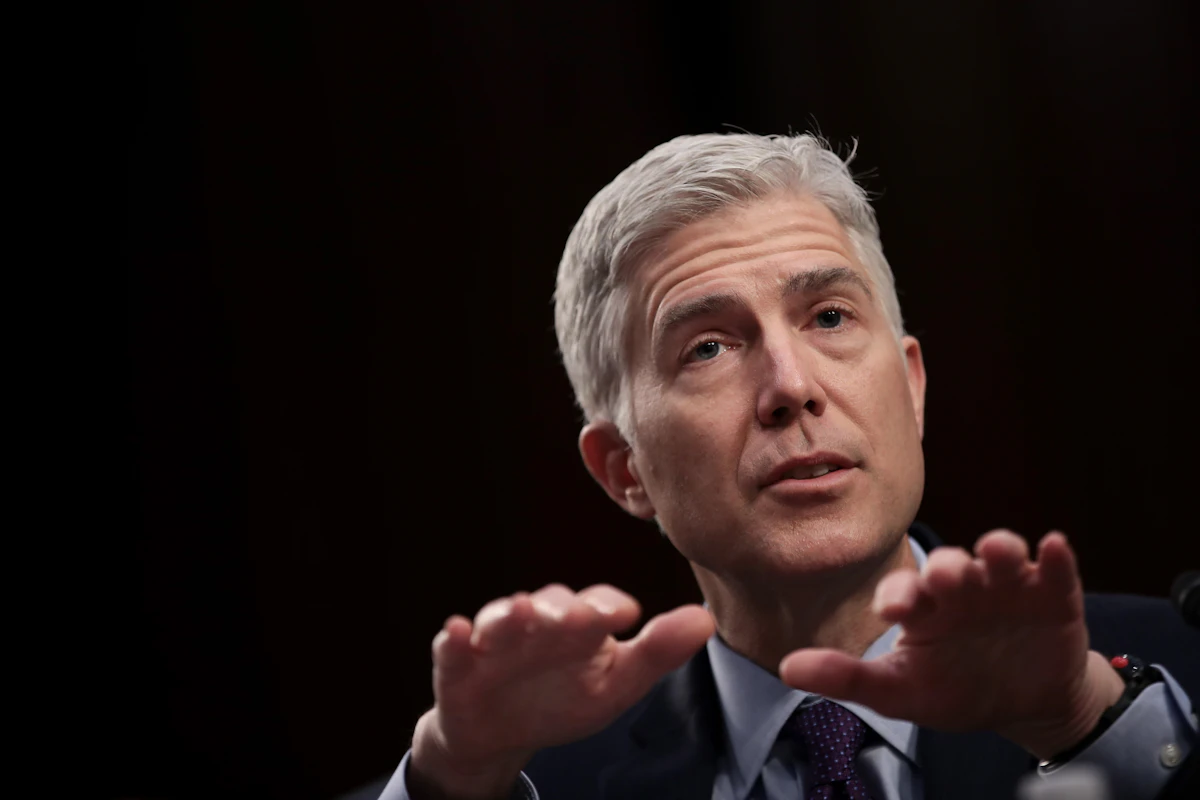
The Supreme Court Has Another Tribal Sovereignty Test on Its Hands
Source: The New Republic · Bias: Left
Summary
Six years ago, the Supreme Court held that nearly half of the state of Oklahoma was still legally considered Indian country. State officials have gone to great lengths to refuse to apply the court’s landmark decision in McGirt v. Oklahoma. Now the Supreme Court faces another crucial test of whether it will uphold tribal sovereignty that had been unjustly denied for more than a century.The petition in Stroble v. Oklahoma comes from Alicia Stroble, an enrolled member of the Muscogee (Creek) Nation who works for the tribal government on tribal land. In 2019, she filed tax returns with the state that argued she was exempt from state income taxes because of her tribal membership and employment. Auditors from the state Tax Commission denied her protest, prompting her to appeal through the commission’s internal processes.Generally speaking, states cannot tax tribal governments or members who live in Indian Country—the formal legal term for tribal reservations in all their various forms—without permission from Congress. (Please do not email me about all of the non-relevant exceptions.) The Supreme Court held in a 1993 decision, for example, that Oklahoma’s Tax Commission could not levy income taxes or motor vehicle registration taxes against members of the Sac and Fox Nation who lived on its reservation without Congress’s “explicit authorization.”At first, a state administrative law judge agreed with Stroble’s argument. Then the Oklahoma Tax Commission exercised its final administrative review of the matter. It conceded that Stroble was indeed an enrolled member, that she worked for the tribal government, and that she did so on Creek reservation land. Nonetheless, they rejected her claim.How can this be? After all, it was six years ago that the Supreme Court held in McGirt v. Oklahoma that the Muscogee (Creek) Nation’s reservation had never been disestablished by Congress and still legally existed, even though Oklahoma had acted otherwise for roughly a century. (Oklahoma courts later applied the same reasoning to other major tribal reservations in the state, covering roughly 43 percent of the state.)Oklahoma’s tax code is also fairly clear on the matter. An enrolled member of a federally recognized tribe is exempt from Oklahoma’s personal income tax, the law says, when the member is “living within ‘Indian Country’ under the jurisdiction of the tribe to which the member belongs” and “the income is earned from sources within ‘Indian Country’ under the jurisdiction of the tribe to which the member belongs.”To get around this, the commission did two things. First, it concluded that Stroble’s residence wasn’t part of the reservation because it didn’t meet the commission’s regulatory definition of Indian Country. The commission described it as “unrestricted, non-trust, private fee land,” which is a complicated way of saying it isn’t owned by the Muscogee (Creek) Nation itself or by the federal government on the tribe’s behalf. (Stroble argued, citing McGirt and federal law, that this status isn’t relevant.)Second, and perhaps more importantly, the commission went out of its way to refuse to apply McGirt to state taxation laws. The administrative law judge who initially reviewed Stroble’s case had concluded that “the importance of the McGirt decision to the instant matter is the Court’s analysis of whether Congress disestablished or diminished the Creek reservation.”The commission’s response was to claim that the judge had “completely disregarded the Court’s express limitation of McGirt to the Major Crimes Act,” which was the law at issue in the case. “To date, the U.S. Supreme Court has not expanded the scope of McGirt to state taxation, nor has Congress or the State Legislature made any changes to Oklahoma tax laws that would exempt the McGirt defined historical reservation boundaries from state taxation,” the commission argued.This claim is hard to square with McGirt itself. In that case, the defendant was an enrolled member of the Seminole Nation of Oklahoma who had committed multiple felonies against other tribal citizens on the Creek reservation. States typically prosecute felony offenses within their borders. In the nineteenth century, however, Congress enacted the Major Crimes Act to give federal prosecutors the power to prosecute certain felonies committed between tribal members in Indian Country.During his appeals process, McGirt argued that his state convictions were invalid because the federal government, not Oklahoma, had jurisdiction over his crimes. The state of Oklahoma countered that the Creek reservation on which McGirt had committed the offenses was not Indian Country because Congress had implicitly disestablished the Creek reservation around the time that Oklahoma became a state in the early twentieth century.McGirt responded that, under Supreme Court precedent, Congress must explicitly disestablish a reservation for it to be dissolved. In an earlier case known as Royal v.
Related Coverage
- Trump Scores Appeals Court Victory in Battle Over National Park Historical Displays (Right — RedState)
- Lawfare: Kangaroo court picks fight with state’s conservative attorney general (Far Right — WorldNetDaily)
- UPDATE: Louisiana Supreme Court Temporarily Blocks Politically Motivated Indictment Against AG Liz Murrill (Far Right — The Gateway Pundit)
- Iran’s supreme leader bails on first day of late dad’s funeral ceremonies (Right — New York Post)
- Louisiana court halts criminal indictment against state attorney general (Center Left — US news | The Guardian)
- Dissecting the Supreme Court's Scary 'Birthright' Betrayal (Center Right — RealClearPolitics - Homepage)
- Some Thoughts on the Court's Opinion(s) in the Birthright Citizenship Case (Center Right — Reason.com)
- The Supreme Court ruled seven years ago. Taxpayers are still paying the price (Center Right — Washington Examiner)
More Headlines From March 11, 2026
- Trump-backed candidate wins spot in runoff for Greene House seat (Center)
- Trump Warns Against Iran Putting Mines Around Hormuz | Balance of Show: Late Edition 03/10/2026 (Center)
- Trump-backed Clay Fuller to face Democrat Shawn Harris in Georgia runoff for MTG seat (Center Left)
- Democrat and Republican head to Georgia runoff election for Marjorie Taylor Greene’s seat – US politics live (Center Left)
- Georgia Democrat Leads Vote in Marjorie Taylor Greene’s District (Center)