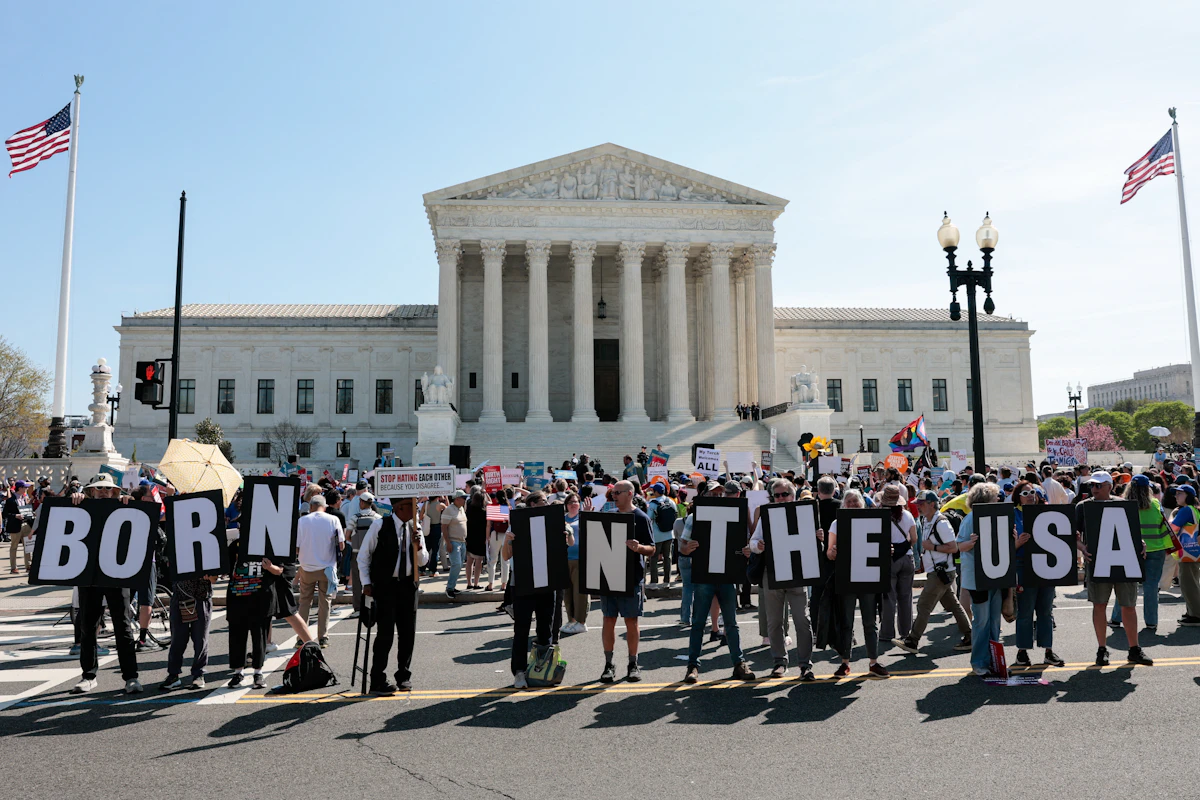
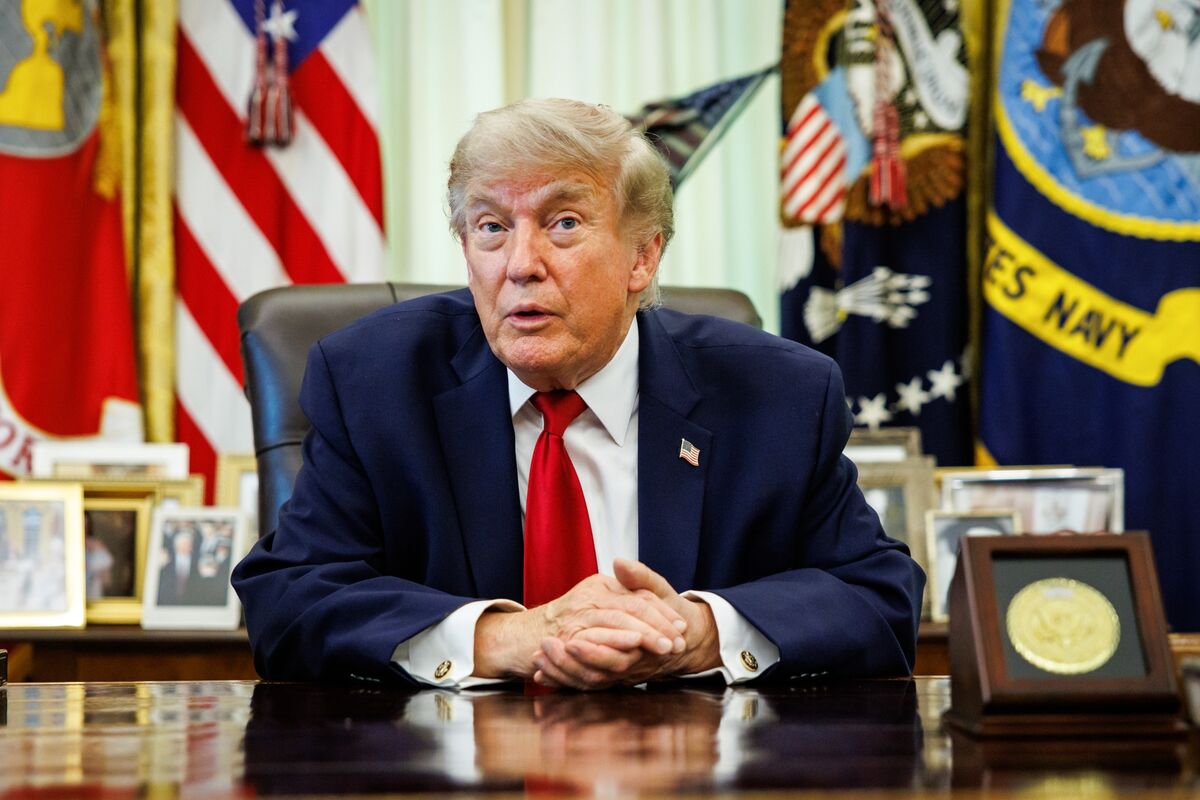
The Supreme Court struck down President Donald Trump’s executive order that sought to curb birthright citizenship on Monday, dealing a crushing blow to the administration’s efforts to redefine a central tenet of the American constitutional order.“Citizenship, then and now, was the right to have rights—to freely participate in our political community,” Roberts wrote for the court in Trump v. Barbara. “The Framers of the Fourteenth Amendment extended that promise to ‘every free-born person in this land.’ We keep that promise today.”Roberts was joined by Justice Amy Coney Barrett, a fellow conservative, as well as the court’s three liberal members: Justices Sonia Sotomayor, Elena Kagan, and Ketanji Brown Jackson. Standing athwart the majority were Justices Clarence Thomas, Samuel Alito, Neil Gorsuch, and Brett Kavanaugh, who all wrote separate dissenting opinions.Thomas, who led the charge, argued that the Citizenship Clause meant to affirm citizenship only for formerly enslaved Black Americans after the Civil War. He leaned heavily on the idea that one’s parents must be “domiciled” in the United States to acquire U.S. citizenship at birth, as well as a burst of right-wing legal “scholarship” that emerged last year to sloppily backfill a legal rationale for Trump’s executive order.“I am not sure that today’s opinion will stand the test of time,” Thomas wrote in his dissent. “The Citizenship Clause ‘added greatly to the dignity and glory of American citizenship.’ Today’s opinion devalues that citizenship.” Alito, who wrote separately, also lamented that the court had “made a serious mistake” in his view in “one of the most important decisions in the history of the court.”Alito is right, if nothing else, about the decision’s significance. By affirming the longstanding rule of birthright citizenship, the Supreme Court prevented the Trump administration from robbing millions of Americans of their constitutional right to live in the only country that they have ever known. In short, as our nation’s 250th anniversary nears, it is a victory worth celebrating.Congress and the states ratified the Fourteenth Amendment in 1868 to resolve a variety of post-Civil War legal disputes, mainly involving the rights of formerly enslaved Black Americans in the South. Among the amendment’s provisions is the Citizenship Clause, which states that “all persons born or naturalized in the United States, and subject to the jurisdiction thereof, are citizens of the United States.”The Civil Rights Act of 1866 had already affirmed the citizenship of formerly enslaved Americans by statute, but Republicans in Congress sought to entrench it even further and place questions of citizenship beyond future political dispute. The Fourteenth Amendment’s ratification also permanently nullified the Supreme Court’s disastrous 1857 decision in Dred Scott v. Sandford that held, among other things, that people of African descent could never become citizens of the United States.The Citizenship Clause’s sole exception was for people who were not “subject to the jurisdiction” of the United States at birth. This language applied, according to contemporaries, to children born to foreign diplomats who possess diplomatic immunity, as well as to Native Americans living under tribal governments beyond U.S. jurisdiction. The former exception is still operative; the latter was superseded by the Indian Citizenship Act of 1924, in which Congress extended U.S. citizenship to all Native Americans by statute.In 1898, the Supreme Court affirmed the clause’s protection of birthright citizenship in United States v. Wong Kim Ark. The plaintiff was born in San Francisco to Chinese parents who had emigrated to California prior to the enactment of the Chinese Exclusion Acts. They returned to China with Wong in the 1870s, where he lived until adulthood before returning to California multiple times. On the second trip, in 1895, customs officials detained Wong and denied him permission to enter the country because, in their view, he was not a U.S. citizen.The Supreme Court reached the opposite conclusion when it ruled on the case three years later. Justice Horace Gray, writing for the high court, held that Wong had acquired U.S. citizenship by virtue of his birth on U.S. soil, even though his parents were not U.S. citizens themselves and later returned to China. As a result, the court affirmed the principle of birthright citizenship for anyone within U.S. jurisdiction. The Nationality Act of 1940 later repeated the clause’s language into statutory law.At odds with this longstanding view of American citizenship is the Trump administration. President Donald Trump has long viewed himself as the arbiter of who is and isn’t an American. His initial entry into the American political scene came in the early 2010s when he falsely claimed that President Barack Obama was born in Kenya and thus not a natural-born citizen.