Rep. Thomas Massie warns GOP will be ‘very vulnerable’ in the midterms
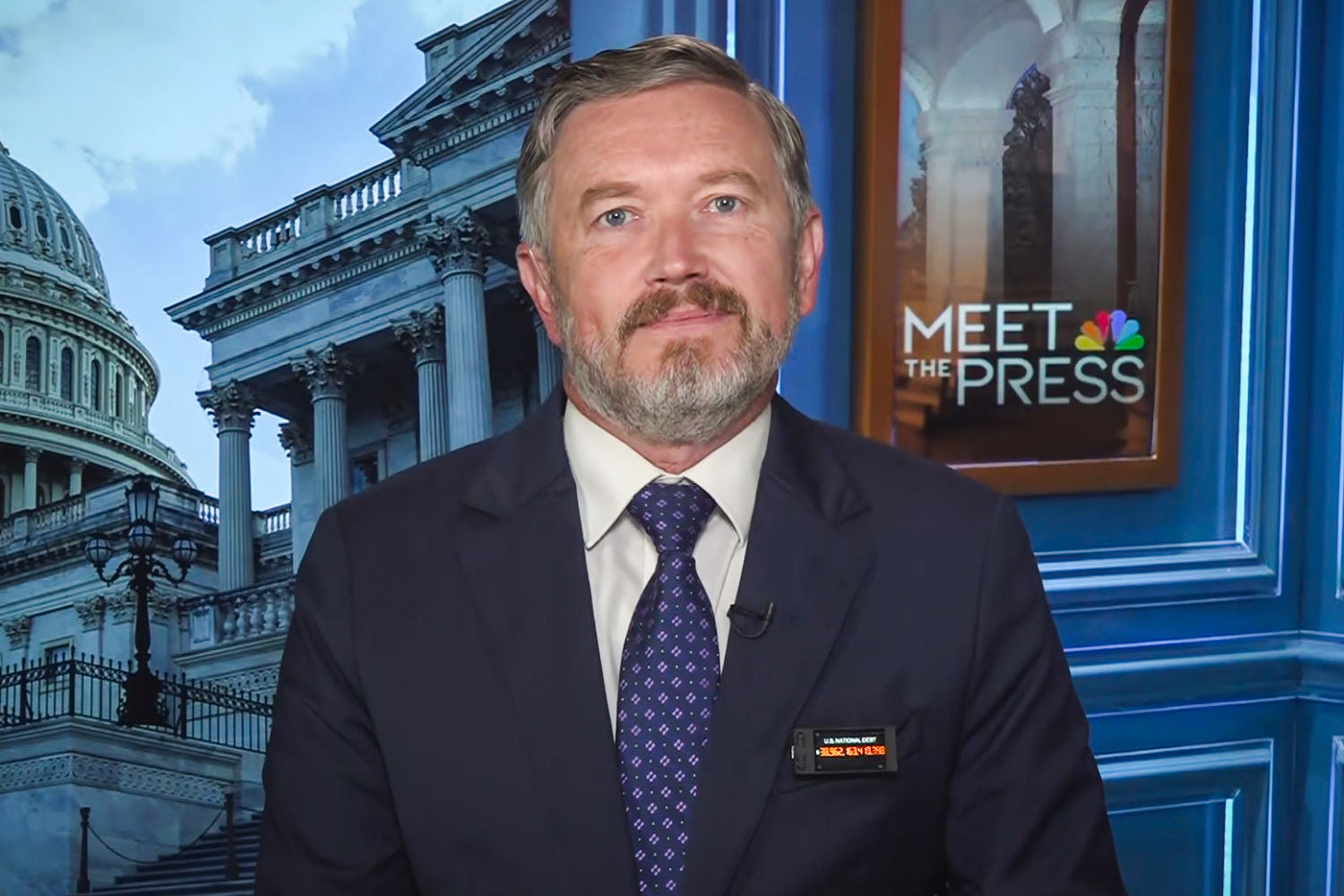
Rep. Thomas Massie, R-Ky., warned on “Meet the Press” that the Republican Party will be “very vulnerable” during the midterm elections.

This week, the president has hit the floor in his support. A new Reuters poll found that Donald Trump's approval is 35 percent. A new Q poll found that it's 33 percent. Nate Silver said it's lower than Joe Biden's was after the Disaster Debate. While there's hope his numbers will keep falling, they probably won't. A third of America is descended from the original confederates. Trump is burning up their lives and fortunes, but they're stand by their man.I could be wrong, but whether his numbers keep falling may be beside the point. The real question is whether Trump's supporters show up in defense of his administration in the coming congressional elections. Tuesday's primaries suggest an answer in the affirmative, as they knocked off Republicans Bill Cassidy of Louisiana and Thomas Massie of Kentucky. However, their defeats might say more about them than about Trump. Cassidy voted to removed him after the J6 insurrection. Massie has been a vocal Trump critic. Both men were marked by maga. Anyway, the point of the movement was to be anti-Republican. They show up to punish Trump's adversaries, not necessarily to support Republicans. Polls suggest that maganites are hardcore partisans, but what made maga a movement is that many are not. Trump took supporters on a decade-long moral vacation. He freed them from the ordinary constraints of decency. He vowed to punish their "enemies," especially uppity women. And he promised they would all get rich. In turn, they believed Trump would spare them from the consequences of their own desires.¹ In the end, he didn't. Their cost of living is soaring higher. The pain of tariffs and war is increasingly intolerable. And now they feel betrayed. Some of them even feel like Joe Biden was better. A recent poll found that six in 10 Americans think the economy was better under the former Democratic president. They are right. That said, the likelihood of a Trump voter picking a Democrat in November is very low, but the likelihood is very high of Trump voters returning to their natural state as nonvoters. Trump didn't woo swing voters. He amassed winning coalitions by adding people who did not vote prior to his entry onto the political scene. What they desired was Trump and everything he represented to them. That desire has backfired and now they lost hope. "They’re s------- themselves because nobody is going to vote," a Trump voter told NOTUS. "You will have your boomer Republicans who watch [Sean] Hannity and all that stuff go out and vote. But people like me, normal people, dealing with the cost of living, we’re not voting."The demoralization that's pushing maga back into nonvoter-hood is compounded by Donald Trump's other big problem – the activation of Americans who might otherwise be oriented toward the Democratic Party but who stayed home during the last presidential election. The couch can no longer hold them down, as gas prices are surging, food costs are soaring and health insurance is impossible. The magnitude is such that Mike Duggan ended his bid as an independent candidate for Michigan governor, because "our internal polling showed the intense anger over gas prices and Iran was boosting Democrats in every office nationally." Maga is demoralized. Democrat-leaning nonvoters are energized.There's room for independent candidates.I don't know if we can trust nonvoters who say they're going to vote. (CNN's Harry Enten said they are "p----- off" and "absolutely" will, while noting that only 48 percent of them said they were "almost certain to vote.") The fact remains, however, that anger is highly motivating. Beyond other considerations, anger has probably determined the outcomes of all but one presidential election since Barack Obama's victory. That year's panic brought a ton of nonvoters to his side. (A Democrat has not won Indiana since.) Moody's says odds of a recession are reaching 50 percent. It's only mid-May. Voters are mad. Nonvoters are madder. The Democrats talk a lot about how to win over Trump voters, but not about how to harness the compounding rage of nonvoters, and then turn them into Democrats. The presumption seems to be that Trump voters will stick around, but hardcore partisans, who make up his floor of support, will never vote Democratic. Trump was the reason many maganites surfaced in the first place. He's the reason they will likely go back underground. That leaves some swing voters to fight over, which is fine, but there are 90 million people in this country who did not vote in the last election. A bunch of them now say they will vote this year.The Democrats act like there's only so many voters to go around, so they have to be careful about the kind of message they send. It can't be too "anti-Trump," whatever that means, and it can't be too "progressive," whatever that means.
Rep. Thomas Massie, R-Ky., warned on “Meet the Press” that the Republican Party will be “very vulnerable” during the midterm elections.
An analyst says a rock legend handed us a roadmap to fighting Donald Trump.Bruce Springsteen's current tour isn't just a concert — it's a masterclass in resistance, and other celebrities should be taking notes, according to a labor journalist who attended one of the Boss's recent shows.Writing in the Guardian, Steven Greenhouse argues that Springsteen has cracked the code that has eluded so many of Trump's celebrity critics: how to speak out powerfully without alienating, lecturing, or losing your audience."He talks to people," Greenhouse writes. "He doesn't talk at them or down to them or lecture them. He voices common concerns, he rallies, he inspires."Greenhouse attended Springsteen's recent show at the Barclays Center in Brooklyn, which he describes as "far more than a fabulous, joyous concert" — calling it "an inspiring resistance event." From the opening moments, Springsteen made his intentions clear, telling the crowd that the E Street Band was there "in celebration and defense of the American ideals and values that have sustained our country for 250 years."What followed was three hours of pointed, thunderous anti-Trump messaging woven through classic rock and roll. Springsteen called Trump "a reckless, racist, incompetent, treasonous president and his ship of fools administration." He led the crowd in a rendition of Edwin Starr's "War (What Is It Good For?)" — a barely veiled reference to Trump's conflict with Iran — before launching into "Born in the USA."He also tackled Trump's efforts to rewrite history, telling the crowd: "Our museums are being told to whitewash American history of any unpleasant or inconvenient facts, like the full history of the brutality of slavery. You want to talk about snowflakes? We have a president who can't handle the truth."Central to Springsteen's current tour is "The Streets of Minneapolis," a new song about Trump's deployment of federal agents to the city, written in honor of Renée Good and Alex Pretti — two people killed during ICE operations. At the end of the song, Springsteen led the arena in a chant of "ICE out now!" as photos of Good and Pretti appeared behind the stage.At the No Kings rally in St. Paul in March, Springsteen invoked Good's final words to the agent who would take her life: "That's fine, dude, I'm not mad at you. I'm not mad." He called on the crowd to "find a way to take aggressive, peaceful action to defend our country's ideals" — echoing John Lewis's famous call to "get into some good trouble."Greenhouse argues that Springsteen's effectiveness comes from a credibility built over decades of championing the working class — the same voters Trump has cynically courted while delivering for billionaires. He also has something most celebrities lack: independence. With hundreds of thousands of fans willing to pay $100 or more to see him, Springsteen answers to no corporate overlords.That freedom stands in contrast to Stephen Colbert, whose outspoken Trump criticism Greenhouse suggests may have contributed to the cancellation of his show. Springsteen, he notes, faces no such constraints — only death threats, which have reportedly increased as the tour has progressed.Trump has responded to Springsteen in characteristic fashion, calling him a "total loser," a "dried-up prune," and "not a talented guy." Springsteen has not appeared deterred."So many of our elected leaders have failed us that this American tragedy can only be stopped by the American people — by you," Springsteen told the Brooklyn crowd. "So join us and let's fight for the America that we love."Greenhouse closes with a call for more of the same — and a wish that Springsteen would take his resistance show outdoors, to free concerts that could draw hundreds of thousands."Springsteen is an unarguable leader of the resistance," he writes. "The nation could use more like him."
Magnifica Humanitas is Pope Leo's first encyclical.
President Donald Trump seems indifferent to public opinion, according to one political analyst — and that poses a grave threat to the future of democracy.“His approval rating has plunged into the 30s, and he doesn’t seem to care,” MS NOW’s Paul Waldman wrote on Sunday. “Americans think the economy is terrible, and Trump seems indifferent. Instead, he’s putting his time and attention into a series of projects that could not be better designed to make him look corrupt and out of touch.”Waldman proceeded to list Trump’s various actions that Republicans believe are counterproductive to their goal of retaining control of both the House of Representatives and the Senate. These include his proposed gold-plated ballroom, his proposed Virginia arch, his $1.8 billion slush fund for supporters including Jan. 6 rioters and his revenge campaign against Republicans who do not always vote as he wishes. He also has vocally expressed indifference to problems that Americans are concerned about including the Iran war and rising gas prices.“Indeed, if Trump were trying to engineer a defeat in November for his party, it’s hard to imagine what he would be doing differently,” Waldman argued. “Where does this indifference to both his own standing and the political fortunes of his party come from? He may have a version of senioritis, the way students stop caring about classes as the end of high school approaches. Trump does care about his legacy, but as far as he’s concerned, that legacy isn’t written in legislation or policy victories; it’s physical and tangible. If he’s loathed by two-thirds of the public when he departs the White House, it may not matter to Trump so long as there are gigantic buildings with his name on them.”He added, “Even more, Trump may see this indifference to the public’s judgment as a kind of liberation. He spent a lifetime attempting to free himself of any and all constraints, so he can do whatever he wants. Before he was president, it was the constraints of the law, ethics, convention and civility that vexed him; in politics it’s the law and ethics (again), political norms, international alliances and agreements, the bureaucracy, Congress and the courts. The political interest of his own party, and even his own popularity? That’s just one more thing tying him down. And he’s going to cut those cords.”Indeed, Washington Post reporter Luke Boradwater recently noted regarding last week in the president’s career that Trump’s political standing continues to deteriorate week-by-week basis.Life finally man-handled President Donald Trump like it typically abuses Democratic presidents: with pushback and disappointment. But don’t expect to see this brand of ego acknowledge it, says Washington Post writer Luke Broadwater.“By pretty much any estimation, President Trump has had a very bad week,” said Broadwater. “New poll numbers show his approval rating has hit a second-term low. He is weighing whether to restart a bombing campaign in an unpopular war against Iran. Gas prices are high and inching higher heading into Memorial Day weekend. And his grip over Republican lawmakers is beginning to slip after he proposed a pair of deeply unpopular spending items, prompting an unusual revolt from the Senate.”He added that Trump is acting like a man who does not need to concern himself whatsoever with public approval in order to retain his power.“But Mr. Trump has decided to double down, presenting himself as politically all-powerful even in the face of indications that he is not,” Broadwater wrote.
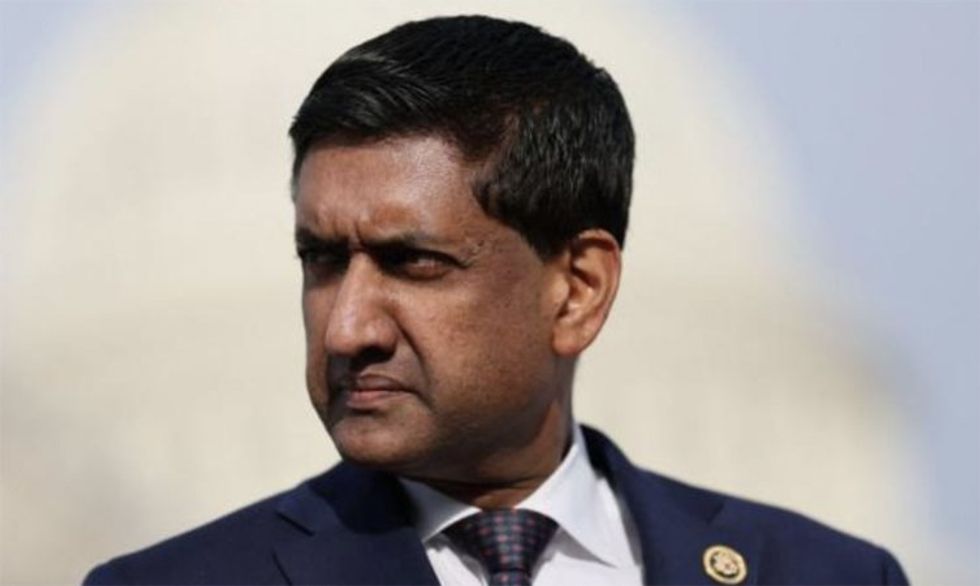
When Rep. Ro Khanna began pushing to release the Jeffrey Epstein files, his own party thought he was wasting everyone's time."The establishment class thought I was crazy," Khanna told Axios. "They said nobody would care. Nobody would vote based on it."They were wrong. With midterm elections approaching, Democrats across the country are pouring money into ads tying their Republican opponents to Epstein — betting that Trump's continued refusal to release the files has left a wound that voters haven't forgotten."What they missed," Khanna said, "is that Epstein goes to the core of what people hate about Washington: a rigged system where the rich and powerful play by different rules."The clearest sign of how seriously Democrats are taking the issue: in Ohio's hotly contested Senate race, every single ad that veteran Democrat Sherrod Brown has aired this year has been an Epstein ad. Brown has spent nearly $1.5 million attacking freshman GOP Sen. Jon Husted over donations he accepted from Leslie Wexner, a financial client of Epstein's. Husted's campaign says it has donated those funds to an anti-human trafficking charity — and has noted that Brown himself previously accepted donations from Wexner's wife.The stakes are highest in Maine, where Democrat Graham Platner is running in what both parties consider a must-win race for Senate majority control. In a six-figure TV ad, Platner accuses Republican Sen. Susan Collins of selling out voters to "the president and to the Epstein class," as footage of Epstein and Trump plays on screen.In Georgia — one of Republicans' best pickup opportunities this cycle — Democratic Sen. Jon Ossoff has made "the Epstein class" a centerpiece of his stump speech and media appearances, arguing it captures the broader corruption of the Trump era. The phrase has drawn some criticism as a potential antisemitic dog whistle, though that charge has been disputed — and notably, Ossoff himself is Jewish.Democrats and allied groups have also aired Epstein-linked ads in Wisconsin, Tennessee, and New Mexico, where the issue has even spilled into an intraparty fight: in the Democratic gubernatorial primary, an outside group ran ads falsely linking former Interior Secretary Deb Haaland to Epstein — ads a local news station rated "false and misleading."Republicans are pushing back. RNC spokesperson Kiersten Pels accused Democrats of "cynical political theater," pointing to the party's own historical ties to Epstein donors. "The same party now trying to weaponize Epstein to distract from their own failed policies spent years cashing Epstein-linked checks," she said.Whether the strategy will work remains an open question. Despite Khanna and Rep. Thomas Massie's bipartisan push to release the files, Massie was unable to turn Epstein into a winning issue in his own GOP primary — and was defeated last week after being targeted by Trump's political machine.But Democrats say the general electorate is a different audience entirely. And Khanna, for one, is no longer being laughed at, according to Axios.
The House speaker's "kitchen table issues" claim quickly drew pushback from critics.
GOP congressman says his party is set to count cost of ‘Trump disappointment syndrome’ after primary defeatDonald Trump’s Republican party is on course for a damaging rejection at the ballot box in November, according to a maverick US congressman ousted by a challenger handpicked by the president.Thomas Massie, a Republican from Kentucky, became the latest of Trump’s targets to be defeated in the party’s primaries this week. He had repeatedly broken with the president over military action against Iran, government spending and the release of the Jeffrey Epstein files. Continue reading...
Several top Democratic candidates in the midterms are airing scathing ads linking their Republican foes to the Jeffrey Epstein scandal — betting that the Trump administration's reluctance to release the Epstein files still resonates with voters.Why it matters: Democrats are mostly focusing on high prices, health care and Trump's war against Iran, but some also are trying to tie Republicans to the late sex offender as part of a broader message accusing the GOP of protecting the corrupt elite.Zoom in: In the hotly contested Ohio Senate race, Democrat Sherrod Brown has spent nearly $1.5 million on TV ads slamming his GOP rival, freshman Sen. Jon Husted, for previously taking donations from Epstein financial client Leslie Wexner, according to the ad-tracking firm AdImpact.In fact, the only two ads Brown has aired this year have attacked Husted over Epstein, per AdImpact.Husted spokesperson Amy Natoce told Axios the campaign has "donated all available funds" from Wexner "to an anti-human trafficking charity."Husted's campaign has also noted that Brown previously accepted donations from Wexner's wife. Wexner, for his part, has said that Epstein conned him.Graham Platner, the presumptive Democratic nominee in the Maine Senate race — a must-win contest for the party's hopes of gaining a majority in the Senate — also is making anti-Epstein messaging part of his strategy to unseat Republican Sen. Susan Collins.In a six-figure TV ad, Platner accuses Collins of selling out voters to "the president and to the Epstein class," as an old video of Epstein and Donald Trump flashes across the screen.In Georgia's Senate race — one of the GOP's best opportunities to flip a seat this year — Sen. Jon Ossoff (D) likewise has argued in speeches and media interviews that Trump's administration is made up of "the Epstein class."What they're saying: Rep. Ro Khanna, a California Democrat who spearheaded the push to release the Epstein files alongside Rep. Thomas Massie (R-Ky.), feels vindicated by the anti-Epstein ads."The establishment class thought I was crazy when I first pushed to release the Epstein files," he told Axios. "They said nobody would care. Nobody would vote based on it.""What they missed is that Epstein goes to the core of what people hate about Washington: a rigged system where the rich and powerful play by different rules."Republican National Committee spokesperson Kiersten Pels responded to a request for comment by accusing Democrats of hypocrisy because of their own ties to Epstein: "The same party now trying to weaponize Epstein to distract from their own failed policies spent years cashing Epstein-linked checks.""Their outrage is nothing more than cynical political theater from a party with no message and no credibility," she added.Zoom out: Democrats and their allies in state and federal races this cycle in Wisconsin, Tennessee and New Mexico also have aired ads tying their rivals to Epstein, or mentioning him while making a larger anti-Washington argument.It's unclear whether such spots will resonate with voters. Despite loud voices on the right bashing Trump over his handling of the Epstein files, Massie was unable to use the issue to rally many Republicans to his side.Massie was targeted by Trump's political machine and lost his bid for reelection in last week's GOP primary.Even so, many Dems believe an anti-Trump, anti-GOP Epstein argument will register with the overall electorate.The other side: Some critics have argued that the phrase "Epstein class" is an antisemitic dog whistle. Others have pushed back on that notion and pointed out that Jewish politicians, such as Ossoff, are among those saying it.The intrigue: Democrats aren't just slamming Republicans over their supposed ties to Epstein — they're bashing fellow Democrats, too.In New Mexico's gubernatorial election, an outside group ran negative advertising linking ex-Interior Secretary Deb Haaland (D) to Epstein. Her Democratic opponent, former Bernalillo County District Attorney Sam Bregman, also said in a spot, "Unlike others, I'm not in the Epstein files."Haaland aired a six-figure ad that pushed back, calling her opponents' claims "lies."A local news station reported that the outside group's ad was "false" and "misleading."