The Looming Crisis in Home Health Care
Source: The New Republic · Bias: Left
Summary
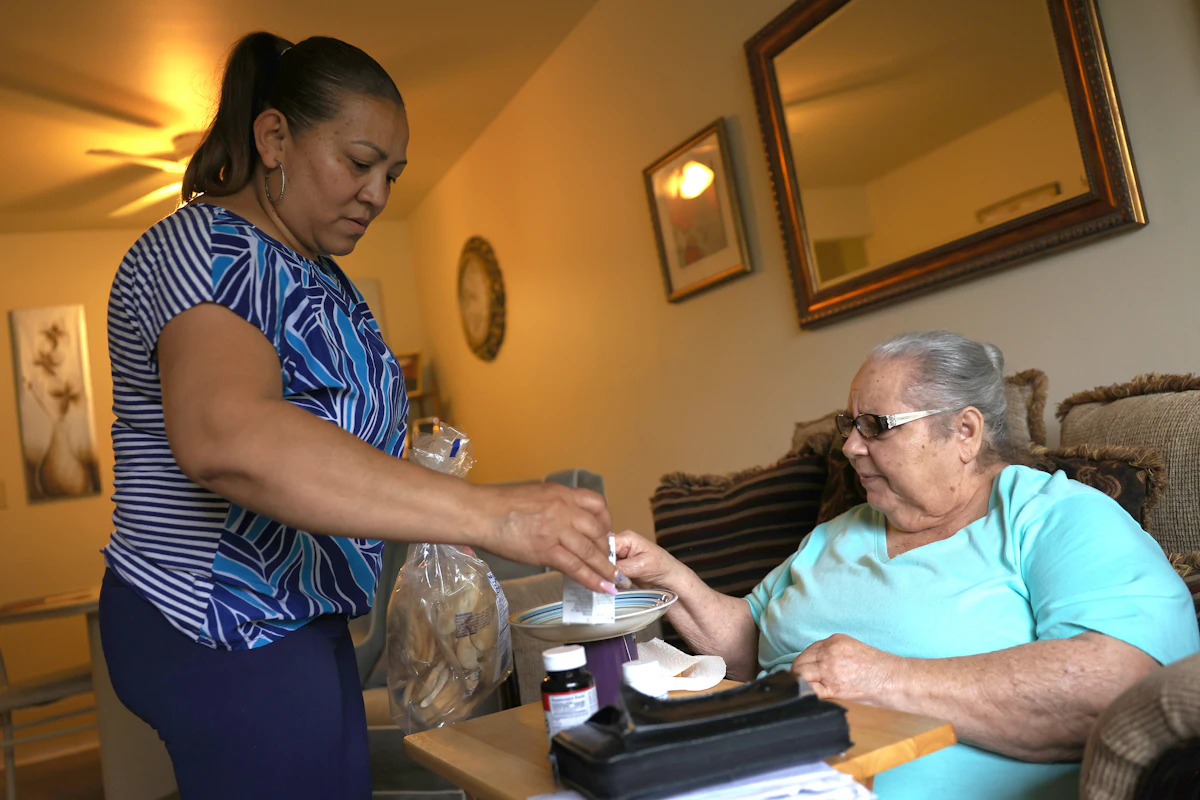
The health care industry has offered a rare bright spot for a struggling labor market, growing at dramatic rates even as employment flags in other sectors. It’s not only hospitals and medical facilities that are hiring more: Demand for home health care workers has spiked over the past decade, and as the American population ages, the need for these professionals will only increase. But cuts to Medicaid and shifts in immigration policy could threaten the future of these vital working-class positions.The workers in this sector include home health aides, who assist elderly and disabled individuals with care such as checking vital signs and helping administer medications, as well as with activities of daily living, like bathing, eating, and going to the bathroom. There are also personal care aides, who provide assistance with the activities of daily living, and with tasks such as running errands, preparing meals and cleaning. In short, they are crucial to the quality of life for any individual who is otherwise unable to meet their own daily needs.Despite the importance of home health care for older and disabled Americans, these workers typically earn lower wages, a trend exacerbating difficulties in hiring for these positions. In 2024, the median pay for home health and personal care aides was only $16.78 per hour. While the labor is both physically and emotionally taxing, there is a perception that the occupation is lower-skilled than other health professions because it may require less training.“The workforce has just historically been under-recognized and under-appreciated,” said Madeline Sterling, associate professor of medicine at Weill Cornell Medicine and the director of the Initiative on Home Care Work at Cornell University. Home aides are a part of the “direct care” labor force, which includes workers who operate in both home and nursing facility settings. Eighty-seven percent of direct care workers are women, 65 percent are considered low-wage, and 28 percent are black, according to data by the health news and research organization KFF. With 41 percent of workers aged 50 or older, the industry is also disproportionately older, in part because a proportion are family members who are being reimbursed for their care of loved ones.Nursing assistants, home health aides and personal care aides are collectively paid the least of all direct care workers, earning a median of around $35,000 per year, and are more likely to be uninsured. Those working in home and community-based settings—such as senior centers or adult daycares—are also more likely to be non-citizens and work part time compared to registered nurses and licensed nurse practitioners. The combination of low wages, minimal worker protections, and high stress contributes to a significant strain on mental and physical health.“Compared to similar workers not working in the home, we see that this workforce has higher rates of stress, depressive symptoms and loneliness,” said Sterling, who co-authored a 2021 report which found that nearly 21 percent of home health workers struggle with poor mental health.The job is marked by high turnover and vacancies, particularly in the wake of the coronavirus pandemic—a time when many direct care workers left the workforce. “For how much you’re getting paid—$16, $17 an hour—it’s often easier to go to a local retail store and get paid that much for work that is a little bit less emotionally and physically demanding,” said Priya Chidambaram, senior policy manager with the program on Medicaid and the uninsured at KFF.Meanwhile, the continued aging of baby boomers will ensure a demand for home care. Pew Research Center polling has found that the majority of older Americans would like to “age in place,” that is, in their own homes with a caregiver. One 2021 report found that more than half of all adults older than 65 will develop a serious disability and use some form of paid long-term services and supports.“As people need more and more of that care over the course of the day, it may not be possible for their kids or for a neighbor, or … for someone in their community to help them out more informally,” said Chidambaram. “As someone’s need increases, the likelihood that they are going to need professional care is going to increase.”It is not unheard of for the demand for home health care to exceed the supply. One 2023 study found that the number of home care workers per 100 participants in the Medicaid home and community-based services program declined by 11.6 percent between 2013 and 2019. According to the Bureau of Labor Statistics, there will be an increase of nearly 740,000 home health and personal care aide jobs between 2025 and 2034, a 17 percent growth rate—by comparison, the average growth rate for all jobs is 3 percent. However, that growth may be insufficient.
Related Coverage
- A Vietnam Nurse Who Came Home, Helped Get Us to 250 (Center Right — RealClearPolitics - Homepage)
- Freedom at home, persecution abroad (Far Right — BizPac Review)
- America Has a Gratitude Crisis (Center Right — National Review)
- Florida dad went to pick up 18-month-old from day care — what he found was horrifying (Right — Blaze Media)
- McConnell’s Office Releases Statement After 911 Call Reveals Senator Was Found Unconscious in His DC Home (Far Right — The Gateway Pundit)
- James Talarico Keeps Hammering on an Issue Nobody Cares About (Far Right — Townhall)
- Paramedics responded to a ‘cardiac arrest’ at Mitch McConnell’s home on day of hospitalization (Center Left — NBC News Politics)
- Paramedics responded to a ‘cardiac arrest’ at Mitch McConnell’s home on day of hospitalization (Center Left — NBC News Politics)
More Headlines From March 12, 2026
- Oil price surges as Iran steps up attacks on ships in the Persian Gulf (Center)
- U.S. investigates strike on Iranian school as the war sparks a global oil crisis (Center)
- Trump says the 'quiet part out loud' with brag US makes 'a lot of money' from oil crisis (Left)
- Trump releasing 172M barrels of oil from reserve as prices soar amid Iran war (Center)
- Live updates: Energy secretary emphasizes ‘short-term’ spike in oil prices; Senate to take up DHS funding (Center)