The Last Human Oscars?
Source: The New Republic · Bias: Left
Summary
The In Memoriam segment of this year’s Academy Award ceremonies lasted for 15 minutes. On a night when several winners’ speeches were cut short—the songwriting team behind “Golden” was interrupted mid-sentence by their own platinum-plated K-Pop earworm—the producers opted to go long in honoring a series of fallen icons, resulting in some distended but spellbinding television. Billy Crystal eulogized his pal and collaborator Rob Reiner (who never won an Oscar of his own) Rachel McAdams waxed rhapsodic about her Family Stone co-star Diane Keaton. And then Barbra Streisand, who hadn’t sung in public since 2019, serenaded the audience in honor of the late Robert Redford with the final verses of “The Way We Were,” sounding every bit of her 83 years in a good way. At that age, to paraphrase George Orwell, you have the voice you deserve. “The Way We Were” was a predictable choice: Katie and Hubbell 4Ever. But beyond its obvious sentimental value, Streisand’s performance of an early-1970s standard signified something larger about a broadcast both steeped in nostalgia for what the Oscars used to mean and bristling with ambivalence about the shape of things to come. “I am Conan O’Brien, and I am honored to be the last human host of the Academy Awards,” deadpanned the evening’s emcee, whose entrance in Amy Madigan-Weapons costume set up an extended sight gag with plenty of subtext carried over from its suburban-Gothic source: a caricatured (and strangely ageless) avatar of the showbiz establishment being hunted and run down by a group of feral children. “I am Conan O’Brien, and I am honored to be the last human host of the Academy Awards,” deadpanned the evening’s emcee.O’Brien is a funny guy with nothing to prove; his hosting style reflects this fact, with the bonus that unlike, say, Jimmy Kimmel, Conan actually seems to like movies, and to have seen a few as well. His presence was more winning than his material, which was mostly kid-gloves stuff, with the punchiest jabs reserved for Netflix and its CEO Ted Sarandos. (By not alluding to the impending Paramount-plus merger, Conan left Nathan Fielder undefeated as the only comedian to equate new-media monopoly with incipient fascism). The angst of the opening extended through a series of live and recorded sketches bits, linked through their expressly technophobic subtext. One goofed on YouTube’s future as the event’s broadcaster while another affectionately travestied Casablanca as a piece of made-for-streaming–slop, while another a bit connected the Tik Tok–driven narrowing of onscreen aspect ratios to the narrowing of viewer attention spans, complete with an iPhoned-in cameo from Martin Scorsese. O’Brien’s “hostmaxxing” shtick also involved trying to transform a reaction shot of Leonardo DiCaprio into a meme in real time with caption “TFW You Didn’t Agree to This,” suggesting more than ever that Leo is morphing into a grand-old(er)-man, a la Jack Nicholson (or even Scorsese)—an emblem of The Movies who’ll have a front row seat at these things as long as he keeps showing up. Meanwhile, Timothée Chalamet, duly cheap-shotted by O’Brien and others as an enemy of the high arts before losing Best Actor, may now have to hunt down an Oscar by any means necessary. How long until he puts in the call to Alejandro Gonzalez Inarritu? Or vice versa?Chalamet’s positioning as the evening’s big loser has a paging-doctor-schadenfreude quality in proportion to the actor’s perceived narcissism. Sitting in the front with Kylie Jenner, the 30 year old could have been a skinny effigy for Gen-Z itself. Because if there was anything at stake conceptually on this technically clunky, tonally wonky Oscars show, it was the question of whether the kids would be alright. If there was anything at stake conceptually on this technically clunky, tonally wonky Oscars show, it was the question of whether the kids would be alright. The vibes were old-fashioned on a night where the big winners were putatively progressive. Paul Thomas Anderson gave one acceptance speech after another—three in all, for writing, directing, and producing One Battle After Another, a worthier-than-usual Best Picture winner. But as he went on, he got further away from political commentary on behalf of a movie both praised and prodded for its political content, and into sentimentality and nostalgia. “I wrote [it] for my kids, to say sorry for the housekeeping mess that we left in this world we’re handing off to them,” the Studio City kid said after winning Best Adapted Screenplay, leaving little ambiguity as to the meaning of OBAA’s coda, wherein Leonardo DiCaprio’s battle-weary bomber Bob Ferguson relaxes on the couch while his daughter Willa (Chase Infiniti) heads into the fray on his behalf.
Related Coverage
- 'Demon in human skin!' Fox News host loses it as Dem threatens to upend Texas Senate race (Far Left — Raw Story)
- The SAVE America Act and the last line of defense for voter roll integrity (Center Right — Washington Examiner)
- World Cup dreams shattered as StubHub tickets cancelled at last minute (Center — BBC News)
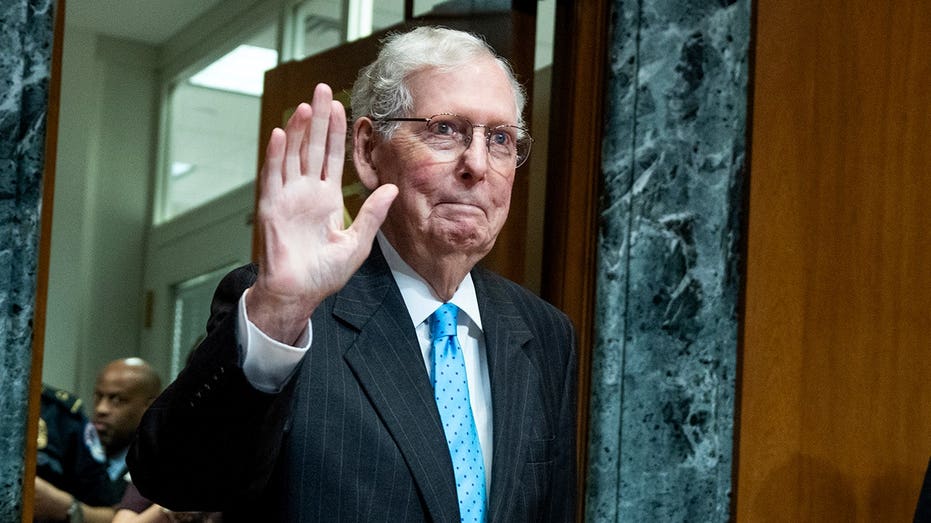
- McConnell was found 'unconscious' in home last month as condition remains unknown (Right — Latest Political News on Fox News)
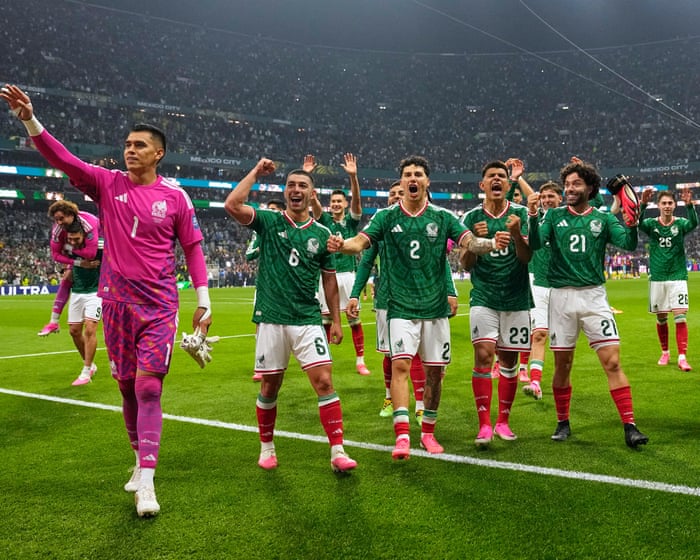
- Mexico 2-0 Ecuador: World Cup 2026 last 32 – as it happened (Center Left — US news | The Guardian)
- USA v Bosnia and Herzegovina: World Cup 2026 last 32 – live (Center Left — US news | The Guardian)
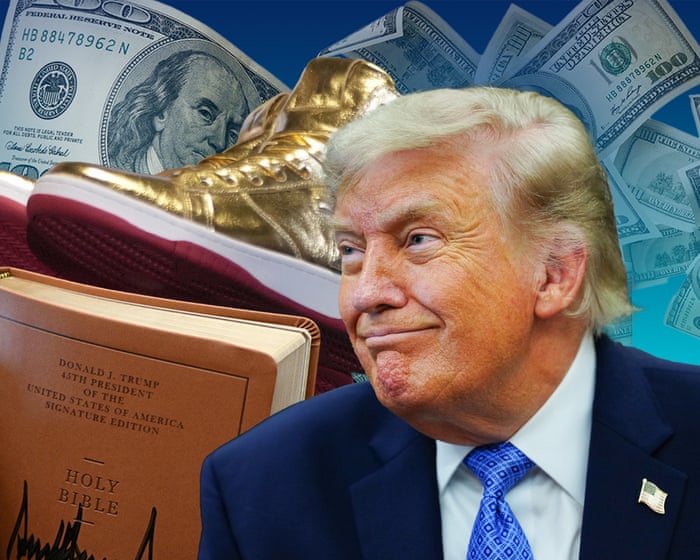
- Crypto, bibles and watches: how Trump made over $2bn last year - The Latest (Center Left — US news | The Guardian)
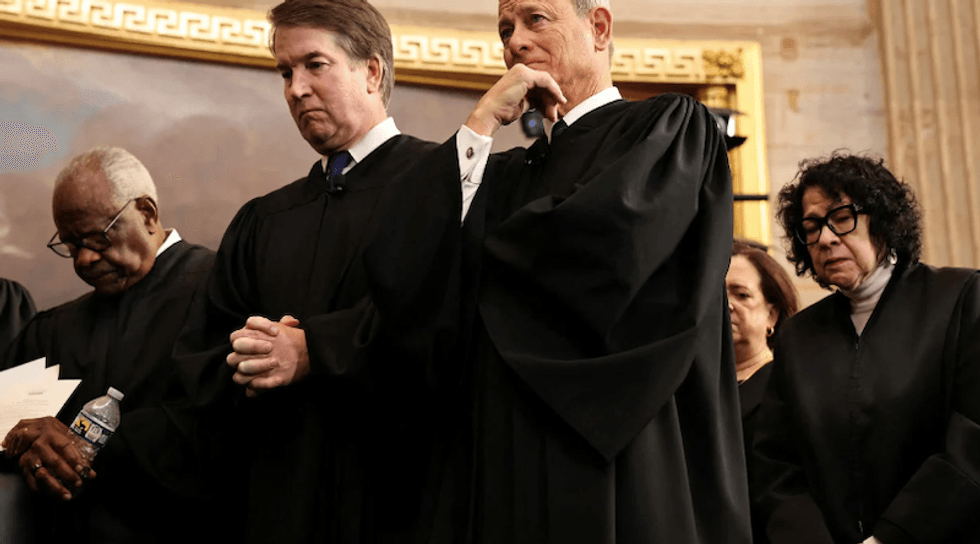
- Alarm bells as Supreme Court takes up major case it ducked last year: ex-DOJ prosecutor (Far Left — Raw Story)
More Headlines From March 16, 2026
- Trump says he’s ‘thrilled’ to see Brendan Carr looking at FCC licenses of news organizations (Center)
- Trump Says Wiles Has Cancer, Will Continue as Chief of Staff (Center)
- White House chief of staff Susie Wiles diagnosed with 'early stage breast cancer': Trump (Center)
- John Thune asked why GOP lacks 51 votes for talking filibuster on SAVE Act (Far Right)
- US airline CEOs urge Congress to end shutdown and pay airport workers (Center)