The history behind Montana senator's mysterious scheme
Source: Alternet.org · Bias: Left
Summary
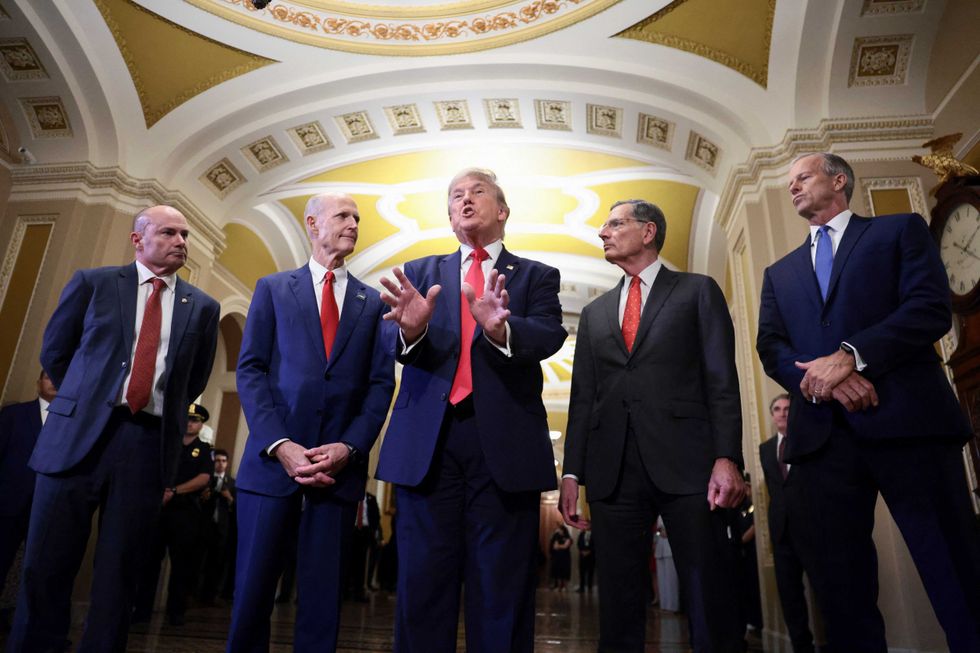
Montana Republican Sen. Steve Daines set bipartisan tongues wagging last week when he pulled off an audacious scheme – one commentator called it an “arrogant and just deeply cynical move” – to ensure that his handpicked successor received an uncontested shot at a six-year term in the United States Senate.Daines, who was widely believed to be coasting to a third Senate term with no serious GOP primary opposition, abruptly ended his own candidacy – with no public notice – minutes before the filing deadline so that Kurt Alme, the state’s little known U.S. attorney who has never held elective office, could slip into the race. Had other high profile Republicans been in the know about Daines plans, a primary election would almost certainly have attracted a host of candidates, potentially from both parties.The Daines maneuver had to have been long in the planning, and near absolute secrecy was essential to its success. The only people who appear to have been in on the plan were Donald Trump, Montana Gov. Greg Gianforte and Daines Senate colleague Tim Sheehy, all Republicans who immediately endorsed Alme.The reaction was swift, if stunned. The Washington, D.C. publication The Hill saying, for example, “The Montana Republican’s decision left lawmakers slack-jawed …”At least a few Republicans condemned Daines sleight of hand, and former Sen. Jon Tester, one of the Democrats Daines said he was trying to keep out of the race, bluntly said: “None of us were running. [Daines] f—ed his own party.”There is an old political axiom that holds that every politician – Daines surely included – longs to pick their successor and American political history is full of similar stories.Last year Illinois Democratic Congressman Jesús “Chuy” García, for example, masterminded something similar, allowing his chief of staff to file for his seat apparently knowing that he was going to retire. Garcia’s decision, like Daines’s, drew bipartisan condemnation, with Sen. Andy Kim of New Jersey saying it “was undemocratic and should not be allowed.” The full House voted to reprimand Garcia.There is some Montana political history that bears remembering in the context of Daines’ audacious maneuver. And a secret, backroom deal in Montana in 1933, also involving a coveted Senate seat, illustrates why historically these too-cute-by-half insider maneuvers rarely redound to the credit of anyone involved.On March 2, 1933, Montana’s senior senator, Thomas J. Walsh of Helena, died suddenly while enroute to Washington, D.C., where he planned to join the Cabinet of president-elect Franklin D. Roosevelt. Roosevelt had tapped Walsh, a distinguished and widely respected senator, to be his attorney general. Walsh’s nomination was widely hailed, and it was expected that he would resign the Senate seat he had held since 1913 when confirmed by the Senate. Walsh’s unexpected death compressed the timeline for a replacement and put the political maneuvering into high gear.As in most states, Montana law empowers the governor to fill a Senate vacancy when it’s caused by resignation or death. In 1933 Montana’s governor was Democrat John Erickson of Kalispell, described by one observer as “a gentle, sleepy, colorless conservative” with close ties to the state’s politically powerful corporations, particularly the Anaconda Mining Company and Montana Power, the influential “twins” of the early 20th Century Montana’s economy.Montana’s other senator was a pugnacious Butte lawyer, Burton K. Wheeler, a Democrat, and a staunch opponent of the “twins” who fancied himself the power in the state party. While a good deal more progressive that Erickson, Wheeler believed he could influence the governor’s Senate appointment, and he set about making sure he could. Above all Wheeler was determined to prevent an arch political enemy, another Butte lawyer and Anaconda lobbyist, J. Bruce Kremer, from receiving Erickson’s endorsement.Wheeler had ample reason to think that Kremer had the political juice to get the nod to replace Walsh. Kremer had long been a member of the Democratic National Committee, a therefore an experienced, well connected national and Montana power broker with close ties to the incoming Roosevelt administration. Anaconda and Montana Power supported his Senate ambitions believing Kremer would be a foil to Wheeler’s influence in Montana and in the Senate.Wheeler, never shy about bullying his way to a desired outcome, pursued his own audacious three-part strategy to thwart Kremer’s ambition and make certain the state’s open Senate seat would be occupied by a politician Wheeler was comfortable with and could dominate.In the first step of Wheeler’s strategy he summoned top Anaconda and Montana Power officials to a hotel room in Helena and read them the Riot Act. They must drop their support of Kremer, he said, or Wheeler would consider it a declaration of political war by the corporations.
Related Coverage
- 'Demon in human skin!' Fox News host loses it as Dem threatens to upend Texas Senate race (Far Left — Raw Story)
- The Race to Rescue 8,000 Sailors Still Stranded Behind Hormuz (Center — Bloomberg Politics)
- Pay-to-play cycle behind GOP's corporate tax cuts exposed in new report (Far Left — Raw Story)
- Senator John Fetterman Reveals the One Thing That Would Make Him Leave the Democrat Party (VIDEO) (Far Right — The Gateway Pundit)
- “America-laster”: Texas Senate Candidate James Talarico Slammed in New Ad Ahead of the 250th Anniversary of American Independence for Comments Calling American Flag a “Complicated Symbol” (Video) (Far Right — The Gateway Pundit)
- Where key Democrats stand on divisive Michigan Senate primary (Center Right — Washington Examiner)
- Tillis pronounces SAVE America ACT ‘dead’ as vital voter legislation remains stalled in Senate (Far Right — BizPac Review)
- Today in Supreme Court History: July 3, 1941 (Center Right — Reason.com)
More Headlines From March 10, 2026
- Pendulum swings back on economy amid Iran conflict (Center)
- Georgia voters deciding Marjorie Taylor Greene's replacement in special election (Center)
- Oil prices fall and stocks rebound after Trump says Iran war could end ‘very soon’ (Center Left)
- Gas price spikes are slamming Senate battleground states (Center Left)
- Oil prices fluctuate as Trump signals Iran conflict could end soon (Center)