The GOP is imploding — and now Republicans can't pass bills because of Trump
Left
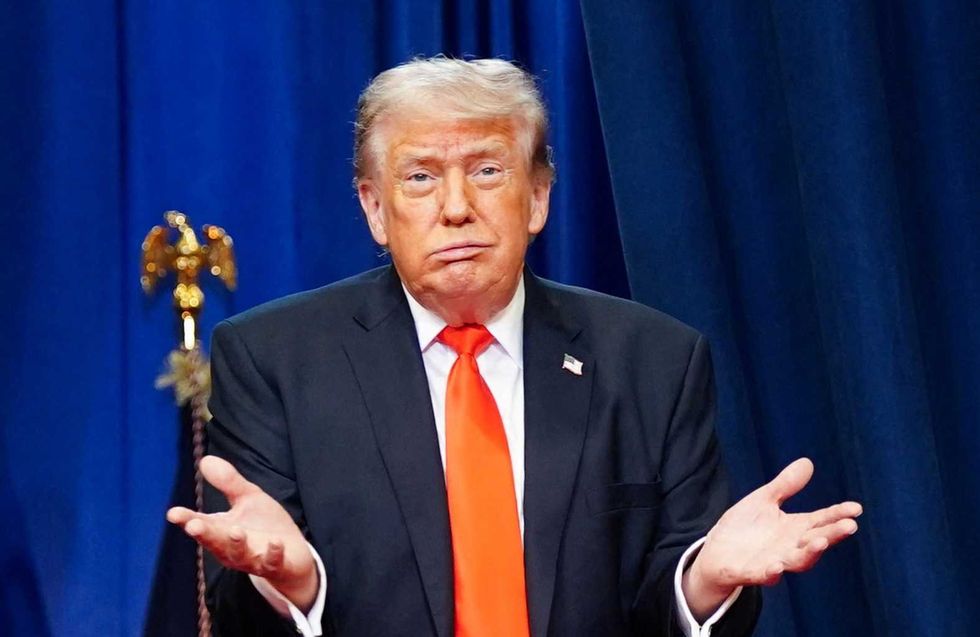
President Donald Trump is forcing the Republican Party into a politically perilous position in advance of the upcoming midterm elections — and they are now relying on a gamble that traces back to former President Richard Nixon’s administration.“Even as Congress abandoned plans to pass an immigration-spending package before Memorial Day, as Republicans revolted against the Trump administration’s pursuit of a $1.776 billion settlement fund for his allies, key House Republicans were discussing a sprint toward a third bill under the so-called budget reconciliation process that would advance by the end of next month,” reported Bloomberg's Zach C. Cohen on Tuesday. Cohen pointed out that Republican lawmakers want to pass three reconciliation bills, something that has not happened since Nixon accomplished this more than half a century ago.“It’s a tantalizing tool for a party trying to defend majorities in the House and Senate while the high cost of living dominates voters’ economic anxieties,” Cohen explained. “But just because House Speaker Mike Johnson and top deputies have been huddling for weeks to find a constellation of policies that could get near-universal support, that doesn’t mean anything will become law, even with passage being completely within Republicans’ control.”Yet this will be difficult because Republicans can only afford to lose two votes on any given day with full attendance to pass anything unless Democrats defect, which is unlikely. Considering that Trump has alienated many Republican lawmakers, from House members like Rep. Thomas Massie (R-KY) and Rep. Don Bacon (R-NE) to Senators like Sen. Mitch McConnell (R-KY) and Sen. Bill Cassidy (R-LA), Yet the issue is even deeper than this.“The kinds of policies that help incumbent Republicans fend off primary challengers in heavily red districts don’t necessarily work with the general electorate in the purple ones, and vice versa,” Cohen wrote. “Deep cuts to social services could make headroom for what couldn’t fit within the deficit caps last year, but at a political cost that lawmakers may not be willing to bear. Enacting or even passing that bill out of one chamber before the August recess may give Republican campaigns enough time to sell to voters that they’ve taken action on whatever’s included, though Democrats would have their fair share of criticism that would be hitting screens and mailboxes as well.”The result is that “absent a fiscal cliff like Republicans had hanging over their heads last year, it’s hard to get members to agree to acquiesce to the parts of the bill they don’t like.”He concluded that “you can take at their word that there are corners of the Republican conference that fear what the ballooning national debt—roughly the size of the US’s gross domestic product—will do to the country’s ability to pay for the rest of its expenses that are crowded out by interest on bond payments, risking a potential catastrophic default on the national debt. But addressing the deficit has always been seen as an issue that requires bipartisan support.”In short, “It’s difficult to find about $2 trillion in savings annually without considering both spending cuts and tax increases, which neither party has the political fortitude (or support) to shoulder alone. So Republicans are trying to tackle the most intractable problems of our day with the narrowest of majorities.”The GOP is determined to pass this legislation to distract from Trump’s unpopular $1.8 billion slush fund for his supporters and $1 billion ballroom. The consensus among Republican lawmakers is that those issues will be politically toxic for them in the upcoming midterm elections, despite their recent efforts to gerrymander in key states to their advantage.“We think Democrats are still favored to win the House, even though Republicans have helped themselves through redistricting,” managing editor Kyle Kondik of the political analysis publication Sabato’s Crystal Ball, told AlterNet. “The national environment just seems like it'll be enough to push Democrats to the majority.”
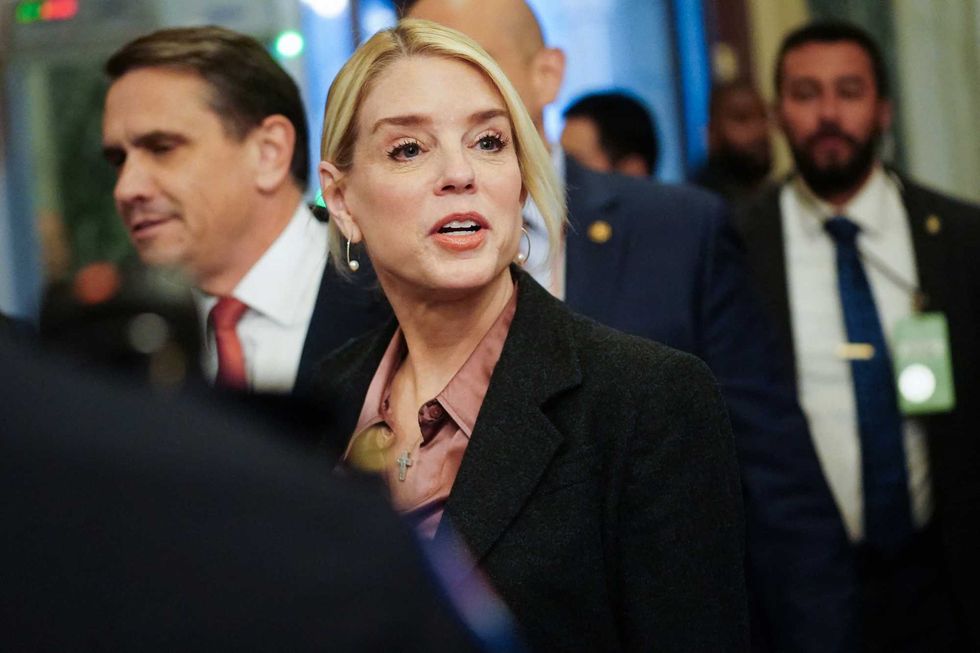
Former Attorney General Pam Bondi was diagnosed with thyroid cancer shortly after President Donald Trump removed her from the Justice Department last month, according to Axios.Bondi, 60, underwent treatment and is recovering, a source told the outlet. The diagnosis came weeks after Trump ousted her as AG in early April — a departure he framed warmly in a Truth Social post calling her "a Great American Patriot and a loyal friend."Katie Miller, a former White House communications staffer and wife of Deputy Chief of Staff Stephen Miller, effectively confirmed the news Tuesday evening when she posted on X: "Pam has been quietly kicking cancer's ass the last few weeks."Miller added that Bondi "has a heart of gold."Despite the health battle, Bondi is now returning to the fold. Trump has appointed her to the Presidential Council of Advisors on Science and Technology, a high-profile AI policy panel co-chaired by White House AI and crypto czar David Sacks and science adviser Michael Kratsios. The panel also includes tech heavyweights like Nvidia co-founder Jensen Huang, Meta CEO Mark Zuckerberg, and Oracle co-founder Larry Ellison.Bondi will be tasked with facilitating coordination between the federal government and the tech executives on the panel. She will also serve in a newly established advisory role focused on national infrastructure."Pam has been an enormously valuable asset to the president's team, and I'm thrilled for her and for all of us that she's going to remain involved," Vice President JD Vance said in a statement to Axios.Deputy Attorney General Todd Blanche has served as acting attorney general since Bondi's departure in early April.
The former President's latest legal action lodged on Tuesday in federal court comes just weeks before the DOJ's planned release of the explosive tapes and transcripts.
Budget constraints are forcing liberal-leaning states that spend their own money on healthcare for noncitizens to scale back that aid, as they grapple with federal Medicaid cuts and the expiration of federal subsidies that helped people buy Obamacare plans.Under federal law, immigrants who are in the country illegally are not eligible for federally funded health coverage.But as of last month, six states — California, Colorado, Illinois, New York, Oregon and Washington — plus the District of Columbia were spending state dollars to cover some income-eligible noncitizen adults regardless of their immigration status. A total of 14 states plus the district provide state-funded coverage to noncitizen children whether they are here legally or not. And three states — Colorado, New Jersey and Vermont — cover pregnant women regardless of their immigration status.In addition, 40 states have taken up options in Medicaid and the Children’s Health Insurance Program, known as CHIP, to provide coverage to lawfully present children and/or pregnant women who are not citizens.But the sweeping tax and spending bill President Donald Trump signed into law last summer cuts federal spending on Medicaid, the joint federal-state health insurance program for low-income people. It also places new eligibility restrictions on lawfully present immigrants, including refugees and asylees, who are enrolled in a variety of government-subsidized health programs, including Medicaid, CHIP, Medicare and plans available on the insurance marketplaces created under the Affordable Care Act, better known as Obamacare.And Congress at the end of last year failed to renew federal subsidies that helped people buy Obamacare plans.With less federal money to provide health benefits, at least five states (California, Colorado, Illinois, Minnesota and Washington) plus the District of Columbia have already scaled back or announced plans to scale back state-funded health benefits for immigrants. Other states also may have to pull back as budget pressures continue.“The federal government shifted much more of the financial burden of providing those services to states. And so states are taking a holistic view at their healthcare budgets and trying to figure out where they can cut,” said Medha Makhlouf, a law professor and the founding director of the Medical-Legal Partnership Clinic at Penn State Dickinson Law, who studies immigrants’ access to healthcare.“Historically and currently, as we’re seeing, immigrants are going to be the first to be cut, for a variety of reasons. They don’t have political power in the same way citizens do.”Drishti Pillai, director of immigrant health policy at KFF, a health policy research group, warned that the state cuts, combined with the federal changes, “will likely increase uninsured rates and reduce access to care among immigrants and their children, most of whom are U.S. citizens.“Over the long-term, these changes could lead to worse health outcomes that could be more complex and expensive to treat,” Pillai said.But Cooper Smith, director of homeland security and immigration at the America First Policy Institute, a conservative think tank that has worked on policy development with the current Trump administration, said that when budgets tighten, policymakers should prioritize U.S. citizens.“Taxpayers pay into a system,” Smith said. “I think it’s reasonable to expect that those who have paid into the system should be the primary beneficiaries of public benefit.”California has traditionally provided some of the most generous benefits. But last June, Democratic Gov. Gavin Newsom signed a state budget that barred immigrants who are here illegally from newly enrolling in the state’s Medicaid program, known as Medi-Cal. In addition, current enrollees between the ages of 19 and 59 will have to pay a new $30 monthly premium beginning in July 2027. And this July, the state will eliminate dental care for noncitizens.Newsom’s budget plan for next year proposes scaling back Medi-Cal coverage for some immigrants living in the country lawfully, including an estimated 200,000 asylees, refugees, and others with certain immigration statuses.California Democratic state Sen. María Elena Durazo is pushing legislation this session that would undo the enrollment freeze and restore access to full-scope Medi-Cal coverage for adults living in the U.S. illegally.“California immigrants are not going to go away,” Durazo said. “We need them. They’re agricultural workers, they’re food workers, they’re construction workers.“Are we going to not provide the minimal basic healthcare coverage and think that somehow it’s not going to come back to haunt us through emergency rooms and other counties and public hospitals?”Hannah Orbach-Mandel, a policy analyst at the nonprofit California Budget and Policy Center, said the state should find alternatives to the cuts, such as raising corporate taxes.
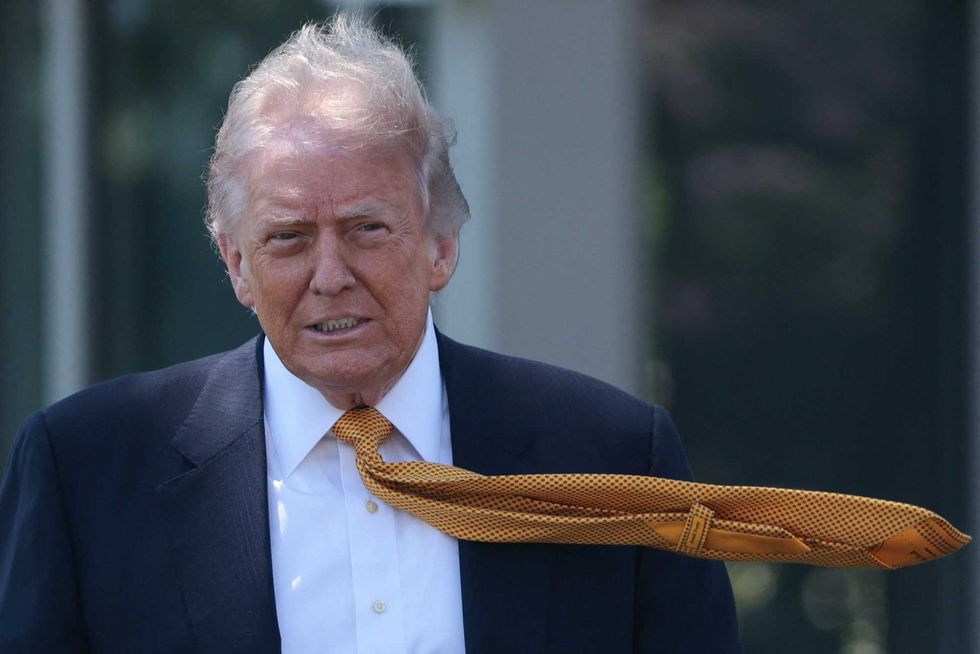
Questions about President Donald Trump's health and fitness have gotten urgent as he nears his 80th birthday, and Americans are increasingly concerned that he might not be up to the task.The 79-year-old president went Tuesday to Walter Reed National Military Medical Center for his third checkup in 13 months, sparking new speculation about his health, and CNN's Harry Enten presented polling data that shows those concerns are widespread."I think the American people are having increasing concerns about the president's physical health, and these are just the numbers because we're just running the numbers here," Enten said. "You could see it right here, say Trump's physical health to be president is good enough. You go back to 2023, it was 64 percent, 2025, 54 percent, within the last month, look at this, down to just 44 percent of Americans who say that Trump's physical health is good enough to be president.""It has been on a steady decline," Enten added. "The American people are viewing with their eyes and what they're viewing they are not pleased with, and as you can see here, for the first time ever this year, less than 50 percent of Americans actually say that Trump's physical health is good enough to be president."Other presidents have been older than 70 while serving, and Enten compared public perception of Trump's fitness with those chief executives. "Other presidents in advanced age, why don't we look at those presidents who are over the age of 70?" he said. "Okay, you can see it right here, okay, highest share, I took the highest share of any poll for either of these, any of these presidents saying not good enough to be president. Now, the majority of Americans say that Trump's physical health is not good enough to be president, 55 percent. That's not as high as Joe Biden's was back in 2024, with 69 percent, but it's a whole heck of a lot higher than Ronald Reagan's was back in 1987, when it was 38 percent.""Of course, there were massive issues about about Reagan's mental and physical health back then, so at this point, what you're seeing here is Donald Trump, for the first time ever this year, the clear majority of Americans saying that his physical health is not good enough to be president," he added. "It's not Biden's levels, but it far exceeds Ronald Reagan's level."Two-thirds of Americans support age limits for presidents at 80 years old, and many would prefer that to be even lower, Enten said."The bottom line is this: Americans are increasingly concerned about Trump's physical health, and when you put it together with Biden, what they simply want is they want age limits," Enten said. "Going to be very interesting to watch the next presidential campaign, because now we've had two consecutive presidents by the end of next month who they've had presidents, at least 80 or north. Americans may want to choose someone actually younger for a change." - YouTube youtu.be
In what they hope will become a hot-button election issue in the November midterms, congressional Republicans unnerved by the spread of Islam are holding hearings and proposing legislation to prevent
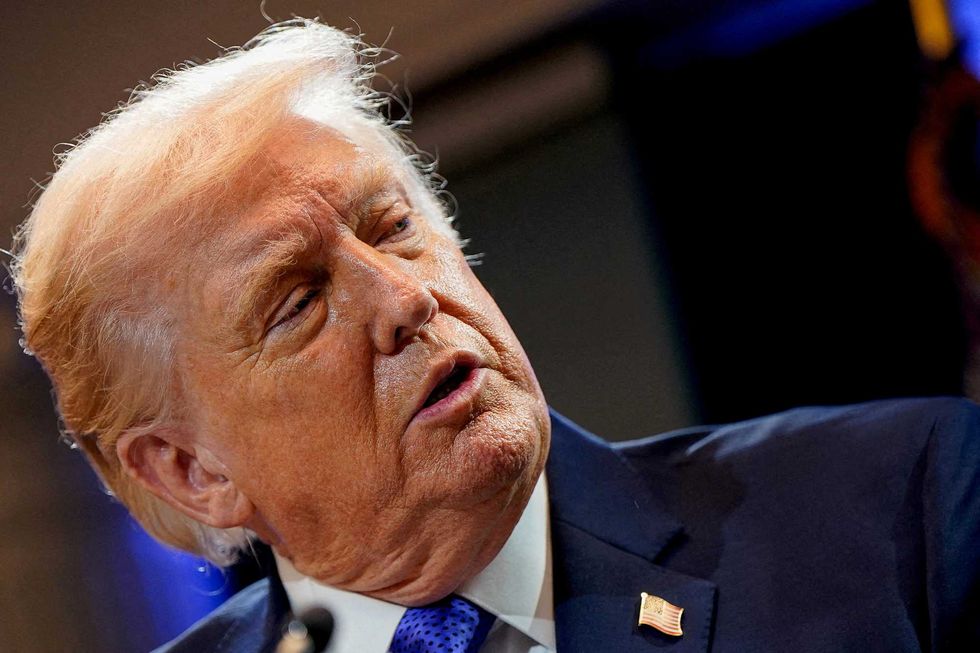
Donald Trump has handed Iran a stunning victory while simultaneously raising questions about his stability to American allies with a proposal so "divorced from reality" that it exposes the administration's complete lack of strategic planning.So wrote New York Times columnist Tom Friedman, a Middle East expert, who said on Tuesday that Trump's misguided Iran war strategy has already inadvertently given Tehran a far more potent weapon than any nuclear capability: the realization that it can hold the global economy hostage at will with no end in sight.Trump and Prime Minister Benjamin Netanyahu gambled that multibillion-dollar weapons systems could bomb Iran into surrendering its nuclear program. They relied entirely on Netanyahu's promise that the Iranian regime would collapse like "a house of cards after a few weeks of heavy bombing," Friedman wrote.Instead, they enabled Iran to discover what Friedman calls a weapon of "mass disruption" — cheap drones capable of closing the Strait of Hormuz, the world's most critical oil chokepoint."Now, and forever, Iranians will know that we know that Tehran can shut off the world's most important oil tap anytime it wants. This new source of leverage for the Iranian regime is priceless," the columnist explained.Trump's latest proposal in a Truth Social Memorial Day post exposed the catastrophic consequences of waging war without scenario planning or expert input with the president writing that he is "mandatorily requesting that all Countries [in the region] immediately sign the Abraham Accords." The columnist pointed out that Trump even claimed allies told him they "would be honored" if Iran itself joined the accords. "If Iran signs 'it will be the most important Deal that any of these Great, but always in Conflict Countries, will ever sign,'" he wrote. "Nothing in the past, or in the future, will surpass it."Friedman posed the question: "On what planet of the Milky Way Galaxy would this regime in Tehran, which is practically founded on hatred of Israel, just up and make peace with it after this war?"The proposal was so unexpected and so divorced from Middle Eastern political reality that Friedman labeled it as "unhinged" and a cause for concern."The whole thing was so ridiculous, juvenile and unvetted by any experts that it had to have left our Israeli and Arab allies deeply worried that their American protector is led by a truly unstable man," Friedman concluded.