The Battle to Enact a Billionaire’s Tax In California
Source: The New Republic · Bias: Left
Summary
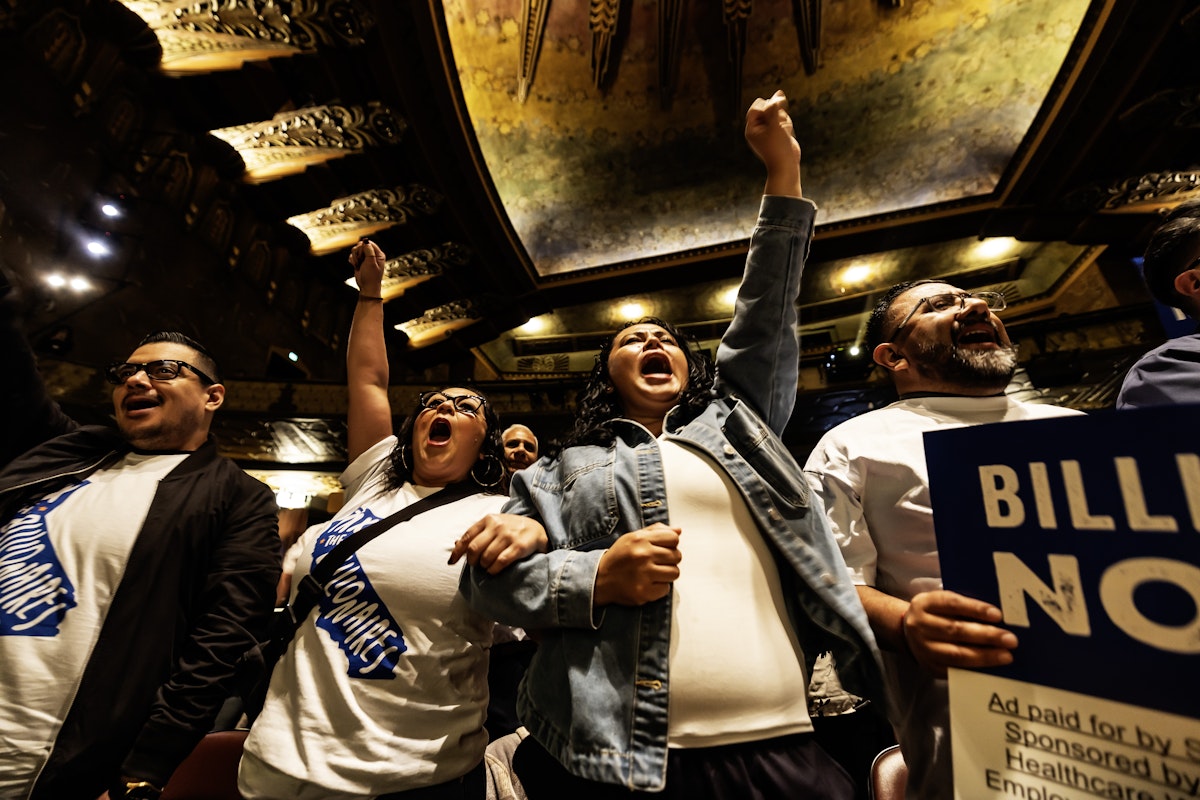
When the Los Angeles chapter of 50501, one of the loosely organized groups behind the No Kings marches against President Trump over the past year, heard about a proposed initiative to tax Californian billionaires, its volunteer members quickly signed up to help get the measure on the November ballot. The idea of a wealth tax wasn’t new to many activists, but the timing was right. Hunter Dunn, a 50501 member, said he’s noticed a change in the way his colleagues have talked about taxing the rich in the past few years. Instead of using the slogan that billionaires should pay “their fair share,” people use a more open-ended call: “Make billionaires pay.” That shift might seem subtle, but there’s an important distinction: Only the latter implies punishment.“[The billionaires] went too far supporting the American Gestapo,” Dunn said. “They went too far actively bowing down to Trump and donating him money for destroying the ballroom, and then there were many, many, many of them directly referenced and associated with [Jeffrey] Epstein and [Ghislaine] Maxwell, child sex traffickers…. They’re not just sitting at a table with an alleged Nazi. They’re sitting at a table with an alleged predator, sex trafficker, and pedophile as well. And the American people do not want that table to exist anymore.”At first, the tie between Epstein, who died in prison in 2019 while awaiting trial on sex trafficking charges, and a California ballot initiative isn’t obvious. But when viewed as part of the ever increasing anger at America’s elite and the role they play in supporting the Trump administration, it makes more sense. Taxing billionaires has been popular with voters since Senators Elizabeth Warren and Bernie Sanders, who supports the California proposal, proposed it in their 2020 campaigns for president, but legislators haven’t answered the call. This year, California voters may be taking the matter into their own hands—and the proposal, no matter how imperfect, may ride the growing tide of left-wing populism to passage in the November elections.Diego Marquez, a 38-year-old optician who collects signatures for the proposal near his home in downtown L.A., says a lot of the voters he speaks with also mention Epstein. They want to “screw the billionaires,” he said. “A lot of people are fed up.”The proposed initiative is sponsored by the United Healthcare Workers West, a chapter of the Service Employee’s International Union, which began collecting signatures in January. The measure would implement a one-time tax of 5 percent for any legal California resident with assets over $1 billion in 2026. To land on the state’s typically proposal-heavy ballot, the campaign must gather enough signatures to equal 5 percent of the total votes cast in the last gubernatorial election—so about 875,000 signatures. The deadline for collecting and verifying those signatures is June 8.The Teamsters have signed up to support the effort, as has 50501 and the local chapter of the Democratic Socialists of America. The SEIU-UHW has more than 5,000 volunteers collecting signatures and has approved up to $25 million in spending for this and two other ballot measures.But the measure hasn’t gotten universal support, even from the left. The SEIU-UHW has sponsored many ballot initiatives in the past few years—45 since 2012—such that the union’s president, Dave Regan, has become somewhat notorious for it. According to recent reporting from The Information, a tech publication that covers Silicon Valley, not all of labor leadership in California is on board with the billionaire tax, worried it would make it harder to pass other wealth taxes or raise revenue for other programs. Some say Regan uses ballot initiatives “more as bargaining chips or political tools than as policy proposals,” according to The Information. In the past, ballot proposals have spurred the state legislature to act on measures or provide more health care funding ahead of potential ballot measures.Even many left-wing observers are questioning whether the proposal is a wise policy. A one-time tax on billionaires, of which there are about 200 in the state, isn’t exactly going to solve inequality. “Before this country starts messing around with major wealth taxes (which have a miserable track record in other countries), we ought to tax high incomes—not just billionaires—at a much higher rate, and increase capital gains and corporate tax rates as well. All these income-based taxes stand today at what, historically, are appallingly low levels,” my colleague Timothy Noah wrote in January.Few countries attempt to tax wealth, Noah noted, and often don’t raise much if they do. This is why many policy experts have objected to wealth tax proposals from Warren, Sanders, and others in Washington. Many politicians object, too—and not just Republicans.
Related Coverage
- Trump Scores Appeals Court Victory in Battle Over National Park Historical Displays (Right — RedState)
- Pay-to-play cycle behind GOP's corporate tax cuts exposed in new report (Far Left — Raw Story)
- Billionaire Trump ally melts down in spat with pope: ‘Working for Chinese communists” (Far Left — Raw Story)
- Photos of the Week: World Cup, Wine Battle, White Kimono (Center Left — The Atlantic)
- California city council members voted out in a landslide refuse to leave office (Right — Blaze Media)
- Photos of the Week: World Cup, Wine Battle, White Kimono (Center Left — The Atlantic)
- Battle for Senate Is Looking Awfully Close (Center Right — RealClearPolitics - Homepage)
- Costco announces all California stores to shut on Fourth of July — here’s where to go instead (Right — New York Post)
More Headlines From March 9, 2026
- Schumer calls on Trump to tap Strategic Petroleum reserve amid rising oil prices (Center)
- Live updates: Trump calls oil price surge ‘small price to pay’ as Iran names new leader (Center)
- Explosive thrown near NYC mayor's home being investigated as 'ISIS-inspired' terrorism, officials say (Center Left)
- National Average for Gallon of Gas Hits $3.54 Amid War in Iran (Center Left)
- Trump says he's "not happy" about Iran's new supreme leader (Center)