The American West Is Drying Up. Can the Market Help?
Source: The New Republic · Bias: Left
Summary
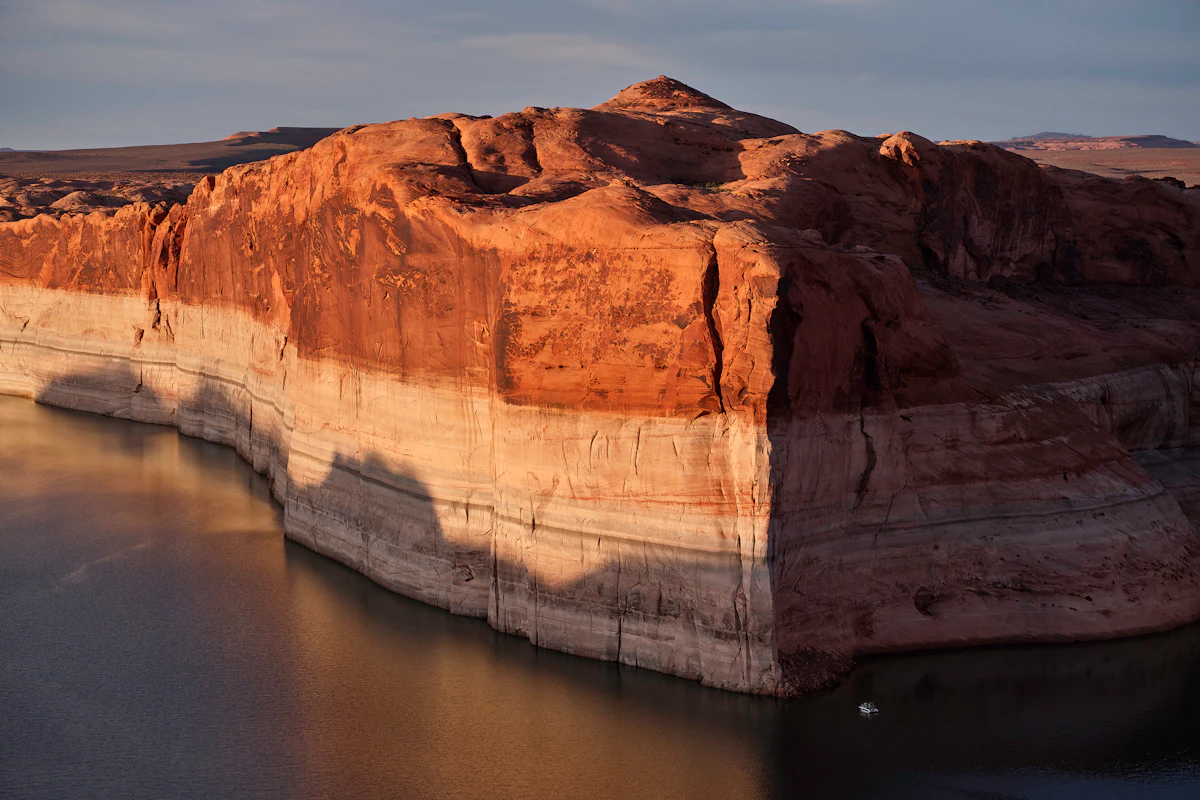
When members of the Colorado River Water Users Association, or CRWUA, descended on Caesars Palace for their annual conference in December, few showed much enthusiasm for Las Vegas’s popular diversions. Attendees mostly bypassed the slots and roulette tables, the magic shows and nightclubs. The sole planned excursion on offer—an early morning jaunt to Hoover Dam—was the definition of a busman’s holiday. This was not a decadent bunch. They were serious-minded people dealing with a monumental problem. Some called it an emergency; even the most sanguine considered it a crisis.Water was running out.The CRWUA conference is always in Vegas. Water wonks have been making the pilgrimage since 1945, when the Strip was still known as Highway 91 and Elvis was playing dairy shows back in Tupelo. The city’s transformation, for better or worse, was as much their predecessors’ doing as it was gambling kingpin Meyer Lansky’s. They’d subdued the mighty Colorado River, channeling its waters—along with the megawatts of power they generated—to build not only Sin City but Los Angeles, San Diego, Phoenix, Tucson, and as much as 15 percent of the United States agriculture sector. It was not cowboys or pioneers but federal water engineers who birthed the West as we know it, “a culture and society built on … a sharply alienating, intensely managerial relationship with nature,” as historian Donald Worster put it.This year’s meeting drew 1,700 or so attendees. Along with policy experts, hydrologists, commissioners, and environmentalists were many of the stakeholders—the property developers, agribusiness executives, tribal representatives, and so on—whose livelihoods, and in some cases lives, depend on the dwindling and beleaguered waterway. The pilgrims hailed mostly from seven Western states, divided a century ago into competing factions: the Upper Basin (Colorado, Wyoming, New Mexico, Utah) and the Lower Basin (Nevada, Arizona, California). They talked flow, irrigation, conservation, and, in more somber moments, seepage, evaporation, bathtub rings, and dead pools.A week before the conference, local news stations aired a story about a man in Laughlin, a 90-minute drive to the south, who’d literally walked across the river and back while a drone hovered overhead, memorializing the escapade. The amusing human interest story had a forbidding subtext: The Colorado was drying up, thanks in part to the West’s 26-year-long “megadrought”—its worst in 1,200 years—which many scientists believe may be permanent.The science isn’t complicated, but these days it bears repeating. Due to a warming atmosphere, snow lines in the Rockies and other ranges flanking the river are in retreat, meaning less spring snowmelt trickling into the basin, even as increasingly parched earth and warm air claim their share of the remaining moisture. As a result, the river’s 46 reservoirs, including the enormous man-made Lake Powell and Lake Mead, now stand more than two-thirds empty, according to a recent report by the Colorado River Research Group. A few more dry years coupled with continued overconsumption, the report suggests, could plunge Lake Mead into “dead pool” status, when levels fall so low that hydroelectric power (already running at a reduced capacity) flickers out and water no longer reaches the outlet works that channel it downriver.As Matt Diserio, co-founder and president of Water Asset Management, a hedge fund that has spent millions buying land in the area (principally for the attached water rights), noted last year in an investor pitch, “It’s underreported just how severe and near-cataclysmic these risks are.”How bad could it get? In late January, the United Nations released a report declaring the advent of what it called global “water bankruptcy”: a catastrophic new normal. The new terminology would seem to suggest a long-shot gamble that the language of financial insolvency might somehow spur action among leaders who have grown numb or even hostile to more sciencey admonitions.One can hope. As the report states, “available water resources … have been significantly reduced, with some impacts … effectively irreversible on human time scales.” (Damn those human time scales.) The authors found the most severe threats in the Middle East, North Africa, South Asia, and, yes, parts of the U.S. Southwest. Similar forecasts are outlined in a study by South Korean researchers published in September in Nature Communications. Under high-warming scenarios, the authors determined, both Phoenix and San Diego will be among the areas where extreme, multiyear water scarcity—what the authors term “Day Zero Drought”—is projected to emerge within the coming decade.Although Chennai, Cape Town, São Paolo, Mexico City, Kabul, and Tehran, among other localities, have already flirted with similarly apocalyptic circumstances, for the crowd at Caesars, such nightmares seemed remote.
Related Coverage
- ‘A total disappointment’: revelers face unbearable heat at Great American State Fair (Center Left — US news | The Guardian)
- Extreme heat temporarily closes Great American State Fair (Center — NewsNation)
- Americans Cheer as B-2 Stealth Bomber, Fighter Aircraft Fly Over Great American State Fair in DC Amid 250 Celebrations (VIDEO) (Far Right — The Gateway Pundit)
- A Vietnam Nurse Who Came Home, Helped Get Us to 250 (Center Right — RealClearPolitics - Homepage)
- Mt. Olive Pickle Co. exits Great American State Fair over Confederate flag (Center — The Hill News)
- This Republican Has a Wild Idea for Fixing Housing Prices: Let the Market Actually Work (Far Right — Townhall)
- ‘Commie corridor’ goes west: Here’s who propelled Dems’ latest socialist to a win (Far Right — WorldNetDaily)
- NYC Mayor Mamdani discusses American exceptionalism and "forces of division" in America 250 speech (Center — Politics - CBSNews.com)
More Headlines From March 17, 2026
- Pam Bondi subpoenaed for April 14 House deposition on Epstein files handling (Center Right)
- ICE Agents Arrest Illegal Aliens Convicted of Murder, Child Sex Crimes, Sex Abuse (Far Right)
- Senate launches bitter floor battle over voter ID legislation (Center Right)
- Trump says China summit is delayed to focus on Iran war (Center Right)
- BEASTMODE: Trump Declares That UK Prime Minister Keir Starmer 'Is Not Winston Churchill' (Center Right)