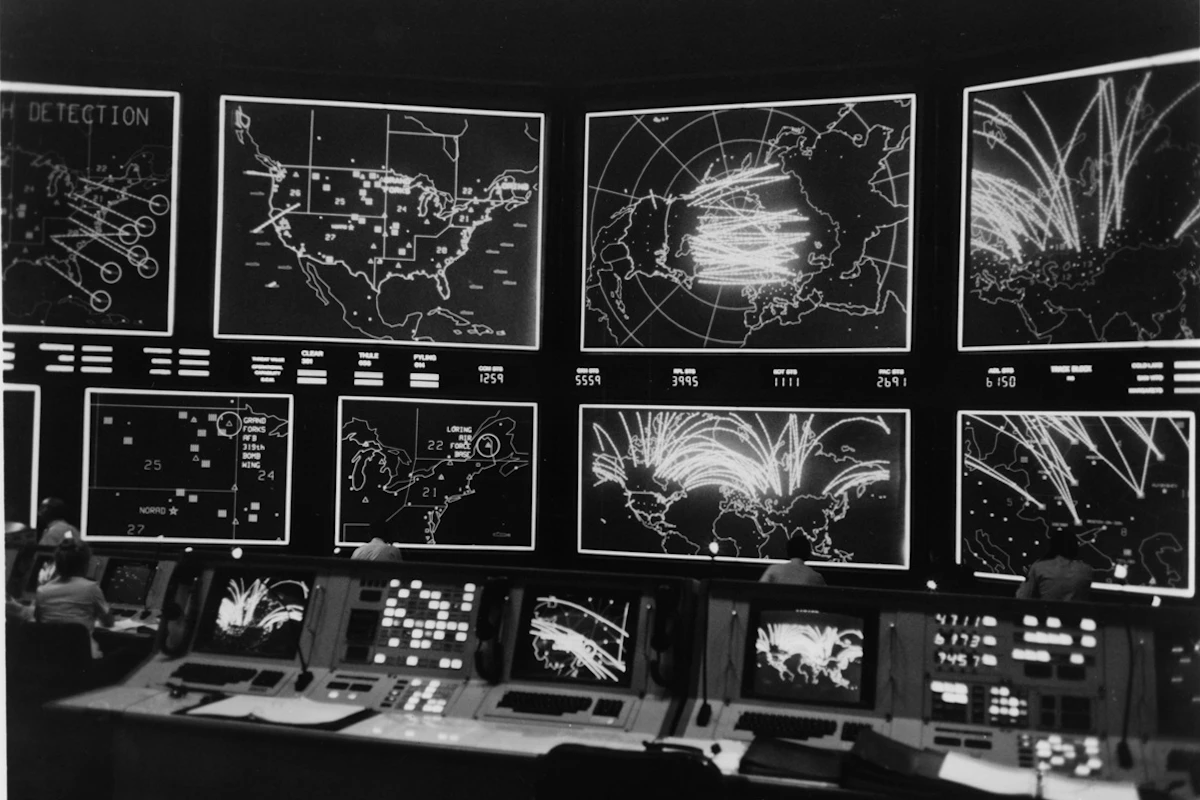
In the wake of Operation Epic Fury, both supporters and critics of the president have described the joint U.S.- Israeli bombing campaigns as “exquisite.” Iran’s supreme leader, in addition to vast swaths of the security cabinet and IRGC command were wiped out at the same time that Iranian missile production capabilities were severely degraded. The intelligence was, in some senses, so captivating, so advanced, and so hyper targeted, that military experts on both sides of the political spectrum set aside the liabilities of escalating a hot war to celebrate the god-like perfection of its initiation. But if this new intelligence apparatus, powered by AI and irresistible to America’s top commanders is hastily integrated into the nuclear arsenal, the fallout will be anything but “exquisite.” An examination of government documents, private sector contracting records, and the little noticed statements of military commanders suggests that the same artificial intelligence that allowed frictionless decapitation in Iran is now coming to the nuclear arsenal—with potentially world-altering consequences. While much noise has been made about safeguarding the nuclear command from AI, with constant reassurances of “human-in-the-loop” safeguards, a different escalatory threat has fallen by the wayside: left of launch operations. With worst-case scenarios of nuclear engagement, most people think of Strangelove-esque military planners fomenting support for a doomsday machine. During the Cold War, near-misses occurred with terrifying frequency, such as the occasion when a flock of geese was mistaken for a soviet nuclear bombing campaign. Most of these almost catastrophic mistakes revolved around mistaking things for missiles that had already been launched. With the integration of AI into the nuclear command and control infrastructure, escalation may soon begin on the ground, before the launch codes have been entered and the bunkers sealed. This new doctrine is known as “left of launch” and AI is increasingly being integrated into the systems used to predict when a nuclear weapon is being launched, as well as the assets that could be degraded to prevent a first strike. As we have seen time and time again, the frictionless intelligence that led to a perfect exfiltration in Venezuela, or the targeted killings in Iran, may soon grease the wheels of preemptive strikes on nuclear capabilities, an escalation into untested terrain for both artificial intelligence, and humanity.What Is “left of launch?” The first public use of the term appears to be a 2014 memo between Army and Navy chiefs discussing the need for new technologies for U.S. missile defense. That memo states that “Now is the opportunity to develop a long-term approach that addresses homeland missile defense and regional missile defense priorities—a holistic approach that is more sustainable and cost effective, incorporating ‘left-of-launch’ and other non-kinetic means of defense. The proposed strategy would serve as the capstone for the Department to balance priorities, inform resourcing decisions, and restore our strategic flexibility.”This memo marked a strategic shift, putting an increasing focus on the idea of stopping adversaries’ nuclear missiles before they’re launched, a tactic that proved effective during the Obama era for degrading North Korea’s ballistic missile tests. Since the 2014 memo, cyber attacks and sabotage have been added to preemptive air or missile strikes on foreign missile launchers and facilities under the umbrella of “left of launch.” Five years after the term “left of launch” began cropping up inside the Department of Defense, the Trump administration commissioned and released a review of American “policies, strategies, and capabilities…to counter the expanding missile threats posed by rogue states and revisionist powers.” The report called for an escalatory build-out of new capabilities. Among those was a new framework for advancing the notion that preemptive action is actually just another form of defense. As Laura Grego of the Union of Concerned Scientists wrote at the time, the report increased the escalation cycle with America’s enemies by “bringing attack operations into the overall missile defense posture as a triad along with active defenses, such as interceptors, and passive defenses, such as hardening and dispersal of potential missile targets.” This, according to Grego, created what amounts to “a kinetic version of left of launch” that no longer reflects traditional deterrence but instead is a first-strike capability. Grego also pointed out that the report’s interpretation by other nuclear powers, namely Russia and China, will not abide by America’s framing that new satellites and hypersonic ballistic missiles are for defensive capabilities, something Russia quickly made explicit. During the Cuban missile crisis, President John F.