Ten Years After Brexit, Every Grim Prediction Has More Than Come True
Source: The New Republic · Bias: Left
Summary
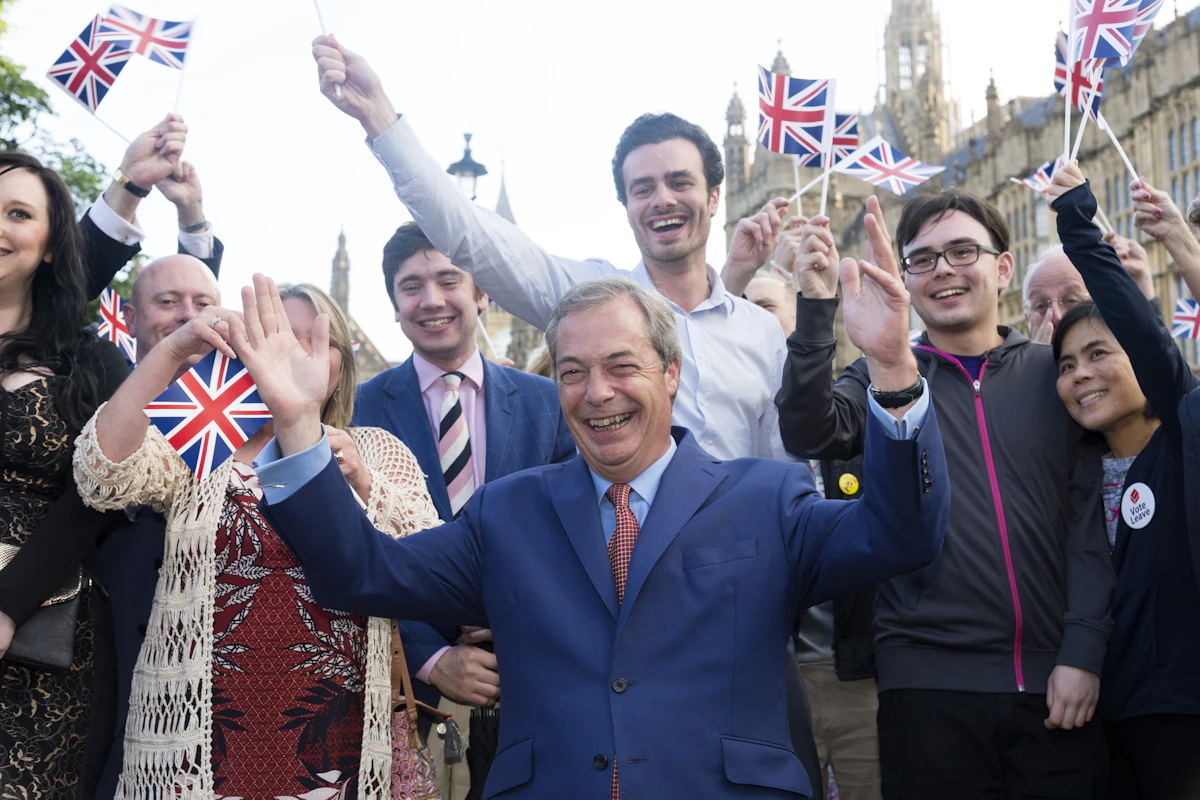
“It was Game of Thrones,” says George Osborne. The former Tory chancellor of the exchequer was talking about the fateful referendum 10 years ago, on June 23, 2016, on whether the United Kingdom should remain in or leave the European Union. Or rather, he was talking about one man in particular, and Osborne’s comparison was just right. For Boris Johnson, the referendum—in fact, all of politics, even all of life itself—was a game, although also an opportunity. The one thing it wasn’t to Johnson was a serious matter with grave implications for his country.Just how grave we can now see. Every warning about the malign consequences of leaving the EU has been justified. This is not the place for detailed economic analysis with statistics and tables, but just to take one example, and a detached transatlantic view, a paper published last year by American academic economists, chiefly at Stanford, compares the U.K.’s performance since the referendum with those of similar countries and reckons that the U.K. economy is 8 percent smaller than it would have been had we remained inside the EU. Our particular problems are a grossly inflated financial sector that produces a disproportionate amount of tax revenue but is particularly vulnerable to a crisis such as that of 2008, along with a larger postindustrial economy characterized by low education, low skills, low investment, low wages, low growth, and low productivity. These wouldn’t have been cured merely by remaining in the EU, but they have been patently aggravated by leaving.One obvious and undeniable consequence of the referendum has been political chaos. In the 40 years from 1976 to 2016, there were in all six British prime ministers. In the decade since the referendum, there have also been six. And soon there will be a seventh, with Sir Keir Starmer having thrown in the towel on Monday. He will presumably be replaced by Andy Burnham in a kind of coup. It’s yet another in a series of coups, a Labour premier kicked out as a succession of Conservative premiers— Theresa May, Boris Johnson, Liz Truss—were before him. This latest change cannot be justified by any serious belief in Burnham, whose political résumé is far from stellar—a member of Parliament for 15 years (when he loyally and repeatedly voted for Tony Blair’s criminal and catastrophic invasion of Iraq); a minister for a few years; an unsuccessful candidate for the Labour leadership not once but twice; and then mayor of Greater Manchester, where his achievements were genuine but quite modest, such as improving the bus and railway services. His only real selling proposition is that he’s not Starmer.And all of this stems from that fateful day 10 years ago. The referendum campaign remains one of the most unpleasant experiences of my life. To be clear, I say that as a Remainer, but not just because of that. One might sometimes feel like the American pol years ago who said, after losing an election, “The people have spoken, God damn them,” but one can accept defeat after a fair fight. But the Brexit referendum was anything but fair. It was a squalid exercise in demagoguery or plain mendacity. A riveting two-part BBC program, Brexit: A Very British Civil War, is the latest in the long line of brilliant documentaries produced by Norma Percy, an American adornment of British broadcasting. Her oeuvre includes important additions to our knowledge of the bloody disintegration of Yugoslavia and conflicts in the Middle East, but my favorite may be the Watergate series, made 20 years after Richard Nixon’s resignation, which is not least a comic masterpiece, as all the old burglars and bunglers revisit, and try to explain away, their malfeasance.There is a certain similarity in the Brexit program, even if there’s nothing at all funny about the consequences. It all came about because of the internal politics of the Conservative Party. Once upon a time it was the Tories who were the Europhiles. One Tory prime minister, Harold Macmillan, made the first attempt to join what was then the European Economic Community, or Common Market, in 1963, before he was blackballed by Charles de Gaulle. Another, Edward Heath, did join in 1973. And as is often forgotten, it was one more Tory, Margaret Thatcher (yes!), who ratified the Single European Act in 1986 establishing the single market. After her fall, a group of Tory M.P.s began a guerrilla campaign against further European integration, and they harried John Major during his troubled prime ministership from 1990 to 1997. When David Cameron became Conservative leader of the opposition in 2005, he told his party to “stop banging on about Europe,” but his words went quite unheeded.
Related Coverage
- Big Oil heads for biggest profits in years as Trump pushes for lower gas prices (Right — New York Post)
- Look past partisanship, and celebrate 250 years of freedom (Right — New York Post)
- The Supreme Court ruled seven years ago. Taxpayers are still paying the price (Center Right — Washington Examiner)
- ‘The wheels are coming off’: readers reflect on the 250th anniversary of the American experiment (Center Left — US news | The Guardian)
- Mamdani addresses America’s 250th: ‘Patriotism is every act of righteous dissent’ (Center — The Hill News)
- How did 16 hidden Ohio kids go undetected for years? Experts weigh in (Center — NewsNation)
- Extreme heat won’t stop Capitol Fourth concert, Trump speech, or fireworks. Crowds told to come prepared (Center Right — Washington Examiner)
- Former Texas middle school teacher sentenced to over 30 years for sexually abusing 13-year-old student (Right — New York Post)
Daily Analysis
Read the full Parallax Pulse for June 22, 2026 — an AI-powered analysis of how Left and Right media covered the biggest stories this day.
More Headlines From June 22, 2026
- British Prime Minister Keir Starmer resigns (Center)
- Reflecting Pool repairs become personal for Trump (Center Left)
- Starmer on the Brink With Resignation Plan Seen Imminent (Center)
- More than a third of Americans say MOU better for Iran (Center)
- The Save America Act Is The Most Important Piece Of Legislation In American History: Why It Must Pass (Far Right)