AOC stuns Democratic establishment with bombshell endorsement of Ayatollah-sympathizer
Alexandria Ocasio-Cortez defied party leadership with an endorsement of fellow leftist Abdul El-Sayed in Michigan's Democratic Senate primary.

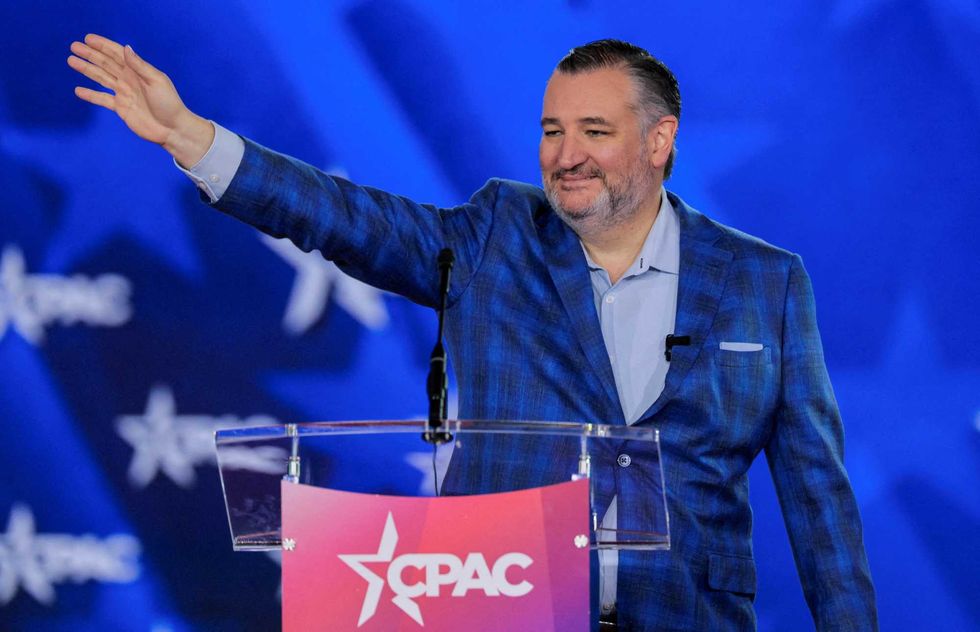
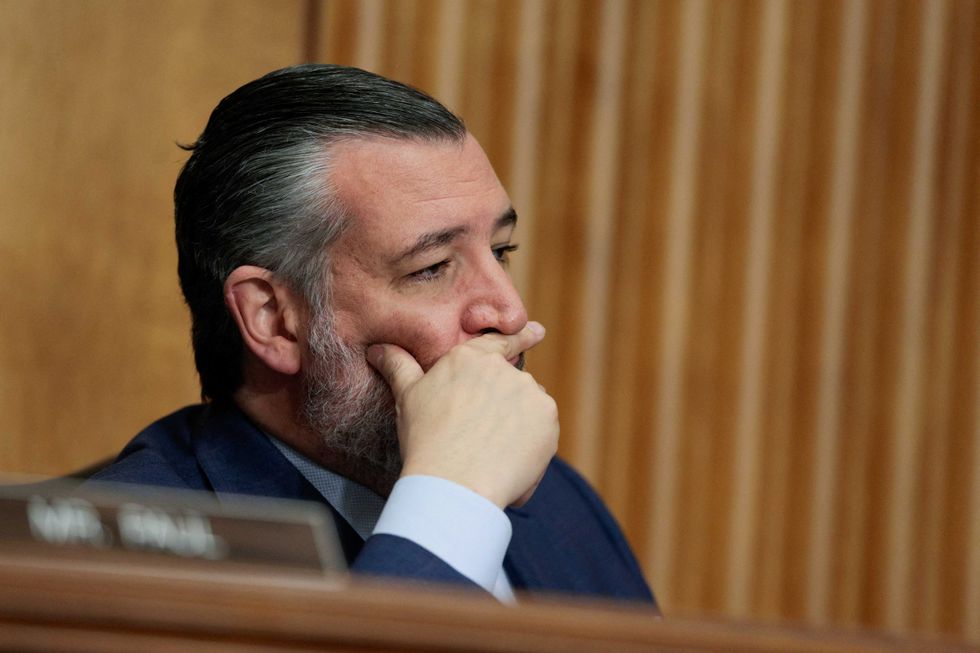
After the U.S. Supreme Court issued, at the end of June, a bombshell ruling upholding birthright citizenship, far-right Sen. Ted Cruz (R-Texas) was quick to condemn the decision as a "travesty." But according to Notre Dame law professor Derek T. Muller, that condemnation is a major flip-flop from what Cruz said about birthright citizenship back in 2011.U.S. President Donald Trump, after returning to the White House, issued an executive order declaring birthright citizenship illegal. But the High Court struck down that order as unconstitutional, with conservative Chief Justice John Roberts and Justice Amy Coney Barrett (a Trump appointee) joining Democratic-appointed Justices Sonia Sotomayor, Ketanji Brown Jackson and Elena Kagan in agreeing that birthright citizenship is protected by the U.S. Constitution's 14th Amendment. In a June 30 post on X, formerly Twitter, Cruz angrily wrote, "Today's decision regarding birthright citizenship is a travesty. The Fourteenth Amendment was written to overturn Dred Scott and guarantee citizenship to freed slaves — not to create automatic citizenship for the children of those who violate our immigration laws or are only temporarily in the United States. This decision will only invite further exploitation of our immigration system. The Court adopted an interpretation that departs from the original meaning of the Constitution and incentivizes illegal immigration. Congress retains the authority to clarify federal law, and it should act immediately to restore the original meaning of the Citizenship Clause and protect the integrity of American citizenship."But Muller, on X, pointed to an "alternative take from Ted Cruz, 2011."The Notre Dame legal scholar linked to a video of Cruz defending birthright citizenship without hesitation in 2011, the year before he was elected to the U.S. Senate. At that point, Cruz was best known for his years as Texas solicitor general.Cruz himself is an immigrant and a Latino. Now 55, he was born in Calgary, Canada on December 22, 1970 — and his father, the late Raphael Cruz Sr, was originally from Cuba. The U.S. senator's full name is Raphael Edward Cruz Jr.When Cruz was asked if the U.S. should "allow birthright citizenship," he responded, "I have spent my professional career defending the Constitution…. The 14th Amendment provides for birthright citizenship. I've look at the legal arguments against it, and I will tell you, as a Supreme Court litigator, those arguments are not very good. As much as someone may dislike birthright citizenship, it's in the Constitution. And I don't like it when federal judges set aside the Constitution because their policy preferences are different. And so, my view: I think it's a mistake for conservatives to be focusing on trying to fight what the Constitution says on birthright citizenship." The Cruz flip-fop that Muller highlighted is drawing a lot of reactions on X.Arizona Republican Stephen Richer tweeted, "gotta start audition for Alito's spot?" — a reference to speculation that Cruz could be nominated for the Supreme Court if Justice Samuel Alito retires.Attorney Sean Marotta commented, "Ah, but what about true-blue MAGA judges like James Ho? Surely, he couldn't be in favor of birthright citizenship."Attorney Sean Silverman posted, "@SenTedCruz, you might be able to save yourself from a claim of hypocrisy by explaining exactly when and why your opinion changed. Any explanation?"Never Trump conservative David Schmidt wrote, "No one should ever accuse Ted Cruz of having enduring principles." - YouTube www.youtube.com
Alexandria Ocasio-Cortez defied party leadership with an endorsement of fellow leftist Abdul El-Sayed in Michigan's Democratic Senate primary.
Democrats remain largely silent on legislative next steps after the Supreme Court ruled states may bar transgender athletes from girls sports teams.
Sen. Ted Cruz (R-TX) criticized New York City Mayor Zohran Mamdani for urging residents to conserve energy during a dangerous East Coast heat wave, calling the request absurd. Mamdani addressed the extreme temperatures on X, "New York: it's hot out there, and the power grid is working overtime to keep us cool." "Set your AC to 78 degrees, turn off lights/electronics you're not using, and unplug what you can. Our City is doing its part too: maintaining the 78 degrees rule in our buildings, dimming/turning off our lights during peak electricity demand, asking private partners to do the same, and powering down non-essential equipment."Cruz responded on X, "In a first-world country, you could turn on the A/C…."Texas Gov. Greg Abbott and the Texas power grid have issued identical recommendations during extreme weather phenomena in Cruz's own state, according to the Texas Tribune. Travis Akers, a social media user, pointed out Cruz's response during Texas' devastating 2026 winter storm that killed residents and left millions without power, "You are the absolute LAST person to weigh in, Captain Cancun."What the video below. Your browser does not support the video tag.
Millions of mourners are expected to turn out for the week-long funeral ceremonies recognizing Iran’s former Supreme Leader Ayatollah Ali Khamenei. Khamenei helmed the Islamic Republic for 37 years before being killed in U.S. and Israeli airstrikes on Feb. 28 at the beginning of the war. Khamenei is to be buried July 9 following days…
OpenAI may give the U.S. government a 5% stake in the company, per the Financial Times. The proposal is in very preliminary conversations, according to a person familiar with the matter.Why it matters: If the overture is taken up by the Trump administration, that would mean the government would have a vested interest in weighing whether or not to limit the release of an OpenAI model. Catch up quick: OpenAI views the potential government stake as a way to give the general public a share of the upside of AI, and CEO Sam Altman has previously shared with Axios his interest in some sort of public wealth fund.The goal is to include other AI labs giving over a similar stake.This could look like including shares in Trump accounts or some other vehicle that would give American households exposure to investments in AI, for example. Anthropic supported similar policies in a recent paper, arguing for "universal pre-distributive capital accounts" with "priority given" to those with jobs exposed to AI disruption. Zoom out: The potential investment comes as the White House is still deciding when OpenAI can release its most powerful models widely, through a regulatory process that Altman has said isn't quite "optimal." Altman proposed on Wednesday a U.S.-led international forum to establish AI regulatory standards, which could be a way to allow the government to invest without having as heavy a hand in regulation.Between the lines: Investors tell Axios that the idea of giving a stake reads like a PR stunt aimed at making it seem as if the public could benefit from the AI boom just as the technology threatens their jobs.Yes, but: The government's 9.9% stake in Intel, taken last August, appears to have paid off.Its shares are up nearly 400% since then, although it has also come amid a broad rally for chip stocks. Friction point: The Intel stake was acquired under the CHIPS Act. A deal with the AI labs would likely require an act of Congress.It's also unclear what a government stake would accomplish, other than giving the AI labs a closer relationship to what is currently one of their biggest hurdles: the government. An investor in Anthropic and OpenAI tells Axios that the proposal reads more like a "political move" to gain favor with the administration than something that would actually create a shared benefit for the American public. What they're saying: A government stake would be a "troubling milestone" that hurts competition between the labs, " David Sherman, AI and financial inclusion strategist at io.net, a decentralized cloud network, said via email.It "gives one AI company a government stamp of approval whilst millions of developers, researchers and businesses are locked out by skyrocketing token prices and endless GPU queues," he added, referencing the challenge in accessing AI at current costs or chips at current supply levels.It comes amid broader concern about whether the government is already curbing the competitive edge of U.S. AI labs compared with China by putting guardrails around model release timelines.And if the goal is to share the financial benefits of AI, there are other ways to do that. Some have suggested that AI companies share a percent of pre-tax income or that the government impose a tax on all tokens. Kevin Bankston, an AI governance advisor, wrote "JUST. TAX. THEM." on X.Bill Gates proposed an automated robot tax in 2017 that could slow down automation, suggesting they should be taxed the same way human employees pay income tax. The bottom line: "The labs develop the technology, but citizens and their elected representatives must make the rules," Altman wrote in the Financial Times earlier this week.
The C.I.A. and Office of the Director of National Intelligence had tried to fire 19 officers at the beginning of the second Trump administration.
The chief justice faced down the president, forged unlikely coalitions and achieved long-sought goals.
Former Democrat-turned-Independent Senator Joe Manchin is urging Sen. Fetterman to follow in his footsteps as his former party lurches left. Manchin bucked the Democratic Party in 2024 […]