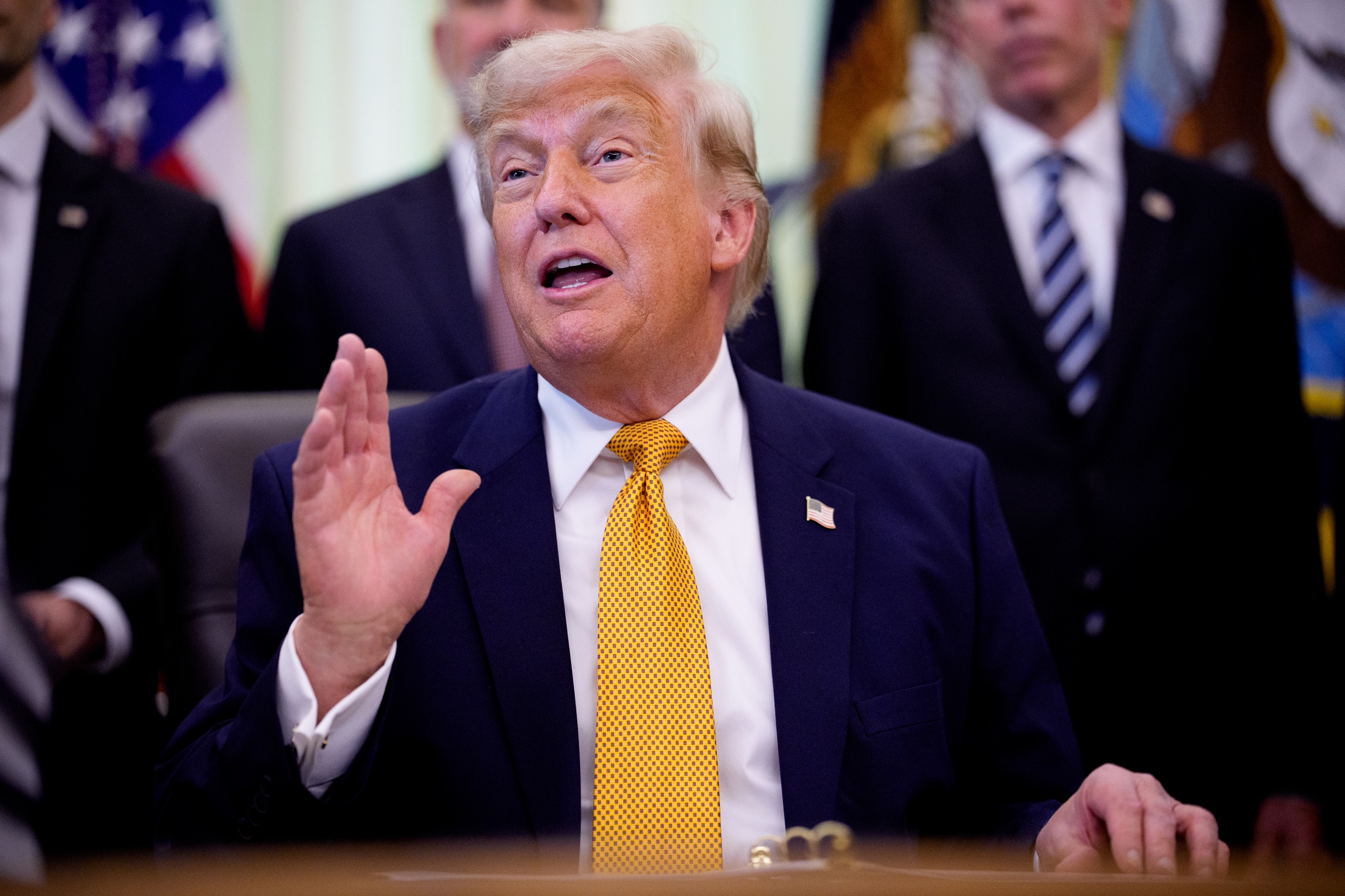
Supreme Court Hands Trump Major Executive Power Expansion in FTC Firing Case
The ruling “promises to unleash only chaos,” Justice Sonia Sotomayor said in a dissent to the court's majority opinion.

The U.S. Supreme Court has “declared war” on American democracy, on “modern society,” and on “everything it takes to function in the 21st century,” warns Nobel laureate Paul Krugman, after the court expanded presidential powers once again. Six of the court’s members, presumably the conservative wing, “are fundamentally hostile to democracy, fundamentally hostile to the modern world and determined to put the catastrophically bad leader that we currently have sitting in the White House in charge of everything, which is a nightmare scenario on every level.”Krugman scorches the court for ruling that presidents can fire, without cause, the heads of independent federal agencies (except the Federal Reserve). In doing so, the court overturned a 91-year-old precedent. He explains that in a modern society, “the agencies that operate the U.S. government and basically run our society are supposed to be professional. They’re supposed to be following their legal mandate. They’re not supposed to be personal tools of a dictator in the White House.” Krugman says that the court has now given “essentially dictatorial powers to the occupant of the White House,” while also making it extremely difficult for the economy and for society to function.He explains that in today’s complicated world, ground rules are necessary. Offering the Food and Drug Administration (FDA) as an example, Krugman says that producers need to know that their products will be approved based on merit, and not on “spurious grounds.” “And what would cause those decisions to happen?” he asks. “Well, how about the fact that some businesses are better at the business of bribing the president and his family than others. And if you think that this is outlandish — you know, a few years ago you might have said this was outlandish, things like that wouldn’t really happen — well, as we speak, these things are happening all the time.”Ultimately, Krugman says, America cannot continue on this path — and he calls for some form of restructuring or constraining of the Supreme Court.“This is a clear argument that says we have to one way or another disempower the Supreme Court. I don’t know enough to tell you what is the best route to do that but court packing or something else is going to have to happen.” Professor of law Barb McQuade, commenting on the court’s opinion, wrote, “Today’s decision in Slaughter will destroy the independence of the Merit Systems Protection Board, which will have a cascading effect on all federal employees, who have been free from political interference for 150 years. The spoils system is back, baby!”
The ruling “promises to unleash only chaos,” Justice Sonia Sotomayor said in a dissent to the court's majority opinion.
The Supreme Court handed President Donald Trump a loss on Monday in siding against his party on voting, refusing to overturn state laws that allow mail ballots that arrive after Election Day to be counted as long as they are postmarked by Election Day. But they might simultaneously have given Trump the tools to punch a hole in the right to vote by mail anyway.That's because they also released their long-awaited decision in Trump v. Slaughter, overturning nearly a century of precedent to determine the president can fire members of independent agencies without cause.According to White House correspondent Jacob Bogage, one of the many federal entities that could be impacted by Trump's newfound powers to clean house would be one with critical implications for mail-in ballots — effectively giving him a bunch of the control he was hoping to get out of the ruling that didn't go his way."This also has big potential mail-in voting consequences," he wrote. "It could empower the president to fire members of the USPS board of governors, the group that selects the postmaster general and overseas the U.S. mail system."This comes as the current postmaster general, David Steiner, is already going all-in on a controversial Trump executive order that would direct the Postal Service not to deliver mail ballots at all in states that don't hand over sensitive information about voter practices to the federal government.A federal judge in Boston has already moved to block the enforcement of that executive order, but litigation is certain to continue in the case.
The Supreme Court ruled on Monday that state laws allowing ballots to arrive after Election Day are legal. The decision is the latest in a series of setbacks for President Trump’s efforts to regulate elections.
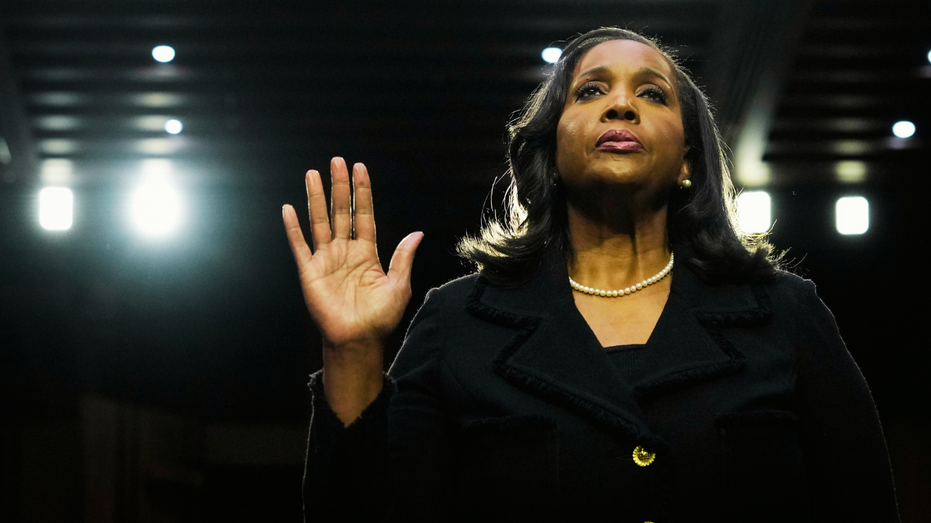
Lisa Cook, the first Black woman on the Fed board, sued Trump after he alleged she misrepresented mortgage information and moved to fire her.
CLICK HERE TO WATCH RIGHT NOW! The post Watch Live: Supreme Court Rules Federal Law Does NOT Require Mail-In Ballots to Be Received by Election Day – Barrett and Roberts Side with Liberal Justices and More! The WAR Zone Podcast With Wayne Allyn Root Presented by The Gateway Pundit appeared first on The Gateway Pundit.
Congressional Republicans are redoubling their support for the SAVE America Act, a bill that has left Washington in gridlock for months, after the Supreme Court ruled states can count mail-in ballots that arrive after Election Day. The 5-4 decision in Watson v. Republican National Committee rejected a GOP-led push to end laws that permitted mailed […]
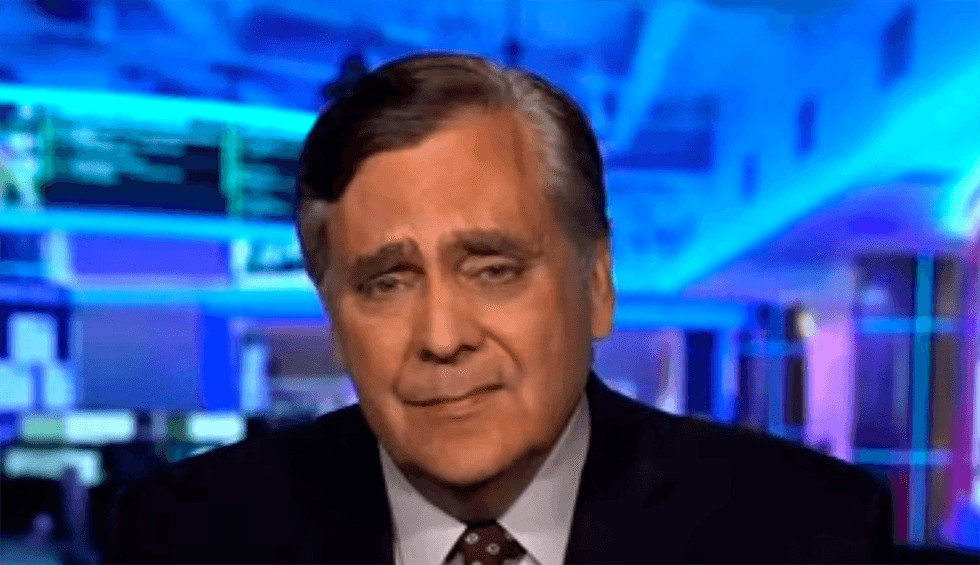
President Donald Trump suffered a major setback in his efforts to federalize voting in the upcoming midterm elections, according to a right-leaning legal scholar.“I think this is a significant loss for Republicans who have wanted to try to rein in the way that we do our elections,” Jonathan Turley told Fox News’ Dana Perino on Monday. The George Washington University Law School professor was discussing the Supreme Court’s 5-4 ruling permitting states to count mail-in ballots after Election Day, even though Trump — who believes mail-in ballots are predominantly used by Democratic voters — tried to ban counting any of them after Election. “California, of course, is the nightmare where you can go for weeks without a decision.”He added, regarding right-wing Justice Samuel Alito’s lashing out at the decision, “And just as Alito really lashes out and says this undermines the integrity of the process, the faith in the process of voters — and that is a sentiment that is shared by many — what the court is saying is that you can’t use this federal law to achieve that purpose, that there is room at the elbows here for states like Mississippi to count ballots that had been postmarked before Election Day.”The Supreme Court’s decision breaks a recent pattern of the judges siding with Trump and Republicans, especially on cases involving race, a trend that has caused many critics to accuse the jurists of partisanship given that six of them are Republicans and three are Democrats. In the mail-in ballot case, two conservative judges — Chief Justice John Roberts and Judge Amy Coney Barrett — joined the three liberal judges to create the narrow majority.“The ruling, authored by Justice Amy Coney Barrett, is a setback for President Donald Trump, who has frequently criticized mail-in voting, claiming without offering evidence that it is rife with fraud,” NBC News explained. Journalist Jamie Dupree pointed out that, despite Trump’s hope to reduce Democratic votes by suppressing mail-in ballots, “that issue is now off the table for the 2026 midterms.”This is not the only way that Trump has attempted to guarantee he retains control of the Senate and House of Representatives by federalizing the midterm elections. He also suggested he would purge voters from the rolls using DOGE and state-shared voter files, advocated strict voter ID laws, threatened to send ICE and radical groups to polling locations and implemented partisan gerrymandering. The last move was made possible when the Supreme Court overturned large portions of the 1965 Voting Rights Act.“What they all add up to is a desire to avoid any accountability to the voters in the midterm elections — to ensure, to preordain the outcome of a midterm that he thinks is going to go badly for him,” Dan Vicuña, Senior Policy Director for Voting and Fair Representation at the nonprofit good government group Common Cause, told AlterNet earlier this month. “We know, from the Big Lie of the 2020 election to spurring on a violent revolt to overthrow a free and fair election, that he has no respect for democratic norms, for the voice of the people. This is entirely about his own power and his own ego. He will even invest in protecting that ego and protecting his power at the expense of the needs of the public. People are suffering with high gas prices and affordability issues, and he does not care. All that matters is protecting his power, and he has no interest in whether he does that through democratic means.”Regarding the attempts to federalize elections, such as by his recently-overturned attempt to impose deadlines on mail-in ballots, Vicuña suggested those efforts are illegal.“I think some of these attempts to federalize, to nationalize elections are clearly illegal,” Vicuña argued. “You've seen some of that overreach already struck down — attempts to order independent agencies to force a strict voter ID requirement on people. That has been rejected. Common Cause is in court challenging the latest executive order to turn the United States Postal Service into some election administration agency and to create a further bureaucratic layer to make it more difficult to vote by mail. In terms of the president's authority to order around USPS, it's illegal. In terms of USPS's authority to become some sort of national election administration agency, it far exceeds the legal authority that Congress gave to the postal service. The statute describing what kind of work the postal service would do is about postal service work — processing mail and selling stamps. It has nothing to do with election administration.”
The Supreme Court is poised to drop its final batch of major opinions of its term Tuesday, in what could have major implications for the midterms and immigration.