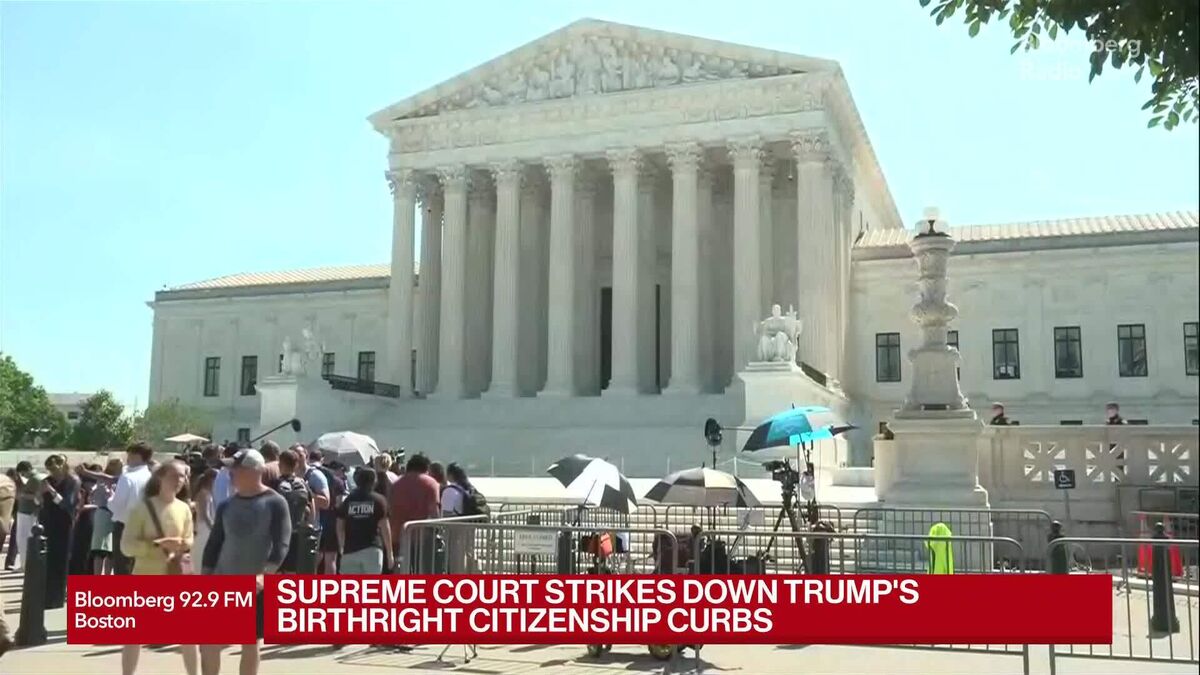
Monday, June 29 brought President Donald Trump both victories and disappointments at the U.S. Supreme Court — which ruled, 6-3, in favor of Trump's right to fire members of regulatory agencies and overturned a 1930s SCOTUS precedent. But the High Court, much to Trump's disappointment, refused to hear his appeal of a $5 million civil judgement awarded to former Elle Magazine editor E. Jean Carroll. And in a 5-3 decision, the justices blocked Trump's efforts to remove Lisa Cook from the U.S. Federal Reserve Board of Governors. Defenders of the 2026 Roberts Court's GOP-appointed supermajority often praise them as "originalists." But in a biting piece for The Atlantic, Duncan Hosie — a Stanford Law School legal expert — attacks the right-wing justices as "radical" and "decadent.""In recent days," Hosie writes, "the Supreme Court's conservatives have issued one ambitious opinion after another. They expanded President Trump's powers to fire independent regulators, rescind deportation protections, and turn away asylum seekers; weakened state authority to enact gun control; narrowed the ability of religious minorities to vindicate their free-exercise rights; eroded the due-process rights of green-card holders; and handed big wins to multinational oil and tech companies. Yet anyone not paying close attention would likely miss the Court's radicalism."The Stanford legal expert continues, "The justices' language in most cases obscured their opinions' effects; the word 'decadent' fits. Using invocations of precedent to disguise rather than illuminate, the conservative justices pretend to preserve what they are overturning. This duality — sweeping remaking of law presented as continuity — has become a hallmark of the Roberts Court."Hosie laments that the Roberts Court repeatedly shows its disdain for "precedent" and the doctrine known as "stare decisis," which, in Latin, means "let the decision stand.""When the Court does overrule precedent," Hosie argues, "it is a big deal, as in yesterday's decision in Trump v Slaughter. The opinion officially overturned Humphrey's Executor, a 90-year-old case. But the separation-of-powers practice formalized in Humphrey's Executor goes back at least 50 years before the Court decided it."Stare decisis, according to Hosie, "fosters predictability, fairness, and stability in the legal system, allowing society to order its affairs with some confidence about the law.""This is not how courts are supposed to operate," the legal scholar laments. "A roving tribunal rummaging through past decisions for minority views it likes, then reviving them while studiously refusing to admit what it has done, is not acting like a legitimate court. It is aggrandizing power from the past judges whose reasoning it discards and from future judges who will be bound by its decisions should they take stare decisis seriously…. The conservative majority is wagering that as long as the opinions are long enough, cite enough cases, and avoid explicitly saying 'We are overturning this' too frequently, the public will not notice — or at least will notice less. But you cannot liberate a city by destroying it, whatever you call what you are doing. Words cannot cover up the rubble."