Should Stoners Have Guns? It Depends on How Much John Adams Drank.
Source: The New Republic · Bias: Left
Summary
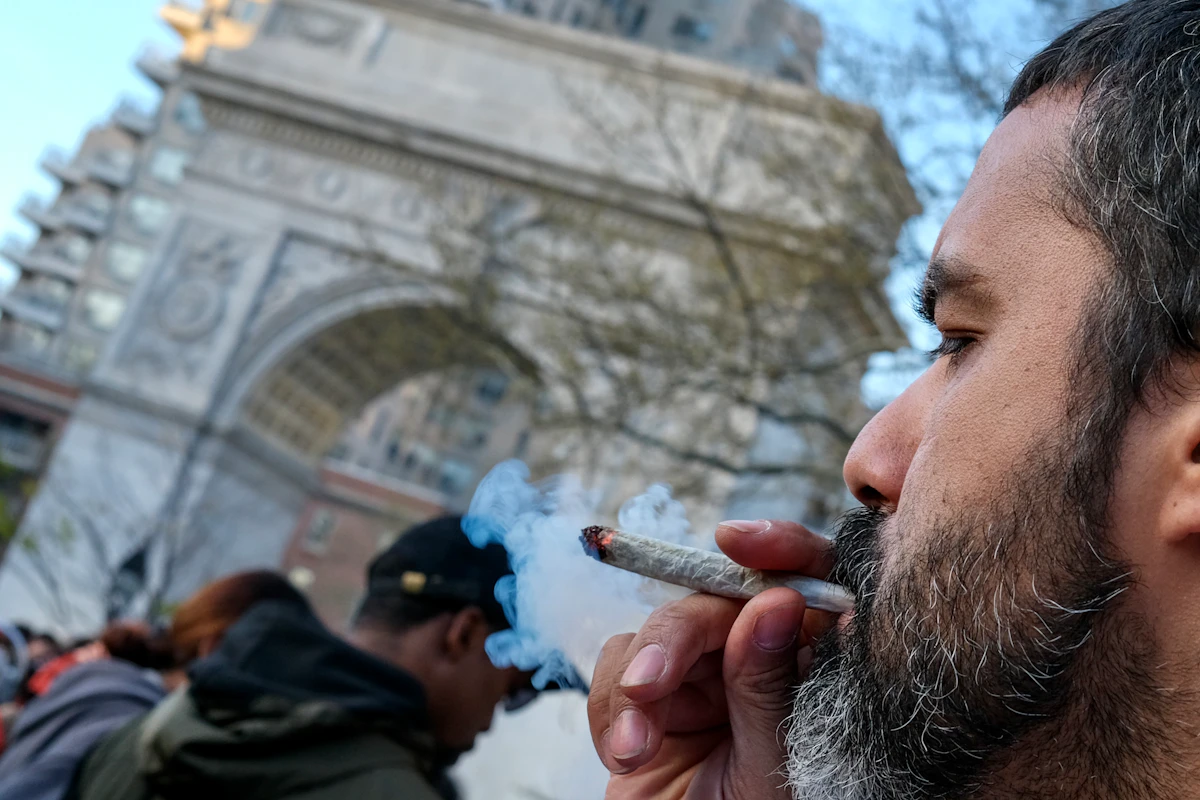
The oral arguments before the Supreme Court last week in United States v. Hemani were lively and at times illuminating. But not because they clarified the Second Amendment. Rather, they showed how unworkable the court’s current framework has become.For nearly two hours, the justices and the lawyers debated drugs, alcohol, gummies, cough syrup, Ambien, ayahuasca, anabolic steroids, and marijuana. They also wandered into the drinking habits of John Adams, James Madison, and Thomas Jefferson. (Answer: They held their own and then some.)The spectacle was entertaining. It was also revealing, and what it revealed was the incoherence of the court’s current Second Amendment framework.The case itself is straightforward.Ali Hemani, a Texas resident, was charged under a federal law that makes it a crime for anyone who is “an unlawful user of or addicted to any controlled substance” to possess a firearm. Federal agents found a Glock pistol and marijuana in his home. Hemani admitted he used marijuana roughly every other day.A federal district judge dismissed the charge, construing the statute to require being under the influence of drugs at the time of possession. The Fifth Circuit agreed. Now the Supreme Court must decide whether the statute violates the Second Amendment as applied to Hemani.But the case arrives as the latest stop in a very peculiar doctrinal journey.In 2022, the court adopted a new test for gun regulations. Under that framework, restrictions on citizens’ gun use are constitutional only if they are consistent with the nation’s historical “tradition” of firearms regulation, especially—though not exclusively—around the time of the founding.That is why courts confronting challenges to gun restrictions now have to delve into antediluvian gun regulations, while also confronting a thicket of questions about which historical laws and which historical periods matter and which ones don’t.Little wonder that the court’s guidance has produced chaos in the lower courts. Monday’s argument illustrated why.Representing the federal government, Principal Deputy Solicitor General Sarah Harris defended the statute by invoking that historical tradition. The Second Amendment, she argued, allows the government to temporarily disarm habitual marijuana users while they continue using drugs regularly.That is a sensible—if not irresistible—line of argument. But to frame it in terms the court demands, Harris had to analogize it to early American laws dealing with “habitual drunkards.”From that premise followed an extended seminar on the alcohol consumption of the founding generation. Justice Neil Gorsuch took the lead. “John Adams took a tankard of hard cider with his breakfast every day,” he noted. “James Madison reportedly drank a pint of whiskey every day.” Thomas Jefferson, Gorsuch added, claimed he was not much of a drinker. He merely had three or four glasses of wine a night.Would those men, Gorsuch asked, count as “habitual drunkards”? Would they therefore be disarmed under the government’s theory?The justices proceeded through a parade of modern hypotheticals. What about someone who takes one sleep gummy every few nights? What about a person who uses marijuana once or twice a week? What if someone takes a spouse’s Ambien tablet without a prescription? Under federal law, that is technically unlawful drug use.The argument stretched on for nearly two hours and featured discussion of cough syrup, prescription stimulants, sleep aids, and psychedelics, during which there was often laughter in the courtroom.There is an element of comedy here. But it is not simply the image of baby boomers in robes talking about drug use. The justices know roughly as much—or as little—about controlled substances as the average citizen. And their questions were thoughtful and serious.They were just aimed at the wrong issue. Why should we care whether marijuana use today resembles the drinking habits of colonial “habitual drunkards”?The pertinent question in the case is much simpler. It is whether the drug use in question creates a meaningful risk that firearms will be used dangerously.That is the point that actually matters. And it can be framed in two ways.First, it may simply be the best reading of the statute Congress enacted in 1968, after the assassinations of Martin Luther King Jr. and Robert F. Kennedy. Congress sought to keep guns away from people whose behavior made them dangerous or irresponsible.Alternatively, the Second Amendment itself may require interpreting the statute in a way that avoids unnecessary infringement of the individual right recognized in District of Columbia v. Heller and its progeny.Either way, the focus should be the same: dangerousness, not colonial drinking customs. Imagine a simple hypothetical.
Related Coverage
- Wannabe influencer busted for pelting sleeping homeless victims with ‘high-powered’ water gun (Right — New York Post)
- Senator John Fetterman Reveals the One Thing That Would Make Him Leave the Democrat Party (VIDEO) (Far Right — The Gateway Pundit)
- SCOTUS Birthplace Citizenship Decision Is John Roberts’ Roe v. Wade (Far Right — The Federalist)
- Blue states’ gun-banning spree is boomeranging back on them (Far Right — BizPac Review)
- James Talarico is even more anti-gun than we thought (Far Right — BizPac Review)
- So much for Lakers’ big offseason … LA fans left with sinking feeling (Right — New York Post)
- Now We Know What Will Get John Fetterman to Leave the Democrat Party (Right — PJ Media)
- Adam Carolla Destroys Joe Biden for Attacking Trump Over Reflecting Pool (Video) (Far Right — The Gateway Pundit)
More Headlines From March 10, 2026
- Pendulum swings back on economy amid Iran conflict (Center)
- Georgia voters deciding Marjorie Taylor Greene's replacement in special election (Center)
- Oil prices fall and stocks rebound after Trump says Iran war could end ‘very soon’ (Center Left)
- Gas price spikes are slamming Senate battleground states (Center Left)
- Oil prices fluctuate as Trump signals Iran conflict could end soon (Center)