Energy Markets, Hormuz and the World's Supply of Fuel
The world's supply of fuel is much more diversified than it was during the energy crises of the 1970s.

If you believe the multibillion-dollar firms behind “prediction markets” and the individuals who are handsomely paid to promote them, two things are absolutely clear: These exchanges are not gambling, and they certainly don’t prey upon young or vulnerable people. But many lawmakers, as you might suspect, don’t seem convinced. Undeterred, the industry has been furiously adding to its roster of lobbyists and advocates over the past year, hoping to build on the Trump administration’s support, which is no doubt founded partially on Donald Trump Jr.’s positions at both Kalshi and Polymarket. But support from the administration and the first family does not seem to be enough, and the prediction market industry has been mobilizing an effort to ensure incipient attempts to rein in the industry die in the cradle. Key to these efforts are prediction market advocates who cut their teeth working on behalf of addictive industries in the past. Prediction markets are bracing for a drawn-out fight, and they’ve staffed their front group with executives well versed on issues of gambling and addictive products. The Coalition for Prediction Markets, or CPM—a trade group backed by some of the largest players in the prediction market industry, including Kalshi, Coinbase, Crypto.com, Robinhood, and Underdog—has recruited a bipartisan dynamic duo of influential former congressmen to be the faces of the industry. In addition to the political firepower, CPM added an influential former gambling industry advocate and a former vaping executive to help manage the organization’s direction. Prediction markets, which offer customers a chance to wager their money on uncertain outcomes in return for payouts from correct predictions, have claimed exemption from state and local gambling laws. They’ve managed to dodge regulations despite the fact that many of the predictions made on these platforms are on the outcome of sporting events, with one measure finding that up to 90 percent of trading volume on Kalshi, the industry’s largest domestic player, comes from sports. While this might sound like gambling to you or me, in the eyes of the industry, and of the Trump-controlled Commodities Future Trading Commission, or CFTC, the products offered by these firms are not gambling but swaps—sophisticated investment products that are regulated solely by the CFTC. State and local governments disagree. Forty-one state attorneys general have challenged this claim, with Minnesota going so far as to pass a law banning them, while Arizona’s attorney general filed criminal charges against Kalshi. Despite claims that prediction markets operate as investment tools, they are not sound investments for the average person. An analysis from The Wall Street Journal recently found that just 0.1 percent of accounts on Polymarket earn 67 percent of all profits on the platform, and that there are nearly three unprofitable accounts for every one that makes money on Kalshi. In one study, users of prediction markets were worse off, on average, than customers of traditional sports books. With lawmakers, regulators, and even the general public turning against the industry due to its avoidance of state laws, the industry banded together last December to launch CPM. The organization is headed by a onetime rising star of the Democratic Party, former Congressman Sean Patrick Maloney, who had advised Coinbase prior to his 2024 assumption of the ambassadorship to the Organization of Economic Co-operation and Development. At his side is former Republican Congressman Patrick McHenry. The onetime chair of the powerful House Financial Services Committee, McHenry has turned to advising financial firms since he left office in January 2025. At last count, McHenry held seven positions at financial firms, including four where he served as a “senior adviser,” counting CPM. Together, Maloney and McHenry are the bipartisan tag team tasked with protecting prediction markets from the dreaded threat of being regulated like gambling. In its campaign to achieve the joint goals of ensuring every American has access to a prediction market and blocking states from regulating them, CPM has shared a series of misleading facts about the nature of the predictions market industry. In one graphic, the organization touts that “nearly half of all adults under 45 have participated in an online financial or prediction market.” Key to this claim is the inclusion of other online financial markets, which could presumably encompass not only cryptocurrency exchanges but also run-of-the-mill investment accounts or even retirement accounts accessed via the internet.Other claims promoted by CPM seem even more dubious.

The world's supply of fuel is much more diversified than it was during the energy crises of the 1970s.
Democrats haven't yet learned that their abuses of power can be used against them by their opposition. It's just a matter of time.
Mojtaba, 56, hasn't been seen in public since the war started on Feb. 28 with surprise US-Israeli airstrikes that reportedly injured him and killed his father, the late Supreme Leader Ali Khamenei.
Sen. Cory Booker (D-NJ) will face Justin Murphy, the winner of the New Jersey Republican Senate primary, in his bid for re-election this November.
People may forget that Scott Bessent is probably the strongest wartime Treasury secretary going all the way back, at least to World War II. Through his Economic Fury campaign, he has slowly but surely turned off Iran's monetary and economic spigots.
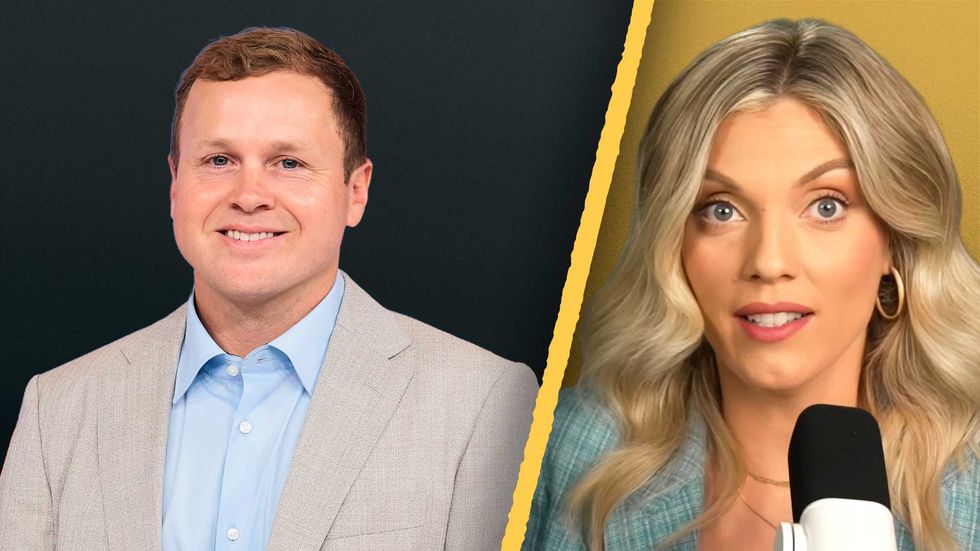
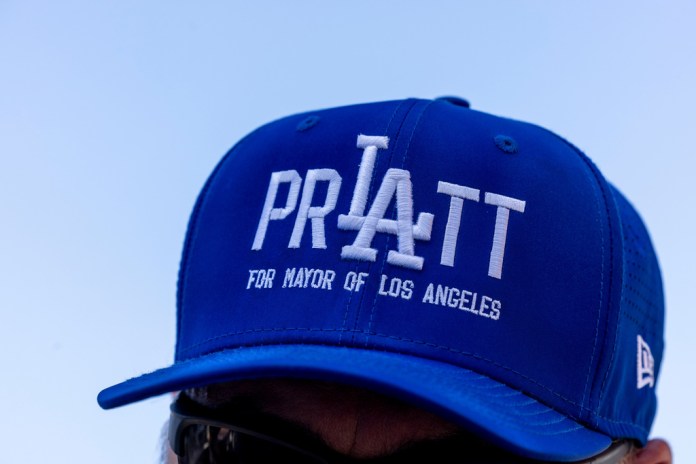
Los Angeles mayoral candidate Spencer Pratt has something that professional politicians can’t manufacture: authenticity.And BlazeTV host Liz Wheeler explains this powerful trait has left his opponents terrified.“If we had a video camera on the faces of the Democrat political strategists and on Spencer Pratt’s opponents, you can bet your bottom dollar that they are just shell-shocked by this. They don’t know how to deal with this. They are so scared,” Wheeler says.The reason why the Democrats are “scared,” she explains, is because while Pratt is all about no-nonsense policy, they have no policy to run on at all.“They can't run on Karen Bass’ record. They can’t run on Nithya Raman’s ideology. So what they do instead as their sort of final move — this is one week before the election; people are already casting early votes — is they try to use famous people to invoke groupthink among voters,” she continues.And unlike past elections, this strategy isn’t working — as Pratt’s “X factor,” which Wheeler explains as “political savvy that can’t be taught” — is winning over voters left and right.“It allows him or it enables him to speak in a way to voters that is not only relatable, but completely without the fear of offending the politically correct police,” she says, before playing a clip of Pratt demonstrating this “political savvy.”“What are your plans for the over 40,000 homeless in Los Angeles?” a reporter asked Pratt.“Well, they’re not homeless. They’re drug addicts. Most of these people are addicted to fentanyl and meth. This isn’t Spencer making it up,” Pratt responded.“No matter what anybody tells you, we have housing and shelter for everyone that’s living on the street. They are choosing to be on the street because they want to do drugs. They don’t want rules. They don’t want to listen. They want to have animals to abuse. This idea that they are forced on the street right now is a lie that our city is perpetuating,” he continued.“We’ve paid $24 billion to house these 40,000 people. There’s spots for all of these people. They are choosing, because they’re an addict, and you can do fentanyl and sewer meth on the sidewalk with no repercussions,” he added.When the reporter pressed him on how he plans to address the “homeless” issue, Pratt explained that he plans to use federal land to build facilities for them in just 90 days — but only for the true Los Angeles homeless who want to change their lives for the better.“These 40,000 people, 60% of them, City Watch just announced this week, are not from Los Angeles. They’re not from California. These people have been bussed in by scam rehabs, scam NGOs, scam homeless nonprofits. These people, when I unplug them and say, ‘You're not taking our tax money any more,’” they’re all going to go to Seattle, where the mayor will welcome them,” Pratt said.“So the people that want to keep doing drugs and live on the sidewalk — a lot of these people are going to leave. The other ones, there’s a lot of criminals, there’s people that are getting naked in front of kids. They’re going to jail,” he continued.“Not everyone goes in the same box. So we have the money, we have the resources, and we have the facility,” he added.“The reason that this is so effective,” Wheeler says, “the reason that the political savvy, the X factor that Spencer Pratt possesses, is so effective is because voters recognize authenticity when they see it.”“Spencer Pratt is giving it to them straight,” she adds.Want more from Liz Wheeler?To enjoy more of Liz’s based commentary, subscribe to BlazeTV — the largest multi-platform network of voices who love America, defend the Constitution, and live the American dream.
Washington Examiner columnist Guy Benson criticized Los Angeles and expressed cautious optimism about independent candidate Spencer Pratt’s mayoral bid. “Not to douse the hope with cold water, the two remaining candidates are both left and lefter,” Benson said on Fox Business’s The Evening Edit Monday. Pratt is facing Los Angeles Mayor Karen Bass and City […]