The Supreme Court's decision in National Republican Senatorial Committee v. FEC has strengthened the political parties, allowing them to spend without limit in direct coordination with their candidates, while still maintaining transparency and accountability.
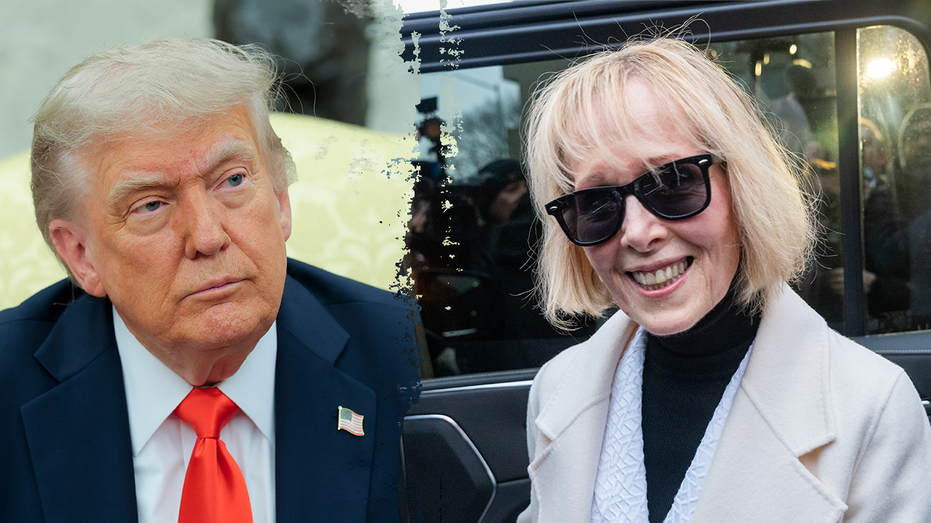
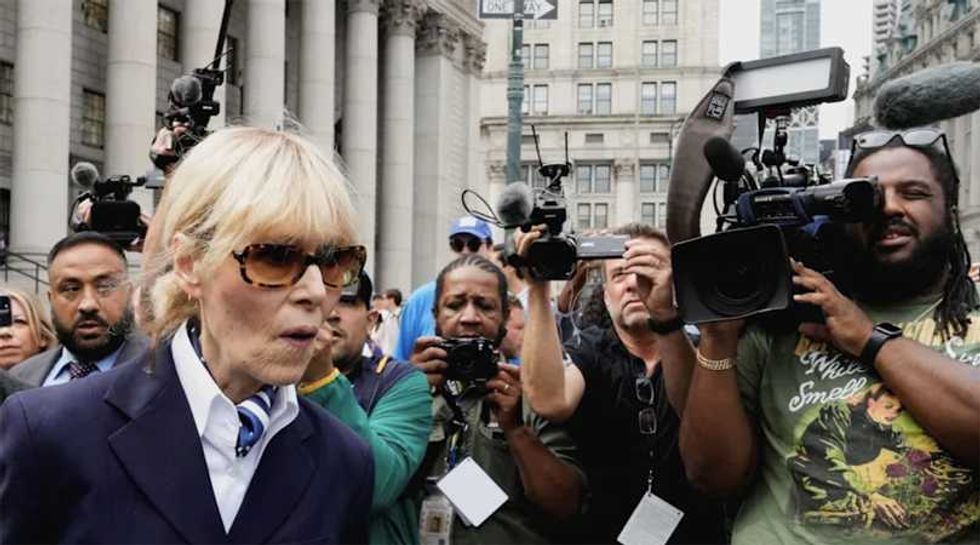
A federal judge has ordered President Donald Trump to release the more than $5 million payment he owes to E. Jean Carroll, a former magazine columnist who sued Trump for sexually abusing and defaming her, according to a new report. CNN reported on Wednesday that Judge Lewis Kaplan told Trump to release the money, along with accrued interest, after the Supreme Court refused to hear Trump's appeal in the case. The payment is part of the civil verdict that found Trump sexually abused Carroll in a department store in 1996, and then defamed her when he became president. Carroll has also secured an $83 million judgment from a jury in her defamation case against Trump. The president has until the end of July to appeal that ruling to the Supreme Court, according to the report. A spokesperson for the Trump administration told CNN in a statement, "The American People stand with President Trump as they demand an immediate end to all of the Witch Hunts, including the Democrat-funded travesty of the Carroll Hoaxes. President Trump will keep winning against Liberal Lawfare, as he continues to focus on his mission to Make America Great Again."
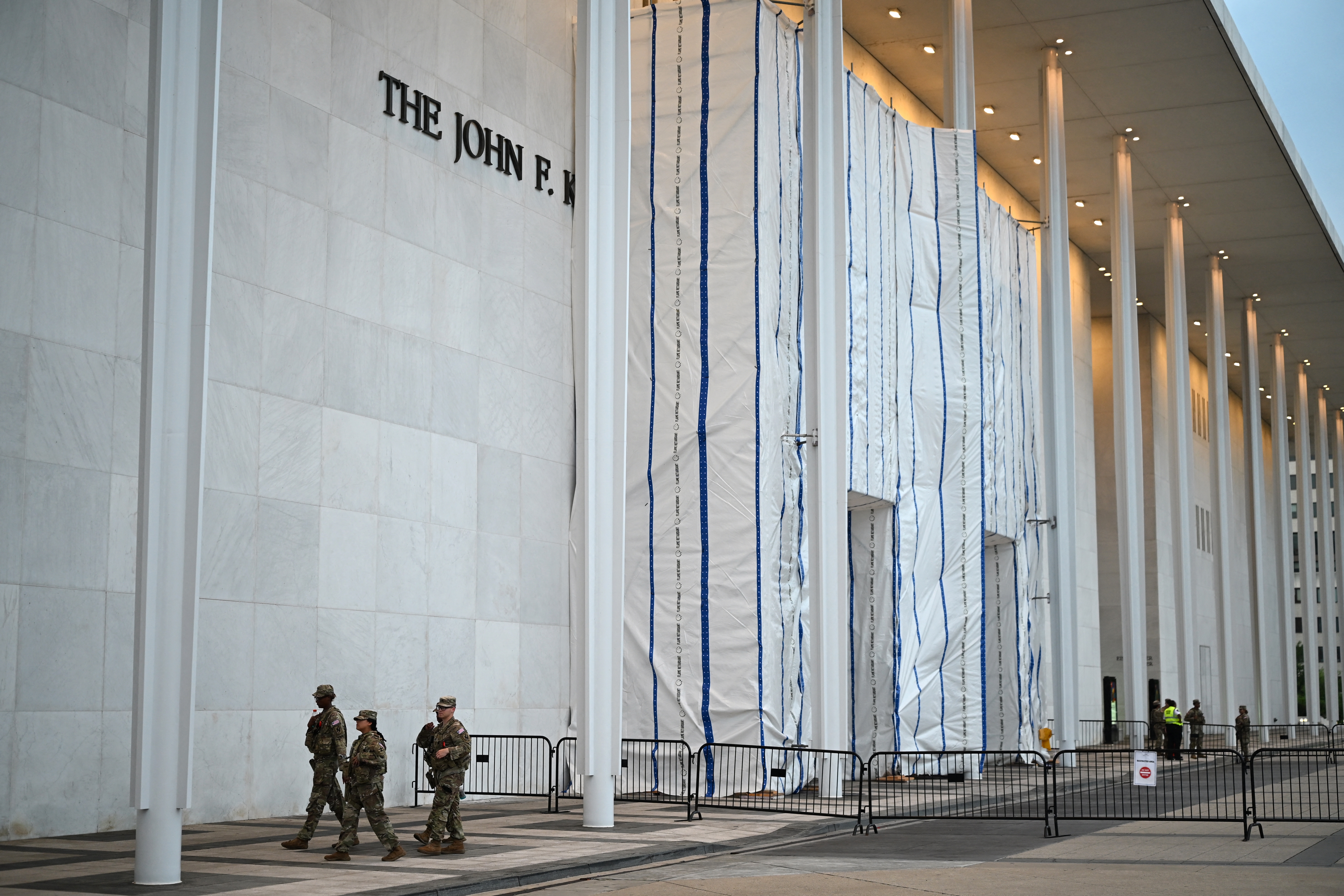
The D.C. circuit appeals court denied all of President Trump's arguments that sought to stop the removal of his name from the Washington, D.C., arts institution.
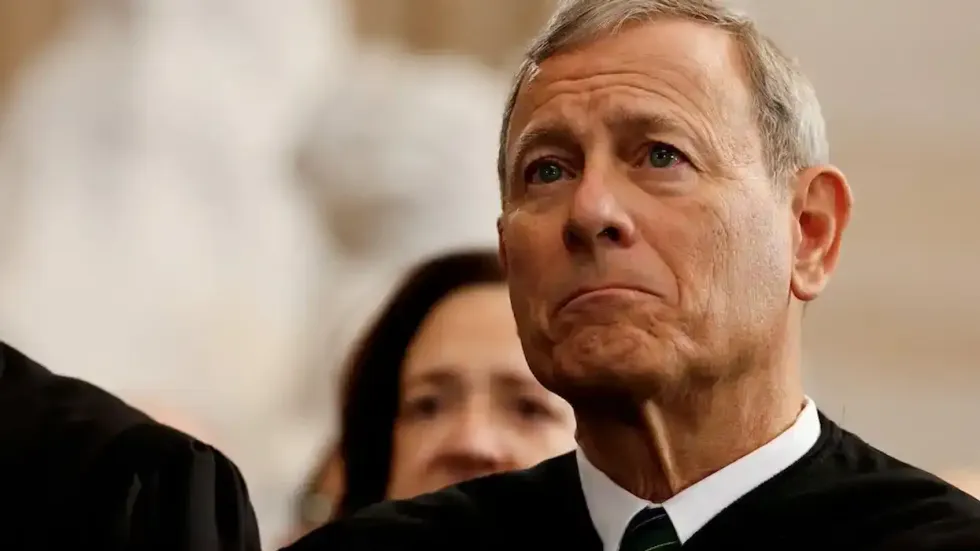
In a letter sent to U.S. Supreme Court Chief Justice John Roberts on June 30, Rep. Greg Landsman (D-Ohio) sounded the alarm about "conflicts of interest and ethical risks posed by prediction market betting on Supreme Court decisions and Court operations." And the Democratic congressman urged Roberts to "consider adopting a policy to ban the use of prediction markets for all justices, officers, and staff." Landsman isn't the only one who is speaking out about prediction markets and the High Court. In Above the Law, Senior Editor Kathryn Rubino argues that prediction markets need to be addressed much more "explicitly" than what one presently finds in the High Court's "existing code of conduct.""Prediction markets have exploded," Rubino explains in Above The Law. "Monthly trading volume on Kalshi and Polymarket ballooned from under $5 billion in September 2025 to roughly $24 billion by April 2026. And the contracts available aren't exactly abstract. Users were able to bet on the outcomes of cases like birthright citizenship, whether states can count mail-in ballots after Election Day, the president's ability to fire members of independent agencies, and transgender athlete participation in high school sports. They can also bet on whether and when a specific justice will retire, and who their successor might be."Rubino continues, "That's a menu that would be very interesting to someone who already knows the answers. Justices know how they're voting before opinions are released. Law clerks know how cases are coming out. Judicial assistants know when a retirement is imminent. The insider information advantage here isn't theoretical — it's structural, and it accrues to a specific, small group of people at One First Street NE."The Above the Law reporter points out that "technically," the Code of Conduct for Justices covers prediction markets. But according to Rubino, Landsman, in his letter to Roberts, "makes the case that technically-already-prohibited isn't enough — partly because the prohibition isn't explicit, and partly because the conflict-of-interest risk isn’t limited to obviously case-related bets.""This Court has demonstrated a fairly consistent approach to outside calls for ethics reform: acknowledge them minimally, act on them minimally, and wait for the news cycle to move on," Rubino writes. "A letter from a Democratic member of the minority, however well-reasoned, is not historically the kind of thing that moves Roberts to act with urgency. The Court's ethics problem is not going to resolve itself."Rubino continues, "If Roberts is looking for a genuinely easy win — a way to get ahead of a problem before it metastasizes into a scandal rather than reacting to one after the fact — this is a fairly painless place to start. All he has to do is say the obvious thing. But um, I wouldn't hold your breath."
A federal appeals court has dealt President Donald Trump yet another legal defeat in his fight to have his name on the Kennedy Center, court records show. A three-judge panel on Tuesday denied Trump's request to pause — or "stay" — a lower court order while he appeals it.That order, issued in May, declared his name on the building illegal and gave him two weeks to take it down. He did."We now deny Appellants' motion for a stay pending appeal because they have failed to show how they will be irreparably injured absent a stay," the D.C. Circuit wrote.The fight started in December 2025, after Trump packed the Kennedy Center's board with his own appointees, named himself chairman, and had them vote to rename the building "The Donald J. Trump and John F. Kennedy Memorial Center for the Performing Arts," according to ABC News.Trump was asked about the vote at the White House that same day."We're saving the building. We saved the building," he told reporters. "The building was in such bad shape, physically, financially, in every other way."Congress named the center for President John F. Kennedy by federal law in 1964 — and only an act of Congress can change it."The Kennedy Center is a living memorial to a fallen president and named for President Kennedy by federal law," former Rep. Joe Kennedy III (D-MA), a grandnephew of the late president, wrote on X. "It can no sooner be renamed than can someone rename the Lincoln Memorial."Ticket sales dropped by 50% in the week after Trump announced his takeover, the Washington Post reported — even as he claimed record donations.Rep. Joyce Beatty (D-OH), an ex-officio board member who said she was muted during the renaming vote and blocked from voicing her opposition, sued, according to court records.Court records show Trump lost at the U.S. District Court for the District of Columbia in May. He lost an emergency stay request on June 12 — the same day he was forced to comply and remove his name from the building. Now he has lost again.Because the Trump team couldn't show they'd be hurt without the stay, the court said it didn't even need to consider whether they have a chance of winning the underlying appeal.
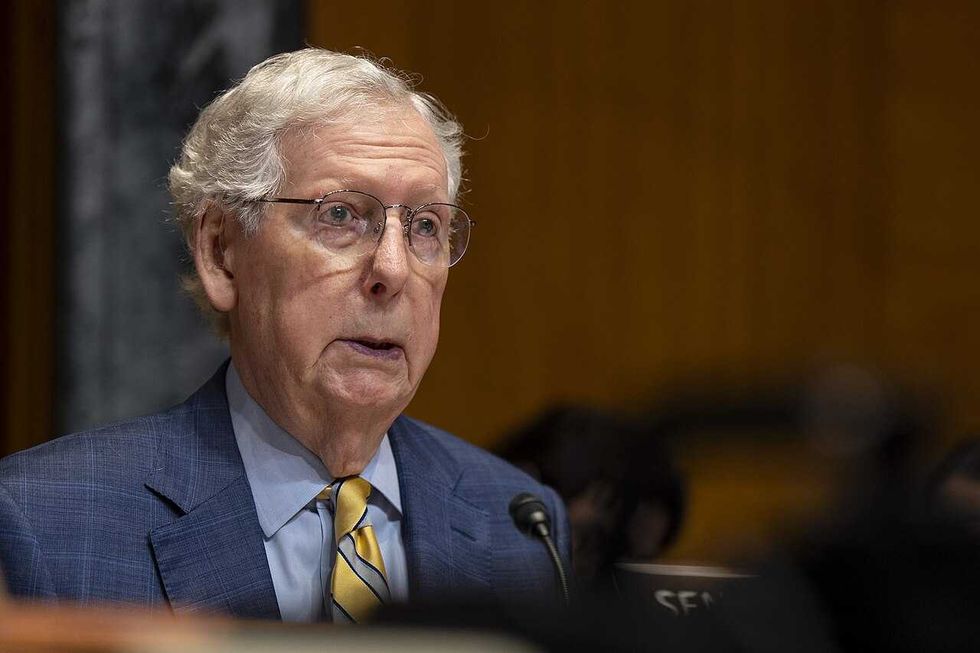
According to sources for The Hill, Sen. Mitch McConnell (R-Kentucky) — who has been hospitalized since June 14 — had "lengthy conversations" with Senate Republican Whip John Barrasso (R-Wyoming) and Senate Majority Leader John Thune (R-South Dakota) earlier this week. And a GOP aide said that McConnell is anxious to "get back to work." Yet questions about McConnell's health persist, and both liberals and conservatives are saying that there needs to be greater transparency about the former Senate majority leader's illness — which, according to Washington Examiner reporter Kaelan Deese, is "drawing new attention to an unresolved legal question in Kentucky" that "could trigger a high-stakes court battle if the longtime Republican senator were unable to complete the remainder of his term."Deese reports, "The question carries added urgency because Kentucky's revised Senate vacancy law creates a narrow window for holding a special election before this fall’s already scheduled Senate race, raising the stakes if the former Republican Senate majority leader's seat were to become vacant in the coming weeks…. While Senate leaders and his staff have insisted he is recovering, coupled with Senate Majority Leader John Thune (R-SD) and others who've said they spoke with him on Monday, the prolonged absence has fueled speculation over what would happen if his seat became vacant before a key statutory deadline coming up in early August."The Examiner discussed that legal question with University of Kentucky political science professor Stephen Voss.According to Voss, "Kentucky's had an ongoing battle over executive authority since COVID with the Democratic governor in place. The legal battles have been raging during much of that time…. One thing (people) probably don't understand is that the U.S. Constitution does not specify how to fill Senate vacancies. Filling Senate vacancies was given to the states."That means that it's up to Kentucky, not any other state, to decide what happens with McConnell's seat in the U.S. Senate, Voss says."Voss also said Kentucky's government is unusual because it doesn't have a single executive branch headed solely by the governor," Deese reports. "Instead, several constitutional officers independently exercise executive authority, creating recurring disputes over how much power lawmakers can reassign. The renewed focus on how Kentucky handles Senate replacements stems from House Bill 622, a 2024 law that repealed Kentucky's longstanding practice of allowing the governor to appoint an interim U.S. senator. Instead, the law requires vacancies to be filled through a special election, with the governor's role limited to issuing a proclamation calling that election."Deese continues, "Under the current statute, a vacancy occurring before August 3 would trigger the process for a special election to fill the remainder of McConnell’s current term. But election law experts say the law, which has not yet been tested in court since taking effect in 2024, could face constitutional scrutiny."Josh Douglas, a University of Kentucky law professor, told Newsweek, "There's a wrinkle. The Kentucky Constitution, in Section 152, says the governor appoints when there is a vacancy in a statewide office, Yet the 17th Amendment to the U.S. Constitution says essentially that there should be an election but that the legislature can give the governor the ability to make a temporary appointment."