I Moved to New York to Pay More in Taxes—and I’m Glad I Did
Source: The New Republic · Bias: Left
Summary
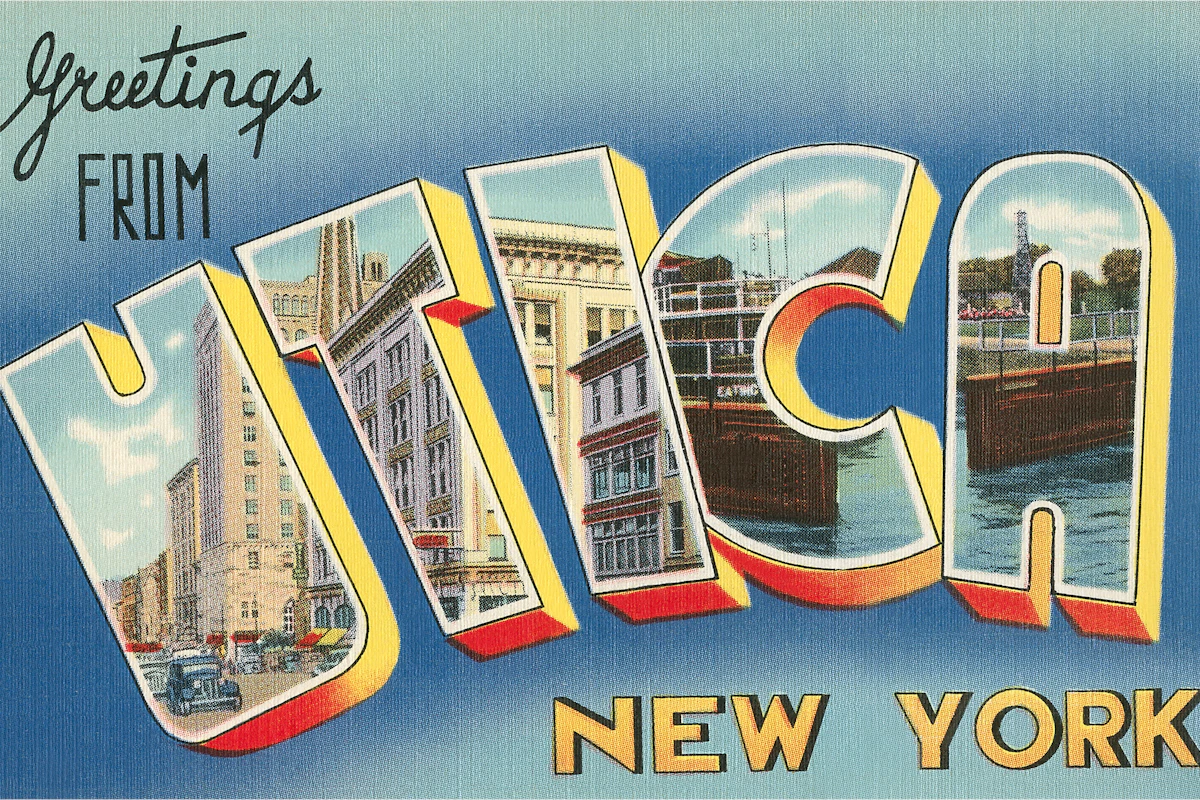
At last week’s WelcomeFest, Matt Yglesias, the longtime blogger turned centrist Substacker, moderated a panel with two Democratic members of Congress from big blue states—Tom Suozzi, who represents part of Long Island, New York, and Adam Gray, who hails from California’s San Joaquin Valley. He ended up making a remark that immediately struck me. I’ve been thinking about it for more than a week. “The problem for Democrats is that most people see great things about California and about New York, but they don’t think of them as places where government is functioning well,” he said. “The taxes are relatively high, and it’s not obvious that people are getting anything extra for it.” He asked how Democrats could make outcomes better for people in these high-tax states.The reason this statement rang my bells is that I moved to New York almost three years ago, and taxes were a big reason why. My then partner—now husband—and I decided to move here from Arkansas. That’s right: We wanted to pay more taxes. And I’ll tell you why.It is true that New York and California have some of the highest income tax rates and estimated share of personal income residents pay in all taxes when property, sales, and local taxes are taken into account. I’m not sure what evidence Yglesias was considering when he said it wasn’t clear what people were getting from their high taxes—or what benefit he specifically thought those taxes were failing to deliver. But then, it’s not always easy to evaluate what bang we’re getting for the buck. How do we measure the effectiveness of the government? These are the questions I found myself asking.On one level, people experience their taxation in a personal way: There is an amount of money withheld from our paychecks or paid to their state finance departments (or refunded to them) every spring. That is also, usually, how they experience government services, or services largely subsidized or regulated by the government: who decides their county or city’s operations, how transparent are they, how reliable are their utilities, what is a trip to the DMV like? For the most part, they’re only paying individual taxes and living in one state at a time.Indeed, most people spend the vast majority of their lives in one state, and they’ll spend their working lives paying only one state’s income tax. People don’t make interstate moves that often: The Harvard University Joint Center for Housing Studies calculated in 2020 that about 13 percent of Americans move each year, and only about 14 percent of those moves are across state lines. Most people stay local. Of the people who move, most move for personal reasons having to do with jobs and family—or the chance to buy a new home instead of renting. Which is to say: Most people can’t make a real assessment on what they’re getting for their taxes on an individual level because they lack the information needed to make informed comparisons.My husband and I lived in my home state of Arkansas together for a little more than five years; like most people, we decided to move for a number of reasons. One was that we could no longer stand the South’s blazing hot summers and were worried about climate change, so we looked for more climate-resilient places to live, which mostly led us up north. We wanted to live somewhere near an Amtrak station with frequent service, near mountains, and we really wanted to buy an older home that we could comfortably afford. We also wanted to leave the South for political and cultural reasons. We landed in central New York.All that being said, if I had to name the catalyst for the move, it was when I had to write a check for my 2022 Arkansas state income taxes. I was self-employed for most of my time in Arkansas, which meant I frequently owed some amount of taxes at the end of the tax year, and in the spring of 2023 that amount was a little more than $7,000. That was, coincidentally, the amount that the state would soon be giving to individuals who wanted to use tax money to send their children to private school under the newly passed LEARNS Act.The LEARNS Act gave almost anyone, regardless of income, taxpayer money to use toward private school tuition. I realized the same amount of money I was sending to the state could be used by someone with more money than I had to send their children to a school that promoted teachings I disagreed with, while also robbing the public school system of funds. I simply decided that I didn’t want to live in a state that used its tax dollars—my tax dollars—that way. I wanted to move to a place where my taxes were spent more in line with my values. Even if it meant paying more.It was a clarifying moment. We had lived for years in a very rural part of the state that looked different even from where we live now, near New York’s dairy country. We often had to take our own trash to the dump, our roads fell into disrepair after the slightest winter storm, and the county often relied on private help to fix them.
Related Coverage
- Business Leader Calls on New York City to Resist Mamdani (Far Right — The Gateway Pundit)
- Fox host warns Trump will pay for his 'breathtaking' corruption (Left — Alternet.org)
- Luka Doncic weighs in on new-look Lakers roster amid heavy criticism (Right — New York Post)
- Pay-to-play cycle behind GOP's corporate tax cuts exposed in new report (Far Left — Raw Story)
- Mamdani mocked by GOP for telling New Yorkers to set thermostats to 78 (Center — The Hill News)
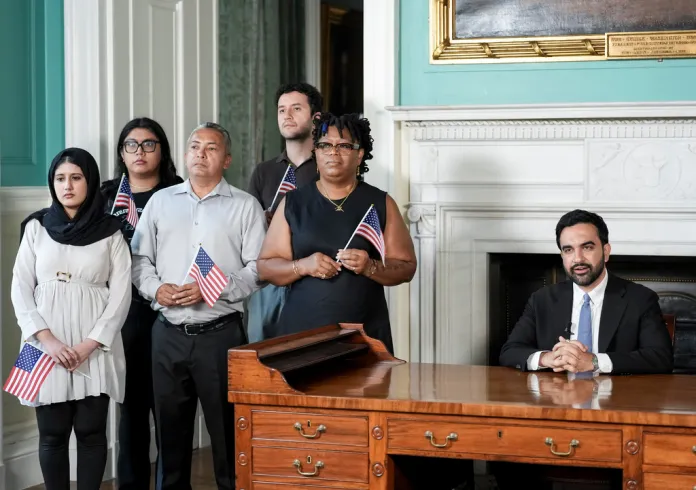
- READ IN FULL: Zohran Mamdani’s America 250 address from George Washington’s desk at New York City Hall (Center Right — Washington Examiner)
- The Supreme Court ruled seven years ago. Taxpayers are still paying the price (Center Right — Washington Examiner)
- Mamdani Is Telling A Brazen Lie About ‘Capitalist Mismanagement’ Of New York (Far Right — The Federalist)
Daily Analysis
Read the full Parallax Pulse for June 13, 2026 — an AI-powered analysis of how Left and Right media covered the biggest stories this day.
More Headlines From June 13, 2026
- White House Comms Team NUKES the Weather Channel for Claiming UFC Freedom 250 to Be Ruined by Weather and Mosquitos: “Bullsh*t Clickbait Headline” Written by “Friendless Loser” (Far Right)
- Barack Obama Trashes Trump’s Iran Deal, Says He Doubts New US-Iran Agreement is Different From His Disastrous 2015 Nuclear Deal (VIDEO) (Far Right)
- Elon Musk expected to attend Trump’s UFC Freedom 250 fight at the White House (Far Right)
- Proposed US-Iran Deal Hinges on Risky Plan of Sequenced Rewards (Center)
- Iran peace deal expected to be finalized ‘in the next 24 hours’: Pakistan (Center)