How Progressive Christian Activism Might Bring Gen Z Back to Church
Source: The New Republic · Bias: Left
Summary
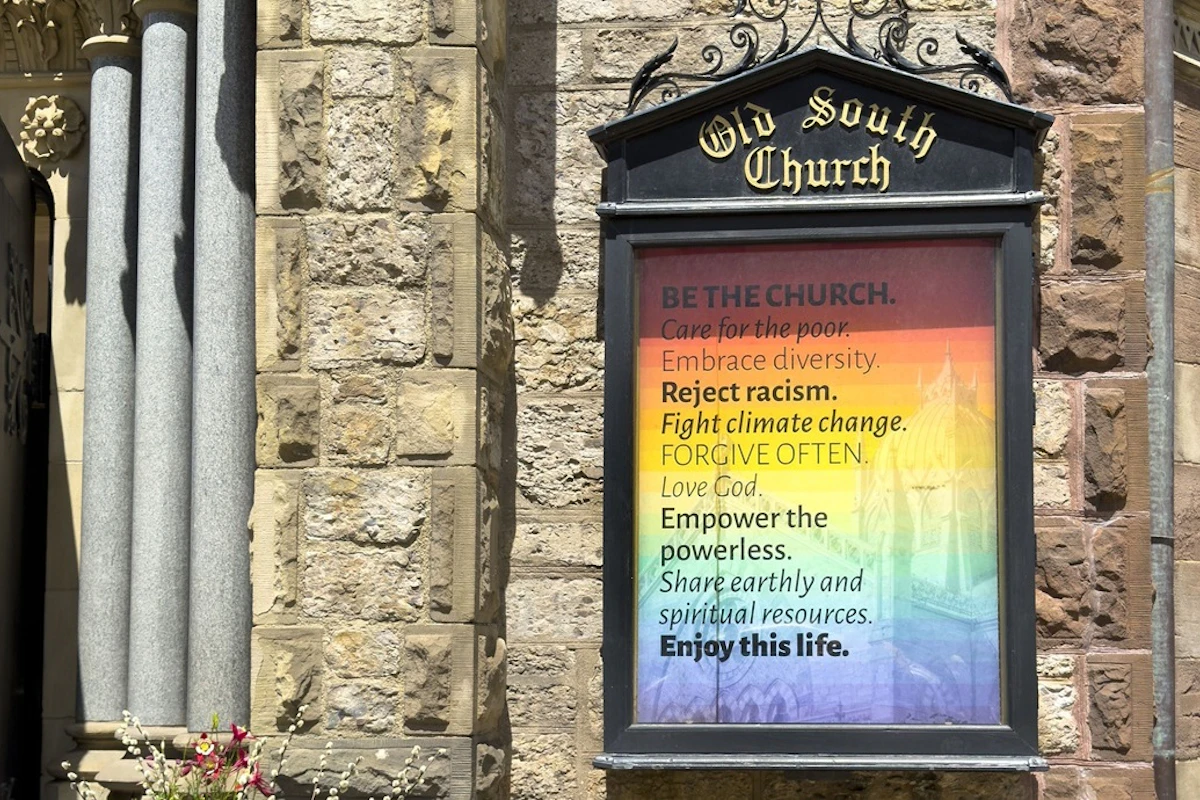
When Linnea was younger, she would attend a Christian summer camp in western Michigan, far outside of the liberal bubble of her Shaker Heights neighborhood in Cleveland, Ohio. Now a 19-year-old student at Case Western University, Linnea had grown up attending a progressive, mission-oriented Protestant church active in the local community. She remembered the summer camp as being “politically neutral,” but given its location in a deep-red region, many of Linnea’s peers had a more conservative understanding of the teachings of their mutual faith.“It was in those moments where I would see, Wow, we’re both Christian, but we’re moving through the world in completely different ways,” recalled Linnea, who is a member of her university’s branch of the progressive faith network United Protestant Campus Ministries.As a faithful Christian and young woman who identifies as queer, Linnea is among a relatively small number of Gen Z Americans who are both religiously affiliated and politically progressive. Gen Zers are less likely to identify as Christian than older generations, and less likely to regularly attend church, according to the most recent Census of American Religion by the Public Religion Research Institute, or PRRI. Progressive Christians thus have the burden of convincing ideologically aligned young people that worship is a meaningful way to engage in society.In the current political climate, the term “Christian values” is often equated with conservative values, both by those who support that ideology and by those who do not. The Trump administration’s efforts to embed Christian nationalism—the belief that the United States was founded on and should be governed by Christian principles—into the fabric of the federal government have further cemented this perspective into cultural consciousness. Polling has also shown that Americans who identify themselves as adhering to or sympathizing with Christian nationalist beliefs remain overwhelmingly supportive of Trump.Progressive Christians don’t necessarily like to align themselves with any particular political term—to them, they are simply following Christ’s teachings. However, there is a distinct ideological difference between them and their conservative or Christian nationalist counterparts—which makes “progressive” a clean shorthand for the way they apply their religious beliefs to everyday life.“Jesus was also executed by the government in the street and called us, multiple times, not just to love our neighbors but to stand in deep and profound solidarity with the most oppressed amongst us,” said Lizzie McManus-Dail, the pastor of Jubilee Episcopal Church, a church in Austin, Texas with several LGBTQ members. “That, I think, is the deepest and truest heart of Christianity, but it is certainly not what Christianity has become synonymous with in a country where the government is openly trying to make this a Christian nationalist nation.”Recent civil action by church leaders in opposition to the Trump administration’s policies has placed a spotlight on Christians who believe the tenets of their faith are not in line with the actions of the president, and of the Republican Party as a whole. After thousands of Immigration and Customs Enforcement officers were installed in Minneapolis earlier this year, local Christian pastors—along with other faith leaders—took an active role in community organizing. Late last year, Christian clergy were also among those arrested for protesting ICE crackdowns in Chicago.These types of activities by church leaders may appeal to civically minded, progressive young people looking for community. But data suggests that if any Gen Zers will be more inclined to attend church because they consider Christianity to be in line with their values, that increase would not have a significant statistical difference in church attendance among the younger generations.“I think it might happen at the margins, but I don’t think it’s going to be happening en masse because of the other larger secularization trends that have emerged with younger people,” said Melissa Deckman, the CEO of PRRI and the author of a book on Gen Z political participation.The church’s treatment of LGBTQ Americans writ large is a major factor in whether a young person identifies with a particular religion. According to a 2024 survey by PRRI, 60 percent of unaffiliated Americans under 30 say that they left their religious tradition because of its teachings regarding LGBTQ people. Fewer than four in 10 LGBTQ individuals identify as Christian; they are also twice as likely to identify as religiously unaffiliated as compared to straight people.“There’s still a perception among many younger people that religion equates with negative treatment of LGBTQ individuals, despite the fact that a lot of these progressive clergy you see being arrested are really, frankly, far more affirming of LGBT individuals,” said Deckman.Although they are a relatively small portion of Christians, LGBTQ...
Related Coverage
- Meet the patriotic ‘living historians’ who bring the American Revolution to life — one reenactment at a time (Right — New York Post)
- Blue states’ gun-banning spree is boomeranging back on them (Far Right — BizPac Review)
- Most Gen Z can't answer basic questions on U.S. history at 250th (Left — Alternet.org)
- Some states rolling back worker heat protections (Center — NPR Topics: News)
- Conservative pundit slurs pastor for adopting Black daughter: 'Actively evil' (Far Left — Raw Story)
- 'Positive Progress' Made in Latest Iran Talks, but Nothing Is Off the Table (Far Right — Townhall)
- Brendan Boyle brings Congress back to ‘where it all began’ in Philadelphia to mark 250 years of American independence (Center Right — Washington Examiner)
- Boeing Made Progress on Air Force One Modifications, GAO Says (Center — Bloomberg Politics)
Daily Analysis
Read the full Parallax Pulse for May 10, 2026 — an AI-powered analysis of how Left and Right media covered the biggest stories this day.
More Headlines From May 10, 2026
- Iran signals consideration of U.S. plan to end conflict (Far Right)
- Trump uses AI to tout sunken Iranian ships as US awaits peace proposal response (Center)
- The Times is now illiberal, wrong way to save diners and other commentary (Right)
- ‘Got to have a strong stomach’: Watch Democrats float shocking scheme to boot entire Virginia Supreme Court after redistricting loss (Far Right)
- Netanyahu Tells CBS He Wants to Phase Out US Funding for Israel (Center)