How Malta to Jordan, Usually About 10 Hours, Turned Into Four Days
Source: The New Republic · Bias: Left
Summary
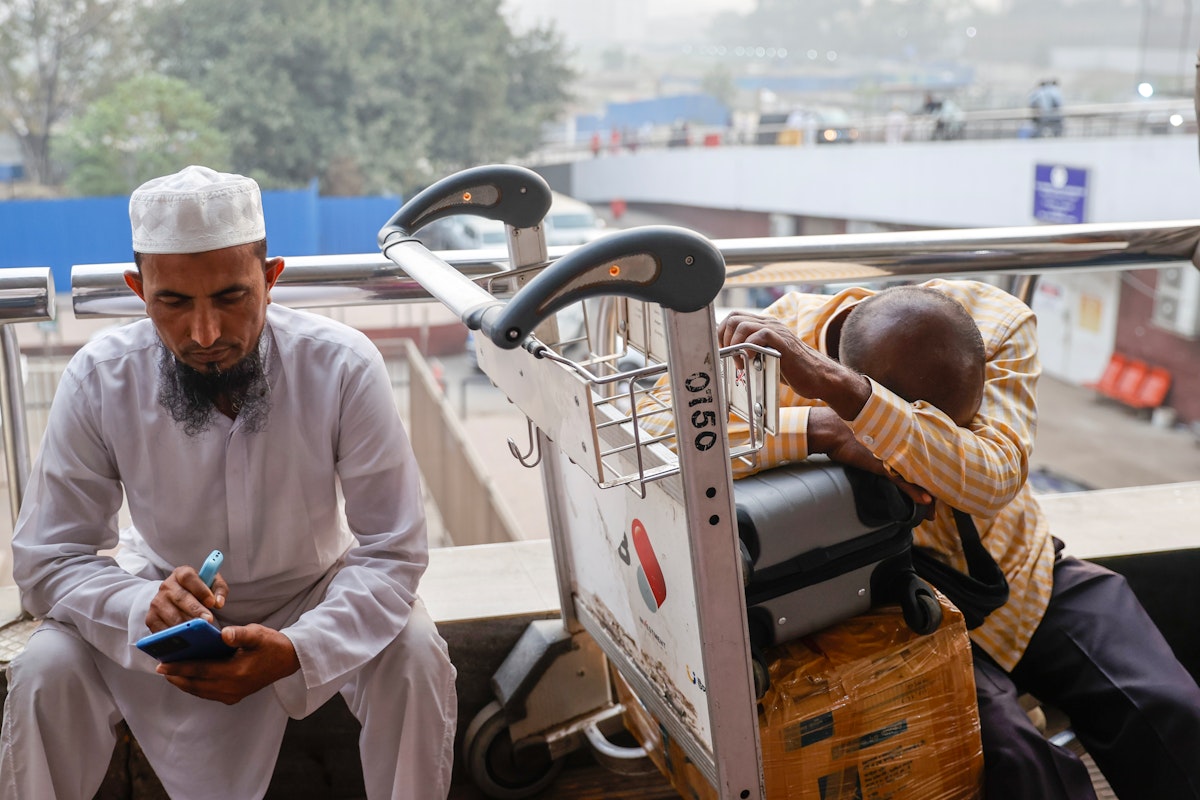
While I am generally an optimistic person, I tried to be realistic in assessing the potential of war breaking out in the region before agreeing to leave my home in Amman, Jordan, to go to the Mediterranean island of Malta for a work-related conference.I had followed the Iran-U.S. indirect talks in Muscat and Geneva, and it looked then like America’s “no-wars” president would again let diplomacy and negotiations prevail. True, Donald Trump had amassed a huge armada around Iran, but I naïvely believed that in a country with only 25 percent of the population supporting the idea of a war, and many in the ruling party opposing it, war was out of the picture.So off I went. The conference, about dealing with cooperation in the Middle East and North Africa, or MENA, region, went great. As it was winding down, I kept checking the news, and I learned that the Thursday talks in Geneva had gone well. The fact that another set of talks was scheduled for Monday seemed to make it certain that I would be able to return to Amman before any possible war. Trump’s State of the Union speech did worry me a little, but then I was reassured by the fact that the Omani foreign minister agreed to appear on American television to tell Americans that there was progress in the talks.Boy, was I wrong. We will see what will happen. I do have a feeling of sympathy for the people of Iran, who have been living under this strict religious rule for decades, and I hope that they will be one day free; but I am not sure this is the way. We have an Arab proverb that says my brother and I may fight my cousin, but my brothers and our cousin would fight the stranger. I think patriotic Iranians will not want to be freed by the U.S., and certainly not by a war criminal like Netanyahu, who has a totally different agenda from that of wanting Iranians to be free.On a personal level, of course, I became worried that my wife and I would not be able to get back home anytime soon. You Americans don’t run into this sort of thing, but it happens from time to time in our part of the world. My saga is one of mere inconvenience, but multiply it by the millions of stories that are similar and worse—some, of course, far worse—and you begin to get a sense of how a war that to Americans is halfway across the world reverberates across many countries, affecting untold numbers of people. The New York Times reported just yesterday on how airspace restrictions have tangled travel in the region, “fragmenting a once efficient and finely tuned global aviation network,” as the paper put it.By noon on Saturday, February 28, just hours after the start of the war, Turkish Airlines texted us that the second leg of our flight, from Istanbul to Amman, was canceled due to force majeure, and we could apply for a refund.The cancellation of our Turkish flight back to Queen Alia Airport in Amman meant at least a one-day delay. The hotel graciously agreed to our conference organizers’ request to keep the conference rate of $170 per night for the extra night.Having gone through the earlier U.S.-Israel 12-day bombardment of Iran last year, I remembered that while insurance rates spike at times of war, national airlines consider that they have a responsibility to their citizens to bring them home. So we scrambled to find a connecting flight that would allow us to hop to any regional location served by Royal Jordanian. Our travel agent found us a ticket via Cyprus. The trip was Malta to Larnaca via Emirates, and then from Larnaca to Amman on Royal Jordanian.But when we arrived the next day at the Malta airport, we discovered that our flight to Larnaca was also canceled. It seemed that the flight was a Malta-Larnaca-Dubai flight, and the Dubai airport had just been hit by Iran, so they canceled the whole route. Emirates put us up for free at a local five-star hotel, which softened the blow considerably; still, the strike on the Dubai airport meant that the second-busiest airport in the world had been paralyzed.By the second day of our stay at that hotel, we heard that there was a drone attempt at the British base in Cyprus, and we quickly realized we would not be able to get to Larnaca (which is on the island’s Greek side) for some time, and therefore we went back to finding a plan C.We still hadn’t left Malta. We decided to try our luck again with Royal Jordanian, but a flight to Istanbul was now $1,000. A friend who’d attended the conference discovered a flight on the national Maltese airline for a fraction of the cost. We quickly changed course, and we were able to make it to Istanbul.One last worry was whether Royal Jordanian was still flying, because Jordan had partially closed its airspace. The flight went ahead as scheduled but, before boarding, we were again warned about further danger. The U.S. Embassy in Amman had evacuated its staff, and nearby Jordanian homeowners were alerted of the possibility of an attack against the embassy in the West Amman Abdoun district.
Related Coverage
- Hakeem Jeffries Reminds Radicals To Hide America-Hating Until After Election Day (Right — The Daily Wire - Breaking News, Videos & Podcasts)
- Iran’s supreme leader bails on first day of late dad’s funeral ceremonies (Right — New York Post)
- MAMDANI’S NYC: Con Edison Shuts Off Power to 10,000 Customers in Queens as Temps Soar Over 100 Degrees (Far Right — The Gateway Pundit)
- Democrats will have ‘field day’ with Trump inquiries if they win House, legal experts say (Center Left — US news | The Guardian)
- How Americans Are Feeling About the U.S. as the Country Turns 250 (Center Left — TIME)
- First Thing: Iran to show defiance in six-day funeral for supreme leader (Center Left — US news | The Guardian)
- Florida dad went to pick up 18-month-old from day care — what he found was horrifying (Right — Blaze Media)
- USMNT defense turns biggest question mark into World Cup strength (Right — New York Post)
More Headlines From March 14, 2026
- FCC chair invites bipartisan backlash as MAGA battle with press intensifies (Center)
- How Trump’s FCC Is Policing Speech on TV Networks (Center)
- Trump demands countries join coalition to police Strait of Hormuz (Center)
- Trump says he’s asked ‘about 7’ countries to police Strait of Hormuz (Center)
- Sheriff alerted Michigan synagogue to potential rise in threats 2 days before attack (Right)