How Democrats Can Outplay the GOP on Tax Cuts
Source: The New Republic · Bias: Left
Summary
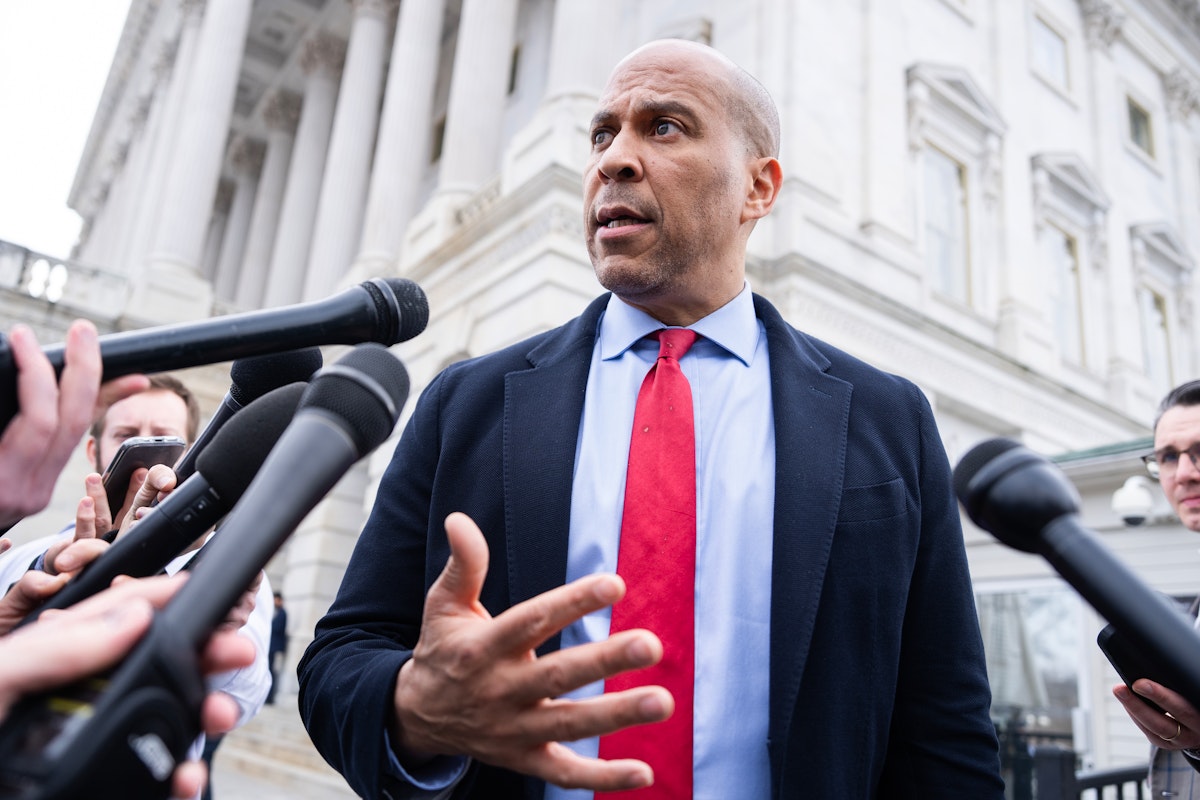
A popular Washington game is to oversell tax cuts to lower-income people. Republicans have excelled at this for half a century. Now Democrats want to play, too.In the most familiar version of the game, a Republican president promises to slash income taxes but ends up mainly doing so for rich people. Ordinary people may get a cut, but it’s very small. Thus President George W. Bush’s tax cuts in 2001 and 2003 boosted incomes for the top 1 percent by 6.7 percent but boosted incomes for the middle 20 percent only 2.8 percent, and for the bottom 20 percent a pathetic 1 percent. President Donald Trump’s 2025 tax bill actually lowered incomes for the bottom 20 percent when you factor in accompanying Medicaid and food stamp cuts, while incomes for the middle 20 percent rose only 1 percent or less. The wealthy made out like bandits; everybody else got table scraps at best.Another Republican trick, perfected during the 2024 presidential campaign, is to eliminate taxes on stuff that scarcely gets taxed as it is. That’s what Trump did last year by eliminating taxes on tips. Only 4 percent of workers receive tips, and at least 37 percent of these people pay no income tax in the first place—and that’s before you figure in tax credits like the Earned Income Tax Credit. Also, let’s get serious, when the tip is in cash who’s going to report it as income?A related Republican trick is to claim you eliminated taxes on something when actually you reduced them by not very much. That’s the gist of Trump’s supposed elimination last year of taxes on Social Security, about which he boasted in last month’s State of the Union Address. What Trump actually did was introduce a deduction of up to $6,000 for individual filers that’s phased out starting at incomes of $75,000. Given that people earning less than $75,000 pay little income tax in the first place, and that 15 to 50 percent of their Social Security benefits goes untaxed already, the impact was negligible.Democratic Senators Chris Van Hollen and Corey Booker now propose tax cuts of their own. Von Hollen’s proposal would eliminate taxes on incomes up to $46,000 for individuals and up to $92,000 for married couples. Booker’s plan would double the standard deduction to $37,500 for individuals and $75,000 for married couples, and would also expand the child tax credit. These senators’ proposals deliver more benefit to lower-income people than those from their Republican counterparts, and Van Hollen and Booker sweeten the deal by also increasing taxes on higher incomes. No one would call these plans a stalking horse for trickle-down economics. Still, it seems to me that they miss the point.Booker helpfully presents a tax calculator with his proposal. I entered an income of $65,000, the maximum household earnings for the bottom 40 percent in the income distribution. For a single filer with no kids, Booker’s plan would boost after-tax income by 4 percent. That’s not nothing, but it’s is well under the 6.7 percent that Dubya’s tax cuts delivered to the top one percent. As for Van Hollen’s plan, people earning less than $50,000 seldom pay income tax as it is.Remember Mitt Romney’s famous complaint in 2012 that 47 percent of the population paid no income tax at all? (The real percentage was 46 percent, which since then has dropped to 40 percent). Some of Mitt’s 47 (now 40) percenters are rich jerks who dodge tax liability, but most of them are low earners. Romney’s complaint drew on a tendentious conservative literature (about which I’ve written many times) that complains too many Americans are insulated from the cost of government. The trouble with this argument is that, when you factor in all taxes at the federal, state, and local level, pretty much everybody pays them. Indeed, at the time Romney made his 47 percent crack, the middle 20 percent paid nearly as much effective tax (25 percent) as the top one percent (29 percent), while the bottom 20 percent paid a not-inconsiderable 17 percent. That goes a long way toward explaining why Romney lost the election.State taxes are more regressive than the federal income tax, but the chief reason Romney’s “untaxed” pay quite a bit in tax is the federal payroll tax, or FICA (for 1935’s Federal Insurance Contributions Act). About 70 percent of Americans pay more FICA tax than federal income tax because the federal income tax is reasonably progressive at the low end (more so, anyway, than at the high end) while the FICA tax, which funds Social Security and Medicare, is not progressive at all. The Social Security tax is regressive in two ways: It’s a flat tax (12.4 percent, split by employers and workers) plus it doesn’t apply to any income above $184,500.
Related Coverage
- Billionaire Tech Mogul Peter Thiel Warns Woke AI Company Anthropic Could Rig 2028 Election for Democrats (Far Right — The Gateway Pundit)
- Bannon warns the ‘old politics are gone’ amid Democrat socialist surge (Far Right — BizPac Review)
- Penn Dems boot GOP Rep from House floor for patriotic suit despite encouraging ‘Pride’ attire (Far Right — BizPac Review)
- Wes Moore on democratic socialist gains: Voters want ‘someone who is going to fight for them’ (Center — The Hill News)
- Europe Has Replaced Most US Cuts Within NATO, Top Commander Says (Center — Bloomberg Politics)
- Karoline Leavitt on the ‘Full Blown Communist Revolution’ Happening Thanks to Democrats (Video) (Far Right — The Gateway Pundit)
- The Democrat Party Is Literally Communist, and the Voters Admit It! (VIDEO) (Far Right — The Gateway Pundit)
- Pay-to-play cycle behind GOP's corporate tax cuts exposed in new report (Far Left — Raw Story)
More Headlines From March 12, 2026
- Oil price surges as Iran steps up attacks on ships in the Persian Gulf (Center)
- U.S. investigates strike on Iranian school as the war sparks a global oil crisis (Center)
- Trump says the 'quiet part out loud' with brag US makes 'a lot of money' from oil crisis (Left)
- Trump releasing 172M barrels of oil from reserve as prices soar amid Iran war (Center)
- Live updates: Energy secretary emphasizes ‘short-term’ spike in oil prices; Senate to take up DHS funding (Center)