How a Bank Robbery Case Became SCOTUS’s Next Big Fourth Amendment Test
Source: The New Republic · Bias: Left
Summary
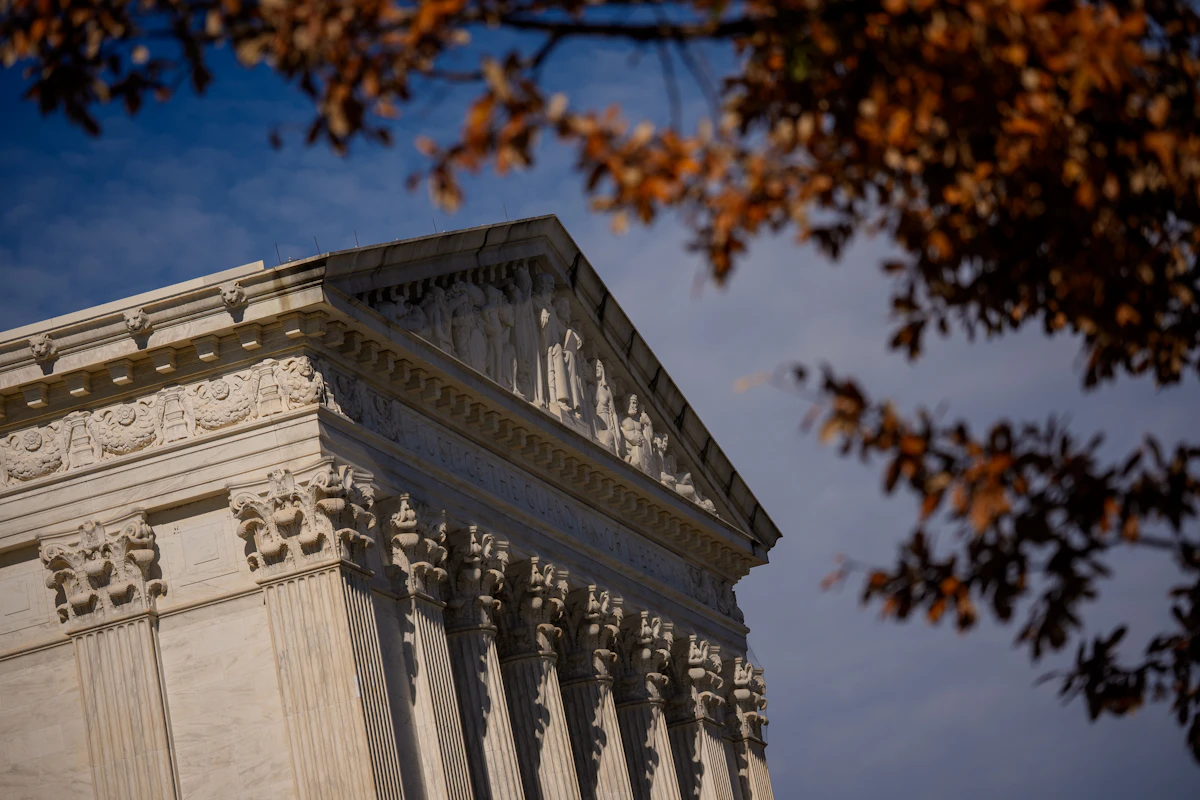
It’s been a few years since the Supreme Court heard a major Fourth Amendment case. That will change next month when the justices hear oral arguments in Chatrie v. United States on the government’s use of geofencing warrants to obtain a person’s cell phone data. Their ruling could have major implications for how and when police can access Americans’ sensitive personal information in the digital age. It will also provide an important window into how the latest iteration of the Supreme Court thinks about the Fourth Amendment, tech companies, and privacy rights.This particular case began with a bank robbery in a town outside Richmond, Virginia, in May 2019. Local police officers followed the usual investigative steps but came up short on leads. The following month, one of the detectives sought what is known as a geofencing warrant that required Google to comb through millions of accounts and identify which ones came within a 150-meter radius of the crime scene for an hour around the time of the robbery.Google is a common target for geofencing requests because of its location-tracking service, unimaginatively named Location History, which more than 500 million users have activated. Location History updates itself roughly every two minutes, effectively creating a comprehensive record of a person’s movements—a literal digital footprint, if you will, albeit one that users can delete.Since it receives so many requests, Google has developed a multistep process for responding to them. For the first step, the company initially provided a police detective with semi-anonymized data for 19 users within the geofence. The detective then requested additional data on nine of those users for the second step. He “did not explain to Google why he chose these nine accounts, nor did he consult a magistrate [judge],” according to court filings, but Google complied. From there, the detective “requested that Google de-anonymize three of the numbers, again without explaining why or consulting a judge,” which Google agreed to do as the third and final step.Finally, detectives used the data to identify a local man named Okello Chatrie and obtain a search warrant to search his house. According to the Justice Department, they found “two robbery-style demand notes,” as well as “nearly $100,000 in U.S. currency (including bills wrapped in bands signed by the victim bank teller) and a silver and black 9mm semi-automatic pistol” that looked like the one carried by the bank robber in surveillance footage.Federal prosecutors charged Chatrie with multiple felonies related to the bank robbery. Ahead of trial, Chatrie and his lawyers asked a judge to exclude any evidence obtained through the geofencing warrant, including what detectives found at Chatrie’s house because of it, on the grounds that it violated his Fourth Amendment protections from unreasonable searches and seizures. The district court broadly ruled in Chatrie’s favor. For step one—the search warrant to obtain the first 19 accounts—the court held that the government did not have sufficient probable cause to obtain the warrant to geofence those accounts. On the additional searches that narrowed it down to nine users and then three users, the district court also concluded that it had “improperly provided law enforcement and Google with unbridled discretion to decide which accounts will be subject to further intrusions.”Ultimately, however, the district court applied what is known as the “good-faith exception,” one of the many holes in the Swiss cheese that is the modern Fourth Amendment, to uphold the search. Chatrie entered a conditional plea of guilty while he challenged the geofence warrant’s constitutionality on appeal. He was sentenced to more than 11 years in prison. Chatrie’s next stop, legally speaking, was the Fourth Circuit Court of Appeals, which promptly made a dog’s breakfast of the case.At first, a divided three-judge panel affirmed the district court’s ruling, but on much different grounds. Two of the judges held that the Fourth Amendment hadn’t been violated at all because Chatrie and other Location History users had voluntarily given their location data to Google. Under the third-party doctrine, a twentieth-century carve-out for warrantless searches, Americans lose the “reasonable expectation of privacy” when they voluntarily hand over personal information to a third party, like a bank or a telecommunications company.Judge James Wynn, the dissenting judge on the panel, countered by noting that the dispute more closely resembled the 2018 case Carpenter v. United States. In that ruling, the justices had held that cell-site location information, or CSLI, was protected from warrantless searches by the Fourth Amendment. The high court explicitly declined to extend the third-party doctrine to CSLI data in Carpenter because of its intensely personal nature.
Related Coverage
- Trump’s ‘ramped up’ rhetoric leaves unifying tone of July Fourth speech in question (Center Left — NBC News Politics)
- Where to watch fireworks in LA for the Fourth of July (Right — New York Post)
- Big Oil heads for biggest profits in years as Trump pushes for lower gas prices (Right — New York Post)
- From Saatva to Casper: The best Fourth of July mattress and bedding sales (Right — New York Post)
- Inside the security operations for July Fourth celebrations in D.C. (Center — Politics - CBSNews.com)
- What This Fourth of July Is Really About (Center Left — The Atlantic)
- Why the Fourth? It's Complicated (Center Right — RealClearPolitics - Homepage)
- In 1976, I went to jail to celebrate the Fourth of July (Left — Salon.com)
More Headlines From March 16, 2026
- Trump announces Susie Wiles diagnosed with breast cancer (Right)
- BREAKING: Trump's Chief of Staff Susie Wiles Has Cancer (Right)
- Gas prices reach highest level since October 2023 as oil holds above $100 per barrel; US stocks jump (Right)
- White House Announces Chief of Staff Susie Wiles' Cancer Diagnosis — but Prognosis Is 'Excellent' (Right)
- President Trump Impromptu Presser Aboard Airforce One – China Dependent on Hormuz Strait, Not USA (Far Right)