Four words will determine Trump case's fate at the Supreme Court
Source: Alternet.org · Bias: Left
Summary
The Supreme Court on April 1, 2026, will hear oral arguments in Trump v. Barbara, the case that challenges the Trump administration’s efforts to bar the children of immigrants without legal status from birthright citizenship by reinterpreting the terms of the 14th Amendment.In January 2025, President Donald Trump issued an executive order removing the recognition of citizenship for the U.S.-born children of both immigrants here illegally and visitors here only temporarily. The new rule is not retroactive. This change in long-standing U.S. policy sparked a wave of litigation. When the justices weigh the arguments, they will focus on the meaning of the first sentence of the 14th Amendment, known as the citizenship clause: “All persons born or naturalized in the United States, and subject to the jurisdiction thereof, are citizens of the United States and of the State wherein they reside.”Both sides agree that to be granted birthright citizenship under the Constitution, a child must be born inside U.S. borders and the parents must be “subject to the jurisdiction” of the United States. However, each side will give a very different interpretation of what the second requirement means. Who falls under “the jurisdiction” of the United States in this context? As a close observer of the court, I anticipate a divided outcome grounded in strong arguments from each side.Arguments for automatic citizenshipSimply put, the argument against the Trump administration is that the 14th Amendment’s expansion of citizenship after the eradication of slavery was meant to be broad rather than narrow, encompassing not only formerly enslaved Black people but all persons who arrived on U.S. soil under the protection of the Constitution. The Civil War amendments – the 13th, 14th and 15th – established inherent equality as a constitutional value, which embraced all persons born in the nation without reference to race, ethnicity or origin.One of the strongest arguments that automatic citizenship is the meaning of the Constitution is long-standing practice. Citizenship by birth regardless of parental status – with few exceptions – has been the effective rule since the time of America’s founding.Advocates also point to precedent: the landmark case of United States v. Wong Kim Ark in 1898. When an American-born descendant of resident noncitizens sued after being refused re-entry to San Francisco under the Chinese Exclusion Act, the court recognized his natural-born citizenship.If we read the Constitution in a living fashion – emphasizing the evolution of American beliefs and values over time – the constitutional commitment to broad citizenship grounded in equality, regardless of ethnicity or economic status, seems even more clear.However, advocates must try to convince the court’s originalists – Clarence Thomas, Samuel Alito, Neil Gorsuch, Brett Kavanaugh and Amy Coney Barrett – who read the Constitution based on its meaning when it was adopted.The originalist argument in favor of birthright citizenship is that the phrase “subject to the jurisdiction” was meant to invoke only a small set of exceptions found in traditional British common law. In the Wong Kim Ark ruling, the court relied on this “customary law of England, brought to America by the colonists.”One exception to birthright citizenship covered by this line of rulings is the child of a foreign diplomat, whose parents represent the interests of another country. Another exception is the children of invading foreign armies. A third exception discussed explicitly by the framers of the 14th Amendment was Native Americans, who at the time were understood to be under the jurisdiction of their tribal government as a separate sovereign. That category of exclusion faded away after Congress recognized the citizenship of Native Americans in 1924.The advocates of automatic birthright citizenship conclude that whether the 14th Amendment is interpreted in a living or in an original way, its small set of exceptions do not override its broad message of citizenship grounded in human equality.Opposition to birthright citizenshipThe opposing argument begins with a simple intuition: In a society defined by self-government, as America is, there is no such thing as citizenship without consent. In the same way that an American citizen cannot declare himself a French citizen and vote in French elections without consent from the French government, a foreign national cannot declare himself a U.S. citizen without consent.This argument emphasizes that citizenship in a democracy means holding equal political power over our collective decisions. That is something only existing citizens hold the right to offer to others, something which must be decided through elections and the lawmaking process.The court’s ruling in Elk v.
Related Coverage
- Melania gives Congress private deadline as she works around Trump's team: report (Far Left — Raw Story)
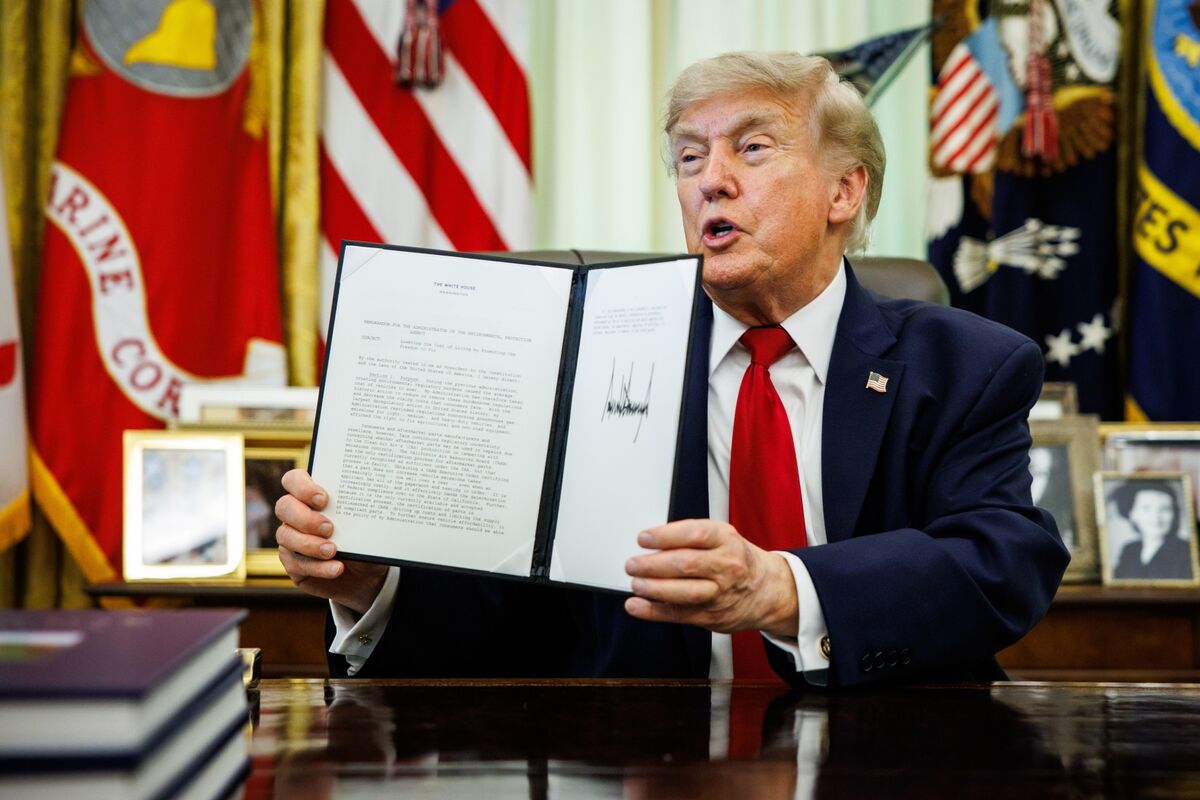
- Trump announces pardons for pollution violators prosecuted for "fixing their car" (Center — Politics - CBSNews.com)
- Trump Pardons Six People Pursued for ‘Fixing Their Car’ (Center — Bloomberg Politics)
- Sources: Trump likely to pardon pollution violators; weighing clemency for Diddy (Center — Politics - CBSNews.com)
- Fox host warns Trump will pay for his 'breathtaking' corruption (Left — Alternet.org)
- Trump Scores Appeals Court Victory in Battle Over National Park Historical Displays (Right — RedState)
- Signs of Victory: I-95 Welcomes President Donald Trump Int'l Airport (Right — RedState)
- Trump’s ‘ramped up’ rhetoric leaves unifying tone of July Fourth speech in question (Center Left — NBC News Politics)
Daily Analysis
Read the full Parallax Pulse for March 30, 2026 — an AI-powered analysis of how Left and Right media covered the biggest stories this day.
More Headlines From March 30, 2026
- Why one Democrat broke ranks to save Trump's DHS nominee (Right)
- Trump Threatens Iran Energy Sites If No Deal Reached on War (Center)
- Trump will 'destroy' the Republican Party with NATO action warns GOP lawmaker (Right)
- House Democrat warns of ‘boots-on-the-ground quagmire’ in Iran (Center)
- How Yemen’s Houthis Could Worsen the Oil Crunch (Center)