WATCH: Sanders lashes out at GOP ‘morality’ while rallying behind Dem with Nazi-linked tattoo
Sen. Bernie Sanders lashed out at towel-clad Republican staffers who confronted him over support for scandal-plagued Maine Senate candidate Graham Platner.

The Democratic base is split on where they want the party to go — left, center, or stay put — but the majority can agree on their dissatisfaction with the party’s direction, says CNN data guru Harry Enten.Fewer Democrats are currently satisfied with their party than they were after President Joe Biden’s debate performance that led to him dropping his reelection bid, Enten noted.Democratic voters’ “p—— offness” Enten added on social media, “has never been higher with their own party in Congress.”Noting that 46 percent of Democratic voters currently are satisfied with the Democratic Party, Enten reiterated that the majority are dissatisfied.Looking specifically at Democrats’ net approval of congressional Democrats, Enten explained that after the shutdown in October of last year, congressional Democrats had a net approval rating of plus 22 percent.“Today, though, look at that,” he said, pointing to a net approval rating of minus 9 points.“That is an over 30 point drop, at the climb, right into the ocean, right there,” he said.“And I will note it had never been negative. Democrats had always had a positive net approval rating of their own party in Congress in every Congress before this one.”“Congressional Democrats are underwater with their own party, and that’s why I think these primaries are going to be so interesting, because they’re going to tell us, okay, which way do Democrats want their party to go?”He said the “big problem” is “Democrats aren’t sure what direction they want their party to go.”Nearly three in ten (28 percent) want the party to move to the left, he said. Less than one in five (18 percent) want the party to not move at all. And nearly half — 47 percent — want the party to move to the center.“This is a party divided, where they’re not actually giving a clear message of where they want their party to go,” he noted.Offering a note of caution to lawmakers in primary races, Enten said that “if all of a sudden, Democrats are actually going to move to the left — which is not what their party wants — that will actually upset the rest of the electorate.”Enten said the “only thing” that unites the Democratic base right now is “they are very upset with Donald Trump, and I think the candidates who are able to actually capture that, that’s the candidates who are going to advance to the general election.”
Sen. Bernie Sanders lashed out at towel-clad Republican staffers who confronted him over support for scandal-plagued Maine Senate candidate Graham Platner.
'We're talking about shoes. Are you guys kidding me? I mean, is this the Foreign Affairs Committee?'
Secretary of State Marco Rubio on Wednesday went off on Rep. The post WATCH: Marco Rubio Nukes Dem Rep. Ted Lieu After He Pushes Hoax About Trump’s Cognitive Abilities and Says Trump’s Been Missing for 8 Days appeared first on The Gateway Pundit.
The Democratic Party continues to make telling electoral decisions, this time electing a “former Al-Qaeda volunteer” in New Jersey. Tuesday evening, the Associated Press announced that Adam Hamawy […]
The House candidate also reportedly worked with a group later designated by the U.S. government as a front organization for al-Qaeda.
The vibecession is back, or never really went away, or is now a “permacession.” Or so we’re told. But here’s a novel thought: What if it’s not just vibes? For years, economists and commentators have been trying to explain why American consumer sentiment and confidence in the economy have hit record lows while many objective measures of the economy remain solid. This alleged dissonance persisted throughout the Biden era, when the economy was recovering from the Covid pandemic, and has only gotten worse under President Trump. Still, commentators insist that public opinion is divorced from economic reality: Will Stancil, a University of Minnesota researcher and sometime political candidate, wages near-daily battles on Bluesky arguing that the available data belies the idea that the economy is bad, while others argue that the Democratic Party needs to determine why voters feel this way and propose ways to address it. “Democratic strategists loathe vibecession discourse, because positing that the public is factually wrong about what ails the country makes the job of pandering to voters ... much harder, no matter which party is in charge,” Brian Beutler wrote on Substack on Monday.The common takeaway is that voters are mad at price spikes in recent years of everyday goods like gas and groceries, and at the longer-term increase of housing and health care costs. It’s become the “affordability” crisis. But a new report from the Roosevelt Institute points to a simpler yet more profound explanation: Americans no longer feel that they can achieve a good life. Whatever the economy is doing, it isn’t delivering one. “If we are talking about the core goals of economic policy, yes, we want overall growth, but to what end?” said Elizabeth Wilkins, the president and CEO of Roosevelt. “To deliver the building blocks of a good life for people, right? We fundamentally believe that progress should be about people living better lives. So, what does it look like to actually deliver that for people?”The report, released Tuesday, digs deep into how people feel about what they can afford, what they want, and what they think the government should do about it. It’s a more complex picture than is often provided by simple surveys that ask how voters feel about their financial situation or the economy as a whole. Some of the biggest findings are that most voters feel like they have had to make trade-offs to afford what they needed over the past few years, don’t have enough to buy what they need and have a financial cushion left over, and that they would like to be free of debt. Just one in five said they were very secure in their income and confident they’d be able to retire comfortably. Almost 80 percent said they are worried about their finances now or in the future, and 35 percent have stopped putting money into savings in order to make ends meet.This points to two trends others have previously noted. For American households, there is no slack in the economy, and no feeling of security. The one or two breadwinners per household are already working all they can, and the number of people working multiple jobs to make ends meet is rising. The cost of necessities has risen, especially housing, electricity, transportation, and health care premiums, which people can’t easily cut out of their budgets. Sometimes when people pay more for these things it means they’ve moved into a bigger house or are receiving medical care they had put off and therefore improving their lives. But the base price of these necessities has gone up without people feeling like they’re moving up. Paying more for the same amount of goods doesn’t make people feel better, and sometimes people even end up downgrading or downsizing to try to balance their budget. The survey also showed that people feel the current political system is unfair. Confidence in the government is underwater by 41 points, and voters had more confidence in small businesses, their employers, and banks. That’s largely because people think the government is full of self-serving politicians working for billionaires and corporations. In the K-shaped economy—the term used to describe increasing inequality—most of the benefits of a “good” economy go to those at the top. While this trend has been growing for at least three decades, it has hit home in the second Trump term, as obscenely wealthy tech titans like Jeff Bezos, Mark Zuckerburg, and Elon Musk gave up any pretense of caring about inequality and democratic ideals and have cozied up to the administration instead.“People’s expectations are shaped by what’s possible in a world where people can buy their third yacht, and you don’t have the time to spend with your child because of the number of jobs that you have to work, even if those jobs mean that you can buy groceries for the week,” Wilkins said. “We ought to be able to do better by people than the basics when so much is possible based on the resources that we have.
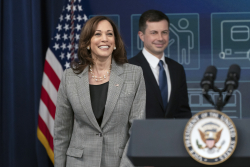
Despite being desperate to put Biden behind them, Democrats can't do it. Both Kamala Harris and Pete Buttigieg are routinely topping Democratic primary polling, and both are defined by Biden.
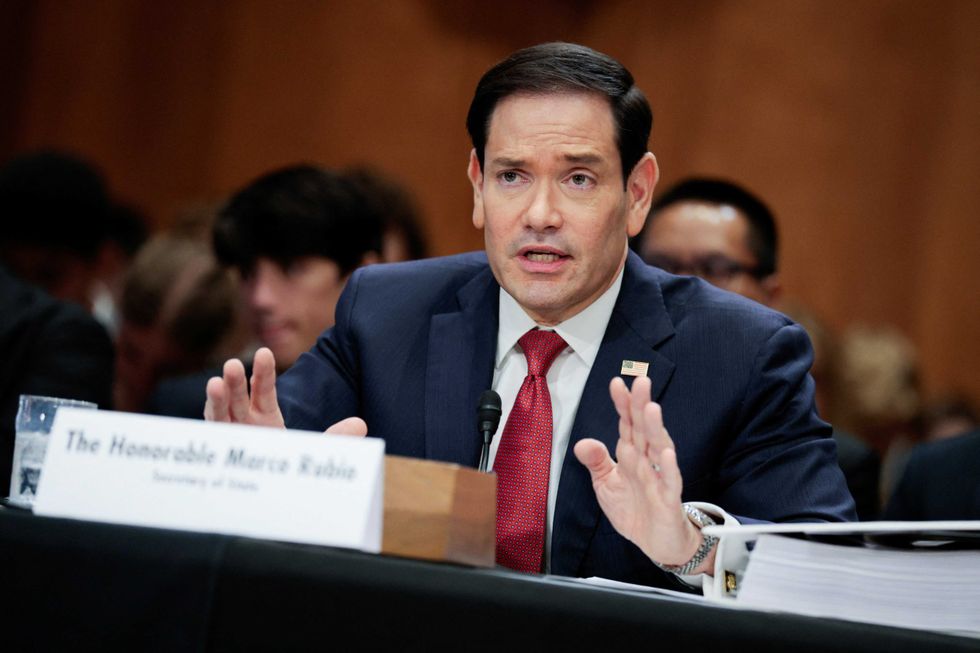
On Tuesday, Congressional Republicans were “blindsided” by President Donald Trump's announcement that current Director of the Federal Housing Finance Agency Bill Pulte will double in the role of acting Director of National Intelligence, an appointment that has drawn harsh criticism. But lawmakers in Congress weren’t the only ones from Trump’s camp to be surprised by the move, as on Wednesday morning, Secretary of State Marco Rubio revealed that he’d never even heard of Pulte, who would be leading the country’s intelligence efforts amidst its largest war in years. It was while discussing that war with the House Foreign Affairs Committee that Rubio shared his thoughts on Pulte, or lackthereof, saying, “I never heard his name.”The Director of National Intelligence is a role that is vital to the country’s security apparatus, and in theory, when it comes to issues like the Iran war, would work in concord with the Secretary of State, who is the nation’s top diplomat. It does not bode well that one hand does not appear to know what the other is doing — or of the other’s existence in the first place. Rubio’s admission represents the intersection of two flashpoints for the administration. First, Pulte’s appointment, which has drawn bipartisan outrage over his lack of experience and suggestions he may “weaponize” the post, as he has a proven track record for targeting Trump’s enemies. Second, the president’s fumbling approach to the war with Iran. Rubio’s testimony on Wednesday comes in the lead-up to a House war powers vote, and the fact that lawmakers are raising the issue of Pulte amid discussion of the conflict indicates that they have concerns about how his intelligence oversight will impact the war. The Secretary of State isn’t the only prominent, relevant official to have never heard of Pulte. When Senator Susan Collins (R-ME), a senior member of the Senate Intelligence Committee, was asked about the appointment, she said, “I have no knowledge of this individual at all. I don’t know whether he has an intel background before that. I truly don’t know him at all.” Others on Capitol Hill who are familiar with him have been quick to push back against his appointment. “Whoever told the president to go ahead and commit to this publicly before vetting it should lose their jobs, because they should know that the math just works against Pulte being confirmed,” Senator Thom Tillis (R-NC) told CNBC. “I don’t think he has a prayer.” Speaking to reporters on Tuesday, Senate Majority Leader John Thune (R-SC) declared, “We don’t need a weaponized DNI; we need professionals there… If he’s somebody they want in that position permanently, he’s got a lengthy road ahead of him.”