Blue Governors Are Tacking Rightward on Fossil Fuels
Source: The New Republic · Bias: Left
Summary
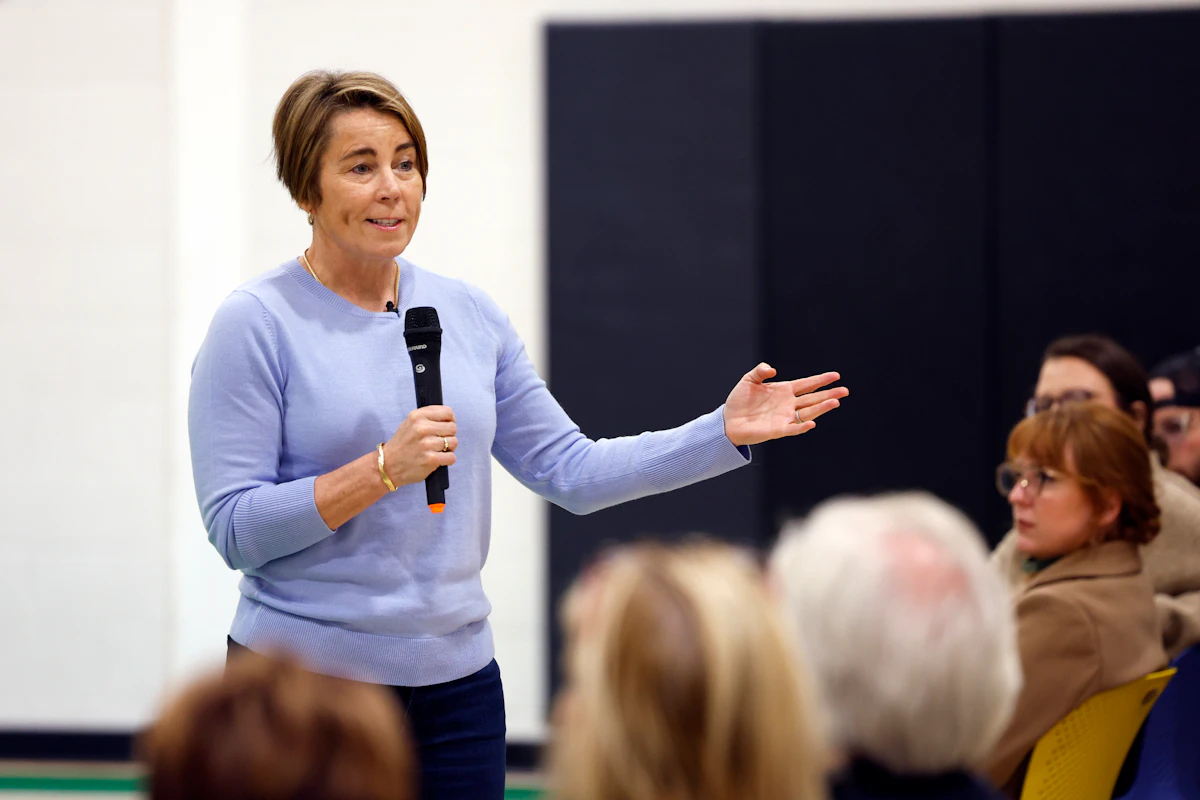
Last week, Massachusetts Governor Maura Healey held a press conference to address concerns around spiking utility bills. She touted growing wind and solar industries as crucial solutions to the affordability crisis, but also importing more fracked gas from out of state.“We have gas pipeline expansion on the Algonquin—that’s good!” she said from her podium, referencing a $300 million project to beef up natural gas infrastructure in the state via Enbridge’s Algonquin Gas Transmission Pipeline. “We need to continue to find more ways to bring energy in, and anything around gas pipelines that works out well with the ratepayers and is consistent with our regulations we’ll welcome.” Not long ago, this cozying up to fossil fuel in the state would have bewildered constituents of most political shades. After all, it was Republican Governor Charlie Baker who signed the 2021 law directing Massachusetts to achieve net-zero emissions by 2050, pivoting away from fossil fuels. One year later, Healey, then the state’s attorney general, bragged about sinking proposed pipeline expansion plans. “Remember,” she reminded her audience, “I stopped two gas pipelines from coming into this state.” (Governor Healey’s office didn’t respond to a list of questions sent over email.) But in recent months, Healey’s tone has shifted. “With Trump’s second term, we are seeing a pivot to pro-pipeline policies from Northeast Democratic governors,” says Itai Vardi, a researcher at the Energy Policy Institute, a group that advocates for renewable energy. Alongside Healey, New York Governor Kathy Hochul and Connecticut Governor Ned Lamont have also embraced natural gas, following years of focus on renewables to secure energy supplies and chasing zero-emissions goals set for 2050.Healey has the Algonquin pipeline expansion in Massachusetts. Hochul recently permitted plans to expand the Williams NESE pipeline through New York Harbor and onto Long Island—after the project twice failed to gain required approvals from state environmental regulators. Despite local uproar, Governor Lamont supports building a compressor in the town of Brookfield, which would cram more gas through an existing pipeline. One executive order Lamont signed in 2021 exemplifies the more pro-climate stance of the Biden years. “There is overwhelming and incontrovertible evidence that man-made greenhouse gas emissions are causing climate change,” the order reads. Natural gas was not just a contributor to emissions, it was also known to be uneconomical. “In light of recent price spikes for heating oil, propane, and natural gas and their negative impact on Connecticut consumers… [a new plan] is needed that identifies the best clean, affordable and resilient heating and cooling options for buildings.”Hochul spokesperson Ken Lovett wrote in an email that with Trump’s second inauguration, “New York and clean energy states lost a critical partner, having gone from the previous federal administration that … supported the energy transition to a White House that is looking to do away with renewables in favor of a ‘drill baby drill’ strategy that favors natural gas and coal.” Massachusetts, New York, and Connecticut all began investing heavily in large offshore wind farm projects years ago—each able to provide around a gigawatt of clean, local energy to the grid. But over the last year, the Trump administration has sought to kill them through litigation and regulatory orders, most recently through a January work stoppage handed down by the Interior Department. While the offshore wind farms currently under construction have been allowed to continue after gaining injunctions in federal court, developers have canceled future wind projects, taking billions’ worth of energy investments with them. Questions of what will plug the gap they leave remain unanswered.Meanwhile, energy costs continue to increase at the national level as the November gubernatorial and congressional midterm elections approach. The U.S. and Israel’s entanglements across the Middle East have also driven gas prices. As voters’ utility rates spike, all three governors have to convince voters that they’re worth keeping around. As a result, these governors are now adopting policies that can coexist with Trump’s. That sometimes means co-opting them. “Connecticut is committed to ensuring that our electric grid is reliable, resilient and that our energy costs become more affordable,” Rob Blanchard, director of communications for Lamont, wrote in a statement. “Offshore wind and other renewables are central to that effort, but it must be complemented by a diverse mix of resources, including nuclear power, natural gas, hydropower, and other technologies.… We will continue to engage with the federal government on shared energy priorities.”Gas may be a political solution, but progressives don’t see a material one.
Related Coverage
- Blue states’ gun-banning spree is boomeranging back on them (Far Right — BizPac Review)
- Wannabe-governor Xavier Becerra’s campaign probed by watchdog investigating Gavin Newsom’s wire-wearing ally (Right — New York Post)
- E Pluribus Algae: Why Green Pond Scum Is as American as Red, White and Blue (Center Left — NYT > U.S. > Politics)
- Socialist Surge: Far-left Democrats test national playbook after blue-city primary shocks (Right — Latest Political News on Fox News)
- FBI infiltrated Gavin Newsom’s inner circle by convincing governor’s ally to wear a wire: lawyer (Right — New York Post)
- Louisiana attorney general indicted over alleged threats; governor pledges swift pardon (Center — The Hill News)
- OUTRAGEOUS! Dem governor pardons rapist of 10-year-old to save him from deportation (Far Right — WorldNetDaily)
- Governments Are Spending $1.1 Trillion Propping Up the Fossil Fuel Industry While Households Pay the Price (Far Left — Common Dreams)
Daily Analysis
Read the full Parallax Pulse for March 24, 2026 — an AI-powered analysis of how Left and Right media covered the biggest stories this day.
More Headlines From March 24, 2026
- Joe Kent Says He’d Testify in Charlie Kirk Murder Case, Even If It Helps Accused Assassin Tyler Robinson (Far Right)
- Mike Lee, Anna Paulina Luna TORCH Thune’s Reconciliation Scheme on SAVE America Act — “DO NOT BE FOOLED!” (Far Right)
- Ex-Trump counterterror chief Kent clashes with Levin, rejects Iran threat claims (Right)
- Her husband is a double amputee in ICE prison. She confronted Kristi Noem over its cruel conditions: ‘I have a fire inside’ (Center Left)
- Iran Negotiations Ongoing, As Trump Says 'War Has Been Won' (Q&A) (Center)