
New York Post
How to watch all 3 World Cup 2026 opening ceremonies: Shakira, Katy Perry, more
All three host nations will have their own opening ceremonies.
Right
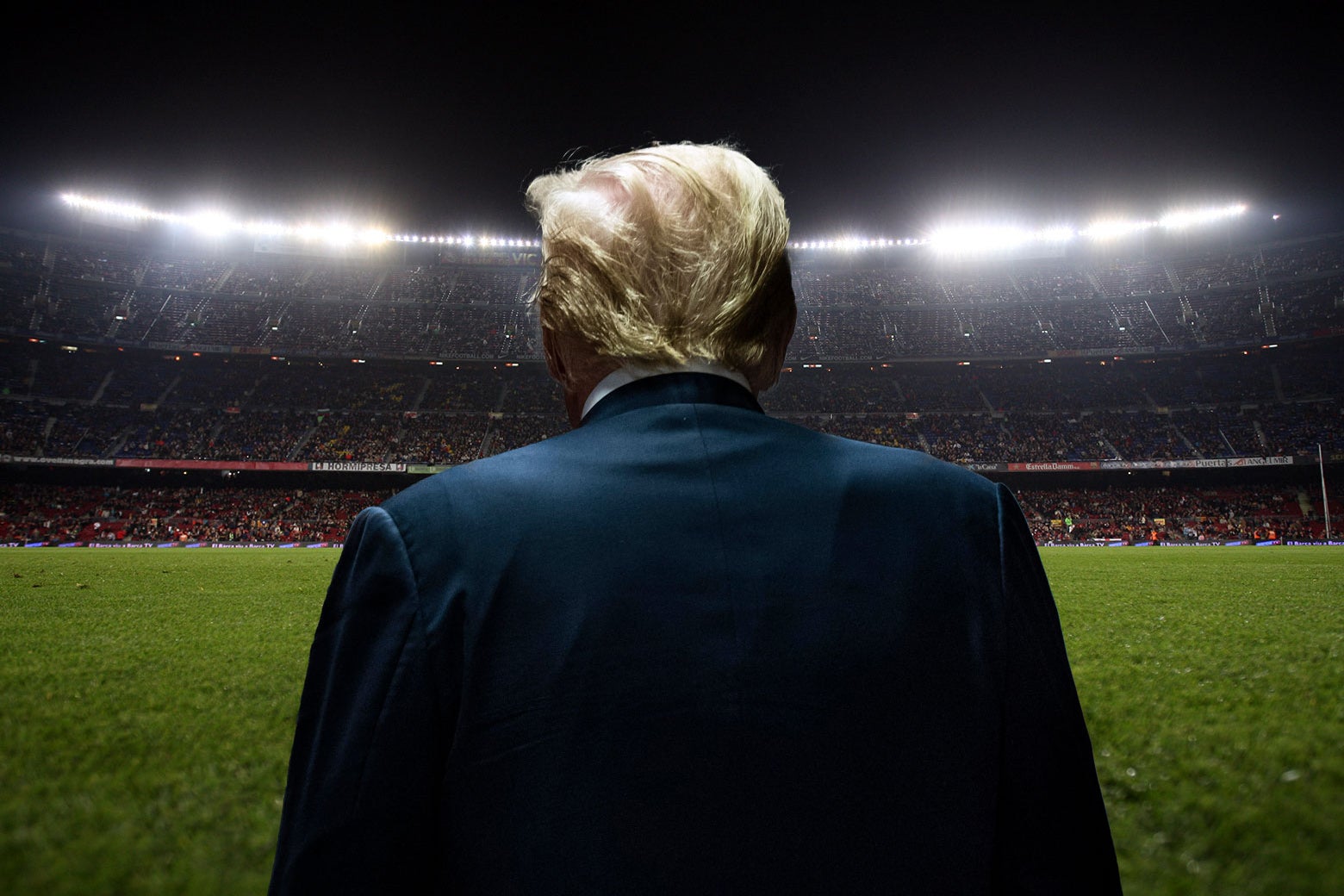
The beautiful game has a long, ugly history with autocrats. But there's something about soccer that the authoritarian mind cannot comprehend.
All three host nations will have their own opening ceremonies.

Just days after the FBI and the Department of Justice released the “Most Wanted Fraudsters” list, an arrest was made of a former Minneapolis grocery store owner. […]

Who's ready for a summer of nonstop World Cup action?!

It's been a long four years, but the FIFA World Cup officially kicks off today.
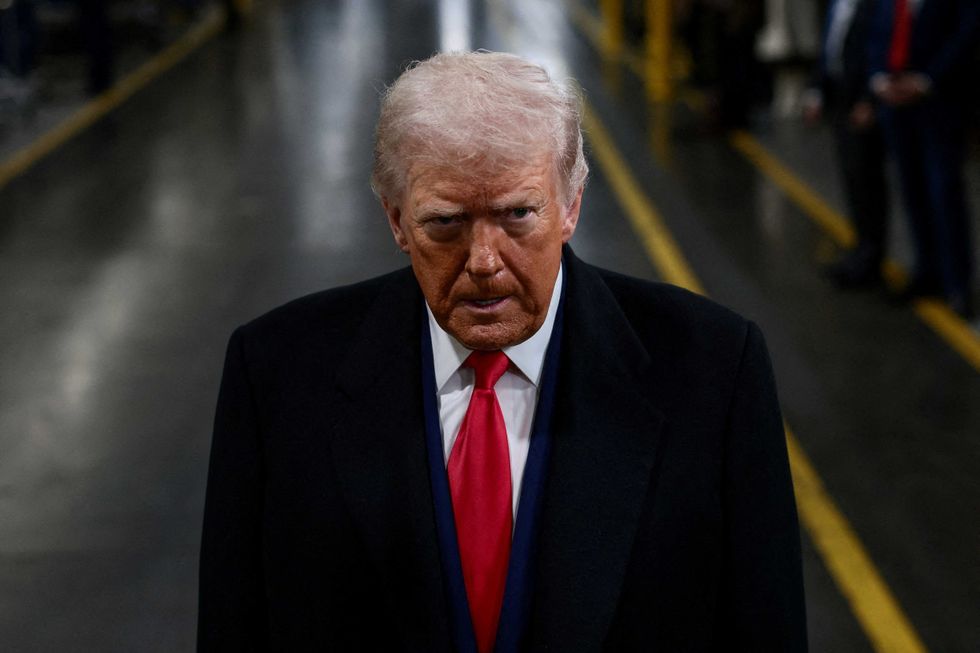
A retired colonel sounded the alarm in a new piece for The Hill this week, warning that President Donald Trump is running headlong into a massive problem that he will inevitably botch.Jonathan Sweet is a retired lieutenant colonel who had three decades of service as a military intelligence officer and now frequently writes about military affairs alongside national security reporter Mark Toth. Their latest piece, published on Thursday morning, argued that Trump "doesn't know how to win in Iran" as the beleaguered peace talks with the Middle Eastern nation drag on with no end in sight."The day the ceasefire began in Iran is the day President Trump’s war strategy began to fall apart," Sweet and Toth wrote. "U.S. and Israeli forces were crushing Iran’s military and were poised to begin systematically targeting the Islamic Revolutionary Guard Corps and the Basij, Iran’s street-level domestic security force and regime enforcers. Then came Trump’s order to stand down. Operation Epic Fury came to a crashing halt, and the White House and the Persian Gulf have been mired ever since in a ceasefire that is on a road to nowhere."The pair further argued that, counter to the insistence of the Trump administration, Iran's military is not a "complete and total mess," nor has it been "completely defeated." In fact, they countered, "whether Mr. Trump fully grasps it or not, has learned to fight the U.S., Israel, and its Gulf state allies on an asymmetrical basis," meaning that "a traditional air force, navy or ground army is not required.""Trump, simply put, does not know how to defeat Iran’s asymmetric war against him," the pair argued. "Plus, he is failing to understand how the Iranian regime is using kinetic tools on a regional basis to gain leverage in the ongoing peace talks. We have described that approach as a three-ring-circus. Mining the Strait of Hormuz is the center ring or main act. Limited ballistic missile and drone strikes against the U.S. and its allies in the region is the second ring. The third? Linking the survival of Hezbollah, the crown jewel of Iran’s axis of resistance against Israel, to the ever-elusive deal being negotiated."They continued: "Trump repeatedly claims that he has effected regime change in Iran. But he has not. The faces changed when Ayatollah Ali Khamenei, Ali Larijani and other top regime leaders were killed on the opening day of the war, but the regime’s militant ideology is the same. In reality, Iran’s regime has only become more entrenched. Most alarming, however, is that Trump seems oblivious that many of his comments, statements, and posts on Truth Social are perceived by Iran’s hardliners as signs of weakness."Ultimately, Sweet and Toth concluded, as they often have, that the only way for Trump to achieve victory over Iran in a meaningful way is to end efforts for a diplomatic solution, and instead "defeat them for real" by renewing the active military campaign against them.

As soccer fans from across the world travel to the United States this month to cheer on their countries’ teams at the 2026 FIFA World Cup, a poll released Wednesday by Data for Progress suggests Americans don’t believe many visitors have warm feelings toward the host country after a year-and-a-half of President Donald Trump’s leadership.Overall the poll found that 62% of American voters think the country’s reputation has deteriorated under Trump, with just 32% saying it’s gotten better.Republicans were the only political faction to believe Trump has improved global views of the US, while Independents and Democrats overwhelmingly said the president has made them worse.The poll also found 52% of US voters believed Trump’s mass deportation policies have hurt the country’s image in the world, with just 34% saying the deportations have helped.Trump’s immigration policies collided with the World Cup earlier this week when Somali referee Omar Artan, who was selected by the International Federation of Association Football (FIFA) to work at the celebrated event, was barred from entering the US despite having a valid visa.A Trump administration official claimed Artan had an “association with suspected members of terror organizations,” but provided no evidence for the allegation. US Rep. Rashida Tlaib (D-Mich.) called his treatment by the US “a disgrace.”Polling data published last year by Pew suggests that Democrats and Independents are more accurately measuring global public sentiment of the US under Trump’s leadership than Republicans.Specifically, Pew found that net positive perceptions of the US dropped by 10 percentage points or more among residents in a dozen countries between 2024 and 2025, including in key allies such as Canada, Mexico, Germany, and France.What’s more, Pew found only five countries where the United States’ reputation has improved since Trump’s election: South Africa, India, Israel, Nigeria, and Turkey.Trump during his second term has taken a number of actions that have sparked anger from foreign governments, including making repeated threats to seize Greenland as a US territory, invading Venezuela and abducting its president, imposing an oil blockade on and threatening to take over Cuba, launching a global trade war, and waging an illegal war of choice on Iran.
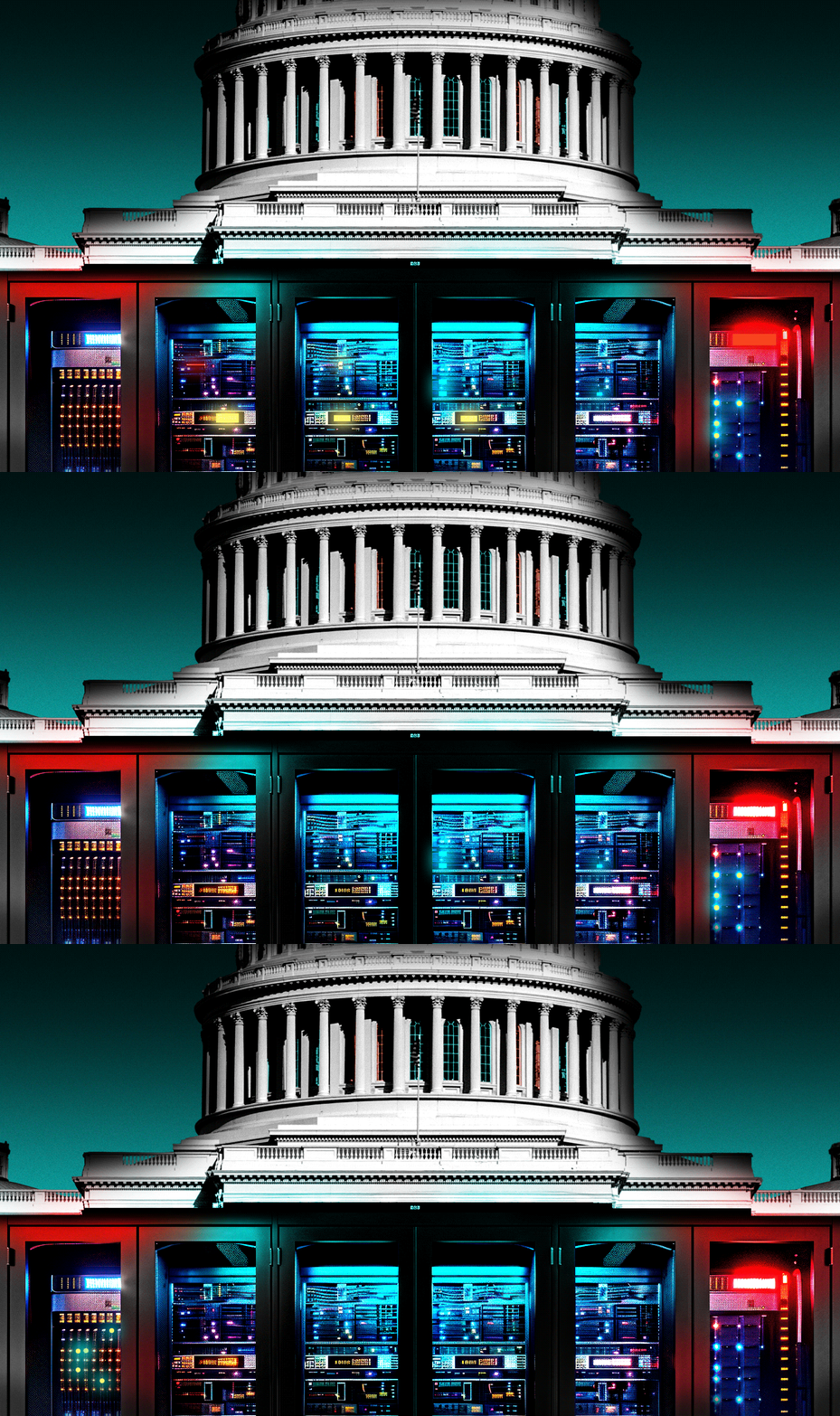
Members of Congress are scrambling to jump on the growing anti-data center fervor sweeping through local communities across the country. Why it matters: Where there is this kind of intense grassroots uproar, there is also political opportunity — and lawmakers know it.The latest example is legislation from Rep. Rob Bresnahan (R-Pa.) to restrict companies' ability to sue municipalities for rejecting applications to build data centers.The bill — called "the Local Control Protection Act" — would also require developers to file a legally binding "community benefit agreement" or lose out on federal tax incentives, per legislative text first shared with Axios.State of play: Growing public anxiety about the rapid growth of AI is fueling bitter fights at the local level to stop data centers from being built, Axios' Madison Mills reported.Objections include alleged environmental damage, high energy usage and resultant utility cost increases, and noise, air and water pollution.More than 350,000 people signed a petition opposing a proposed data center bordering the Nashville Zoo, according to Axios' Nate Rau.In Seattle, local officials have moved to ban new large data centers for a year, Axios' Melissa Santos wrote.By the numbers: Legislative proposals to restrict data center construction were fairly rare on Capitol Hill before this year. Now, Republicans and Democrats alike are flooding the zone.In the last three months alone, more than a dozen bills have been introduced to either investigate data centers' impacts or restrict their proliferation in some way.Between the lines: It's not just toothless bills to commission reports and studies — though there are those too, looking at resource consumption, environmental ramifications and the effects on communities of color.Several proposals aim to protect consumers from any energy cost spikes that result from data center production.Sen. Bernie Sanders (I-Vt.) has introduced a bill to impose an outright moratorium on new data center construction "until legislation is enacted that safeguards the public from the dangers of artificial intelligence."What they're saying: "We should never let billion-dollar corporations supersede the voices of those who live in the community," Bresnahan, one of Republicans' most endangered incumbents, said in statement."The people who live here, work here, and raise their families here are the ones who know what's best for our communities."Reality check: The prospect of any of these bills passing is slim — Congress has notoriously made scant progress in passing any guardrails on AI.And as Axios previously reported, AI and AI-adjacent companies are spending big through super PACs in the 2026 midterms to curry favor with sitting lawmakers and get allies elected to Congress.

Four years of waiting are over; the 2026 World Cup is about to commence.