A GOP Governor? In California? Unless the Dems Get It Together, Yes.
Source: The New Republic · Bias: Left
Summary
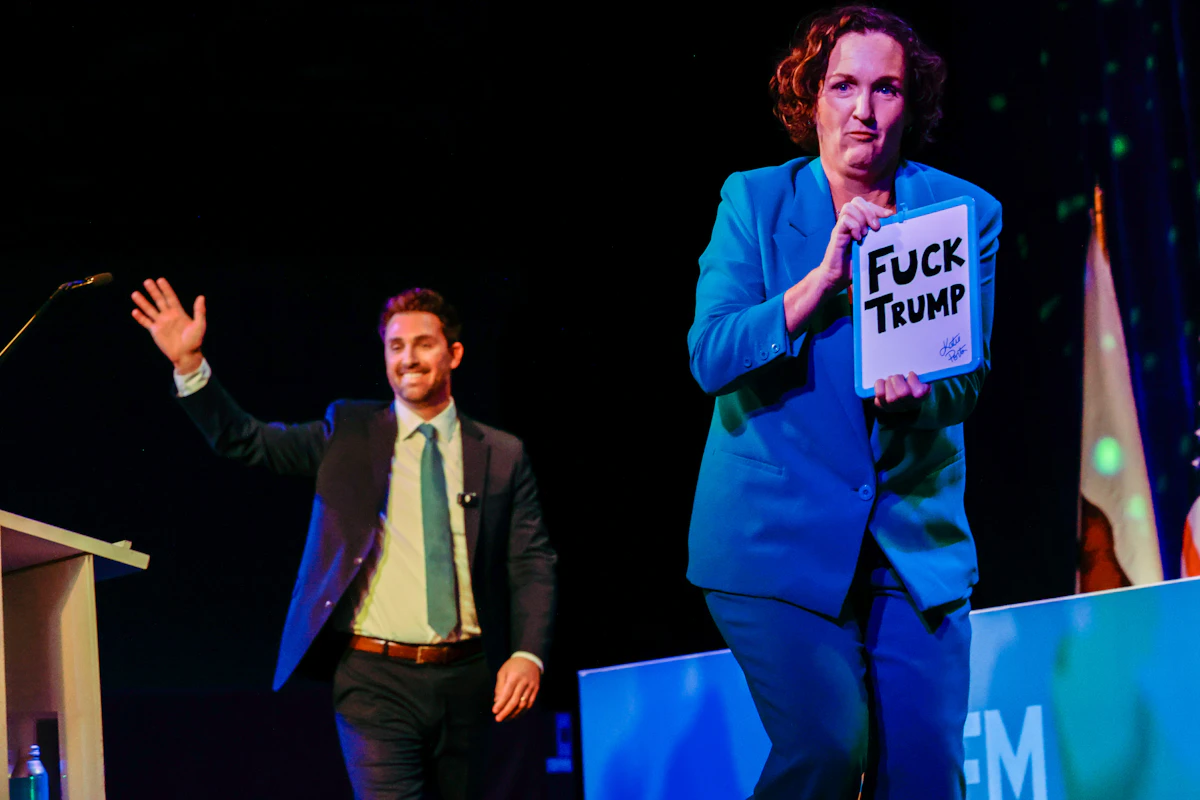
The Democrats are in danger of giving away one of the most important perches in American politics, particularly with a radical Republican like Donald Trump in the White House, and one that they should easily own: the California governorship. The party’s lack of strong internal leaders, ideological divides, and inept handling of issues of race and identity have combined to create a chaotic mess with dire potential consequences. Democratic leaders, both in California and across the country, must immediately start working on a path to ensure that at least one of the candidates who qualifies for the general election in the California governor’s race is a Democrat. The California primaries are officially on June 2, but voters receive and can mail in their ballots as soon as May 5. That’s just six weeks from now. Instead of each party having primaries, California is one of the states where the top two candidates go to the general election. And the polls suggest that if the election were held today, the two candidates who advance might be Riverside County Sheriff Chad Bianco and former Fox News host Steve Hilton, both Republicans. And Bianco and Hilton aren’t Arnold Schwarzenegger–ish moderate Republicans but true conservatives who want to implement Trump’s vision in California. California is a heavily Democratic state (Kamala Harris received 59 percent of the vote compared to 38 percent for Trump in 2024), so what the hell is going on? Democratic dysfunction. Of the 10 candidates running, eight are Democrats. Bianco and Hilton are each near 20 percent, essentially splitting the statewide GOP vote. Meanwhile, the eight Democrats are all getting a chunk of the state’s Democratic vote, leaving the entire field stuck in either single digits or the low to mid teens. Polls also show from 15 to 25 percent of the electorate saying that they are not sure who they will vote for. That likely consists of Democratic voters unable to sort through their eight choices. The three leading Democrats, former Representative Katie Porter, billionaire venture capitalist Tom Steyer, and Representative Eric Swalwell, are all close to Bianco and Hilton in the polls. But at this point, there is no guarantee that any of those three will make the general election. How did we get here? Part of the problem is that there is no clear heir apparent to outgoing Governor Gavin Newsom. Lieutenant Governor Eleni Kounalakis started running for the top job, didn’t get much support, and then shifted to the state treasurer’s race last August. Senator Alex Padilla chose to stay in Washington, despite pleas from some party officials. Harris opted against a run, as well. The field does include some figures with strong résumés. Xavier Becerra was in the House leadership in Washington before stints as attorney general of California and health and human services secretary in the Biden administration. Antonio Villaraigosa was the speaker of the state Assembly and the mayor of Los Angeles. But in more than a year of campaigning, none of the Democratic candidates has broken out from the rest of the field. Some California Democratic leaders are very aware of this issue and have been trying to fix it. Earlier this month, Rusty Hicks, the chairman of the California Democratic Party, released a public letter urging some of the lowest-polling candidates to get out of the race before the formal filing deadline on March 6, to ensure that their names were not on the ballot. No one dropped out. Hicks last week publicly released a poll funded by the state party that showed Hilton at 16 percent; Bianco at 15 percent; Porter, Steyer, and Swalwell at 10 percent, and the other Democrats even further back. Hicks, to his credit, is not being subtle. But the situation is actually getting worse. The University of Southern California and KABC-TV Los Angeles were due last week to host a debate that was supposed to include only the top candidates in the race. To select which candidates would qualify, a USC political science professor came up with a formula that assessed the candidates’ fundraising and polling. This process was not perfect because the formula resulted in the inclusion of the five candidates who have consistently polled the highest (Bianco, Hilton, Porter, Steyer, and Swalwell) but also a sixth, San Jose Mayor Matt Mahan, who is way down in the polls. The formula assessed how long a candidate has been in the race, so it essentially rewarded Mahan for entering the race late (January 29) but with strong fundraising. Mahan is a moderate and has signaled he would be less antagonistic toward tech companies and other wealthy interests in California, so they have poured millions into his campaign. I don’t think Mahan should have been included. That said, the debate sponsors were generally acting in a mature, pro-democracy way, trying to provide voters a real discussion between the truly viable candidates.
Related Coverage
- 'Demon in human skin!' Fox News host loses it as Dem threatens to upend Texas Senate race (Far Left — Raw Story)
- Penn Dems boot GOP Rep from House floor for patriotic suit despite encouraging ‘Pride’ attire (Far Right — BizPac Review)
- A Vietnam Nurse Who Came Home, Helped Get Us to 250 (Center Right — RealClearPolitics - Homepage)
- Dem-run city urges residents to snitch on those who break out sparklers on the 4th (Far Right — BizPac Review)
- ‘Commie corridor’ goes west: Here’s who propelled Dems’ latest socialist to a win (Far Right — WorldNetDaily)
- Pay-to-play cycle behind GOP's corporate tax cuts exposed in new report (Far Left — Raw Story)
- Memo to MAGA: Stop Being Idiots — The Dems Are TELLING US How to Destroy Them! (Right — PJ Media)
- Mamdani mocked by GOP for telling New Yorkers to set thermostats to 78 (Center — The Hill News)
Daily Analysis
Read the full Parallax Pulse for March 30, 2026 — an AI-powered analysis of how Left and Right media covered the biggest stories this day.
More Headlines From March 30, 2026
- Why one Democrat broke ranks to save Trump's DHS nominee (Right)
- Trump Threatens Iran Energy Sites If No Deal Reached on War (Center)
- Trump will 'destroy' the Republican Party with NATO action warns GOP lawmaker (Right)
- House Democrat warns of ‘boots-on-the-ground quagmire’ in Iran (Center)
- How Yemen’s Houthis Could Worsen the Oil Crunch (Center)