A Fractured Supreme Court Plucks a Death-Row Defendant From Harm
Source: The New Republic · Bias: Left
Summary
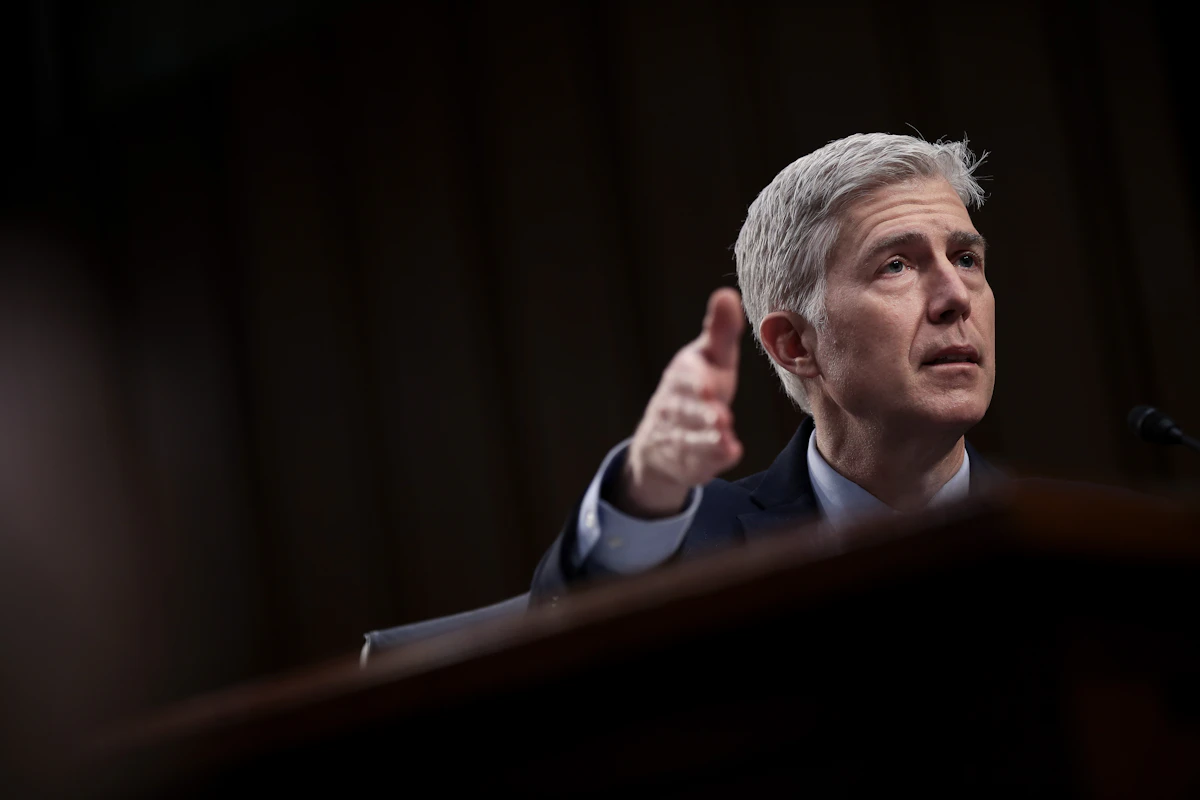
The Supreme Court ruled in favor of a Black death-row prisoner in Mississippi on Thursday who claimed that he had been denied a fair trial because prosecutors had struck all but one of the Black potential jurors during jury selection.Justice Brett Kavanaugh, writing for a 5–4 court, held that the Mississippi courts had “unreasonably applied the clearly established Batson precedents,” referring to a landmark 1986 case, and “unreasonably determined” that defendant had “waived his opportunity to rebut the prosecutor’s asserted race-neutral reasons” for striking multiple Black potential jurors.The court’s ruling is not surprising based on the available record. But the fact that only five of the court’s nine members reached this conclusion is somewhat troubling. Kavanaugh, along with Chief Justice John Roberts, joined Justices Sonia Sotomayor, Elena Kagan, and Ketanji Brown Jackson to form the majority. Justice Neil Gorsuch led the rest of the conservatives in dissent.This lineup is not as surprising as it might look. While Kavanaugh tends to vote with his fellow conservatives on most criminal justice matters, he has shown a special interest in questions of racial discrimination during jury selection throughout his legal career. He even wrote a law review note on Batson v. Kentucky, the landmark 1986 case on the matter, while attending Yale Law School in 1989.Thursday’s ruling is good news for Terry Pitchford, who robbed a grocery store in Mississippi in 2004 along with his then-friend Eric Bullins. During the robbery, Bullins shot and killed the store’s owner. State prosecutors reached a plea deal with Bullins, who was ineligible for the death penalty as a 16-year-old, and instead sent him to prison for 20 years. Under the felony-murder rule, prosecutors then charged Pitchford, who was 18 years old at the time, with first-degree murder, even though he didn’t pull the trigger. A Mississippi jury convicted him, and the court sentenced him to death.As recent events have shown, the American jury system is an essential bulwark against tyranny, oppression, and prosecutorial abuses. For that reason, prosecutors in the Jim Crow South routinely excluded Black Americans from participating as jurors in criminal trials, especially in cases with Black defendants. So prevalent was the problem that the phrase “all-white jury” entered the American lexicon as a shorthand phrase for manifestly unjust and unreliable trials in the South.Black jury participation increased after the demise of de jure racial segregation in the 1950s and 1960s, alongside other forms of direct political participation. But old habits die hard. In the Batson case, for example, a state prosecutor had used his peremptory challenges to strike all of the Black jurors from the jury pool, resulting in an all-white jury for a Black defendant. The Supreme Court ruled in Batson that a state violates a defendant’s equal-protection rights when it “puts him on trial before a jury from which members of his race have been purposefully excluded.”Since Batson, prosecutors have typically given race-neutral explanations to the court for why they are striking jurors to avoid future legal challenges. According to court records, the prosecutor struck four of the five Black potential jurors and gave reasons that ranged from their showing up 15 minutes late to court to their being young, unmarried, and male like Pitchford. A defendant’s lawyers then have the opportunity to respond or rebut those explanations. In Pitchford’s case, however, that did not happen.Rather than allow Pitchford’s lawyers to challenge those strikes, the trial judge simply declared that each of them was race-neutral and moved on. This was implausible, as Pitchford’s lawyers later explained, because the prosecution had “deselected black people from the jury panel who had the same familial, living, social or marital circumstances as whites who were not deselected.” Pitchford’s lawyers tried to object at the end of the process, only to be rejected again by the trial judge, as Kavanaugh summarized:At the close of jury selection, defense counsel sought to raise the Batson issue again. But the trial court twice cut off defense counsel and ended the inquiry before counsel could try to rebut as pretextual the race-neutral reasons articulated by the prosecution: “I think you already made those, and they are clear in the record. For the reasons previously stated, first the Court finds there to be no—well, all the reasons were race neutral as to members that were struck by the district attorney’s office. And so the, the Court finds there to be no Batson violation.”One might expect the Mississippi Supreme Court, to which Pitchford turned next, to have ordered a new trial after learning about this flawed jury selection process. But it did not.
Related Coverage
- Trump Scores Appeals Court Victory in Battle Over National Park Historical Displays (Right — RedState)
- Lawfare: Kangaroo court picks fight with state’s conservative attorney general (Far Right — WorldNetDaily)
- UPDATE: Louisiana Supreme Court Temporarily Blocks Politically Motivated Indictment Against AG Liz Murrill (Far Right — The Gateway Pundit)
- Conservative Catches CNN Host Abby Phillip in a Glaring Hypocrisy as She Defends Communist NYC Mayor Zohran Mamdani’s Absurd Demand on Air Conditioning (Video) (Far Right — The Gateway Pundit)
- Iran’s supreme leader bails on first day of late dad’s funeral ceremonies (Right — New York Post)
- Justice Department defends decision not to release, unredact more Epstein files (Center — NewsNation)
- Justice Department defends decision not to release, unredact more Epstein files (Center — The Hill News)
- Louisiana court halts criminal indictment against state attorney general (Center Left — US news | The Guardian)
Daily Analysis
Read the full Parallax Pulse for May 28, 2026 — an AI-powered analysis of how Left and Right media covered the biggest stories this day.
More Headlines From May 28, 2026
- Ex-CIA official arrested by the FBI for possession of $40 million in gold bars allegedly stolen from work (Far Right)
- Alabama reporter calls it 'too late' for sane Republicans to save the GOP (Left)
- Multiple Artists Drop Out of Freedom 250 DC Concert Lineup (Center Left)
- Two Lives Upended By Vindictive Prosecutors Underscore The Need For Anti-Weaponization Fund (Far Right)
- Democrats Used The DOJ To Destroy Their Enemies. Restitution For Victims Is The Least We Should Do (Far Right)