A forgotten Supreme Court case can help prevent Trump's takeover of elections
Source: Alternet.org · Bias: Left
Summary
The recent FBI search of the Fulton County, Georgia, elections facility and the seizure of election-related materials pursuant to a warrant has attracted concern for what it might mean for future elections.What if a determined executive branch used federal law enforcement to seize election materials to sow distrust in the results of the 2026 midterm congressional elections?Courts and states should be wary when an investigation risks commandeering the evidence needed to ascertain election results. That is where a largely forgotten Supreme Court case from the 1970s matters, a case about an Indiana recount that sets important guardrails to prevent post-election chaos in federal elections.Congress’s constitutionally-delegated roleThe case known as Roudebush v. Hartke arose from a razor-thin U.S. Senate race in Indiana in 1970. The ballots were cast on Election Day, and the state counted and verified the results, a process known as the “canvass.” The state certified R. Vance Hartke as the winner. Typically, the certified winner presents himself to Congress, which accepts his certificate of election and seats the member to Congress.The losing candidate, Richard L. Roudebush, invoked Indiana’s recount procedures. Hartke then sued to stop the recount. He argued that a state recount would intrude on the power of each chamber, the Senate or the House of Representatives, to judge its own elections under Article I, Section 5 of the U.S. Constitution. That clause gives each chamber the sole right to judge elections. No one else can interfere with that power.Hartke worried that a recount might result in ballots that could be altered or destroyed, which would diminish the ability of the Senate to engage in a meaningful examination of the ballots if an election contest arose. But the Supreme Court rejected that argument. It held that a state recount does not “usurp” the Senate’s authority because the Senate remains free to make the ultimate judgment of who won the election. The recount can be understood as producing new information – in this case, an additional set of tabulated results – without stripping the Senate of its final say.Furthermore, there was no evidence that a recount board would be “less honest or conscientious in the performance of its duties” than the original precinct boards that tabulated the election results the first time around, the court said. A state recount, then, is perfectly acceptable, as long as it does not impair the power of Congress.In the Roudebush decision, the court recognized that states run the mechanics of congressional elections as part of their power under Article I, Section 4 of the U.S. Constitution to set the “Times, Places and Manner of holding Elections for Senators and Representatives,” subject to Congress’s own regulation. At the same time, each chamber of Congress judges its own elections, and courts and states should not casually interfere with that core constitutional function. They cannot engage in behaviors that usurp Congress’s constitutionally-delegated role in elections.Evidence can be powerThe Fulton County episode is legally and politically fraught not because federal agents executed a warrant – courts authorize warrants all the time – but because of what was seized: ballots, voting machines, tabulation equipment and related records.Those items are not just evidence. They are also the raw materials for the canvassing of votes and certification of winners. They provide the foundation for audits and recounts. And, importantly, they are necessary for any later inquiry by Congress if a House or Senate race becomes contested.That overlap creates a structural problem: If a federal investigation seizes, damages, or destroys election materials, it can affect who has the power to assess the election. It can also inject uncertainty into the chain of custody: Because ballots are removed from absentee envelopes or transferred from Election Day precincts to county election storage facilities, states ensure the ballots cast on Election Day are the only ones tabulated, and that ballots are not lost or destroyed in the process. Disrupting this chain of custody by seizing ballots, however, can increase, rather than decrease, doubts about the reliability of election results. That is the modern version of “usurpation.”From my perspective as an election law scholar, Roudebush is a reminder that courts should be skeptical of executive actions that shift decisive control over election proof away from the institutions the Constitution expects to do the judging.There is another institutional reason courts should be cautious about federal actions that seize or compromise election materials: The House already has a long-running capacity to observe state election administration in close congressional races.The Committee on House Administration maintains an Election Observer Program.
Related Coverage
- ‘The second-most good-looking president’: Trump entertains on Usha Vance’s program (Far Right — WorldNetDaily)
- Melania gives Congress private deadline as she works around Trump's team: report (Far Left — Raw Story)
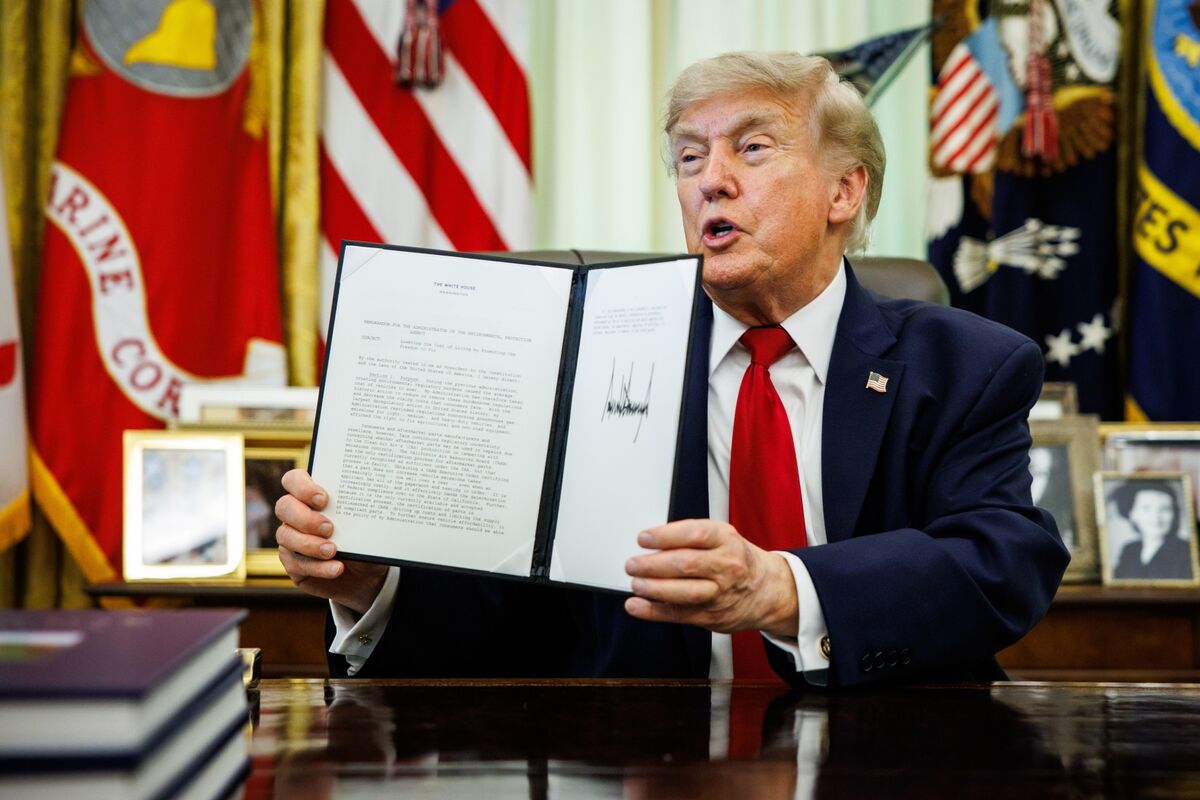
- Trump announces pardons for pollution violators prosecuted for "fixing their car" (Center — Politics - CBSNews.com)
- Trump Pardons Six People Pursued for ‘Fixing Their Car’ (Center — Bloomberg Politics)
- Sources: Trump likely to pardon pollution violators; weighing clemency for Diddy (Center — Politics - CBSNews.com)
- Fox host warns Trump will pay for his 'breathtaking' corruption (Left — Alternet.org)
- Signs of Victory: I-95 Welcomes President Donald Trump Int'l Airport (Right — RedState)
- Trump Scores Appeals Court Victory in Battle Over National Park Historical Displays (Right — RedState)
More Headlines From February 14, 2026
- Noem unable to cite single election fraud case during secretive Arizona visit (Left)
- T.S.A. Workers Brace for Another Shutdown They Didn’t Cause (Center Left)
- New details expose extensive prep behind Trump admin's controversial raid (Left)
- Pam Bondi Crashed Out for a Bizarre Reason. She’s Not Alone. (Left)
- US officials investigate whether ICE agents lied about Minneapolis shooting (Center Left)