Johnson Says He Will Send Housing Bill to Trump
After meeting with the president, the speaker said he would send him a housing bill that Mr. Trump declined to sign this week. There was no word on whether he would sign it.

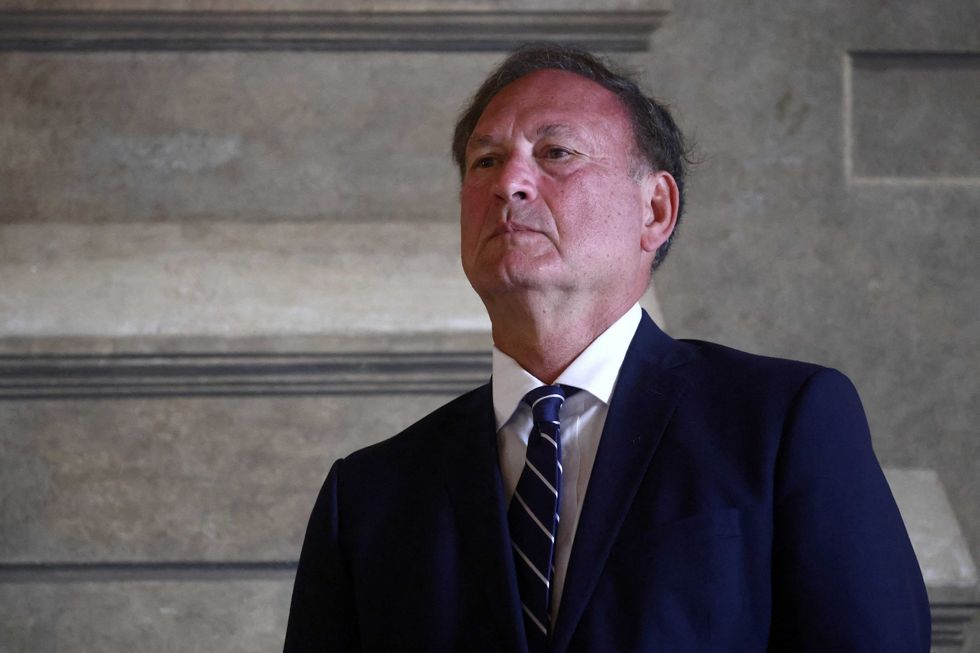
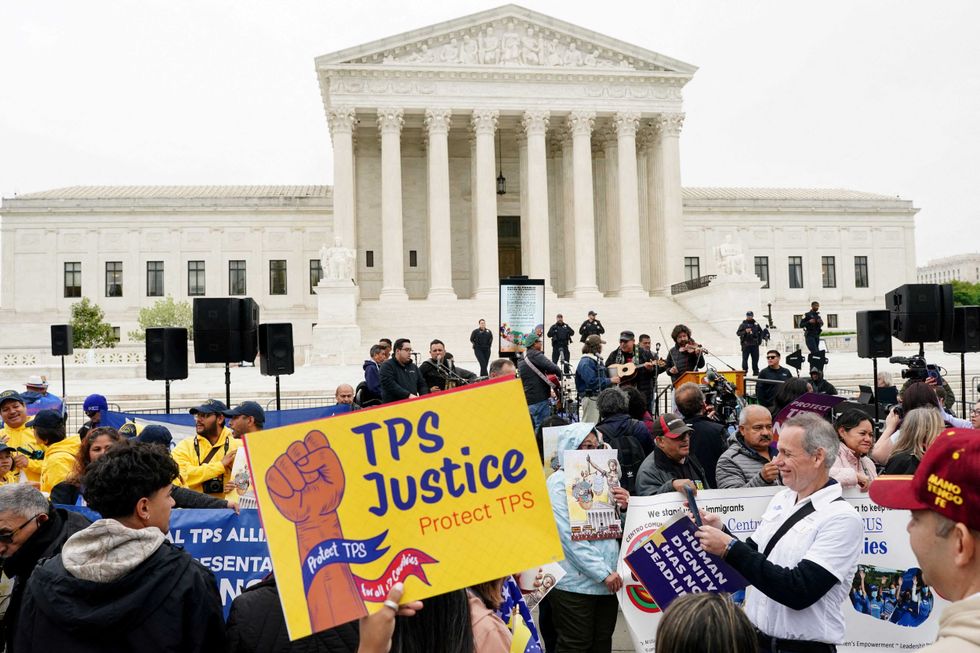
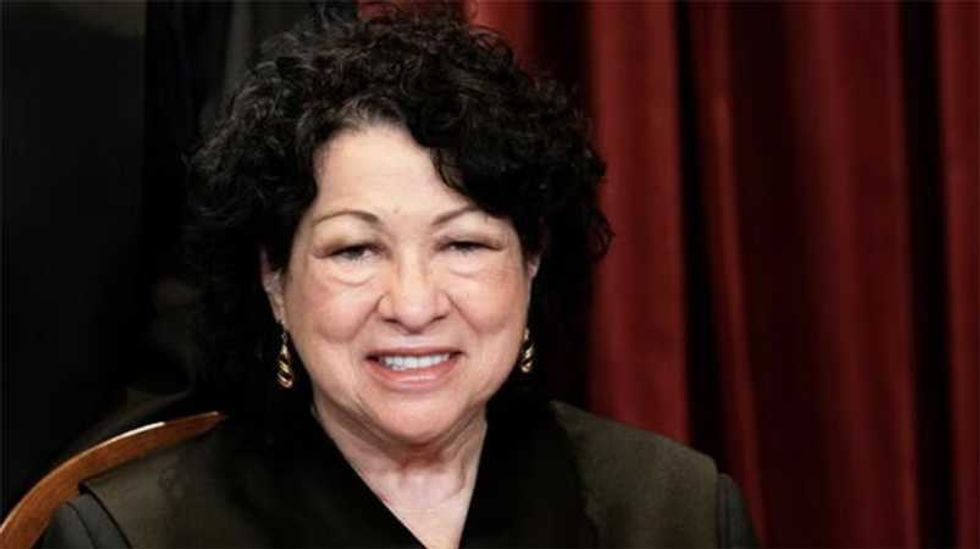
A Slate legal analyst said Thursday the Supreme Court's conservative majority delivered a seismic blow to multiple areas of American law in a single morning, expanding President Donald Trump's power in the process.Appearing on a panel Thursday, Mark Joseph Stern, co-host of Slate's Amicus podcast, walked through three 6-3 rulings the court handed down, all authored by Justice Samuel Alito and all splitting along ideological lines."They did quite a bit," Stern said. He explained that the justices allowed Trump to cancel Temporary Protected Status for hundreds of thousands of Haitians and Syrians without judicial review, permitted the administration to physically turn away asylum seekers at the border, and struck down a Hawaii law that made it illegal to carry a gun onto private property without the owner's consent."This is very much an earthquake in several different realms of the law," Stern said, adding that the decisions award Trump "even more power, specifically over immigration, than he already held, and he already held a lot of it."The TPS ruling alone could strip work authorization and deportation protections from about 350,000 Haitians and 6,000 Syrians. Writing for the majority, Alito held that the TPS statute bars courts from considering the challengers' non-constitutional claims. Also on the panel, Vanderbilt law professor Brian Fitzpatrick, a former clerk for the late Justice Antonin Scalia, framed the day differently. He called the outcome a victory for "conservative judicial philosophy more than anyone," noting the justices were fighting on the originalist and textualist terrain Scalia laid out years ago.The three liberal justices dissented in each immigration case. Justice Sonia Sotomayor read her asylum dissent from the bench, an unusual move that drew a pointed response from Alito, eliciting audible gasps. She warned that the consequences of the decision were predictable, writing, "More people will die."
After meeting with the president, the speaker said he would send him a housing bill that Mr. Trump declined to sign this week. There was no word on whether he would sign it.
A pair of immigration rulings sparked a clash among Supreme Court Justices on Thursday. Following his 6-3 decision announcement on both cases, Justice Samuel Alito accused liberal colleagues of blindsiding on the Court bench. The tension began after Alito announced the first ruling, which adopts a narrow interpretation of what constitutes arrival in the United States, reported CNN's Joan Biskupic. Thus making it significantly harder for asylum seekers who traveled through Mexico and South America to qualify unless they physically set foot on U.S. soil.Justice Sonia Sotomayor read a dissent lasting roughly 10 minutes, invoking the 1939 voyage of over 900 Jewish refugees turned away from Cuba and the United States, who later perished in the Holocaust. She tied the historical event to international treaties protecting people fleeing persecution. Justices Elena Kagan and Ketanji Brown Jackson joined her dissent. "Typically, it's the justice who is reading the majority opinion who's the only one who speaks," Biskupic explained outside the courtroom. "If somebody reads a dissent in this case, from the liberals really protesting what has happened in this refugee case."Alito responded from the bench, stating he would have said more had he known Sotomayor would deliver her dissent orally. Alito then announced a second 6-3 ruling restricting Temporary Protected Status for migrants from Haiti and Syria.Watch the video below. Your browser does not support the video tag.
MS NOW anchor Nicolle Wallace likened Supreme Court dissents to a "primal scream" after a spate of decisions.Wallace was highlighting parts of Justice Elena Kagan's dissenting opinion in immigration cases that end legal protections for recipients of temporary protected status."The justices to put so much storytelling in a dissent does feel like a real primal scream for people to wake up and see what the human toll is of today's decisions," Wallace said.She read excerpts of Kagan's dissent that recounted the stories of Syrian and Haitian nationals and "put human beings at the center of today's stories," Wallace said."Consider Laila Doe, who fled Syria with her daughter in 2013 after her neighborhood was bombed," Kagan's dissent read. "Without TPS, she will have to leave her mother and return to a still ravaged, violent, and dangerous country."Wallace also looked at a part of Kagan's dissent that talked about Fritz Emmanuel Lesly Miot, "a Haitian national who has held TPS for fifteen years," according to Kagan. "Miot suffers from Type 1 diabetes, which is easily treated in the United States, but in Haiti, the same disease can be a death sentence.""He lives in California, where he works in a laboratory researching Alzheimer's, a job he can hold only because of his TPS work authorization," Kagan wrote.Dahlia Lithwick, a legal analyst, described the opinions from Justice Samuel Alito and others who voted to pull back TPS protections as "crabbed." She added that Justice Alito was "angry" at Justice Sonia Sotomayor being "upset" like Kagan.Lithwick also called Justice Alito and others in the majority opinion "vulcans" who saw it as their job to take on a "hyper-textual approach," as opposed to the human-oriented approach that she and Wallace saw in the reactions of Kagan and Sotomayor."What they end up doing is ignoring the explicit intent of Congress," Lithwick said about the justices in the majority opinion. "They end up absolutely circumscribing judicial power of review."
Establishment Democrats are on the back foot after candidates backed by Democratic Socialists of America swept races.
Thousands are feared dead in Venezuela after back-to-back powerful earthquakes struck the country Wednesday evening, collapsing buildings in the capital Caracas and surrounding areas. Venezuela’s acting President Delcy Rodríguez has declared a state of emergency as rescue workers frantically search for survivors in the rubble of “dozens” of collapsed buildings. Historian Alejandro Velasco, who has family in Venezuela, reports that “many Venezuelans abroad are trying to get in touch with their loved ones in Venezuela and are having a hard time doing so.” The current death toll is at 164, with 1,000 people injured, but the U.S. Geological Survey warns there’s a high chance the death toll could rise into the tens of thousands — or even top 100,000.
A bitter clash among Supreme Court justices came into view Thursday through a pair of immigration rulings, in which Justice Samuel Alito accused his liberal colleagues of blindsiding him.The friction emerged when Alito announced the court's decision in an asylum case, adopting a narrow interpretation of what it means for a migrant to have "arrived" in the United States under federal law — a reading that makes it significantly harder for asylum seekers who traveled through Mexico and South America to qualify unless they physically set foot on U.S. soil, reported CNN's Joan Biskupic."The tension really hit a climax, and it came when Justice Samuel Alito read three different opinions from the bench, the first one fairly routine, but the second two having to do with immigration and refugee rights," Biskupic reported from outside the court. "What happened in the courtroom showed not just the division but the anger between the two sides, and Justice Alito, right there from the bench, accused his liberal colleague, Sonia Sotomayor of blindsiding him, in effect, when she started to read her dissent from the bench.""Typically, it's the justice who is reading the majority opinion who's the only one who speaks," she added. "If somebody reads a dissent in this case, from the liberals really protesting what has happened in this refugee case."Over roughly 10 minutes, Sotomayor invoked the 1939 voyage of more than 900 Jewish refugees turned away from Cuba and the United States, most of whom later perished in the Holocaust, and tied that history to international treaties protecting people fleeing persecution. She argued the ruling betrayed that legacy and detailed the violence and extortion facing migrants stranded near the border. Justices Elena Kagan and Ketanji Brown Jackson joined her."Then Justice Alito, who's going to read another opinion, he stops and he says, 'If I had known that the dissent was going to deliver that opinion from the bench, I would have said more, I would have said more about why we ruled the way we did,'" Biskupic said. "It was a very bitter response to what we had just heard."Alito then pressed forward, announcing a second 6-3 ruling restricting the federal government's use of Temporary Protected Status for migrants from Haiti and Syria — another significant win for the administration.The TPS decision could have immediate consequences for refugees who have lived in the U.S. legally for months or years. Biskupic said whether individuals can now be removed depends on their specific status and where they stood in the application process, but the ruling clears a path for the administration to revoke protections it has long sought to end. - YouTube youtu.be
A decision by Justice Sonia Sotomayor to take 12 minutes of the court’s time on Thursday to read her dissent in a 6-3 ruling that makes it significantly harder for asylum seekers who traveled through Mexico and South America to enter the US provoked Justice Sam Alito to take an unseemly potshot at her, which stunned court regulars.According to MS NOW legal analyst Lisa Rubin, arch-conservative Alito sat and listened to a very “calm” Sotomayor read her dissent, with Rubin pointing out, “That is certainly not unusual.”“But here there was a moment of tension between Justices Sotomayor, with her dissent and Justice Alito, who wrote the majority opinion here,” she elaborated. “Producer Peggy Helman, who is in the court for the reading of all of these decisions, said that Justice Alito said in response out loud, ‘There's much I would have added if I had known a dissent would be read from the bench.’”“She [Helman] said that people in the Supreme Court, in the gallery gasped when he said that because this is a group of people that, for all of their differences in terms of legal, interpretive methodology or even the outcome of cases, they like to make it seem as if they get a long; that they are all just rowing in the same direction, trying to do their job to uphold the rule of law” Rubin reported. “Even when their conceptions of what the rule of law is differs, that very obvious public fracture between the two of them was one that was surprising even to the most veteran court watchers in the room today,” she added. - YouTube youtu.be
Justice Samuel Alito took aim at arguments from Hawaii‘s reliance on the “spirit of aloha” as rationale for expansive and restrictive gun laws, in a ruling Thursday striking down a sweeping firearm law in the Aloha State. The Supreme Court ruled 6-3, on ideological lines, to strike down a sweeping Hawaii gun law that required […]