'Very bad facts' emerge as Comey fights Trump prosecutors over seashells: reporter
Source: Raw Story · Bias: Far Left
Summary
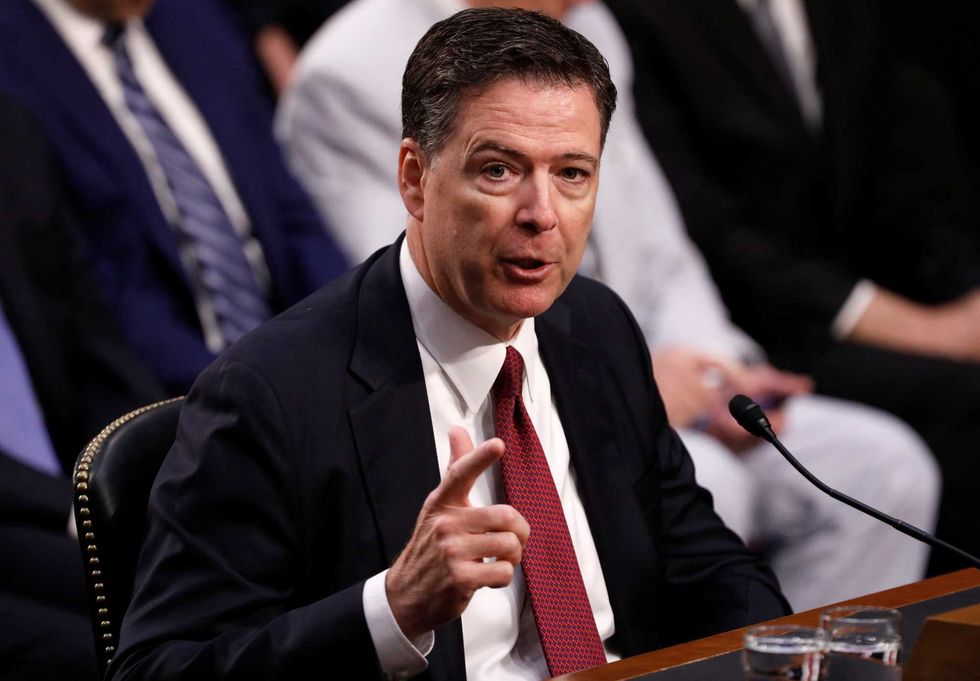
"Very bad facts" have been revealed in former FBI Director James Comey latest motion demanding a federal judge throw out the criminal case over a social media post showing sea shells arranged to spell "86 47," legal experts revealed Wednesday.Comey's lawyers' argument — that the prosecution is part of a multi-year attack by President Donald Trump to punish Comey for First Amendment-protected speech — contains explosive claims about the government's efforts to charge him, reported MS NOW."[Defense attorney] Pat Fitzgerald cites some very bad facts re the prosecution of James Comey," said MS NOW's Carol Leonnig, linking to work by her colleagues Fallon Gallagher and Lisa Rubin. "Worth reading all the ways the president and his aides ordered up the surveillance and prosecution of Jim Comey for a threat to Trump's life – despite agents concluding no threat existed."Comey's attorneys allege the U.S. Secret Service illegally surveilled him electronically at the direction of a senior official, tying the surveillance to Trump's involvement in pushing the case forward. Alongside the dismissal motion, Comey's team filed additional requests, including one to unseal grand jury audio over alleged irregularities in how prosecutors presented the case, and another to suppress evidence they say was obtained through misrepresentations and omissions.At the heart of the case is the phrase "86 47," which prosecutors argue constituted a true threat against Trump, the nation's 47th president. Comey's lawyers dispute that interpretation, noting that "86" is common restaurant-industry slang for discarding or refusing something, not a term for violence.They point out that most dictionaries don't even include "kill" as a definition, and they've submitted a declaration from former federal judge and mob prosecutor John Gleeson stating that in his organized-crime experience, "86" carries no connotation of murder. They also note Comey deleted the post within hours, saying he hadn't realized some people associate the numbers with violence.The filing notes that prosecutors obtained warrants by misleading a judge about interviews with a witness identified as "Person 1" and described by defense attorneys as an "estranged" associate who believed he had committed crimes as FBI director, but that individual testified that he "only" understood "86" to be restaurant slang until hearing a Rudy Giuliani's podcast that convinced him Comey would have known understood it as mob slang."A key witness hated Comey, openly wanted him jailed, disclosed having been in 'rehab' for unspecified reasons, admitted to offering only 'speculation,' and yet supported the defense theory of the case — until the person found a Rudy Giuliani podcast convincing," summarized Adam Klasfeld of All Rise News.The defense further argues selective prosecution, since "86 47" is widely used on protest signs and merchandise nationwide — usage a Washington federal judge recently found is protected First Amendment speech — yet Comey alone faces charges over it.This marks Comey's second indictment in under a year. His first case, brought in Virginia after Trump publicly pressured then-Attorney General Pam Bondi to pursue him, was dismissed on the grounds that the prosecutor who secured the indictment, Lindsey Halligan, had been unlawfully appointed — before a judge could rule on the vindictive-prosecution claims.Judge Louise Flanagan, a George W. Bush appointee, will now decide whether this second case should be dismissed. Courts rarely side with defendants on vindictive or selective prosecution claims, though it does happen — a Tennessee judge recently dismissed charges against Kilmar Abrego-Garcia on similar grounds.
Related Coverage
- Trump has four bad choices on Iran. Here’s the least horrible one (Center Right — Washington Examiner)
- Hannity exposed as outside Trump's 'little circle' after 'Orwellian' gaffe: analysis (Far Left — Raw Story)
- Fauci Complained About “Obnoxious Adolescent” Trump in Covid Diary (Left — The New Republic)
- Trump explodes after surprise attack with curse-laden threat: 'Going to get a beating' (Far Left — Raw Story)
- Trump's worst fear revealed as he faces GOP 'reckoning': analyst (Far Left — Raw Story)
- Trump says US will ‘beat the f—ing s—‘ out of Iran after surprise missile attack (Right — New York Post)
- Trump spills on supposed call to Biden after 2020 defeat: 'The rest is history!' (Far Left — Raw Story)
- 'Who was president!?' Trump defender shut down as he dodges Dem's fact check (Far Left — Raw Story)
Daily Analysis
Read the full Parallax Pulse for July 29, 2026 — an AI-powered analysis of how Left and Right media covered the biggest stories this day.
More Headlines From July 29, 2026
- Ex-Trump health official shocked by Fauci’s ‘unabashed narcissism’ from diaries (Center)
- Trump Asks Supreme Court to Overturn $83.3 Million Award in Carroll Defamation Case (Center Left)
- Morning news brief (Center)
- Trump Pays Tribute to Lindsey Graham: ‘He Died Doing the Work He Was Born to Do’ (Center Left)
- Iran launches 600th attack on US forces in Iraq, Pentagon says (Center)