Trump's 'mad hatter' legacy cemented following latest cabinet member fiasco: analysis
Far Left
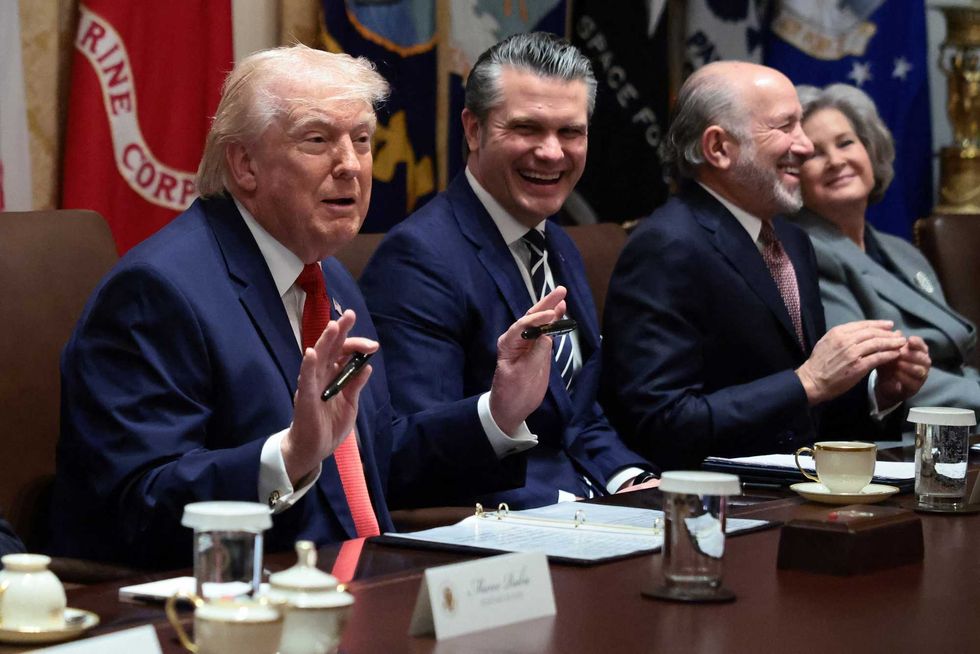
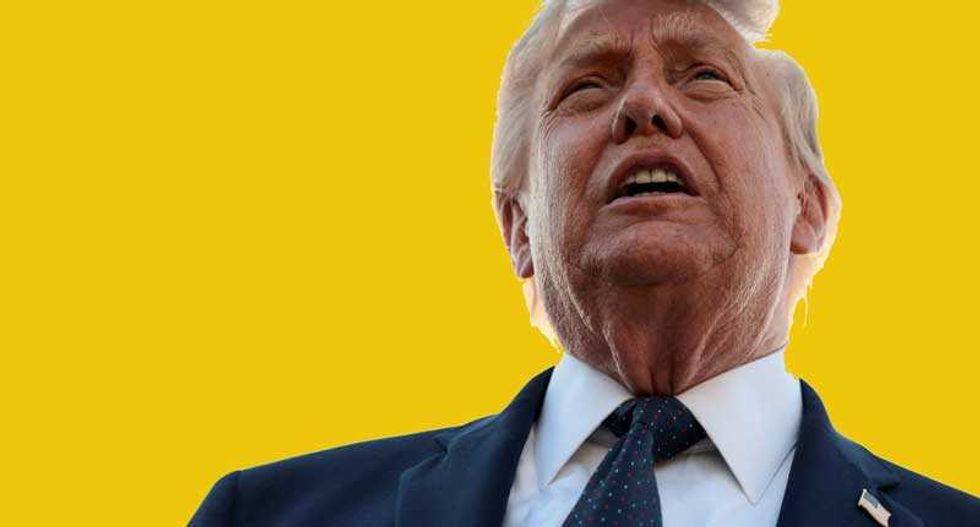
The Washington Post’s bombshell report Sunday that revealed Tulsi Gabbard may have been guided throughout her political career by a “cult guru” cemented the Trump administration’s legacy for the worse, argued Zeteo’s Martin Pengelly, who noted how the revelation made clear that the federal government had transformed into a full “kakistocracy.”Gabbard, who resigned from her position as Director of National Intelligence last Friday, was revealed to have received guidance throughout her 20-plus years in politics from Chris Butler, the leader of a religious group that countless former members have described as a “cult.” That guidance allegedly shaped nearly every facet of her political life – from her talking points to the bills she introduced – with the Post identifying several instances where she appeared to follow through.“Ask yourself a question: ultimately, what does Gabbard’s career tell us about how we are governed now?” Pengelly, who previously worked for Raw Story as an investigations editor, wrote in an analysis published Monday in Zeteo.“A Fox weekend host with an alleged drinking problem is secretary of defense. An anti-vaccine conspiracy theorist runs health and human services. And a dedicated cult member became director of national intelligence, despite the association being long known. This is what a kakistocracy looks like.”The revelation also painted a rough picture of President Donald Trump’s legacy, Pengelly argued.“And Gabbard’s extreme behavior in particular, highlighted by [journalist Jon] Swaine and the Post, shows us it’s not just a matter of Trump being mad as a hatter,” Pengelly wrote. “He’s dragged us all through the looking glass now.”
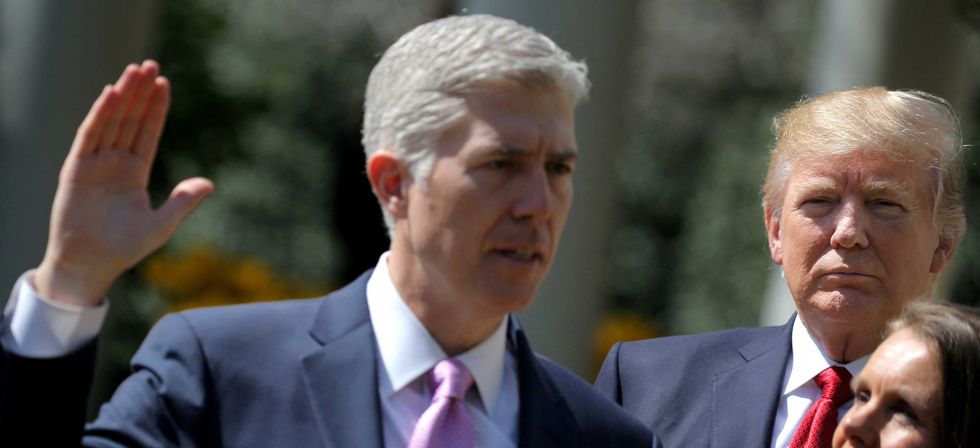
The once tight bond between Supreme Court Justice Neil Gorsuch and MAGA ally Mike Davis has fractured, offering a personal window into the broader rift between the Trump administration and the justices it helped appoint.Gorsuch once nicknamed Davis "the general" for the leading role he's taken in his career, first by helping him secure his first federal judgeship, then by leading the public campaign for his Supreme Court confirmation and later serving as one of his inaugural clerks – but that closeness has since deteriorated, reported The Daily Beast.One source with direct knowledge of the relationship told the Washington Post that Gorsuch was upset after Davis publicly attacked Justice Amy Coney Barrett, calling her a "rattled law professor" over rulings she joined against Trump alongside the court's liberal justices. Another source with direct knowledge said Davis, in turn, was angered by Gorsuch's vote to block the administration's use of a wartime authority to deport Venezuelan migrants.The strain became visible last year when Davis was notably absent from a gathering Gorsuch hosted for his former clerks. The two sources differed on whether Gorsuch asked Davis not to attend or whether Davis chose to stay away on his own.Davis declined to discuss the relationship directly but defended his broader criticism of the court in an interview, arguing that an unfavorable ruling on birthright citizenship would damage the court's standing. "They are following politics and vanity projects instead of the law," he said, adding that public pressure on the justices could be productive. "Sometimes feeling the heat helps people see the light."The falling-out reflects a wider pattern playing out across President Donald Trump's relationship with the court. Despite Gorsuch being one of three justices Trump appointed during his first term, the 80-year-old president has at times publicly criticized him by name, including accusing him of lacking "loyalty" after he joined a ruling striking down Trump's tariffs.Gorsuch, for his part, has avoided directly engaging with the criticism. Asked in a CBS News interview whether he owed loyalty to the president, he said simply that his "loyalty is to the Constitution." Gorsuch did not respond to a request for comment on his relationship with Davis.
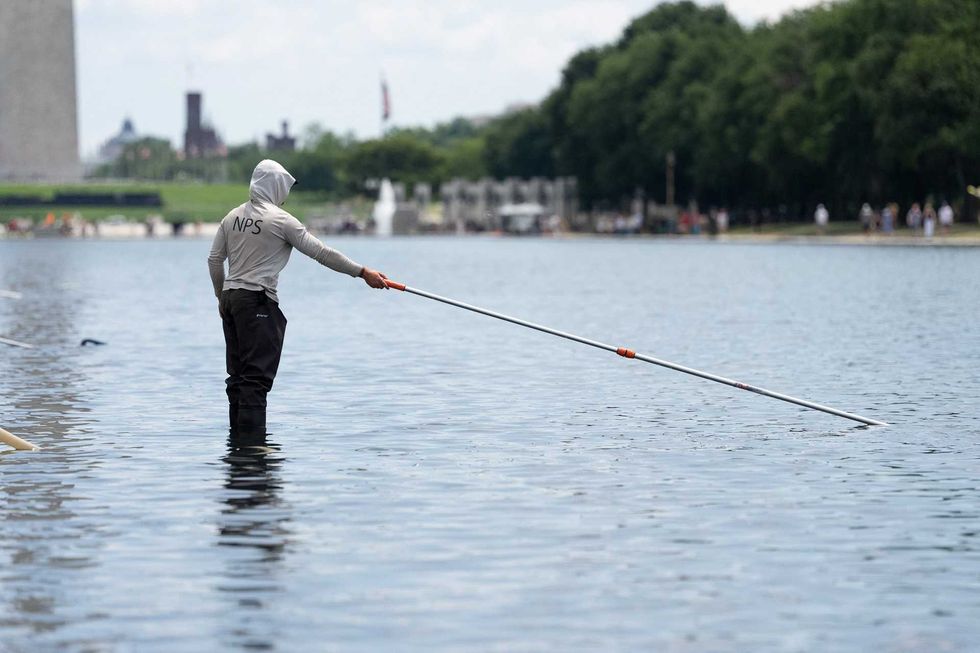
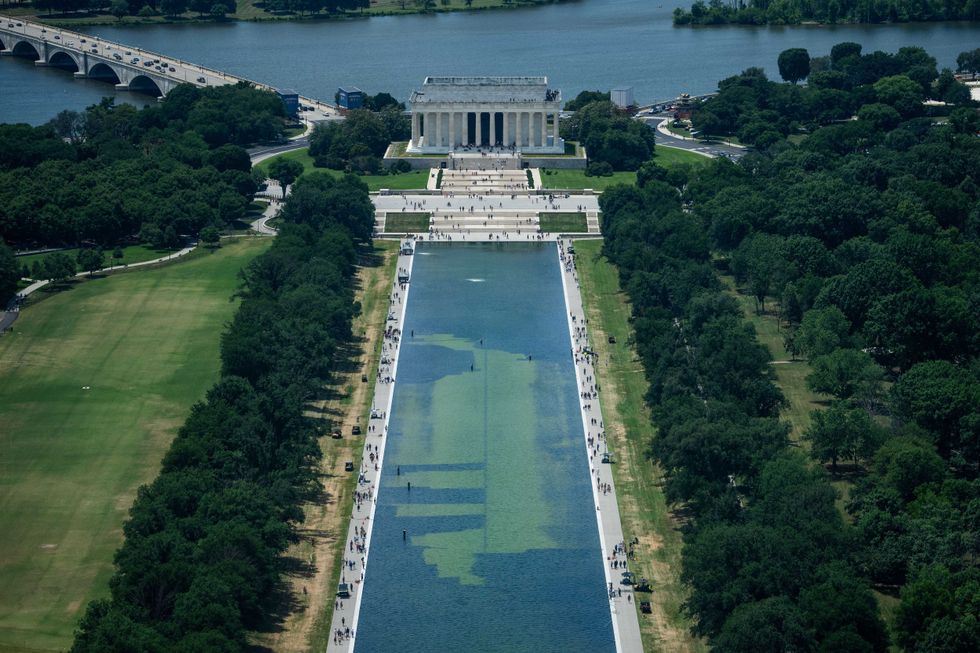
The Lincoln Memorial Reflecting Pool has a new problem: it's reportedly starting to smell.Washington, D.C., freelance photographer Joe Flood posted a photo on X on Monday of the pool being actively drained. "As they drain it, the Reflecting Pool is starting to smell," he wrote.President Donald Trump announced on Truth Social on Saturday that the pool would "probably be forced to release and drain much of the water in order to do the necessary repairs."The drain order came after a $14 million no-bid renovation cratered almost immediately. Workers painted the pool bottom "American flag blue" — then algae bloomed within days, turning the water green and sending the new paint peeling off in strips.Trump blamed unnamed vandals, without offering evidence. United States Park Police separately arrested David Carter Hearn, 67, a three-time Olympic canoeist who says he stopped at the site out of curiosity and reached down to touch a piece of peeling paint. He was charged with misdemeanor destruction of government property."I was just a curious, concerned citizen," Hearn told the Washington Post. "I guess I was there at the wrong place, wrong time."Scientists weren't surprised by the algae. National Public Radio reported that the pool's dark new surface absorbs more sunlight, warming the water and creating ideal conditions for blooms.
The Justice Department is dangling nearly $1 billion in public safety grants in front of cities and police departments nationwide — but with a condition that critics say is designed to freeze out Democratic-led communities.The grants announced this month comes with a catch requiring local officials to work with federal immigration officers as the Trump administration works to draw local police deeper into immigration enforcement in the wake of widely criticized federal surges in cities like Minneapolis and Chicago, reported NPR."They are trying to take dollars that local agencies have been depending on for years and saying, 'Oh, well, if you want these dollars, then you need to help us out with our immigration enforcement work,'" said Tahir Duckett, executive director of the Center for Innovations in Community Safety at Georgetown Law.About $700 million comes through the DOJ's long-running COPS grant program, which has funneled more than $20 billion to local police departments since 1994 for everything from hiring officers to school safety initiatives. An additional $300 million — a new program called the Model Cities Initiative, created under Trump's tax-and-spending law — will go to just two to four midsize cities, with the DOJ bypassing its standard competitive peer-review process in favor of direct review by agency leadership.Buried in the fine print is a mandate that any program that "impedes or hinders" federal immigration enforcement, including failing to honor requests from the Department of Homeland Security, won't be funded. The COPS grants similarly give "priority consideration" to jurisdictions that cooperate with immigration authorities."That is highly unusual and especially concerning, because the grants appear to be bypassing the standard competitive peer review process," Amy Solomon, senior fellow at the Council on Criminal Justice and former head of the DOJ's Office of Justice Programs, told NPR.Teams of reviewers with expertise in diverse subjects would typically evaluate the grant applications, but critics say the new plan would have he practical effect of shutting out Democratic-led cities entirely. What's the end result? The only cities and localities that apply are Republican-led cities," said Insha Rahman of the Vera Institute of Justice, predicting the administration will use the contrast on the campaign trail to paint Democrats as soft on crime.Police chiefs have long resisted entangling local law enforcement with immigration enforcement, warning it erodes community trust and discourages witnesses from cooperating with investigations. Research has also found immigrants commit crimes at lower rates than U.S.-born citizens, and federal data shows more than 70 percent of current immigrant detainees have no criminal convictions — undercutting the administration's public safety rationale.The DOJ declined an interview request, but in a statement called the disconnect between immigration and public safety "ludicrous," touting the arrests of "hundreds of thousands of criminal illegal aliens" including alleged terrorists and gang members. DHS, meanwhile, said cities refusing cooperation force federal agents into a "more visible presence" in their communities.The first Trump administration tried a similar tactic, but it was challenged in court and later reversed under President Joe Biden.
Republicans have signs of trouble ahead of the midterm elections after President Donald Trump has "failed to deliver on his economic promises," an analyst argued on Monday. In a column for The Guardian, journalist and author Steven Greenhouse pointed out how the GOP will have to face this growing problem among white, blue-collar voters in the fall."If any demographic group was key to Donald Trump’s election victories in 2016 and 2024, it was white, blue-collar voters," Greenhouse wrote. "But in perhaps perilous news for Republicans, Trump’s support from that group has plummeted – as many white, working-class voters have grown upset about everything from increased inflation and gas prices to Trump’s war against Iran. These glaring cracks in Trump’s blue-collar base point to big trouble for Republicans in this November’s midterm elections."The disappointment among GOP voters is "bad news" for Republicans, Greenhouse argued. And polls point to that mounting dissatisfaction — a new CBS poll revealed that 54 percent of white voters without a college degree disapprove of Trump's performance as president. Trump won 66 percent of white voters without a four-year degree in the 2024 presidential election."This shows severe cracks in Trump’s white, blue-collar base, a group that candidate Trump wooed by promising to crack down on immigration, to reduce prices on day one, to bring back manufacturing jobs and to not start new foreign wars," Greenhouse wrote. "Many blue-collar voters see that Trump has failed to deliver on any of these promises except for his massive crackdown on immigrants – that crackdown has grown unpopular, however, after Trump’s masked agents killed Renee Good and Alex Pretti in Minneapolis."Democratic candidates in states with a large population of blue-collar, white workers could benefit in midterms from voters turning on Trump, especially in states such as Iowa, North Carolina, Ohio and Texas."To increase their chances of taking back the House and Senate, Democrats need to tap into the growing blue-collar disenchantment with Trump and Republicans," Greenhouse wrote. "And let’s not forget that it’s not just white, blue-collar voters who have turned against Trump – many working-class African Americans, Hispanics and Asian Americans are also upset that Trump plunged the US into war and that gas prices have soared and that tomato prices are up 32% over the past year, coffee prices up 17% and beef up 13%."
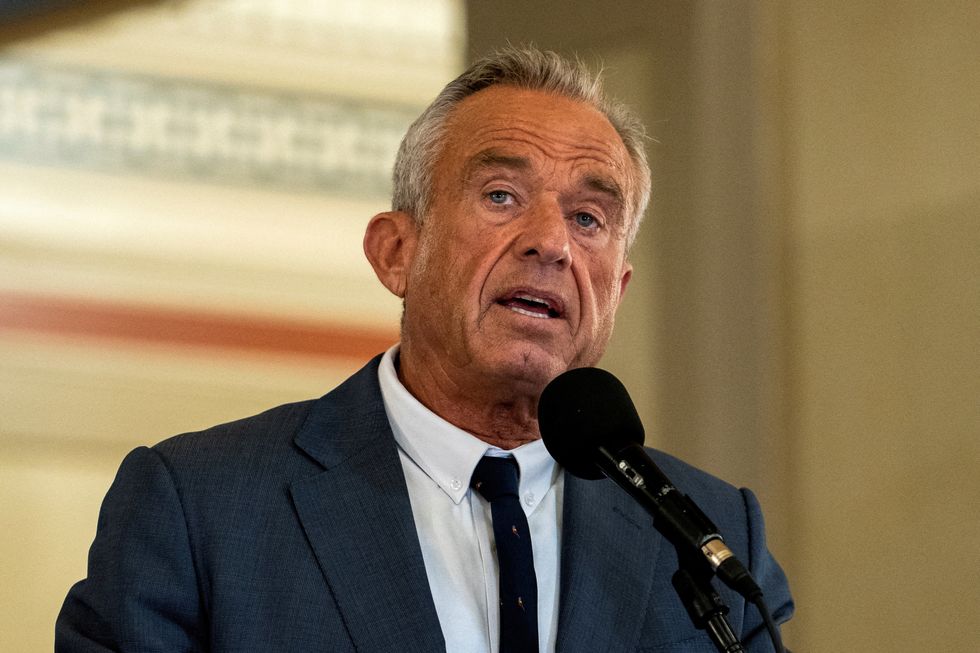
Health and Human Services Secretary Robert F. Kennedy Jr. has "pretty much killed" a cousin's political future, former Rhode Island Rep. Patrick Kennedy said.Patrick Kennedy — a longtime mental health advocate — made the admission in a NOTUS interview Monday. He is one of Robert F. Kennedy Jr.'s last remaining family allies."Many Kennedys say they're mortified," NOTUS reported."I would not be able to run for office and probably survive a Democratic primary," Patrick Kennedy told the outlet, "with all the work that I've done with the secretary."Caroline Kennedy has described the HHS secretary as a "predator" in a January 2025 letter to senators. She urged them to reject his nomination to lead the Department of Health and Human Services."'Enough is enough,' human rights activist Kerry Kennedy wrote last September, demanding her brother resign. 'Secretary Kennedy must resign. Now.'""'Rabid dog" was congressional candidate Jack Schlossberg's verdict — JFK's only grandson, who is running for a Manhattan House seat.Tatiana Schlossberg, writing for the New Yorker, insisted that RFK Jr. was "mostly... an embarrassment to me and the rest of my immediate family.""'None of us will be spared the pain he is inflicting," former Rep. Joe Kennedy III wrote on X.
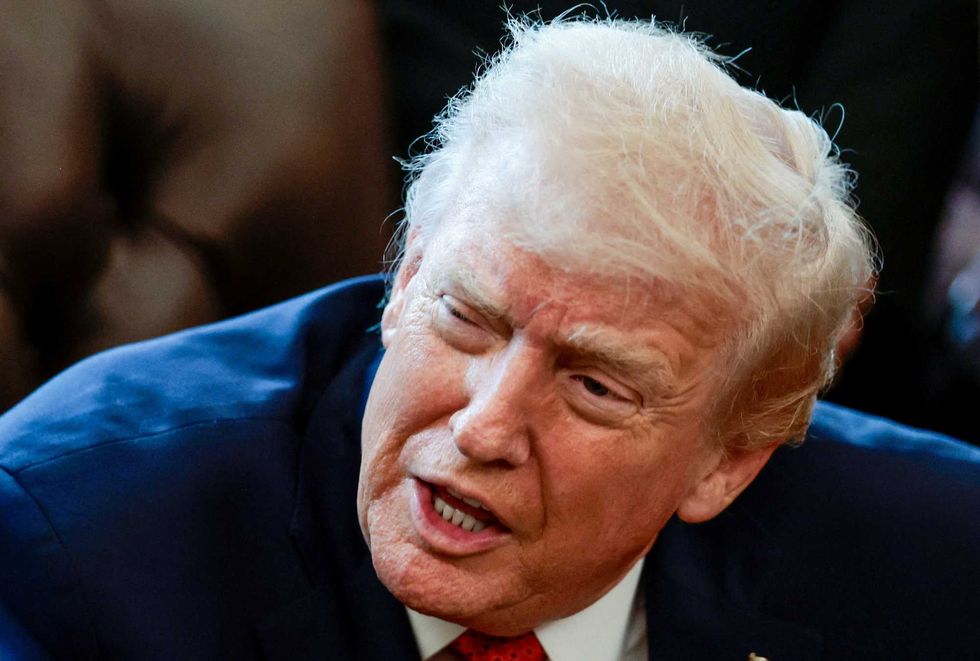
Nobel Prize-winning economist Paul Krugman warned the damage from President Trump's failed war in Iran — and his broader approach to governing — will outlast his presidency, leaving the U.S. diminished on the world stage for years to come.In an interview with The New Republic's Greg Sargent on his "Daily Blast" podcast, Krugman dismissed Trump's claims of victory in Iran as detached from reality."Iran won," Krugman said. "Iran is in a much stronger position and the U.S. in a much weaker position than before the war started."Krugman called the resulting ceasefire deal "vastly inferior" to the Obama-era nuclear agreement Trump abandoned during his first term, adding that the conflict cost lives, depleted weapons stockpiles, and exposed the limits of American power."He could have just done nothing — that would have been better," he said.The conversation centered on a series of early-morning social media posts in which Trump demanded credit for the outcome and touted economic gains. Krugman pushed back point by point, noting that job growth has actually been slower than in the last two years under Biden, with unemployment essentially flat and real wages lower due to inflation accumulated since Trump took office, and he argued stock market gains reflect a global rally rather than anything specific to Trump's policies."The stock market is up, no question about that," Krugman said. "Although the stock market rose a lot under Joe Biden, too, Trump would like you to put that down the memory hole. Stocks are up, by the way, around the world. There’s a stock market boom. I haven’t checked the numbers lately, but I believe that they’re up substantially more outside the United States than inside the United States."Krugman framed Trump's behavior as part of a broader pattern of decline, arguing the war revealed that the U.S. could not impose its will on a "third-rate military power" and that American allies increasingly understand they don't need Washington — citing Ukraine's continued resistance despite a U.S. cutoff of arms and funding. He warned this erosion of credibility is not easily reversible."There’s a lot that has obviously been made much worse by Trump screwups," Krugman said. "What the world now has to suspect, even when Trump is gone from the stage, is who’s the next guy? How do we know that we won’t have another Trump-like figure? Does an agreement with America mean anything, since we’ve just seen an American president rip up every agreement that we had?""We don’t get that back," he added. "It took generations to build the reputation of America. You don’t get that back unless you give us three generations of good governance from here on in."Krugman was equally blunt about Trump personally, describing him as someone living through a kind of public unraveling."If you look at some of those late-night tweets, the tweets we’re talking about here, you kind of get hit by a real dose of somebody in very steep mental decline," he said. "It’s sort of two-layered. On the one hand, it’s the sheer nakedness of the demand for adulation, which is just completely crazy. Somebody who’s sunsetting very plainly in plain sight, who knows he’s on his way out and is desperate to have something that he can call a legacy. That’s what we see there.""But at the same time, you also see him completely detached from the reality of what he’s actually done to us," Krugman added. "What he’s done to you and me, to liberal America, to blue America, even to red America, even to MAGA country."Krugman highlighted the administration's renovation of the National Mall's Reflecting Pool — drained, repainted and resealed, only to be overtaken again by algae — as an almost literary metaphor. "Everything Trump touches turns to crud," he said.
Political analysts have joked for the last few weeks that members of the Republican Party who have lost their primaries but still have until the end of the year to govern have become part of the informal "YOLO Caucus," meaning "you only live once." According to an exclusive Semafor interview with outgoing Sen. John Cornyn (R-Texas), he has started flexing his voting power to get what he wants before leaving. In one incident, Cornyn extorted the White House out of funds that his state had been owed for over a year. In 2025, Congress allocated more than $10 billion in funds for border security, but until Cornyn acted, Texas hadn't seen a dime of it. “Basically, I told Senator Barrasso and Senator [John] Thune: ‘There’s a price for my vote, and it is to get the administration to release the money,’” Cornyn said in his interview with Semafor. White House Director of the Office of Management and Budget Russel Vought quickly called, promising "we’ll put a notice of funding."Cornyn, who has been a loyal supporter of Trump's initiatives, voting with him 99.2 percent of the time, but Trump never returned the loyalty, endorsing Cornyn's scandal-plagued opponent, Ken Paxton. “That’s one example I think of what you can do when you have some cards to play," said Cornyn of his newly discovered powers.Cornyn is also ready to be a thorn in Trump's side over his appointment of Todd Blanche for the attorney general spot. He said he's not a solid supporter, but he's willing to "listen." The four-term senator also isn't going to help his opponent. Instead, he's opting to help his friends and allies in tough races in Maine, Michigan and New Hampshire. “The president picked Paxton, and he’s got $350 million dollars. I think he can spend his money,” Cornyn said of Texas and Trump. “I’m going to try to help in other places.”Cornyn isn't the first Senator to the mock caucus. Sen. Bill Cassidy (R-La.) lost his primary in May after a Trump-supported Republican ousted him. The founder could easily be considered Sen. Thom Tillis (R-N.C.), who announced he was retiring after a number of public battles with Trump. He has become less fearful of the president's wrath in the past several months. Cassidy told Semafor that he and Cornyn were "like-minded in the sense that we’re both not returning, and that gives a certain focus. And he’s conveyed he’s got no illusions about the president."That said, he added, they're not scheming "in a smoke-filled room."Cornyn frequently spoke to the president while serving as the Majority Whip, but doing so wasn't “particularly useful,” he said. Trump "can and will change his mind depending on the next person he talks to on the phone. The president seems to revel in chaos, which is so different from any other leader that I’ve ever seen. I don’t know about you, but I like to minimize the chaos in my life. He just seems to revel in it. We’ve seen even recent evidence of it on the DNI."Cornyn went on to mock colleague Sen. Mike Lee (R-Utah), who thinks “somehow we’re going to beat the opponents into submission." By opponents, he means the Democrats. The Texas lawmaker explained to the younger Lee, “I’ve worked here a long time. It doesn’t work that way."The GOP lawmaker promises he's not a member of the "YOLO caucus"; rather, “I am free to disagree." Before was another matter. Other than helping fund GOP candidates outside of Texas, he's thinking about possible contenders for the 2028 presidential election. While Cornyn is trying to decide between Vice President JD Vance and Secretary of State Marco Rubio, he joked he didn't want to "jinx either one of them." “But don’t tell Ted Cruz that, because Ted wants to be the next president," he added. Cruz ran for president in 2016, during which he was outspoken in his opposition to Trump.
Referring to the Reflecting Pool on the National Mall, Minnesota governor Tim Walz commented on X: “Found an imaginary problem, said only they could fix it, didn’t listen to experts, hired buddies who grifted millions, failed miserably, bragged how great it went. The entire Trump presidency in a nutshell.” (Walz could have added: “blamed others for his failure, conjured up a conspiracy, then prosecuted them.”)One remarkable aspect of Trump’s horrendous reign is how many crises and problems he’s brought on himself—created them out of thin air. Then he brags about how well he’s handled them. And when they go wrong—as they inevitably do—he casts blame on others or on his political opponents.Four examples from the last few days:I. The Return of Operation Metro SurgeUS prosecutors in Minnesota on Tuesday announced charges against 15 people they say conspired to “violently oppose immigration law enforcement.”But when repeatedly questioned by the press, US Attorney Daniel Rosen failed to describe a single example of injuries to federal agents.Rosen has a dubious track record with this kind of prosecution. In the months after “Operation Metro Surge,” launched by the Trump regime last December, federal prosecutors charged three dozen Minnesotans in a first wave of cases allegedly involving assaulting or impeding federal immigration agents. Most were dismissed or downgraded.So why is Minnesota’s US attorney announcing new charges? Rosen’s predecessor as US attorney, Joseph Thompson, said he doesn’t understand it. “I think most people, on both of the sides of the political aisle, viewed [Metro Surge] as a disaster for the administration,” Thompson told The Wall Street Journal. “Why you would want to go back and re-litigate this is beyond me.”One clue lies in the timing of the new charges—coming just two weeks after the John F. Kennedy Library awarded its 2026 Profiles in Courage Award to the people of the Twin Cities for their resistance to Operation Metro Surge.A bipartisan committee praised the community for defending constitutional rights and demonstrating civic courage:“Tens of thousands took to the streets to peacefully protest federal overreach and threats to immigrant families and constitutional protections, while others documented enforcement activity and alerted neighbors to federal agents’ presence. Faith leaders organized demonstrations, community groups built rapid-response networks, labor leaders and small business defended workers, and volunteers provided critical support and resources. Across religious, racial, and political lines, a broad coalition of residents of the Twin Cities and surrounding suburbs united in peaceful resistance despite violent confrontation and real personal risk, defending their neighbors’ rights and strengthening the national movement to protect American democracy.”Trump is presumed to have a grudge against the John F. Kennedy Profiles in Courage Award because last year’s award went to his former vice president, Mike Pence, for explicitly resisting Trump’s demands to overturn the 2020 election results on January 6, 2021.II. Trump’s Unending War in IranOn Sunday, negotiators for Iran and the United States met in Switzerland for a little over an hour. No progress was made. Iranian negotiators insisted on an end to the war between Israel (a US ally) and Hezbollah (an Iran-backed militant group in Lebanon) as a condition for further talks, according to Iranian state media.The talks were also strained by Trump’s renewed threats against Iran. Fox News reports that Trump, in an interview, said he had spoken with Iranian officials Saturday night and warned them not to close the Strait of Hormuz. “You close it, and you won’t have a country,” Fox said, quoting Trump. “You won’t even make it back to your f—ing country.”The Iranian delegation in Switzerland decided to suspend the talks due to Trump’s threats, according to Nour News, which is affiliated with Iran’s Supreme National Security Council. IRIB, Iran’s state broadcaster, said it was unclear if the talks will resume.Iran’s lead negotiator, Mohammad Bagher Ghalibaf, said on social media that the United States should be careful about issuing threats, adding that Iranian armed forces were prepared to respond. “No matter how much they talk, it is we who act,” he wrote.Iran says the strait is once again closed. World oil prices are again rising.One Republican senator described the war in Iran and the sputtering peace talks as “the worst foreign policy blunder in decades.”Trump continues to look for a way out, at least for himself. “If it works out, I’m going to take the credit,” Trump said of the peace agreement, only half in jest. “If it doesn’t work out, I’m blaming JD.”III. Prices Continue to RiseOn Sunday, Trump celebrated Father’s Day with a social media post touting that the USUS has the “BEST ECONOMY EVER.”“Happy Father’s Day!” Trump wrote on Truth Social. “Our Country is doing GREAT.