Trump budget seeks 43% boost in defense spending and cuts in many domestic programs
Source: Raw Story · Bias: Far Left
Summary
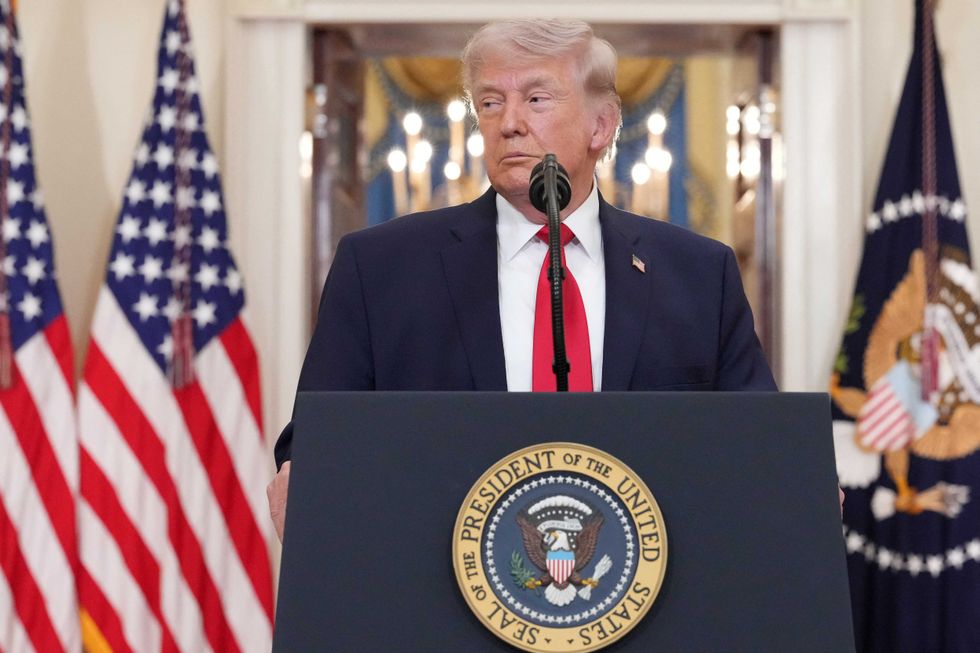
WASHINGTON — The Trump administration released its fiscal 2027 budget request Friday, asking Congress to increase spending on defense programs by 43% and decrease funding for non-defense accounts by 10%.The proposal kicks off what will be a month-long process on Capitol Hill as lawmakers write the dozen annual government funding bills ahead of the Oct. 1 deadline.Congress rarely adheres to the president’s request entirely, and didn’t do so last year, rejecting many of the proposed cuts, including to health and education.Last year’s process, the first of President Donald Trump’s second term, was considerably rocky, leading to a 43-day shutdown that began in October, a brief partial shutdown that ended in early February, and an ongoing shutdown for the Department of Homeland Security.This budget request proposes Republicans again use the complex budget reconciliation process they used last year to enact the “big, beautiful” law to further bolster spending on the Pentagon and DHS.The Defense Department would have its budget raised to $1.5 trillion, a $445 billion increase over its current funding level. The administration proposes that lawmakers put $1.1 trillion of that in the annual spending bill that would require bipartisan support to move through the Senate and place the other $350 billion in the partisan reconciliation bill.“America has already begun to strengthen and reinvigorate the military by committing tens of billions of dollars to new and innovative programs such as the Golden Dome for America, and making critical investments in the defense industrial base,” the document states. “By continuing to provide the resources necessary to rebuild America’s military, the Budget re-establishes deterrence, revives the warrior ethos of America’s Armed Forces, and prioritizes investments against the most acute national security threats.”Department-by-department requestsThe budget asks that lawmakers also increase spending on:The Energy Department by $4.8 billion, or 10%, to $53.9 billion.The Justice Department by $4.7 billion, or 13%, to $40.8 billion.The Veterans’ Affairs Department by $11.5 billion, or 9%, to $144.9 billion in discretionary spending. The proposal asks Congress to decrease spending on:The Agriculture Department by $4.9 billion, or 19%, to $20.8 billion.The Commerce Department by $1.3 billion, or 12.2%, to $9.2 billion. The Education Department by $2.3 billion, or 2.9%, to $76.5 billion.The Environmental Protection Agency by $4.6 billion, or 52%, to $4.2 billion. The Department of Health and Human Services by $15.8 billion, or 12.5%, to $111.1 billion. The Department of Housing and Urban Development by $10.7 billion, or 13%, to $73.5 billion.The Interior Department by $2.3 billion, or 12.9%, to $15.9 billion. The Labor Department by $3.5 billion, or 25.9%, to $9.9 billion.The Small Business Administration by $671 million, or 67%, to $329 million. The State Department and other international programs by $15.5 billion, or 30%, to $35.6 billion.The Transportation Department by $1.6 billion, or 6.2%, to $26.6 billion.The Treasury Department by $1.5 billion, or 12%, to $11.5 billion. The budget proposes $63 billion in funding for the Department of Homeland Security, which doesn’t yet have its appropriations bill from the current year for comparison.Senate Appropriations Committee Chairwoman Susan Collins, R-Maine, said in a statement that there are issues with some of its proposals for both defense and domestic spending.“While there are some improvements over last year’s domestic discretionary budget request, including full support for the Pell Grant program, the request has several shortcomings,” she said. “For example, the proposal includes unwarranted funding cuts in biomedical research. It would also terminate worthwhile programs like LIHEAP, which helps low-income families and seniors to pay their energy bills during the cold winter and hot summer months, and TRIO, which assists low-income, first-generation students in pursuing higher education.”Collins indicated she may bolster defense spending for a certain type of ship that she views as essential to the country’s military.“The request for just one DDG-51, the workhorse of the U.S. Navy, is insufficient to counter the ever-growing Chinese fleet, which now exceeds the size of the American Navy, as well as other global threats,” she said.Privatizing TSA screeningThe president’s request asks lawmakers to cut funding for the Federal Emergency Management Agency’s non-disaster grant program and to begin the process of offloading security screening at the nation’s airports.“The Budget begins the privatization of TSA’s airport screeners by requiring small airports to enroll in the Screening Partnership Program, under which TSA pays for private screeners at designated airports,” it states. “The airports that already use this program have demonstrated savings compared to Federal screening operations.
Related Coverage
- Trump, ballot seizures and a ‘declaration’: Gavin Newsom teases tiresome July 4 address to the state (Right — New York Post)
- 'Not mentally well': MAGA suspects Trump sabotaged by liberals armed with weather machines (Far Left — Raw Story)
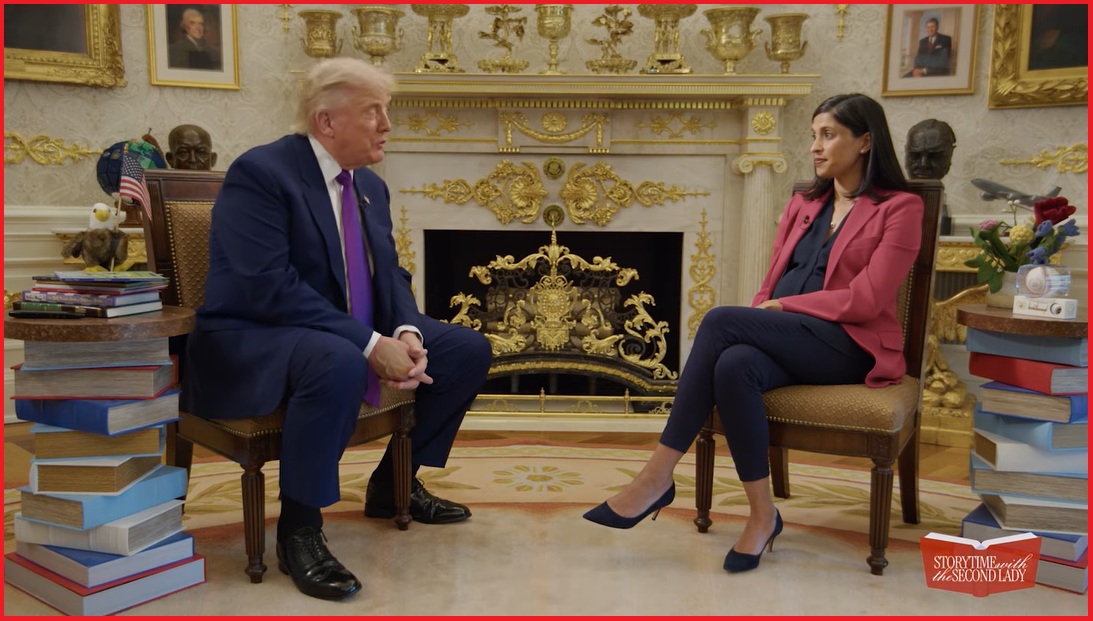
- ‘The second-most good-looking president’: Trump entertains on Usha Vance’s program (Far Right — WorldNetDaily)
- President Trump Reads “Presidents Play” (Far Right — The Last Refuge)
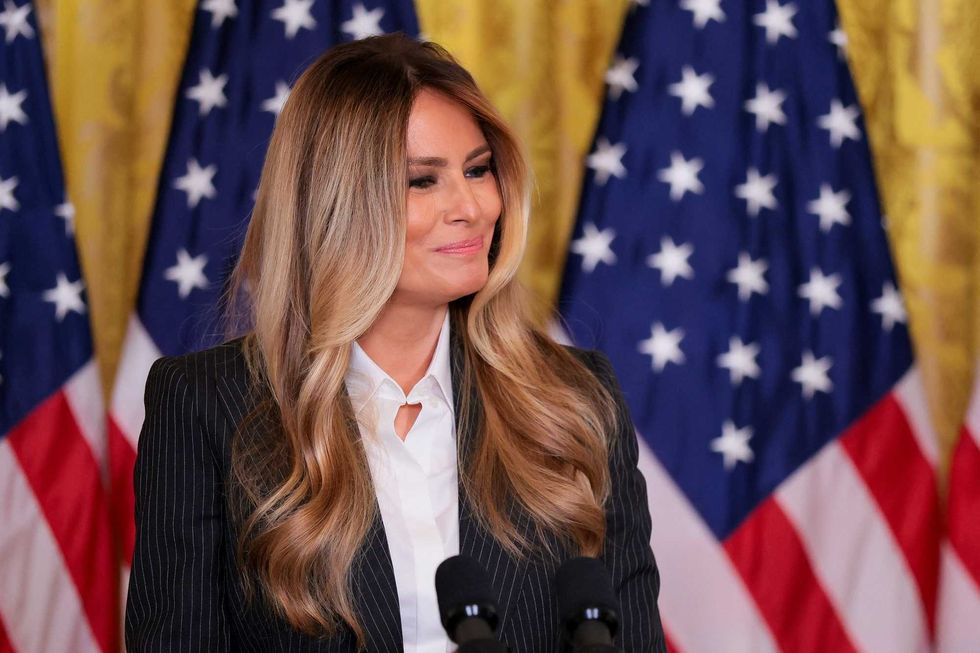
- Melania gives Congress private deadline as she works around Trump's team: report (Far Left — Raw Story)
- Trump announces pardons for pollution violators prosecuted for "fixing their car" (Center — Politics - CBSNews.com)
- Trump Pardons Six People Pursued for ‘Fixing Their Car’ (Center — Bloomberg Politics)
- Sources: Trump likely to pardon pollution violators; weighing clemency for Diddy (Center — Politics - CBSNews.com)
Daily Analysis
Read the full Parallax Pulse for April 5, 2026 — an AI-powered analysis of how Left and Right media covered the biggest stories this day.
More Headlines From April 5, 2026
- 'All the signs of dementia': Top medical expert sounds alarm about Trump’s health (Left)
- Trump threatens Tuesday strikes on Iran's power plants and bridges in profanity-laden post (Center)
- President Trump Unloads With Expletive-Filled Threat to Iran on Easter Sunday (Right)
- Artemis II astronauts embarking on historic moon flyby (Center)
- Trump declares victory after rescue but threats to US operation in Iran still loom (Center)