Trump antifa terror claim faces stern test in trial of ICE firework protesters
Source: Raw Story · Bias: Far Left
Summary
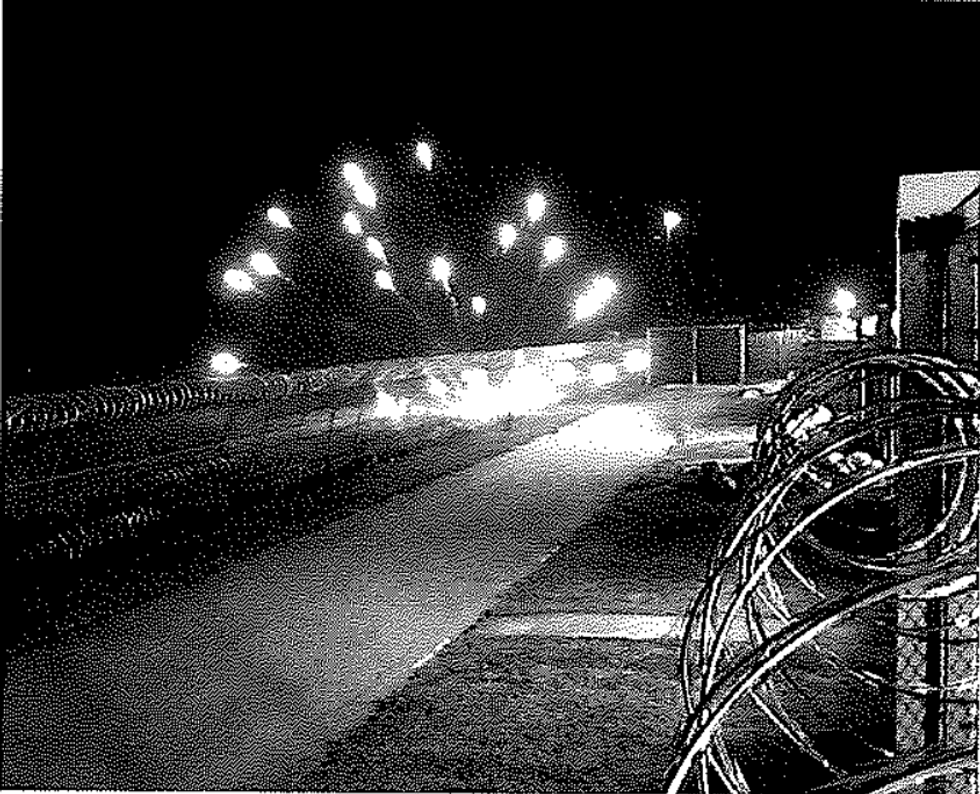
A trial set to begin on Tuesday in Fort Worth, Texas will test whether President Donald Trump’s Department of Justice can use a criminalized notion of “antifa” to convict nine anti-ICE activists of attempted murder and terrorism, after they shot fireworks and vandalized government vehicles.On July 4 last year, most of the defendants showed up at the Prairieland ICE detention facility 25 miles south of Fort Worth to put on a fireworks display for immigrant detainees. A smaller group used spray paint to graffiti vehicles in the parking lot.They dressed in black and concealed their faces with masks — a tactic commonly known as “black bloc.” One activist, former Marine Corps reservist Benjamin Song, carried an AR-15 rifle. A wagon nearby was stocked with an additional rifle, body armor and bottled water. One activist had guns in his car. The defendants say they intended to hold a noise demonstration and set off fireworks to cheer up detainees. The government claims the fireworks were meant to draw officers out of the facility and elicit a law enforcement response.About 45 minutes after the activists arrived, the government alleges, Song opened fire and struck a local police officer, Lt. Thomas Gross, who returned fire. Treated for his injuries, Gross was able to return to full duty within two months.The indictment suggests that when the shots were fired, the other activists intended to retrieve guns and escalate an attack, based at least in part on a command allegedly yelled by Song: “Get to the rifles!” Statements from some defendants and their lawyers suggest they were blindsided by the shooting and fled in terror.The 12-count indictment, which describes the group as an “antifa cell,” charges four defendants alongside Song with attempted murder of law enforcement officers, even though the government acknowledges Song was the only shooter. A larger cohort is charged alongside Song with providing material support for terrorists.‘Criminalizing speech’Following the assassination last September of conservative influencer Charlie Kirk, President Trump issued an executive order “designating antifa as a domestic terrorist organization.” The order describes “antifa” — a decentralized movement of people who oppose fascism — as “a militaristic, anarchist enterprise that explicitly calls for the overthrow of the United States government, law enforcement authorities, and our system of law.”About three weeks later, the first indictment against the Prairieland defendants repeated the language of Trump’s order almost completely. The indictment described the defendants as members of “a North Texas Antifa cell,” while defining “antifa” as “a militant enterprise made up of individuals and small groups … which explicitly calls for the overthrow of the United States government, law enforcement authorities, and the system of law.”As part of the government’s effort to build an “enterprise” case around the defendants’ supposed adherence to “antifa” ideology and hold them jointly liable for the shooting, prosecutors have highlighted some defendants’ involvement in printing political literature. The indictment describes three as being “part of a group that created and distributed insurrectionary materials called ‘zines.’”During their detention hearing last September, FBI Special Agent Joseph Clark Wiethorn described a search warrant executed on the Fort Worth home of defendants Ines and Elizabeth Soto, a married couple.“We discovered, for lack of a better word, a printing production with multiple commercial-grade equipment, paper binders, cutters, industrial copiers, all for producing what we have discovered to be anarchist-type material and reading,” Wiethorn testified.The government plans to call Kyle Shideler, director for homeland security and counterterrorism at the far-right Center for Security Policy, as an expert witness.Shideler endorsed the government’s definition of “antifa” in the Prairieland case before a U.S. Senate subcommittee last October. He touted the material support for terrorists statute as a tool to crack down on “antifa.”“These networks can be targeted for engaging in material support for terrorism,” Shideler told lawmakers. “We are not talking about speech; we are talking about manifestos describing how to overthrow the government and how to do that with violence.”Lydia Koza, whose wife Autumn Hill is among the defendants charged with attempted murder, told Raw Story she believes the government’s case is all about speech.“They’re trying to throw everybody who could be even slightly ideologically opposed to Trump into this bucket of ‘antifa’ so they can be prosecuted,” she said. “This is a huge reason why this case should be alarming to everyone. This is criminalizing speech.
Related Coverage
- ‘The second-most good-looking president’: Trump entertains on Usha Vance’s program (Far Right — WorldNetDaily)
- Melania gives Congress private deadline as she works around Trump's team: report (Far Left — Raw Story)
- Trump announces pardons for pollution violators prosecuted for "fixing their car" (Center — Politics - CBSNews.com)
- Trump Pardons Six People Pursued for ‘Fixing Their Car’ (Center — Bloomberg Politics)
- Sources: Trump likely to pardon pollution violators; weighing clemency for Diddy (Center — Politics - CBSNews.com)
- Fox host warns Trump will pay for his 'breathtaking' corruption (Left — Alternet.org)
- Signs of Victory: I-95 Welcomes President Donald Trump Int'l Airport (Right — RedState)
- Trump Scores Appeals Court Victory in Battle Over National Park Historical Displays (Right — RedState)
More Headlines From February 17, 2026
- Republicans handed major loss in court over swing state voter lawsuit (Left)
- Trump uses Jesse Jackson’s death to argue he’s not 'a racist' (Left)
- GOP warned more 'defections' imminent as 'weak' Pam Bondi hands rebels a win (Far Left)
- Trump’s Jesse Jackson praise immediately backfires: 'Everything he fought for is at risk' (Far Left)
- Trump's reckoning could come via a new 'trap of his own making': analysis (Left)