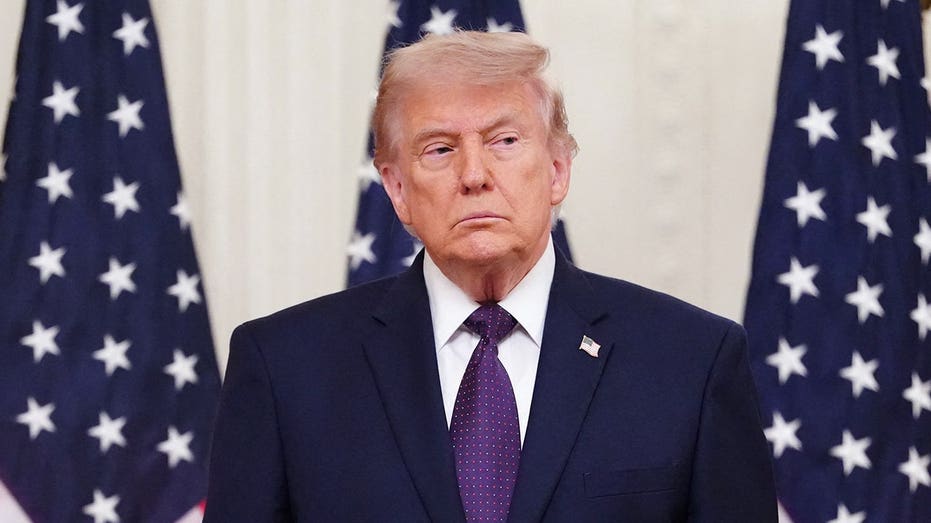
Trump admin backs off controversial $2B fund, clearing path for stalled GOP immigration bill
The DOJ paused the Trump administration's proposed anti-weaponization fund Monday, giving Senate Republicans space to push immigration enforcement funding.

The Trump Justice Department's criminal case against former FBI Director James Comey got a worrisome sign on Monday — and it wasn't a development in that case itself, but one in an unrelated case involving the National Park Service.According to Politico, U.S. District Judge Randolph Moss has issued a two-week restraining order prohibiting the park service from doing anything to interfere with a protest by the liberal group Accountability Now USA, which has for months been protesting President Donald Trump outside a federal courthouse near the National Mall — by flying a huge banner that says "86-47," with "47" being a reference to Trump and "86" a common slang term for getting rid of something.The group has been harassed by the Secret Service, and more recently, a National Park Service official issued an email ordering the group to remove it as it is "obscenity" not protected by the First Amendment. This is in line with a number of Trump officials and allies who have claimed "86-47" is a call for violence against the president."Moss, an appointee of former President Barack Obama, disagreed in his ruling.“The Court does not doubt that political violence is on the rise and that it poses a grave threat not just to the targets of the threats but to the country as a whole," wrote Moss. "But the enormity of that problem does not change the meaning of Plaintiff’s speech, which by any reasonable measure merely advocated for the President’s impeachment and removal from office — that is, ‘to throw [him] out.’”This could have grave implications for the administration's separate efforts to prosecute Comey, who was charged with violent threats for a social media post from last year depicting seashells arranged to spell out "8647." Comey deleted the post and apologized, but has made clear he was never advocating violence.All of this comes as the DOJ quietly reassigned a prosecutor in charge of the Comey case.
The DOJ paused the Trump administration's proposed anti-weaponization fund Monday, giving Senate Republicans space to push immigration enforcement funding.
Trump's $1.8 billion "Anti-Weaponization Fund" that would have benefited political allies is being scrapped, according to the Department of Justice.
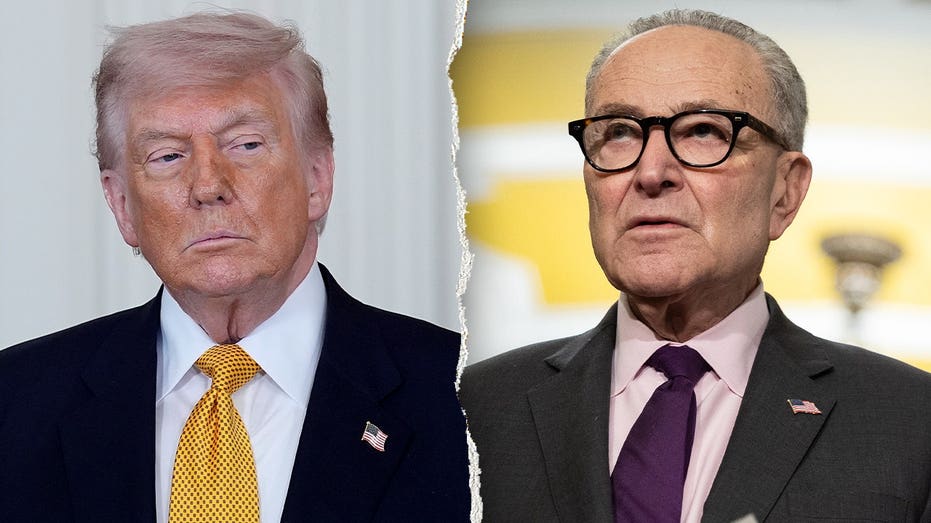
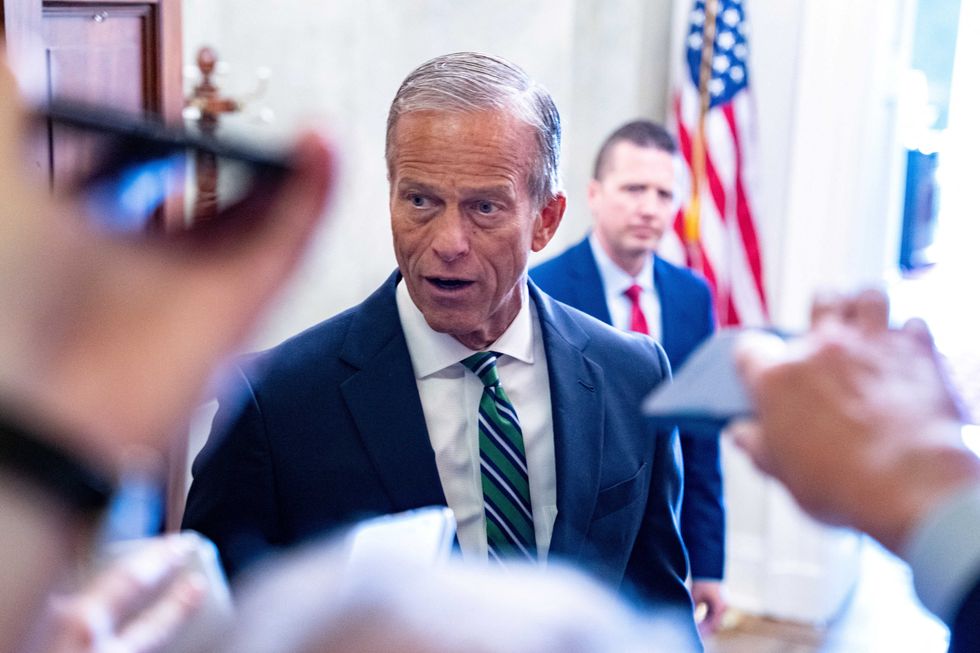
Senate Democrats plan to kill Trump's $2 billion anti-weaponization fund as GOP dissent grows and a reconciliation vote-a-rama approaches this week.
President Trump is dropping his $1.776 billion “anti-weaponization” fund, the Justice Department announced on Monday.
BREAKING UPDATE: The Justice Department released a statement on Monday afternoon on a district court judge's ruling on the weaponization fund. The post BREAKING UPDATE: Trump DOJ Drops $1.77 Billion Weaponization Fund appeared first on The Gateway Pundit.
President Donald Trump's administration pulled the plug on his $1.776 billion "Anti-Weaponization Fund" after a federal judge temporarily blocked it over the weekend — but that doesn't mean the rising confrontation it's caused between the White House and Republicans on Capitol Hill is over, Punchbowl News' Jake Sherman told MS NOW's Katy Tur on Monday."Maybe you have some information about what Speaker Mike Johnson might have said to the president when he was at the White House a little bit earlier today," Tur asked Sherman, referring to the recent meeting on the status of the reconciliation bill, which Republicans have debated updating with language limiting the fund.Sherman acknowledged he didn't know exactly what was discussed there about the fund, but that his sources tell him "the administration is going to announce through DOJ that they are going to comply with the court order ... but the administration plans to say they plan to take no further action."Despite that, he argued, this "is not going to be an immediate salve for Capitol Hill" because Trump could simply decide at a later date to restart it up again when the court order expires. "They're going to want to put language in ... the reconciliation legislation, which funds ICE and CBP, to make sure that the administration can't, at some point, return and do this again."In other words, he said, Republicans will take a "trust, but verify" attitude and "put teeth into legislation to make sure that the administration doesn't, in a couple of months, say, actually, we've changed our minds. We're going to go back and set up this $1.8 billion fund."Ultimately, though, he said, this is probably good news for Republicans because the administration's surrender means they can move forward with the broader reconciliation bill."This was the only path, Katy, to get this done," he said. "The administration would have been frozen up here for weeks, if not months ... if this weaponization fund was put in place, they would have had to deal with this on every single bill that the House and Senate were looking to pass." As a result, Trump had "no other option" but to throw in the towel on the slush fund. - YouTube youtu.be
According to satellite imagery and video analysis, Iran has attacked at least 20 American military facilities across the Middle East, with some experts estimating as many as 28 bases targeted. The report by BBC Verify significantly exceeds public U.S. acknowledgment of the attacks. Strikes have hit key installations across eight countries: Saudi Arabia, United Arab Emirates, Qatar, Kuwait, Iraq, Jordan, Bahrain, and Oman, causing hundreds of millions of dollars in damage. Notable losses include three THAAD anti-missile batteries, each costing approximately $1 billion, and forming a complex regional defense network that cannot be quickly replaced. At Prince Sultan Airbase in Saudi Arabia alone, 42 aircraft have been destroyed or damaged since February, including F-15s, F-35s, Reaper drones, and an A-10 attack plane worth up to $700 million. Iran's tactics evolved from mass missile barrages to precise strikes targeting high-value assets. The Pentagon declined to dispute the BBC's findings, while the U.S. requested satellite imagery restrictions on the region.Watch the video below. Your browser does not support the video tag.