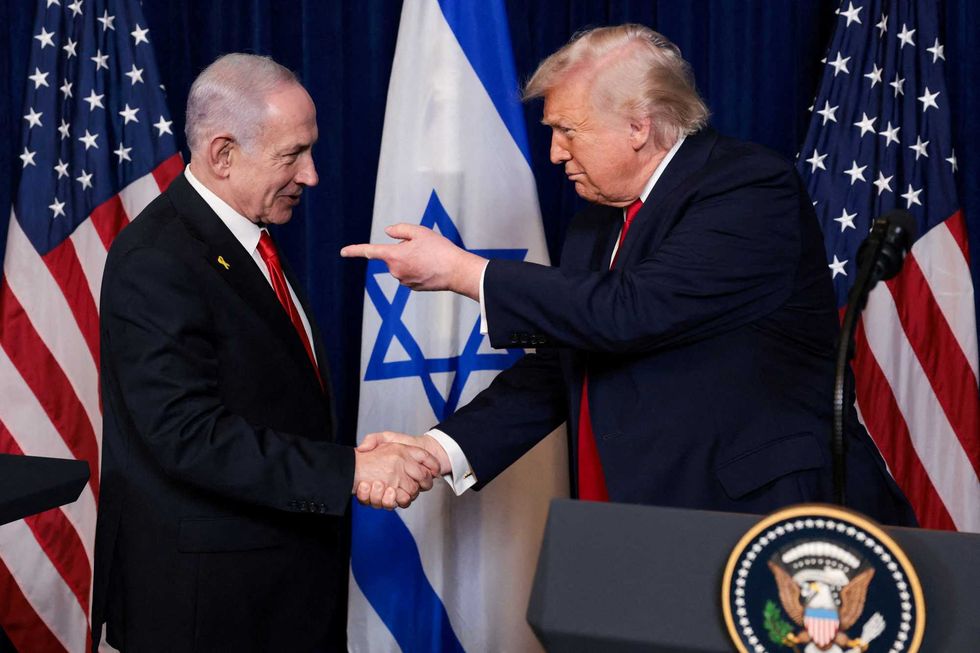
As Israel launched a new bombardment of Lebanon on Tuesday, its far-right security minister, Itamar Ben-Gvir, suggested that it was trying to derail ongoing peace negotiations between US President Donald Trump and Iran.During a press briefing on Tuesday, the influential politician railed against the possibility of a deal to end the war as it neared the three-month mark and said the whole Israeli Cabinet was in agreement.“I know that Prime Minister [Benjamin] Netanyahu and all of us members of the Cabinet... as the government of Israel, cannot allow this to happen,” Ben-Gvir said in Hebrew. “This is an agreement that can harm the state of Israel, and we will not allow this to happen.”Ben-Gvir’s remarks came as Trump engaged in what he has suggested was another promising round of ceasefire talks with the Iranians—talks that did not include Israel.Despite its foreign ministry condemning recent US attacks as signs of “bad faith” and “definitive violations” of the ceasefire on Tuesday, Iran has not yet pulled away from the table.Citing Iranian state TV, Reuters reported on Wednesday that Tehran has received an unofficial framework from the US that would restore commercial shipping through the Strait of Hormuz to pre-war levels for a month in exchange for the US withdrawing troops from Iran’s vicinity and lifting its naval blockade. The US has disputed this account.Trump has previously attempted to force Iran to accept major concessions on its nuclear program upfront, but nuclear-related talks appear to have been shifted to future negotiations.While it has not been at the center of the latest round of negotiations, Iran still considers ending Israel’s assault on Lebanon to be an essential part of a durable peace.As it has during previous peace negotiations between Iran and the US, Israel launched another major bombardment against Lebanon on Tuesday, violating the 45-day ceasefire that went into effect last month.Israeli forces conducted more than 120 airstrikes across southern Lebanon and the eastern Bekaa Valley against what they said were Hezbollah targets, according to The Guardian, as Netanyahu said Israel would “intensify” its military campaign.According to Lebanon’s health ministry, 31 people were killed, and 40 were wounded. In the southern town of Burj al-Shamali, 14 people were killed, including two children and three women, the ministry said.Since Israel’s offensive began in early March, more than 3,200 people have been killed and over 9,700 wounded, according to the ministry. More than 600 people have been killed since the April truce began.Sources also told Reuters that Israel had expanded its occupation of southern Lebanon, past its so-called “security zone.” Israeli forces ordered the residents of dozens of Lebanese villages not to return to their homes in the occupation zone, which Israel is trying to expand to between 5 and 10 kilometers inside Lebanon.In what Israeli Defense Minister Israel Katz has described as a renewal of its “Gaza model,” Israel had demolished or damaged more than 40,000 homes in southern Lebanon before last month’s truce went into effect, though destruction has continued since then. More than 1 million people in Lebanon have been displaced as a result of forced evacuation orders and bombardments by Israel.Hezbollah has responded on Tuesday with drone attacks on Israel, which it had already been launching for weeks in response to what it said were persistent ceasefire violations.Another far-right Israeli Cabinet member, Finance Minister Bezalel Smotrich, said Israel should respond to each drone by destroying 10 buildings in Beirut. If there are no buildings left in Beirut, he said, Israel should expand the demolitions to other areas such as Tyre, Sidon, and the Bekaa Valley.Ben-Gvir, meanwhile, said on Tuesday that Israel should “cut off the electricity in Lebanon,” “occupy” the area up to the Zahrani River, and “return to a massive war.”The timing of Israel’s renewed assault on Lebanon has been met with accusations that it is attempting to sabotage ceasefire talks between the US and Iran.Shaiel Ben-Ephraim, a former diplomat with the Israeli Foreign Ministry who has since become a prominent critic of the country, said that by moving deeper into Lebanon, Israel was “moving to bury not only the supposed ceasefire in Lebanon but also talks on Iran” because its policy “is an endless and wide regional war.”Responding to Ben-Gvir’s remarks, he said, “Israel forced the US into war and won’t let us end it.”