The federal agency overseeing voting security is about to get gutted by Republicans
Far Left
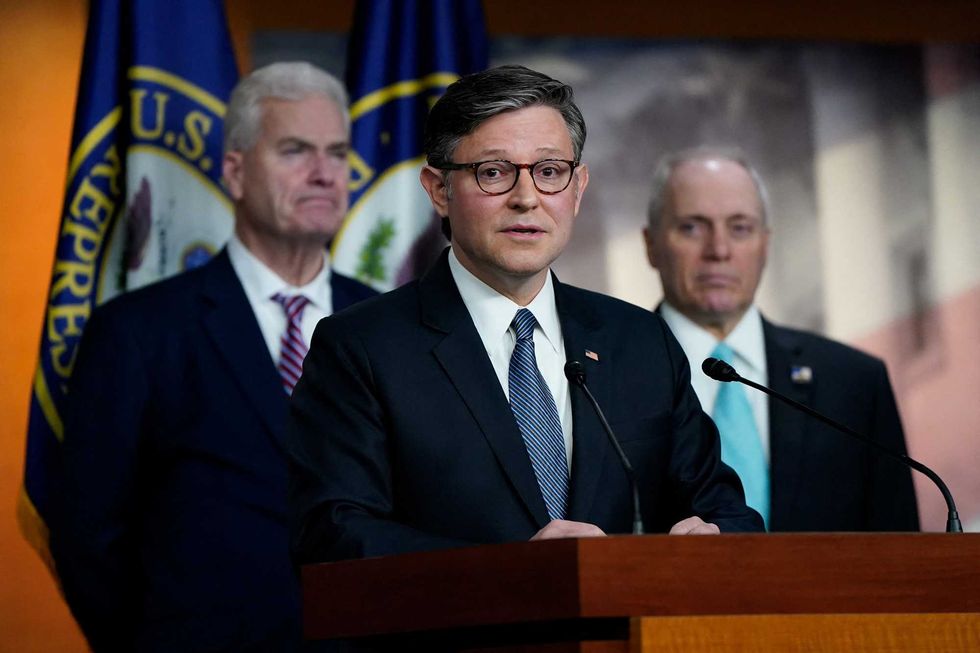
President Donald Trump and Republican allies demand voting restrictions including proof of citizenship requirements, citing election security concerns. However, the U.S. Election Assistance Commission, or EAC— the sole federal agency dedicated to election security— faces severe budget cuts. Congressional funding for EAC election security grants has plummeted from $425 million in 2020 to just $45 million in 2026. Now, House Republicans propose reducinging both the grant program to $15 million and the EAC's overall budget by 30%. Democrats and election officials warn this exposes a gap between GOP rhetoric on election tampering and actual funding commitments. Election officials across states need approximately $400 million annually for cybersecurity, equipment upgrades, and infrastructure improvements. The House Appropriations Committee bill demonstrates Republicans prioritizing noncitizen voting restrictions —an extremely rare occurrence— over concrete security measures. Election officials emphasize, security requires year-round funding, not episodic resources tied only to presidential cycles.Watch the video below. Your browser does not support the video tag.
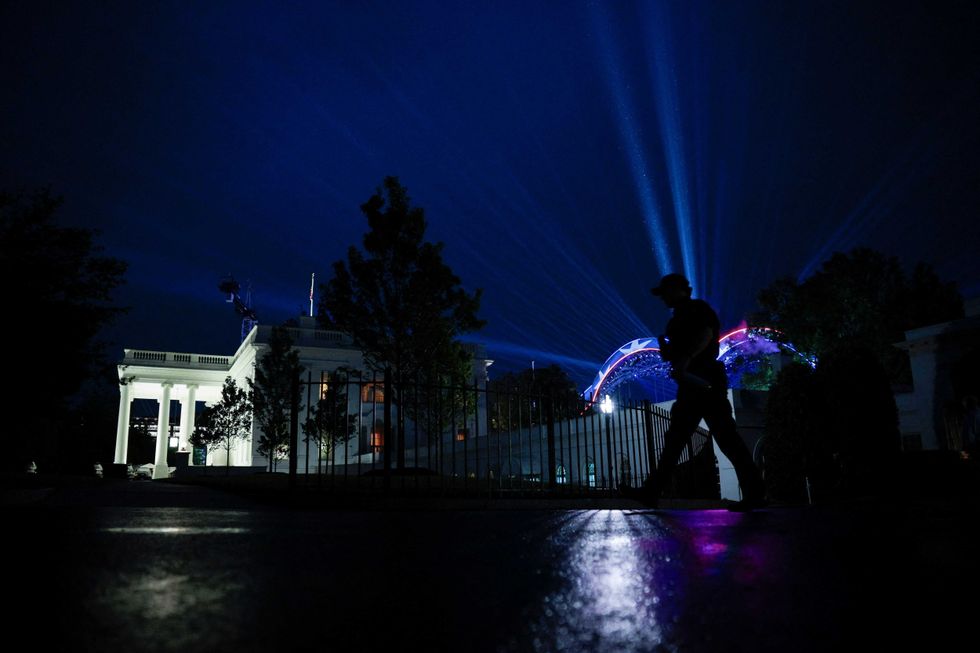
A commercial airline pilot received a baffling response from the FAA after Trump's UFC lights blinded them while landing, MeidasTouch reported.The pilot spoke anonymously about how powerful lights from the UFC octagon on the White House South Lawn filled the cockpit during a landing at Ronald Reagan Washington National Airport. It was "10 times worse than any laser illumination event," the pilot told MeidasTouch.Landing an aircraft relies heavily on visual references, according to MeidasTouch. The pilot filed reports with the Federal Aviation Administration and NASA's Aviation Safety Reporting System.FAA personnel told the pilot to contact the White House about the safety concerns. MeidasTouch noted that the pilot's reports "raise questions" about how well the fight's organizers coordinated with aviation authorities, considering the illuminated UFC setup's proximity to the "busiest flight corridors."The FAA recently recommended blinking red lights for Trump's triumphal arch because of how close it is to busy D.C. flight corridors. MeidasTouch also brought up heightened concern ever since an American Airlines flight fatally collided with a U.S. Army helicopter last year.
The Justice Department closed its investigation into the proposed $110 billion merger of Paramount and Warner Brothers Discovery, saying it found no threat to competition or consumers.
Military planners have discussed contingencies that would involve U.S. forces helping secure Iran's nuclear materials if a deal is reached, according to U.S. officials familiar with knowledge of the ongoing planning.
Former deputy White House press secretary Sarah Matthews on Friday tore apart Republicans who have suddenly found their backbones after losing in GOP primaries. Sen. Mike Lee (R-Utah) on Thursday got into an online battle with outgoing Sen. John Cornyn (R-Texas) over Republican-on-Republican attacks. Cornyn spent the past several months being attacked by his own party for not being pro-Donald Trump enough, despite having a 99 percent voting record with the president. Cornyn's interview with The New York Times cautioned that he thinks the worst is coming for the GOP in the final two years of the Trump administration. "He's going to have the most miserable two years of his life in the last two years of his term, I think, because I think November is going to be a disaster," Cornyn said. After harsh primary races, Republicans have often pivoted to try and appeal to voters outside of the MAGA wing. Trump may not be up for reelection, but one reporter explained he's not going to pivot to being more moderate or more focused on issues that matter to voters.MS NOW White House reporter Laura Barrón-López said that the White House told her, "There is no pivot," even if some of the aides around the president want there to be one, want more focus on the economy and domestic issues," said Barrón-López. "The president himself isn't focused on that. And there are others around the president who genuinely believe, this former official told me, that he has the unique ability to turn out republicans in election cycles."That hasn't necessarily worked out in past midterm elections. This time around, Trump has told reporters that he doesn't care about the midterms. "But another source close to the White House did tell me that they think that Senate Republicans don't really fear the president anymore," she continued. "And you're starting to slowly see over the course of the last month or so, even though the president has clearly knocked out Republican incumbents and attacked members of his own party, there are Republicans across the Senate, especially, and also the House, who are voting against him on key issues."But it was Matthews who clapped back at Cornyn for only now standing up to Trump. "There is never going to be enough for him, other than 100 percent, you know, slavish adherence to whatever he wants. But obviously that's not what the Senator's role is supposed to be," Cornyn told the Times."Yeah, it's a little rich to hear him say that now, because this is what we've known all along about Donald Trump," Matthews said of Cornyn. "That loyalty is a one-way street with himwith him. He demands it from everyone, but he gives it to no one. And so, it's nice to hear Senator Cornyn find his voice and some of these other Republicans be more emboldened now."The problem, she said, is that this is always the way Trump operated, and it should have been something Republicans realized much sooner. "He's always operated not in the best interest for the Republican Party or for the American people. It's always been what is in Donald Trump's best interest," explained Matthews. "And we're seeing that play out with all the things that he has been focused on in this second term, whether it be the ballroom or the arch or the UFC event at the White House for his birthday, he's not actually focused on the priorities of the American people, which would then help the Republicans in the midterm elections, because Donald Trump doesn't care about the Republican Party."She said that she's happy to see Cornyn finally pushing back, but it should have been something he did long ago. "I guess I'm happy to see Cornyn, you know, pushing back on Trump now that he's going to be leaving office because he lost his primary election. And it's not just Cornyn I'm singling out. There are other republicans like [Thom] Tillis and [Bill] Cassidy who have now become a little bit more emboldened," she name-checked. But she sees this with Republicans frequently. They suddenly "find their voice when they're retiring, or they've been primaried out." She said she wishes that "more of them had a backbone" to push back against Trump. With more willing to do that, "Trump wouldn't have been able to get away with some of these other things that we've seen take place in his second administration," she said.
The Trump administration is pushing back against reported details regarding the proposed deal with Iran, with Vice President Vance insisting Tehran would not be “receiving any cash” under the agreement. Vance on Friday morning reupped President Trump’s dismissal of details leaked by Tehran about a possible memorandum of understanding between the two sides. “I’m seeing…
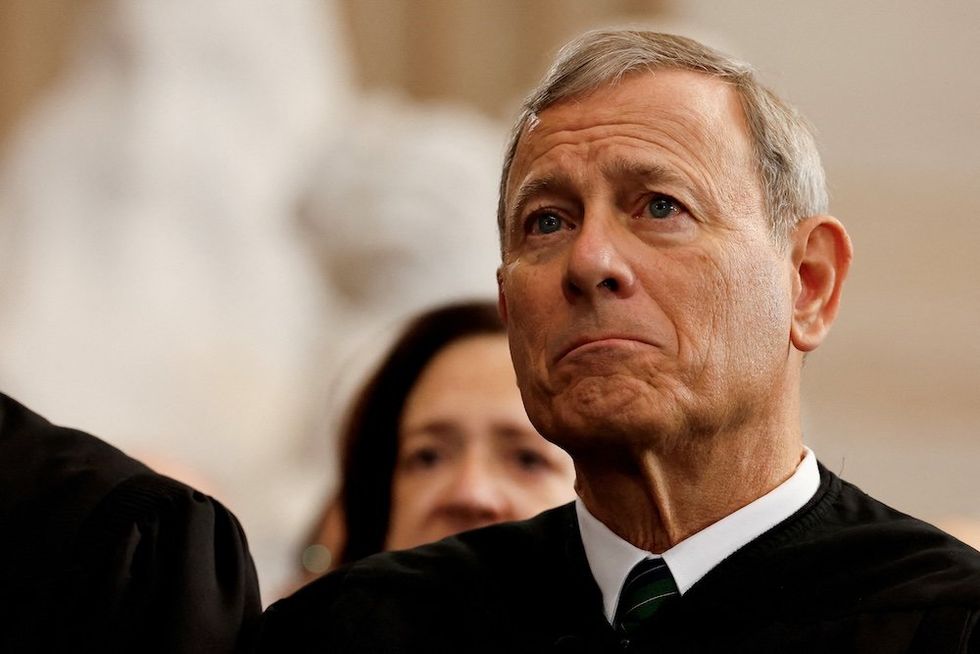
The Supreme Court has left a trail of legal "wreckage" over the course of its last few terms, but according to one legal scholar writing for The Hill, a "fundamental" fix to get them back in line will be making them "fear" again.Paul M. Collins Jr. is a professor of Legal Studies and Political Science at the University of Massachusetts Amherst who has written extensively about the Supreme Court and the issues pervading it. On Friday, The Hill published his latest piece, digging into the current situation surrounding it, with accusations of rampant political bias and disregard for clear legal precedents in order to aid President Donald Trump."In a few weeks, the Supreme Court will end its term, leaving behind a trail of legal wreckage that has become all too familiar since the emergence of its conservative supermajority in 2020," Collins wrote. "Although the headlines will focus on the specific casualties — most notably a crushing blow to the Voting Rights Act — the real story of this term is not what the court did, but why it felt so comfortable doing it. We are witnessing the solidification of a sovereign court: an institution that has effectively decoupled itself from the traditional gravity of American checks and balances."It was not always like this, he noted, explaining that the court once operated with a "healthy, if unspoken, anxiety," which he dubbed, "the fear of reversal.""This fear once acted as a structural brake, reminding the justices that if they strayed too far from the constitutional mainstream, the system would push back," he wrote. "For instance, the 11th, 13th, 14th, 16th and 26th Amendments to the Constitution were passed to overturn Supreme Court decisions. Congress has reversed several decisions by passing statutes as well, as exemplified in the passage of the Lilly Ledbetter Fair Pay Act in 2009. And the Supreme Court occasionally overrules itself, including overturning Bowers v. Hardwick, which allowed states to criminalize same-sex sexual relations, in 2003."Now, however, the "era of hyper polarization" has created a status quo where Congress is barely ever able to pass anything due to the radically different priorities on each side of the aisle. In this environment, the odds are vanishingly slim that Congress would be able to pass a bill rebuking the Supreme Court, let alone a new constitutional amendment, and as Collins noted, the court itself is expected to retain a conservative majority for decades if it is not expanded, meaning that future iterations of it also will not be likely to reverse past decisions."To restore the court’s legitimacy, we must do more than simply add seats; we must change the fundamental math of judicial power," Collins argued. "The goal should be to reintroduce the very thing the conservative supermajority has lost: the possibility of being corrected. The most effective way to achieve this is a two-pronged structural reset. First, Congress should exercise its clear constitutional authority to expand the size of the court. Second, and more crucially, the justices should no longer sit as a permanent, monolithic body of nine. Instead, they should be required to hear cases in randomly assigned three-judge panels with final decision-making authority."He concluded: "Ultimately, instilling a fear of reversal is an act of institutional humility. With public confidence at a historic low, we can no longer afford a court that is always right simply because it is final. We need a court that is final only when it is right."