Over the past several decades, neoliberalism has hollowed out the social and emotional foundations of political life. As welfare states eroded, precarious labor expanded, and public protections disappeared while a new atmosphere of insecurity emerged — one in which anger, fear, resentment, wounded pride, and a longing for belonging became powerful political currencies. This emotional […]
Over the past several decades, neoliberalism has hollowed out the social and emotional foundations of political life. As welfare states eroded, precarious labor expanded, and public protections disappeared while a new atmosphere of insecurity emerged — one in which anger, fear, resentment, wounded pride, and a longing for belonging became powerful political currencies. This emotional […]
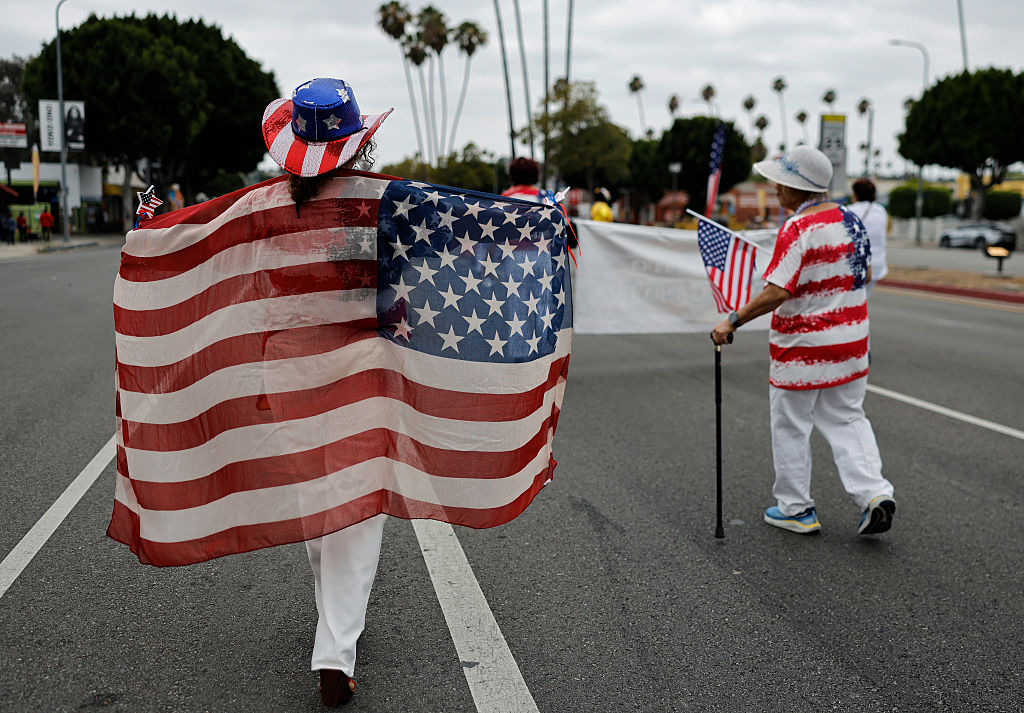
With the country's landmark Semiquincentennial anniversary approaching, polls show that many Americans are harboring negative feelings about the state of the U.S.––and its future.
Democratic Socialists are on the charge in the leadup to the next Congress – but their current winning streak doesn't insulate the party from trouble down the line.
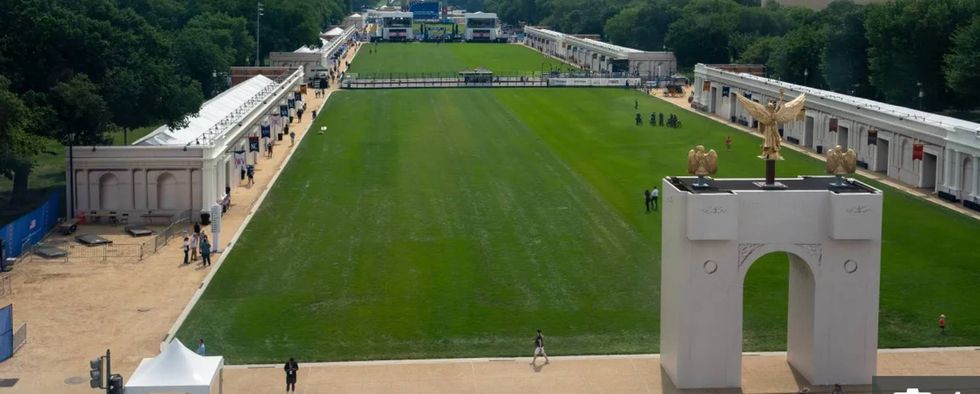
In his latest Freedom 250 triumph, Pres. Fragile Snowflake launched a Great American State Fair in D.C, which is not a state, boasting tens of attendees, no shade or seats, melted ice cream, busted Ferris wheel, $25 pretzels, teenage performers, sorry-ass pavilions often sporting a mere chair, a masturbating MAGA podcaster, and a Spinal-Tap-like mini-Arc-de-Pedo that began disintegrating its first day. No wonder headliner Trump - right again! - giddily proclaimed, "This is the beginning of the golden age of America."Fresh from miraculously transforming "the reflecting lakes" (sic) into a fetid debacle, Trump launched "the most unforgettable birthday party any country has ever had," though maybe not in the way he envisioned. Many observers noted "his own Potemkin Village," billed as "a world-class exposition," sadly "sputtered out of the gate," bathed in the same "stench of kitsch and failure" as everything he touches. The “sparsely attended and shockingly boring” result was variously likened to "comedy gold," "horror movie vibes," "theater of the absurd," and a Butlins - low-rent British package resorts - "for fascists with heatstroke." It did not have to be this way. A viral Reddit post by a former worker at the Smithsonian recalled the "millions in private philanthropy" raised years ago for a landmark 250th anniversary of what's been called "the greatest sentence ever written" declaring "all men (sic) are created equal." Planned was a month-long folk festival, "The Festival of Festivals," featuring a blend of the likes of Burning Man, Farm Aid, Grand Ole Oprey and local festivals highlighting the best of American arts, redolent of the famed Christmas Truce of World War One when "people put down their weapons and got together" in a hopeful, unifying cause.That was before Trump "stole America's 250th birthday and threw it for himself," refusing to issue permits for the Smithsonian's version and swiftly turning what could have been a historic civic celebration into a joyless, gaudy, bleak reality-TV pageant, an alleged state fair, which neither he nor his minions have obviously ever seen, without rides, games, farm animals, cotton candy, fried dough, fresh lemonade or "fun," which could be why reports surfaced of a muggy and miserable scene where bored kids were loudly complaining and at least one took to rolling in the steamy grass screaming, "I. WANT. TO. GO. HOME!!!”Because grifters gonna grift, it also became an egregious “$100-million laundering operation" with a small Ferris wheel. Added to $80 million in our money he stole from the real 250 commission, he lured corporate sponsors seeking favors or contracts - Lockheed Martin, Northrop Grumman, Palantir, Oracle, ExxonMobil, United Airlines - with obscene "deals": $500,000 for “V.I.P access and seating" at all events, $1 million for a “private thank you reception” and “historic photo opportunity,” $2.5 million to hand you the mike for "a speaking role at the July 4 event," up to $10 million for God knows what further abuse of power. Thus did his latest round of corrupt bombastic patriotism, trailing "a sense of dread" and blaring Creed's Higher, kick off Wednesday night to a military flyover, a National Anthem sung by Kash Patel's girlfriend, and a speech behind bulletproof glass to a mostly empty National Mall. "I am thrilled to declare that America is back,” he said, going on to reassure himself on the greatest terror of his life. "We were a joke two years ago, but nobody's laughing at us anymore" - this, from a purported US president forced to fill in for Milli Vanilli. Then he did his cringey robot "dance" while a Marine band played YMCA. Oof. Despite a relatively brief speech, a viral video showed people streaming out as he droned. Later he posted the rally was "packed to the brim with 45,000 happy people. Everybody stayed right until the end of my speech - they loved hearing about a truly successful America." The Party told you to reject the evidence of your eyes and ears: Most reports put the crowd at about 1,000. Sleepy Joe last week: "Whoa. What a loser." Online, people cracked about "almost dozens of people," said they'd seen bigger crowds at school fairs, family reunions, Walmart, and suggested, "They were all at Mamdani's pool party."Heroic Fox News hosts, though, toughed it out. Sitting before a vast expanse of grass dotted with maybe 14 people, they posted AI slopaganda and happily exclaimed "How great is this?" "We've got thousands celebrating!" "People are still coming!" and, "The feeling of patriotism is all in the air." Once the C-listers all bailed, even Vanilla Ice cancelled due to non-existent "inclement weather," and performers came down to a 14-year-old girl from Arkansas who sang Delta Dawn and a local artist who painted an American flag live on stage, desperate Fox folks still chirped about "so many cool people" watching him.
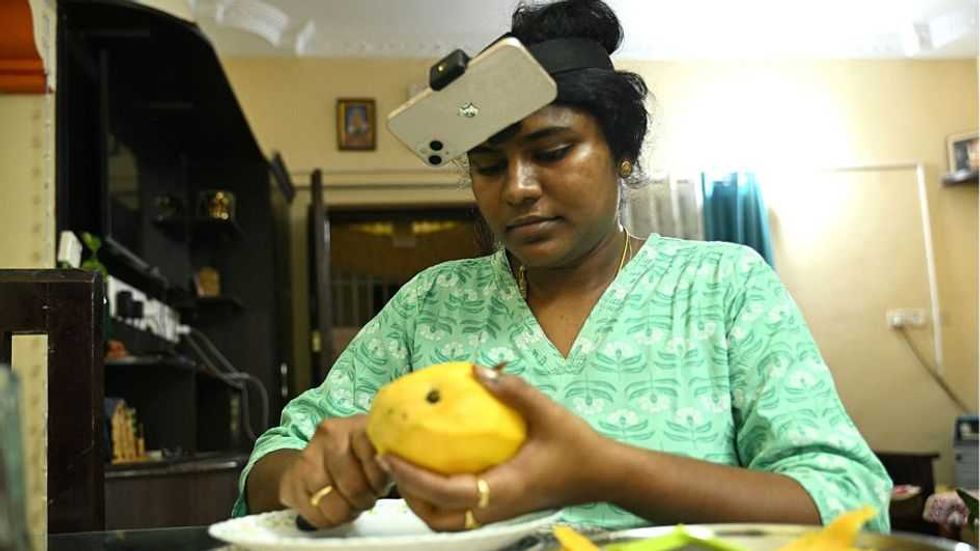
If you want to glimpse the future of artificial intelligence, don't start in Silicon Valley. Start in a South Korean factory.According to the International Federation of Robotics, South Korea now has 1,012 industrial robots for every 10,000 manufacturing workers — the highest robot density in the world. Put another way, roughly one in every 10 manufacturing "workers" is now a robot.For now, however, even the world's most advanced humanoid robots still struggle with tasks that young children perform effortlessly.That startling figure is one piece of a much larger story stretching from American AI labs to South Korean factories, Chinese assembly lines, and Indian garment workshops.For most Americans, the AI revolution is something that happens on a screen. We think of ChatGPT writing emails, Claude summarizing reports, or Google Gemini answering questions. The race appears to revolve around Silicon Valley companies building ever more capable language models.But the next phase of artificial intelligence is becoming much more physical.Instead of asking how machines can write like humans, researchers are asking how they can move like humans — how they grasp a coffee mug, fold a shirt, stitch a collar, or crack an egg without crushing it.That challenge has created an unexpected global division of labor: America builds the brains, South Korea builds the bodies, China provides the classroom, while India supplies the teachers.Together, they're revealing something surprising: the future of artificial intelligence depends on ordinary human beings.South Korea: Building the bodiesIf robotics has an epicenter, it may well be South Korea.The country's dominance in robotics didn't emerge from nowhere. It grew out of decades spent building some of the world's most advanced automobiles.The same expertise that allows South Korean companies to manufacture electric motors, precision steering systems, sensors, braking technology, and other high-performance automotive components translates remarkably well to humanoid robots. Goldman Sachs Research estimates Korean companies could account for roughly 30% of global humanoid robot production by 2035, either by manufacturing robots directly or supplying the critical components that allow them to move.Yet South Korea's embrace of automation has also exposed its tensions.This week, Hyundai workers overwhelmingly voted to authorize strike action after contract negotiations stalled, with robots emerging as a central issue for the first time.The union isn't simply demanding higher wages.It wants guarantees over how artificial intelligence and humanoid robots will be introduced onto factory floors, arguing that workers deserve a voice before machines begin performing jobs currently done by people.The dispute centers on Atlas, the humanoid robot developed by Hyundai-owned Boston Dynamics.While company executives describe Atlas as a way to perform dangerous, repetitive, and physically demanding work, union leaders see a machine that could eventually replace the people who build Hyundai's cars.The disagreement captures the paradox facing much of the developed world.Countries like South Korea desperately need automation. It has one of the world's fastest-aging populations and one of its lowest birth rates, creating labor shortages that robots may eventually help fill.Yet the workers whose jobs are most vulnerable understandably want assurances that they won't become casualties of the technological transition.Child's playFor now, however, even the world's most advanced humanoid robots still struggle with tasks that young children perform effortlessly.Finding a coffee pot, identifying its handle, lifting it correctly and pouring without spilling remains astonishingly difficult for a machine.The bottleneck is no longer the body or the brain. It is experience.Engineers can now build remarkably capable robot bodies and increasingly sophisticated AI models. What they can't manufacture is the accumulated experience that allows humans to navigate the physical world almost without thinking. Like a child learning to walk — or an apprentice learning a trade — robots improve only through repeated interaction with the real world.RELATED: Your child’s new best friend might be a Chinese surveillance device akinbostanci/Getty ImagesChina: Generating the experienceSouth Korea may lead the world in robot density, but China wins on sheer scale.According to the International Federation of Robotics, China had 2.027 million industrial robots operating in its factories in 2024. It installed another 295,000 robots that year alone, accounting for 54% of global robot demand.That scale gives Beijing an enormous advantage in the next phase of AI.Unlike ChatGPT, which learned from enormous quantities of text on the internet, humanoid robots must learn by interacting with the real world.