Supreme Court gets history lesson as it threatens to blow up birthright citizenship
Source: Raw Story · Bias: Far Left
Summary
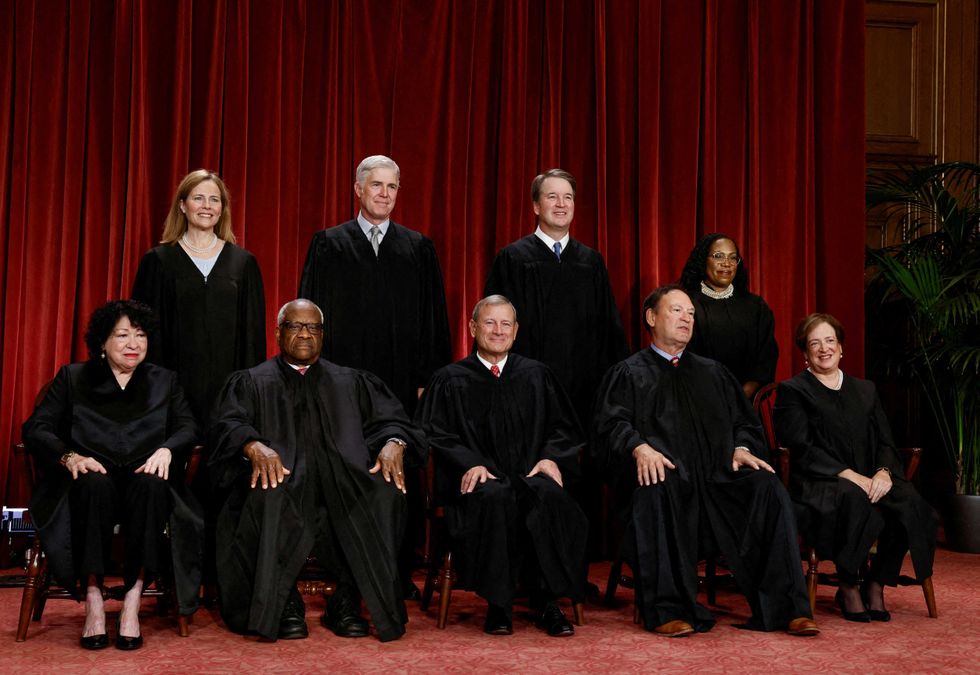
The U.S. Supreme Court will hear oral arguments in two weeks on the birthright citizenship case, and legal experts chewed over the history of that issue.The Reconstruction-era 14th Amendment grants citizenship to “all persons born or naturalized in the United States and subject to the jurisdiction thereof," which was specifically intended to apply to the children born to former enslaved people. But experts explained on Slate's "Amicus" podcast how the history of migration informed that constitutional right."The biggest myth about American immigration is that until the federal government started enforcing our borders in the late 19th century, it was just open borders," said Anna O. Law, the Herbert Kurz chair in constitutional rights at CUNY Brooklyn College."It feeds right into the American dream myth, right?" Law added. "'My ancestors came with nothing but the clothes on their back and a willingness to work hard.' But the period before the federal government took over immigration didn’t mean there were no laws and that there were no migration restrictions. There’s plenty of work and existing scholarship that says the states were enforcing migration laws in the 19th century."However, she was shocked to learn how some elements of present-day immigration law, such as the assumption that poorer migrants would become wards of the state, originated during the colonial era."'People who can’t economically take care of themselves, we don’t want them' – well, that originated in the colonial period," Law said. "So stretching from the colonial period to 1888, first the colonies, and then the states had elaborate sets of laws recruiting certain groups of people to come and restricting other people so they could not come."Co-host Dahlia Lithwick pointed out that the originalism espoused by the Supreme Court's conservative majority sometimes suffered from false narratives about American history, and Law agreed that mistaken assumptions about early immigration could creep into arguments in this case."What we know and what we don’t know about immigration and citizenship history has so many political effects and legal effects, because the myth goes: 'We were very generous for a very long time, and at some point that had to stop because of the ills of mass migration,'" Law said.But that's not the case, she said, because only one state – New York – had benevolent migration laws, and all the rest were restrictionist, and Massachusetts, for example deported people to Ireland, Europe or other states because they didn’t want to be economically and socially responsible for them."A common argument I’ve heard is, 'Well, there were no illegal aliens back then,' Law said. "Well, actually there were unauthorized people, if you want to call them that, [under] just over a century of state laws. So there are plenty of people who had broken some of those laws, and then if you only want to restrict it to federal immigration law, the Congress passed a law in 1808 banning the international slave trade and still ships are smuggling enslaved people in, and so the Framers of the 14th Amendment knew about that. They knew about those ships coming in. They knew about the hundreds of African enslaved people smuggled in after the 1808 congressional ban. So there were unauthorized people in the U.S., and did the 14th Amendment include their children? Yes, it did and they knew that."At the time the 14th Amendment was passed, Congress and most Americans despised the Chinese immigrants in the West, and there were extensive discussions about whether birthright citizenship applied to them, as well, and Law said they made clear it did."The Framers said, ''No, yeah, we mean them, because even though their parents cannot gain citizenship because there are laws banning them from naturalization, we do mean the children,'" Law said.The framers chose to use the words "all persons," which Law said was crucially important for this case."They could have said that the rights of equal protection and due process are for all citizens," she said. "They chose not to use all citizens. It says 'all persons,' and I think they were very mindful of the fact that a bloody civil war had just concluded. They were mindful of the fact that states had been discriminating against Black people, and it’s the states who were going to do any sort of discrimination. So by saying 'all persons,' they are now making clear that U.S. citizenship stands above state citizenship and that the federal government will enforce the protections of state citizenship.
Related Coverage
- 'Demon in human skin!' Fox News host loses it as Dem threatens to upend Texas Senate race (Far Left — Raw Story)
- Trump Scores Appeals Court Victory in Battle Over National Park Historical Displays (Right — RedState)
- Lawfare: Kangaroo court picks fight with state’s conservative attorney general (Far Right — WorldNetDaily)
- UPDATE: Louisiana Supreme Court Temporarily Blocks Politically Motivated Indictment Against AG Liz Murrill (Far Right — The Gateway Pundit)
- A Vietnam Nurse Who Came Home, Helped Get Us to 250 (Center Right — RealClearPolitics - Homepage)
- Iran threatens response without ‘full implementation’ of US deal (Center — The Hill News)
- Iran’s supreme leader bails on first day of late dad’s funeral ceremonies (Right — New York Post)
- Louisiana court halts criminal indictment against state attorney general (Center Left — US news | The Guardian)
More Headlines From March 17, 2026
- ICE Agents Arrest Illegal Aliens Convicted of Murder, Child Sex Crimes, Sex Abuse (Far Right)
- BEASTMODE: Trump Declares That UK Prime Minister Keir Starmer 'Is Not Winston Churchill' (Center Right)
- Trump says China summit is delayed to focus on Iran war (Center Right)
- Pam Bondi subpoenaed for April 14 House deposition on Epstein files handling (Center Right)
- Israeli leadership give military blank check to target any Iranian official without additional approval (Center Right)