Right-wing journalist predicts Tulsi Gabbard will end her tenure on a dramatic note
Far Left
Right-wing journalist John Solomon predicted Thursday, outgoing Director of National Intelligence Tulsi Gabbard will make a dramatic exit by releasing evidence claiming to prove foreign interference in the 2020 election. Solomon, who works closely with Gabbard on declassifications, spoke with Bannon on the "War Room" podcast. "Tulsi is gonna go out in a blaze of glory in her final month because she will be able to release in succession some extraordinary evidence of foreign interference in our election in 2020 and since," Solomon shared.Solomon claimed the intelligence community concealed evidence of "active measures" by China, Iran, and other adversaries, and alleged Gabbard would systematically destroy the official narrative that 2020 was secure. He also claimed China interfered with voter databases in multiple states and made unverified allegations about Ukraine laundering federal grants to Former President Joe Biden's campaign. Gabbard resigned in May, citing her husband's cancer diagnosis. During her tenure, she was involved in President Donald Trump's 2020 election efforts, including overseeing ballot seizures in Georgia and voting machine confiscation in Puerto Rico.Watch the video below. Your browser does not support the video tag.
Former New York City Mayor Eric Adams is trolling his successor by vowing to attend the Israel Day Parade. Adams took to social media to declare that […]
A federal judge refused Thursday to block President Donald Trump’s executive order to illegally limit mail-in voting, clearing the way to disenfranchise millions of voters for the upcoming midterm elections. U.S. District Judge Carl Nichols, a Trump appointee based in Washington, rejected the challenge from Democrats and civil rights groups. He sided with the Trump administration’s argument that it was too soon to block the order because it hadn’t actually been implemented yet.“The Court recognizes that the Postal Service may ultimately issue a final rule that directly affects Plaintiffs or their members, or that the Government may develop State Citizenship Lists that omit specific individuals due to particularized flaws,” Nichols wrote in his ruling. “Plaintiffs may, of course, renew their motions if and when those future actions occur. Until then, however, Plaintiffs cannot show that preliminary injunctive relief is warranted.”Trump’s executive order, signed in late March, directed that states could notify the U.S. Postal Service whether they plan to allow mail-in or absentee ballots up to 90 days before a federal election, and “should” notify the agency whether they intend to supply a list of eligible voters within 60 days of the election. The order also directed USPS to produce a set of mail-in and absentee participation lists for each state, and to refuse to deliver ballots for anyone who is not on the lists. There is no law that requires states to provide this information to the USPS, or authorizes USPS to require states to provide that data. Trump’s order has been described by Democratic leaders as a “desperate, illegal power grab” and “laughably unconstitutional.”A judge could still oppose Trump’s executive order as part of a separate legal challenge in Boston. But in the meantime, the way is clear for USPS to make rules that could prevent millions from voting during the upcoming midterm elections. Democratic lawmakers have urged the Postal Service’s Board of Governors to reject Trump’s directive, as the president has no authority over the USPS, which is an independent agency only accountable to its own board of governors. Lawmakers warned that the USPS is also specifically barred from discriminating against users of the mail, and Trump’s executive order would have the agency illegally perform election administration duties.
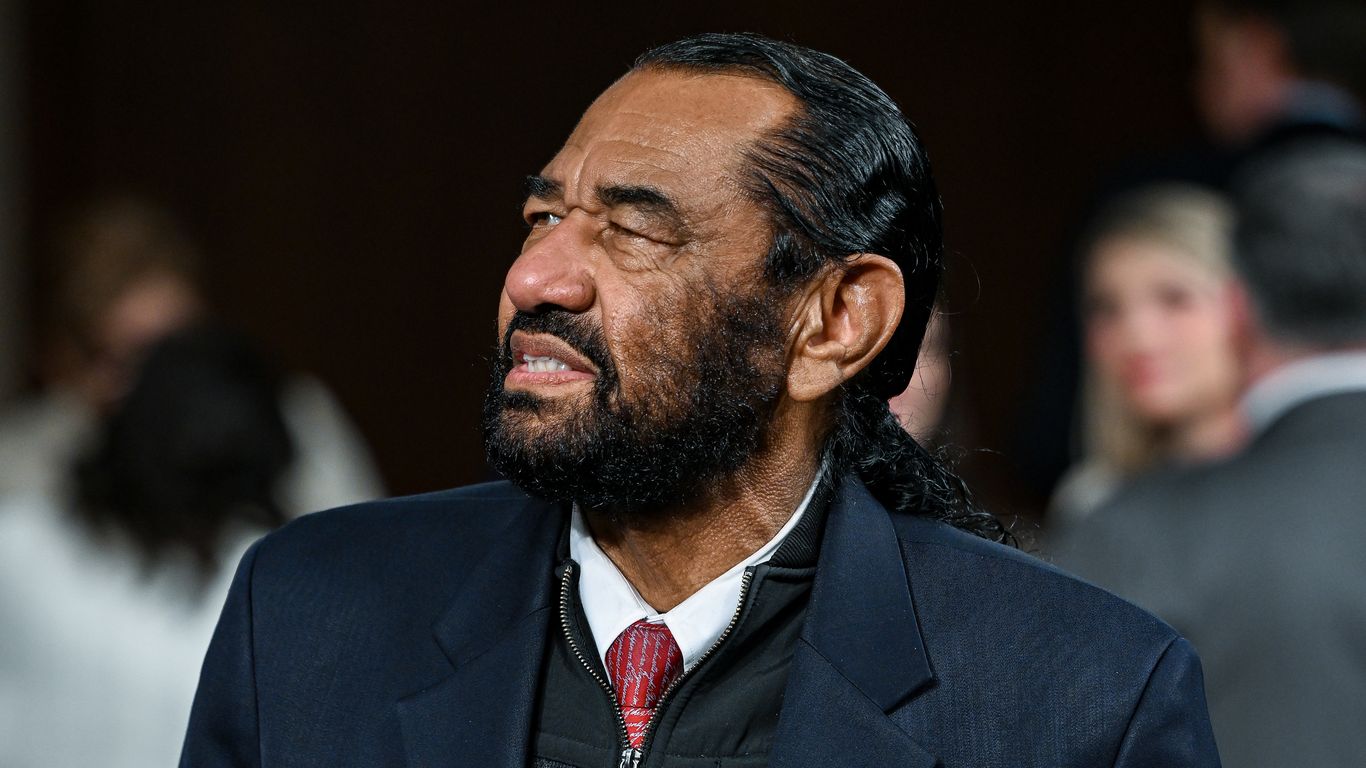
AI companies, the cryptocurrency industry and pro-Israel groups are spending like never before to sink their least favorite members of Congress and congressional candidates.Why it matters: The volume cannot be ignored. It's the kind of spending that can kill careers and stop political movements in their tracks.Pro-Israel groups spent nearly $8 million to oust GOP Rep. Thomas Massie in Kentucky's 4th District, helping to fuel the most expensive House primary in American history.Crypto-aligned Protect Progress was by far the largest spender in Texas' 18th District, pouring nearly $5 million into unseating longtime Rep. Al Green (D-Texas) in favor of freshman Rep. Christian Menefee (D-Texas).By the numbers: Eight of the 12 top outside spenders in House primaries this cycle are PACs affiliated with crypto, AI or pro-Israel groups, an Axios analysis of FEC data found. That includes the top four:Protect Progress, the Democratic arm of leading cryptocurrency PAC Fairshake, had spent the most as of Thursday with $15.8 million across nearly a dozen Democratic primaries.United Democracy Project, affiliated with AIPAC, has spent $11.6 million — including against Massie and former Rep. Tom Malinowski (D-N.J.).Elect Chicago Women, an AIPAC-aligned organization, spent an eye-watering $9.8 million to support just two House candidates in Illinois: former Rep. Melissa Bean (D-Ill.) and state Sen. Laura Fine.Think Big, the Democratic arm of pro-AI PAC Leading the Future, has spent $8.2 million, including support for Bean. It's going after New York U.S. House candidate Alex Bores for his support for AI guardrails.Zoom out: The only entities that can really compete with these levels of spending are the two parties' main super PACs, the Democrats' House Majority PAC and the Republicans' Congressional Leadership Fund.These groups rarely spend large sums in primaries, however, focusing their energy on supporting battleground-district candidates in the general election.The Democratic Congressional Campaign Committee has gotten involved in a few primaries, but only to protect its chosen candidates from what it alleges is GOP meddling.That leaves House primaries open for outside groups to flood the zone with as much spending as they deem necessary to get their preferred candidates over the finish line.Between the lines: House members and candidates targeted by this spending have tried to make the groups' presence the big issue in their primaries, but the tactic has had mixed results.Some progressives, such as Daniel Biss and Analilia Mejia, have been able to make that strategy work by narrowly homing in on AIPAC's involvement in their races.But crypto and AI groups have largely succeeded in elevating their preferred candidates, with AIPAC also notching several wins using groups such as Elect Chicago Women to obscure their intervention.There seems to be even less of a stigma on the GOP side: AIPAC didn't hide its involvement in Kentucky's 4th, for instance, but Massie's attacks on it and other pro-Israel groups and donors failed to help him keep his seat.What they're saying: Rep. Marc Veasey (D-Texas) told Axios in a phone interview Thursday that "people want to campaign on" these PACs spending against them, but "quite frankly, I don't think that many people are ... moved by it."Lawmakers and candidates "like the idea that people are moved by it, and ... like the romanticism that people are moved by it," he said, "but I don't think people really give a sh*t."Veasey said he, like many of his Democratic colleagues, wants to eliminate big money in politics, but "people have to figure out how to work in that world ... and be realistic."Yes, but: Some aren't convinced that this spending adds up to an unstoppable behemoth."You don't have to spend hundreds of millions of dollars if your candidates or policies are popular," said Usamah Andrabi, a spokesperson for the left-wing Justice Democrats — which often finds itself on the opposite end of this spending.Rep. Jared Huffman (D-Calif.) said AIPAC has "overplayed its hand" with its heavy-handed involvement in Democratic primaries in recent cycles, arguing that it will "take a long time for them to rebuild their credibility."What to watch: These groups aren't nearly done yet, with plenty of primaries still ahead.Maryland's 5th District: UDP and Protect Progress have both spent heavily in the race to replace former House Majority Leader Steny Hoyer (D-Md.). Both are backing Hoyer-endorsed state Del. Adrian Boafo.New York's 12th District: While drawing millions in opposition from Think Big — whose donors include OpenAI — Bores has received support from Anthropic-backed Jobs and Democracy PAC, as well as crypto-aligned PAC You Can Push Back.