Pentagon memos reveal Trump set up Tulsi Gabbard to fail: analysis
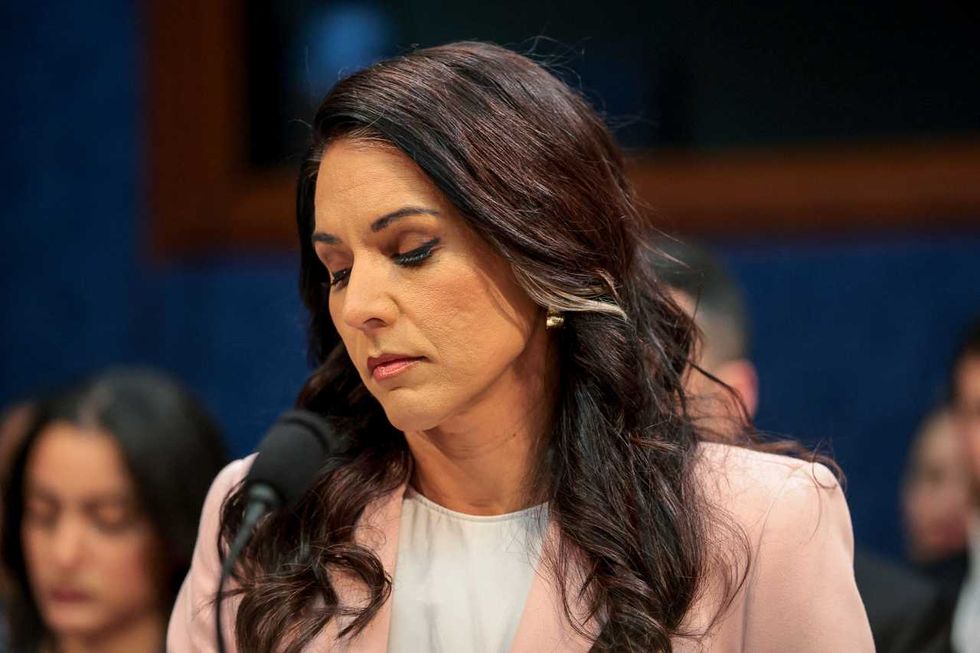
Before she even joined the Trump administration as Director of National Intelligence, Tulsi Gabbard was set up to fail, an analyst reported on Tuesday.Secret Pentagon memos that have now been made public show just what was happening behind the scenes in the years leading up to the second Trump administration, independent journalist Ken Klippenstein wrote in a Substack post published Tuesday.Gabbard has cited her husband's cancer diagnosis as her reason for her pending departure — but there is more to it, Klippenstein explained. "She oversaw her agency’s National Counterterrorism Center move into purely domestic matters (contrary to its original design)," Klippenstein wrote. "The intelligence budget went up. The surveillance state tightened its grip on the American people, with Gabbard presiding over an intelligence community striking up alliances with private companies, including social media giants.""The real story is one of defeat. It’s the story of an intelligence chief discovering she ran nothing, and a national security system that strangles reform with such ease you almost have to respect it," Klippenstein explained.What happened leading up to Gabbard's role, which was created in the wake of the attacks on Sept. 11, 2001, revealed that "Congress is responsible" for altering the job and its reach."Gabbard’s title — Director of National Intelligence — was created in response to public outrage over the intelligence community’s failure to prevent 9/11. But because the member agencies (CIA, FBI, etc.) did not want to have to answer to a higher authority, the position was rendered so toothless and symbolic that one former DNI himself even called the position 'neutered,'" Klippenstein wrote.Donald Rumsfeld also played a role, and in 2004 he began opposing the bill authored by Sen. Susan Collins (R-ME) and Sen. Joe Lieberman (D-CT) to establish a "single, overarching intelligence boss with actual authority over the entire community.""Then-Secretary of Defense Donald Rumsfeld and Vice President Dick Cheney wanted nothing to do with a new official who could touch the intelligence budget of the Pentagon, which controls four of the five largest U.S. intelligence agencies," Klippenstein wrote. "House Armed Services Chairman Duncan Hunter, doing Rumsfeld’s bidding, immediately held up the committee’s final report to stall the bill."And in a private memo to President George W. Bush, written by Rumsfeld, "dripping with contempt," he described his view on the new position. "Rumsfeld warned the president that giving the new intelligence director 'full budget authority' — the exact position Bush had publicly endorsed to appease voters — would create 'a train wreck,'" Klippenstein wrote. "Instead, Rumsfeld proposed a precise blueprint for the toothless agency. The new director’s 'importance and value,' Rumsfeld wrote, 'is not as a collector or producer of intelligence — or as a super CIA director — but rather as the leader of the intelligence community.'"Ultimately, Collins and Lieberman retreated on pushing their bill forward."This episode shows what the national security world thinks of Congress — that they’re a joke — and how the security apparatus effortlessly undermines the Constitution’s balance of powers. Nowhere does Collins express an ounce of frustration, because Congress has completely internalized its role as the ball-gag wearing gimp in Pulp Fiction," Klippenstein wrote.Years later, the decisions left a lasting impression."One could make the mistake of saying that the main culprit here was pitbull Rumsfeld, who was protecting his turf, but the major actor wasn’t a person or an agency," Klippenstein wrote. "It was 'national security,' the mindset itself, and the religion behind it. The belief that the Chairman of the Joint Chiefs, the generals, and the military brass know best. It was able to defy the will of the people, the president, and the Congress.""Tulsi Gabbard never had a chance," Klippenstein added.