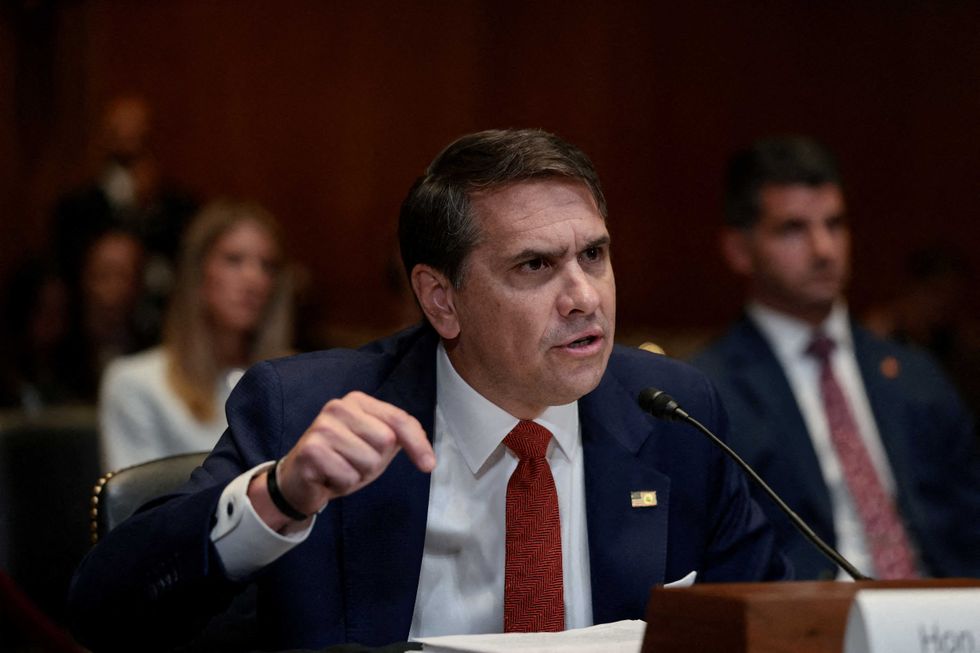
Pete Hegseth makes screeching U-turn on Pentagon religious codes after Mormon outrage
Pete Hegseth's Department of War (DOW) has issued a new listing of religious codes after facing a furious backlash.

Defense Secretary Pete Hegseth reversed course Monday on a Pentagon religious classification policy that had enraged Republican allies — after Sen. Mike Lee (R-UT) called it "repugnant," phoned President Donald Trump directly, and demanded an immediate fix.The controversy stemmed from a May 20 memo, first reported by Military.com, signed by Under Secretary of Defense Anthony Tata, that slashed the military's religious affiliation codes from 211 to just 31. The overhaul was designed to help chaplains better track and serve troops' beliefs — but the initial redone list left The Church of Jesus Christ of Latter-day Saints out of the Christian category entirely, classifying it separately from every other faith that professes belief in Jesus Christ.The backlash was swift and bipartisan. Lee, a Utah Republican and Latter-day Saint himself, posted a video Sunday calling the policy an affront to "tens of thousands" of LDS service members. "It's just repugnant to any sense of decency, any sense of our common heritage," he said. Sen. John Curtis (R-UT) called it "unacceptable." Rep. Greg Stanton (D-AZ) insisted Hegseth explain the exclusion to "hundreds of thousands of Latter-day Saints veterans."Lee then posted that he had spoken with Trump by phone. "I won't speak for him, but I'm thrilled about where this is heading," he wrote.By Monday afternoon, the Pentagon's rapid response account announced the reversal, framing the original list as containing "redundant and unnecessary labeling" — and an updated Religious Affiliation Codes list now includes "Church of Jesus Christ of Latter-day Saints" as a standalone entry. Capitol Hill correspondent Jamie Dupree described the move plainly: the Pentagon had "backtracked."Curtis welcomed the fix. "Thank you to the Department of War for listening to our concerns, engaging thoughtfully and respectfully with my office on this issue, and for delivering a swift correction," he wrote on X.Not everyone was satisfied. Atheist commentator Hemant Mehta argued the revised list still lumps together atheists and agnostics, collapses dozens of smaller faiths into a catch-all "Other Religions" category, and that "the 2017 list was better."
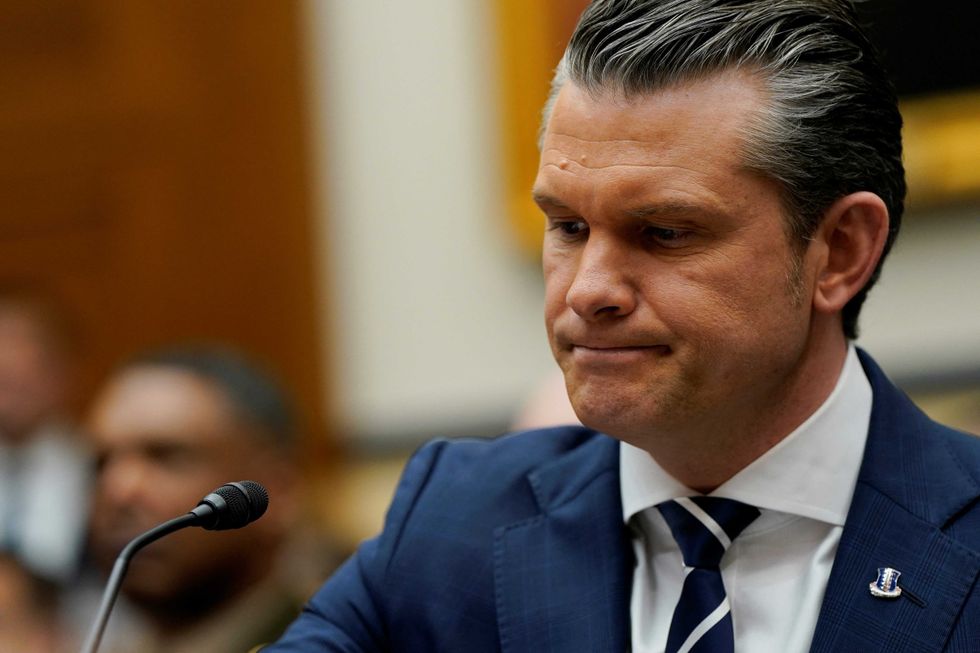
Pete Hegseth's Department of War (DOW) has issued a new listing of religious codes after facing a furious backlash.
Defense Secretary Pete Hegseth reversed a controversial Pentagon religious classification policy after Sen. Mike Lee (R-UT) called it "repugnant" and contacted President Donald Trump directly. A May 20 memo by Under Secretary of Defense Anthony Tata reduced military religious affiliation codes from 211 to 31, but excluded The Church of Jesus Christ of Latter-day Saints from the Christian category. The swift bipartisan backlash included Sen. John Curtis (R-UT) calling it "unacceptable" and Rep. Greg Stanton (D-AZ) demanding an explanation to LDS veterans. By Monday afternoon, the Pentagon announced the reversal, including the Church of Jesus Christ of Latter-day Saints as a standalone entry. Curtis reacted on social media, "Thank you to the Department of War for listening to our concerns, engaging thoughtfully and respectfully with my office on this issue, and for delivering a swift correction," he wrote on X.Capitol Hill correspondent Jamie Dupree concluded, the Pentagon backtracked.However, atheist commentator Hemant Mehta criticized the revised list for still lumping atheists and agnostics together and collapsing smaller faiths into "Other Religions."Watch the video below. Your browser does not support the video tag.
Trump administration officials earlier this year killed a federal criminal investigation into the coal empire owned by Sen. Jim Justice, a Republican from West Virginia and a close ally of the president’s.The investigation examined potential criminal violations of the Clean Water Act by the multistate mining operations largely run by Justice’s son, Jay, according to current and former officials familiar with the matter.The criminal probe was a significant escalation in the yearslong effort to police serial pollution offenses by Virginia-based Southern Coal and dozens of affiliated mining operations controlled by the family. In the past decade, Southern Coal and other Justice corporations have racked up tens of thousands of alleged violations of the Clean Water Act and have been sued repeatedly by state and federal prosecutors over their failure to properly follow environmental laws at their mining sites.The investigation shuttered by the Trump administration was a joint effort by prosecutors and investigators with the Environmental Protection Agency, the Department of Justice’s Environmental Crimes Section and the U.S. Attorney’s Office of the Western District of Virginia to probe whether the incessant violations of antipollution laws had risen to the level of criminal behavior, people familiar with the matter said.People familiar with the investigation told ProPublica that prosecutors believed they had a strong case. They initially had the blessing of Robert Tracci, President Donald Trump’s top official in the Western District of Virginia, to move forward.But in recent months, as prosecutors battled the Justice companies in court over subpoenas for records, the Office of the Deputy Attorney General shut down the probe. At the time, Todd Blanche still headed the office, before assuming the role of acting attorney general in April.“They were told ‘pencils down,’” a person familiar with the investigation said.That prosecutors were even conducting a criminal investigation is noteworthy, people said, because the DOJ only charges a dozen or so criminal Clean Water Act cases each year. It is rare for top DOJ officials to derail a criminal investigation initiated by career officials at such an early stage, people familiar with the case said.“I’ve never heard of that happening before,” said former federal prosecutor Rick Mountcastle, speaking generally about DOJ protocols. Mountcastle spent 24 years as a prosecutor in the Western District of Virginia. “There shouldn’t be some sort of untouchables list of people who are immune from enforcement.”The move is part of a pattern of behavior at the top echelons of the DOJ to push cases against Trump’s political adversaries and ease up on allies.Environmental enforcement against large polluters has plunged under the second Trump administration. Just days after inauguration, the administration reassigned top career environmental lawyers at the DOJ, including those overseeing the Southern Coal case, to work on the president’s immigration crackdown. At the beginning of the year, Blanche personally ordered prosecutors to stand down from cases against diesel emissions cheating.Steven Ruby, an attorney for the Justice companies, said they became aware of the criminal investigation earlier this year.“Ultimately the finding of the inquiry by the government was that there wasn’t any evidence to pursue criminal charges,” Ruby said. “There’s never been any intentional wrongdoing by the companies.”While objecting to the subpoenas in court, the company simultaneously convinced the DOJ to drop the case, he said.“The Justice companies — because Sen. Justice has been governor and because he’s now a senator — are singled out and put under a microscope, and there’s news coverage of violations and consent decrees and compliance actions,” Ruby said. “But the fact of the matter is that those kinds of issues exist throughout the industry.”Current and former government officials familiar with the companies’ environmental record called them routine bad actors. Spokespeople for the EPA and the Western District of Virginia referred questions to the DOJ. Justice’s senate office did not respond to questions.“There is no case to be made here for a criminal investigation,” Emily Covington, a DOJ spokeswoman, said in an email. “Any career prosecutor who would paint a criminal case as strong is simply a deep state prosecutor continuing to push the priorities of the Biden administration.”The deputy attorney general’s office is routinely involved with reviewing cases, she added. The office determined that this case was not consistent with the Trump administration’s priorities, she continued, and it was more appropriate to resolve it through the less punitive civil process. “The bottom line is that this was a politically motivated prosecution for a case that can and should be resolved civilly,” she wrote.The Justice family runs a sprawling coal mining enterprise that extends across the South.
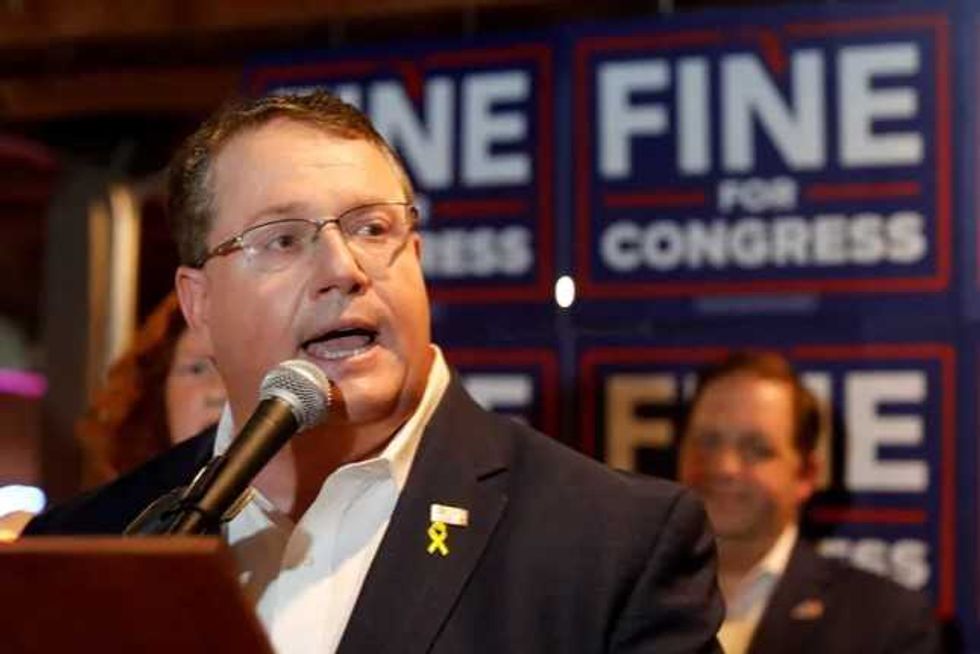
Rep. Randy Fine (R-FL) openly defied President Donald Trump Sunday night in calling for Israel to launch strikes toward Iran, a remark that flew in the face of the president’s foreign policy agenda — and, according to a GOP congressional candidate, may have violated federal law.Iran launched strikes against Israel Sunday in response to that nation's bombing of Lebanon’s largest city, strikes that Trump urged Israeli leadership not to respond to. Despite Trump’s plea, Israel's missiles flew later that night, the news of which excited Fine, who proceeded to encourage Israel to continue.“Israel has every right to respond to rockets being fired at its civilians exactly as we would,” Fine wrote Sunday night in a social media post on X. “Bombs away.”Fine’s comments, however, at least according to Aaron Baker, who’s running to represent Florida’s 6th Congressional District as a Republican, may have violated the Logan Act, which prohibits Americans from holding unauthorized communications with foreign governments in some instances, particularly with intent to “influence measures or conduct of any foreign government.”“Now you are telling [Prime Minister Benjamin] Netanyahu ‘bombs away?’ President Trump told Bibi NO,” Baker wrote in a social media post on X. “Now you have violated The Logan Act, Rep. Fine, and shall be fined or imprisoned under 18 USC 953. So much for trying to pretend you’re loyal to the United States.”Fine has long been a fierce defender and supporter of Israel, though he has frequently drawn scrutiny for his controversial remarks, which critics, even some prominent conservatives, have described as “unspeakably racist” or “genocidal."Examples include Fine telling Gazans to ‘starve away’ last year. In 2021 when, in response to a social media user who shared a photo of what appears to be a Gazan infant buried in rubble with the question “how do you sleep at night,” Fine responded “quite well, actually,” and “thanks for the pic!”Now you are telling @netanyahu “bombs away?”President Trump told Bibi NO. Now you have violated The Logan Act @RepFine and shall be fined or imprisoned under 18 USC 953.So much for trying to pretend you’re loyal to the United States. https://t.co/JhIBak5Qsq— Aaron Baker for Congress (FL-6) (@Aaron4fl6) June 8, 2026
President Donald Trump joked about his many responsibilities in recent White House closed-door meetings. The president has reportedly teased House Speaker Mike Johnson over who really runs […]
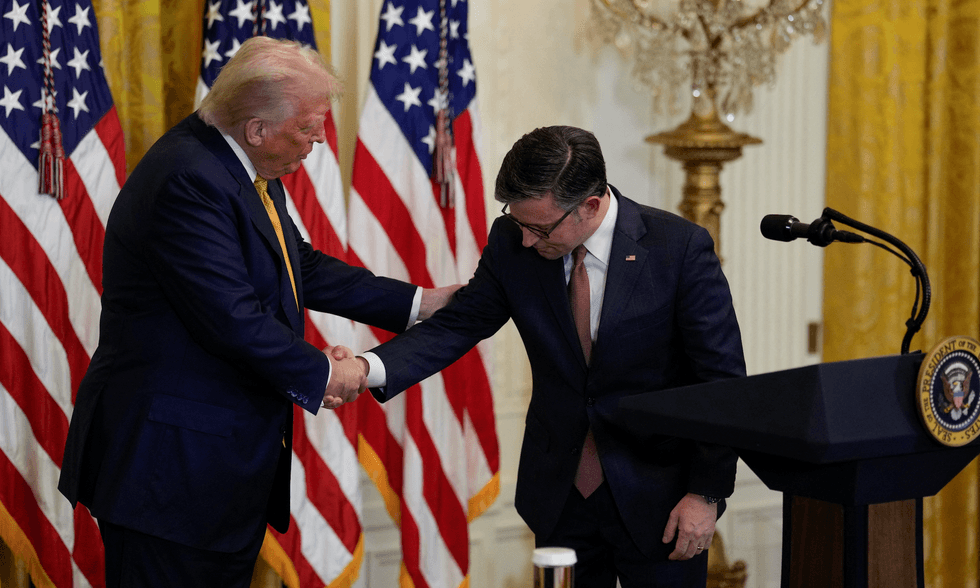
Reese Gorman's new report for NOTUS centers discusses Speaker Mike Johnson ceding his job to President Donald Trump. According to the piece, posted Monday, Johnson relies so much on Trump that the president is the one who actually runs the House. Trump is in on the joke, too. “I have two jobs: being president and being speaker,” Trump once teased Johnson in front of other members of Congress. Trump's mockery stems from Johnson's failure to control his caucus and his desperate search for help from the president. The House is narrowly divided between the two parties, but Johnson has also faced members who are further to the right than the president and those with a more libertarian slant. Instead of working with Democrats for legislation, Johnson has called on Trump to twist arms. It usually involves Trump berating them. Typically, the House whip is responsible for that job. The job is currently held by Tom Emmer (R-Minn.). Last year, Trump on one of his calls with Rep. Victoria Spartz (R-Ind.), who was in the cloakroom. Spartz was crying on the phone and as she walked away, two sources told NOTUS. Trump was on speakerphone, evidently still talking to other Republicans. “I have no f—— idea what she just said," Trump said to the other members. Puck News reported on the incident in February 2025, saying that Trump was screaming that Spartz was a "fake Republican." But Spartz said that Trump had promised to "save healthcare." Rep. Warren Davidson (R-Ohio) also got a call from the president after indicating he was a "no" vote. In the end, legislation passed by the GOP in the past year hasn't garnered much public support, according to Pew Research. The report cited two sources who said they were told to check with the White House before proposing legislation. One House Republican blasted it when speaking to NOTUS as "a total shirking of responsibilities to the White House. Everything has to be preordained and pre-blessed, and there’s very little that we’re able to have our own will on. We should be empowered to pass our own priorities, not just follow what the mandate of the day is.”One GOP aide thinks it's fine to rely on Trump. “Given that the president has to sign the bills that Congress passes for them to become law, it stands to reason that the White House would have input into and help pass the legislative agenda that Republican House Members and the President ran on and that 77.3 million Americans voted for,” the aide said.The 119th Congress is coming close to setting a record for the most "do-nothing Congress" in over 150 years. While previous congresses have been mocked as "do-nothing Congress," under a unified GOP government, legislation has come to a crawl. In the 118th Congress, which had Republicans in Congress and Democrats in the U.S. Senate and the White House, they only passed 158 bills in two years. Typically, there are 300 to 600. To find less, one would have to go back 150 years, according to reports.The 119th Congress has enacted 95 public laws and two private laws. The White House told NOTUS that its overly-involved influence has ensured things stay on the right track. This as a record number of incumbents announced their retirement. “Speaker Johnson is proud to have a strong and productive working relationship with the President that has delivered countless positive legislative results for the American people, in spite of the razor-thin margin of the House majority — including lower taxes, secure borders, reduced crime, a return to American energy dominance, massive reductions in burdensome regulations, fraud, waste and abuse, and so much more,” Johnson's spokesperson said.When Johnson or the White House tried to block bills from the floor that were unflattering to the president, GOP members joined with Democrats to force a vote. “The speaker has felt like, since they’re from the same party, there’s not a need for checks and balances. I disagree,” complained Nebraska Rep. Don Bacon (R), who is leaving Congress at the end of the year. “I think we could have provided more feedback on tariffs, Ukraine and other things, like the ballroom.”Other members told NOTUS don't know of anyone else who could do much better than Johnson.
President Donald Trump is increasingly at odds with his own Republican Party, with The Hill reporting that they are at each other's throats over "a number of hot-button issues" as the party scrambles to address midterm anxieties.As the outlet reported on Monday morning, "despite Trump’s success in defeating GOP House members and Senators who defy him in Republican primaries," GOP lawmakers in Congress are increasingly willing to break with him on key issues, particularly ones where the president's stances are toxic with voters."Four House Republicans joined with Republicans to pass a war powers resolution aimed at forcing the president to end the war in Iran," the report detailed. "Six Republican senators voted with Democrats on a proposal to block the construction of Trump’s planned White House ballroom unless Congress formally authorizes the project."It continued: "Six GOP senators also banded together with Democrats to support an amendment sponsored by Sen. Bill Cassidy (R-La.) to block Trump from bringing back the controversial $1.8 billion 'anti-weaponization' fund, which members of both parties have cast as a 'slush fund' that could dole out money to Trump allies, including people convicted of Jan. 6 crimes against police."Trump has also prompted GOP pushback when he nominated Bill Pulte — director of the Federal Housing Finance Agency, and previously a businessman with zero intelligence experience — to replace Tulsi Gabbard as director of national intelligence. Three Republicans in the Senate joined with Democrats to vote on a measure barring Pulte from serving in the role. Alongside Cassidy, other Republicans who lost their reelection chances to Trump-backed primary challengers have been among this cohort opposing his plans, including Sen. John Cornyn of Texas and Rep. Thomas Massie of Kentucky. This is in addition to some more moderate Republicans, including Lisa Murkowski of Alaska and Susan Collins of Maine, and Thom Tillis of North Carolina, who is not seeking reelection.“The House margin was always pretty narrow, but now that you’ve antagonized Tillis, Cassidy, Cornyn, and you add to that the kind of dynamics you already have with Murkowski and Collins, I think you’re creating a much bigger challenge to actually getting anything passed in the Senate this year," Marc Short, the former chief of staff for Vice President Mike Pence, told The Hill.
GOP pollster Sarah Longwell warned, President Donald Trump's push to confirm Acting Attorney General Todd Blanche as permanent Attorney General could create a midterm liability for Republicans. In the latest episode of her podcast, "Illegal News with Sarah Longwell," Longwell explained the Senate's narrow Republican majority means only four GOP votes can defect before confirmation fails. She speculates at least five senators are likely to vote against Blanche, citing political retribution against Trump as their motive. These are Sens. Susan Collins (R-ME), Lisa Murkowski (R-AK), Thom Tillis (R-NC), John Cornyn (R-TX), and Bill Cassidy (R-LA).Other vulnerable Republicans may oppose Blanche, yet they hold sufficient political pressure, she argues. Longwell also suggested Democratic ads targeting Blanche's role in securing Ghislaine Maxwell a sweetheart deal to a low-security facility could sway vulnerable Republican senators. The confirmation fight threatens intra-party conflict during the midterm election cycle, potentially harming GOP electoral prospects.Watch the video below. Your browser does not support the video tag.