Journalist Karen Hao on Sam Altman, OpenAI & the "Quasi-Religious" Push for Artificial Intelligence
Far Left
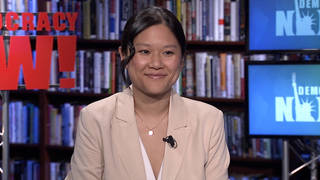
As part of our July Fourth special broadcast, we continue our extended interview with Karen Hao, author of Empire of AI: Dreams and Nightmares in Sam Altman’s OpenAI. The book documents the rise of OpenAI and how the AI industry is leading to a new form of colonialism. “One of the things that you really have to understand about AI development today is that there are what I call quasi-religious movements that have developed within Silicon Valley,” says Hao. “The concept of artificial general intelligence is not one that’s scientifically grounded.”
In our July Fourth special broadcast, we revisit our interview with longtime technology reporter Karen Hao, author of Empire of AI, which unveils the accruing political and economic power of artificial intelligence companies — especially Sam Altman’s OpenAI. Her reporting uncovered the exploitation of workers in Kenya, attempts to take massive amounts of freshwater from communities in Chile, along with numerous accounts of the technology’s detrimental impact on the environment. “This is an extraordinary type of AI development that is causing a lot of social, labor and environmental harms,” says Hao in an extended interview.
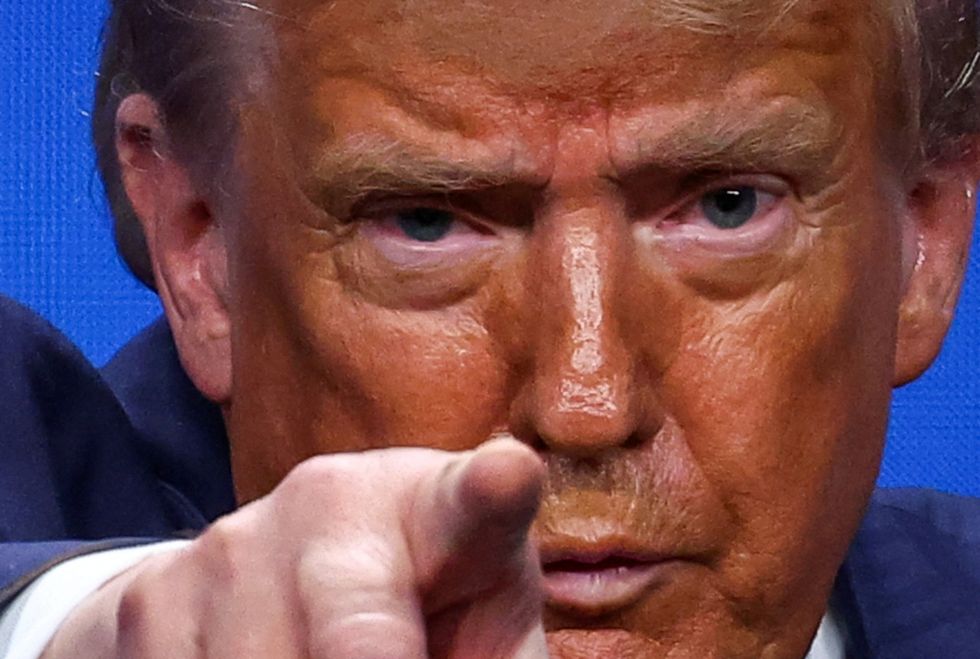
According to the renowned fascism historian Ruth Ben-Ghiat, the Supreme Court has become President Donald Trump’s “partner in corruption,” not only working to enrich those who are in on the scam, but reshaping the U.S. as an authoritarian state in which one must “fear and obey” Trump.“This is the summer of corruption,” wrote Ben-Ghiat on Thursday. “Defined as the abuse of power for private gain, corruption can happen in any kind of organization and government, but under authoritarianism it attains a new status: it is how the executive branch operates, expands its power, and recruits elite and grassroots partners. The Supreme Court is one of these partners, as we’ll see below.”The Trump administration and its enablers on the Court, argues Ben-Ghiat, “are providing Americans and the world with a lesson in how corruption can become systemic.” This, she says, is the goal of all authoritarians: they “seek to retool government and the culture to create the conditions to lie, steal and repress people with impunity. That means going after journalists, judges, investigators, opposition politicians and others who expose official wrongdoing. It also means puffing up the leader’s personality cult and inventing narratives, backed by complicit religious institutions, about his selflessness and purity.”She raises the example of Justice Clarence Thomas, who has a well-documented history of “accepting luxury gifts and travel from billionaire GOP donor Harlan Crow,” who in turn “has a garden full of statues of dictators, and collects Adolf Hitler and Nazi memorabilia.” And, according to Ben-Ghiat, “As per the sacred laws of corruption, these ‘gifts’ were likely supposed to be repaid whenever Thomas put on his robes. No matter that the Court, which has no ethical oversight mechanism, finally instituted a code of conduct in November 2023, which states that justices must ‘uphold the integrity and independence of the judiciary’ and avoid actual and apparent impropriety.”Thomas has paid no attention to this code, refusing to recuse himself in cases involving Trump’s election lies, even though Thomas’s wife Ginny was directly engaged in those lies. As Ben-Ghiat muses, “What good would Thomas be as a link in the chain of corruption if he took himself out of the game just when he was most needed?”“And here we arrive at the Supreme Court as a partner in Trump administration corruption, first by giving the President immunity for official acts, and now by upholding his right to dismiss an official on political grounds,” writes Ben-Ghiat. “A landmark ruling in July 2024 gave the president ‘the power of a king,’ as the Brennan Center termed it, conferring upon him absolute immunity (for the exercise of core constitutional powers) and presumptive immunity (for all other official acts). This created the legal space for a lawless individual such as Trump to feel even more emboldened to use corruption and violence to destroy our democracy and make money doing it.”Now, while the Supreme Court has for 100 years upheld that the president does not have the authority to fire heads of independent agencies without cause, Trump’s allies on the court have overturned that precedent, creating conditions for further “systematic corruption.”“We need to see this decision through autocratic eyes,” explains Ben-Ghiat. “Not obeying the Leader, refusing to participate in his corruption, and politicizing the practice of government are acts of negligence and malfeasance in office in the authoritarian world. Such people must be removed from public service, lest they influence others with their moral stances.”The power to fire agency officials at will is exactly what the president needs to shape government to his private agenda. According to Ben-Ghiat, proof of this intention was revealed by the words of Solicitor General John Sauer, who represented the Trump administration in the case, arguing before the court that the president needs to be able to remove officials in the agencies because “the President must have the power to control and…the one who has the power to remove is the one who…is the person that they have to fear and obey.”
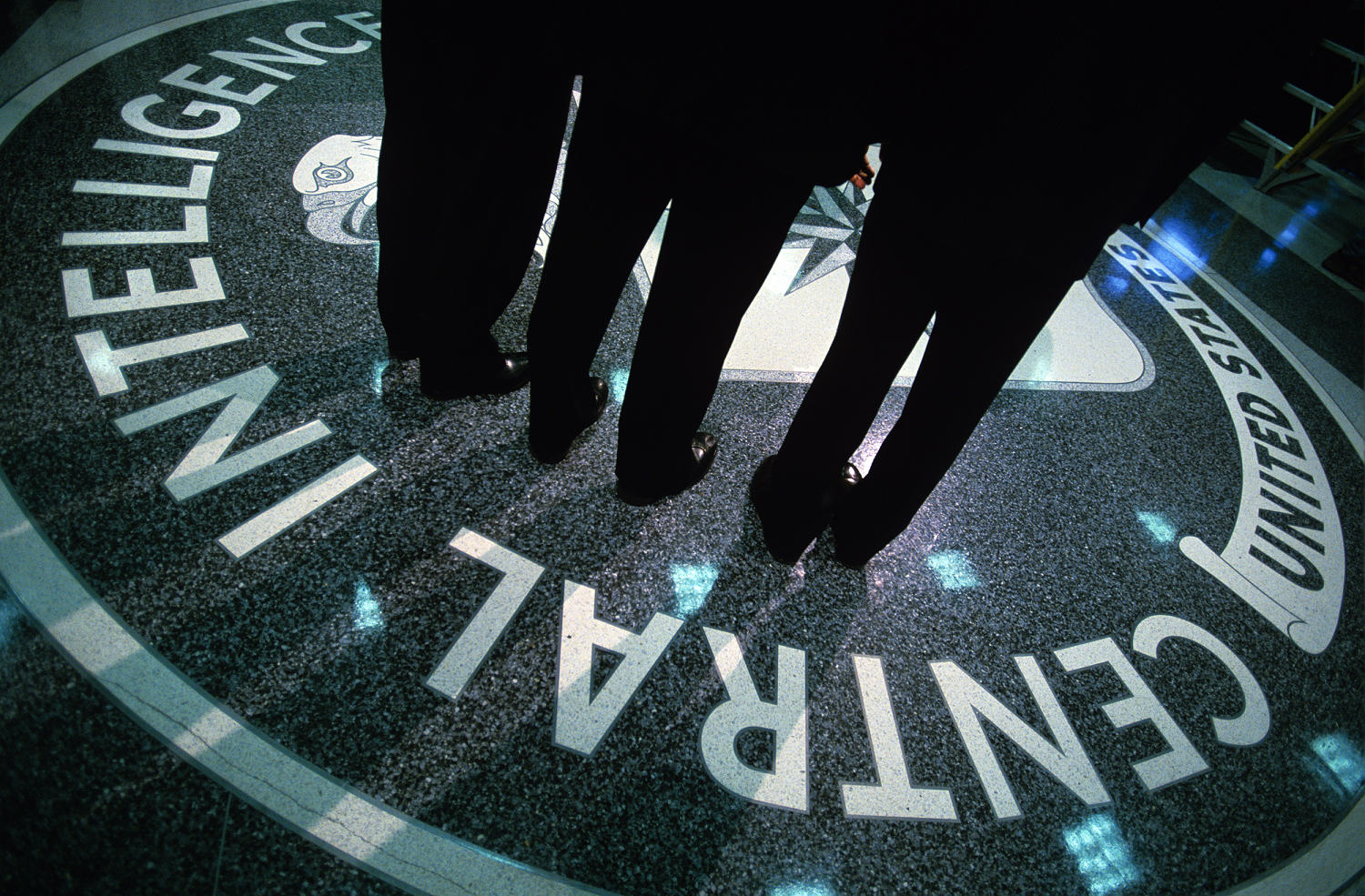
A federal appeals court in a 2-1 decision Thursday upheld a lower court ruling blocking the Trump administration from firing 19 career intelligence officers who had been assigned to roles dealing with diversity, equity, inclusion and accessibility (DEIA). The ruling from the 4th Circuit Court of Appeals found the Trump administration erred in firing the…
OpenAI may give the U.S. government a 5% stake in the company, per the Financial Times. The proposal is in very preliminary conversations, according to a person familiar with the matter.Why it matters: If the overture is taken up by the Trump administration, that would mean the government would have a vested interest in weighing whether or not to limit the release of an OpenAI model. Catch up quick: OpenAI views the potential government stake as a way to give the general public a share of the upside of AI, and CEO Sam Altman has previously shared with Axios his interest in some sort of public wealth fund.The goal is to include other AI labs giving over a similar stake.This could look like including shares in Trump accounts or some other vehicle that would give American households exposure to investments in AI, for example. Anthropic supported similar policies in a recent paper, arguing for "universal pre-distributive capital accounts" with "priority given" to those with jobs exposed to AI disruption. Zoom out: The potential investment comes as the White House is still deciding when OpenAI can release its most powerful models widely, through a regulatory process that Altman has said isn't quite "optimal." Altman proposed on Wednesday a U.S.-led international forum to establish AI regulatory standards, which could be a way to allow the government to invest without having as heavy a hand in regulation.Between the lines: Investors tell Axios that the idea of giving a stake reads like a PR stunt aimed at making it seem as if the public could benefit from the AI boom just as the technology threatens their jobs.Yes, but: The government's 9.9% stake in Intel, taken last August, appears to have paid off.Its shares are up nearly 400% since then, although it has also come amid a broad rally for chip stocks. Friction point: The Intel stake was acquired under the CHIPS Act. A deal with the AI labs would likely require an act of Congress.It's also unclear what a government stake would accomplish, other than giving the AI labs a closer relationship to what is currently one of their biggest hurdles: the government. An investor in Anthropic and OpenAI tells Axios that the proposal reads more like a "political move" to gain favor with the administration than something that would actually create a shared benefit for the American public. What they're saying: A government stake would be a "troubling milestone" that hurts competition between the labs, " David Sherman, AI and financial inclusion strategist at io.net, a decentralized cloud network, said via email.It "gives one AI company a government stamp of approval whilst millions of developers, researchers and businesses are locked out by skyrocketing token prices and endless GPU queues," he added, referencing the challenge in accessing AI at current costs or chips at current supply levels.It comes amid broader concern about whether the government is already curbing the competitive edge of U.S. AI labs compared with China by putting guardrails around model release timelines.And if the goal is to share the financial benefits of AI, there are other ways to do that. Some have suggested that AI companies share a percent of pre-tax income or that the government impose a tax on all tokens. Kevin Bankston, an AI governance advisor, wrote "JUST. TAX. THEM." on X.Bill Gates proposed an automated robot tax in 2017 that could slow down automation, suggesting they should be taxed the same way human employees pay income tax. The bottom line: "The labs develop the technology, but citizens and their elected representatives must make the rules," Altman wrote in the Financial Times earlier this week.
A federal appeals court on Thursday blocked the Trump Administration from firing 19 intelligence officers assigned to DEI jobs.
The post Appeals Court Blocks Trump Administration from Firing 19 Intelligence Officials Assigned to DEI Jobs appeared first on The Gateway Pundit.
As the 60-day deal with Iran reaches the two-week point, President Trump is pushing for oil prices to drop faster. “Just as I promised, Oil Prices are plummeting FAST, and Gas Prices at the pump are dropping too, but not as fast as they should be,” he posted to Truth Social on Wednesday night. Brent…