Iran called Trump's bluff — and somehow Putin won
Source: Raw Story · Bias: Far Left
Summary
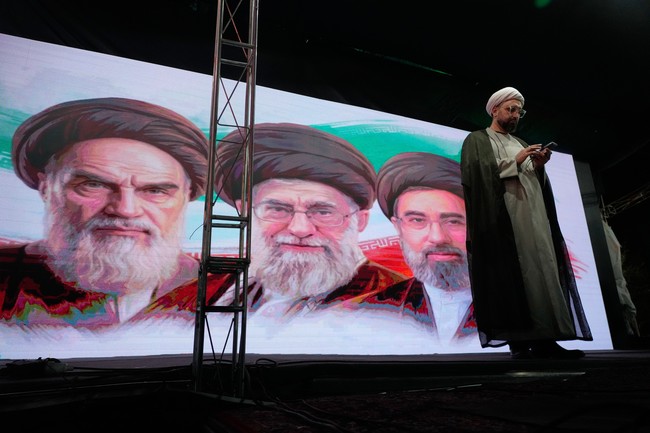
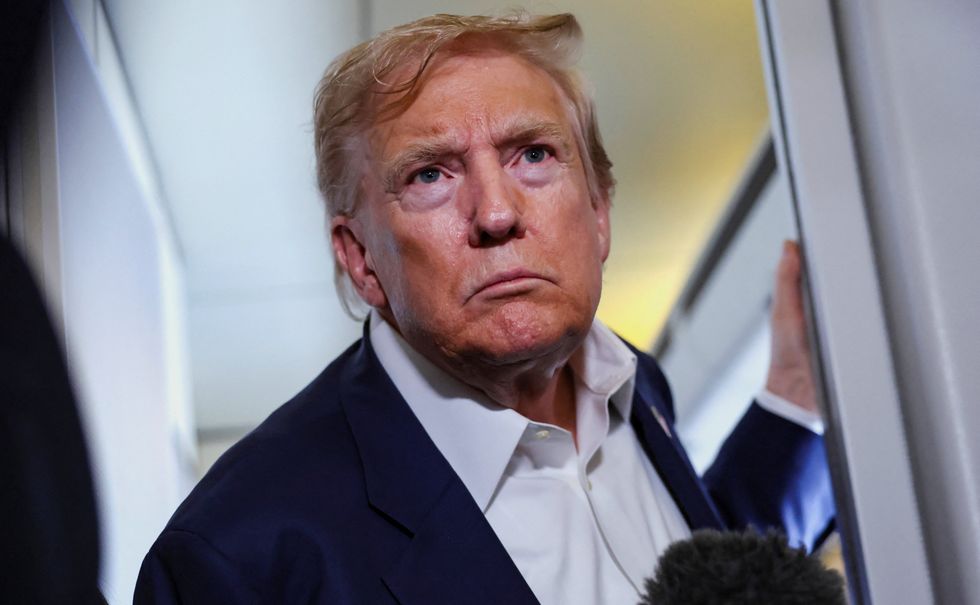
Donald Trump suddenly popped on TV screens late Monday, giving his most extensive remarks on the war in Iran and taking questions from the press.Trump had previously given no public speech to the American people upon the initiation of this war — unlike every American president taking the country to war in the past. His communication to the American public was mostly in the form of videos or speaking by phone to select reporters, offering wildly shifting rationales for the war and its goals.On Monday, however, he finally came before the White House press corps and repeated what he’d said earlier in the day to CBS, that the war — which he now dubbed a mere “excursion” — is “very complete.” But he also said it would go on, even though it would end “soon,” and said that Pete Hegseth, who earlier said the war is “just the beginning,” is correct, even though Trump himself said that it’s “complete.”What?He’s trying to have it all ways in a war that had no planning or an endgame.The crazy presser perhaps is explained by two things that happened in the hours before it: Trump spoke at length to Russian President Vladimir Putin, and Trump saw oil prices surge to $120 a barrel on Sunday, tanking markets around the world and in the U.S. on Monday morning.Let’s take the latter first. We learned from the tariff upheaval that Trump cannot stomach the markets crashing and particularly the bond market starting to teeter. It’s the only thing that stops him. Corporate America and his billionaire friends and GOP donors wind up shrieking. And average Americans — in this case looking at the price of gasoline — become very attuned to the economy and high prices.Trump’s earlier statement in the day to CBS, while the markets were open, that the war is “very complete” was meant to calm the markets. “I think the war is very complete, pretty much,” Trump told CBS. “They have no navy, no communications, they’ve got no Air Force ... Wrapping up is all in my mind.”And the intended effect worked. The markets began to rebound as the price of oil came down. It actually had been coming down a bit from earlier when Trump promised insurance and military escorts for companies. None of that may actually happen. It’s risky for American military vessels to escort ships in the Strait of Hormuz, which has essentially been brought to a standstill, stranding 20 percent of the world’s oil supply. But the market operates on hope and fear.Trump knows that. The real economy operates on facts — real data as well as on experiences on the ground by Americans in their jobs and in their consumer spending — but the market operates on hope and fear until that real economy catches up. The market can be temporarily lifted, and Trump lent it a helping hand.But later, in the presser, after the markets had closed, Trump gave much more mixed signals — the New York Times called it a “zigzag” — saying the war may go on for a while. He even responded to a question about Hegseth, saying it’s “just the beginning” by saying that “both” could be true. Clearly, Trump still wanted to convey that he had massive leverage over Iran, and that the bombing will continue — which it has. That’s because, in essence, this was all a capitulation to the Iranian regime, which knew the US wouldn’t have the stomach to go on for long.Trump had only on Friday called for an “unconditional surrender” from Iran and said he’d need a say in who would be its leader, promoting his most extensive thoughts on regime change yet. And Trump absolutely rejected the idea that the son of the former Supreme Leader could be the new Supreme Leader.But Iran indeed installed as Supreme Leader the son of 86-year-old Ali Khamenei, who was killed in a U.S. strike along with a few dozen other leaders, some of whom were viewed as more moderate by U.S. intelligence and as leaders with whom the U.S. could work. As national security analyst Joe Cirincione, a member of the Council on Foreign Relations, told me on my SiriusXM program yesterday, that strike was a strategic blunder — spurred on by Israel — as the U.S. now had no top leaders with whom it could negotiate.The son, Mojtaba Khamenei, is much more hardline than his father and is only 56 years old. So Trump killed the old man who could likely have been replaced when he died by one among several moderates — all of whom Trump also killed — and now the hardline, young son will be there for a long time.Iran’s regime defied Trump’s demand — there would be no surrender — and they chose their more extreme leader. And then the markets tanked as oil was cut off. And Trump caved.So Trump’s bluster at the presser yesterday was his way of trying to make Iran’s brutal government feel afraid of him. But why should they feel afraid? He’d, after all, just melted away. Trump also completely sidestepped a question from a reporter about how the Iranian people — the vast majority of whom support democracy — could feel betrayed by him?
Related Coverage
- Melania gives Congress private deadline as she works around Trump's team: report (Far Left — Raw Story)
- Trump announces pardons for pollution violators prosecuted for "fixing their car" (Center — Politics - CBSNews.com)
- Trump Pardons Six People Pursued for ‘Fixing Their Car’ (Center — Bloomberg Politics)
- Sources: Trump likely to pardon pollution violators; weighing clemency for Diddy (Center — Politics - CBSNews.com)
- What Is Iran Building Now in the Zagros Mountains? (Right — RedState)
- Fox host warns Trump will pay for his 'breathtaking' corruption (Left — Alternet.org)
- Trump Scores Appeals Court Victory in Battle Over National Park Historical Displays (Right — RedState)
- Signs of Victory: I-95 Welcomes President Donald Trump Int'l Airport (Right — RedState)
More Headlines From March 11, 2026
- Reporter asks Pete Hegseth if Israel is taking advantage of America (Far Right)
- GOP Senator Bernie Moreno outlines why John Thune struggles to move SAVE America Act forward (Far Right)
- President Trump Impromptu Presser on Iran and SAVE America Act Departing the White House (Far Right)
- Victor Reacts: Republicans, Do Whatever Must be Done To PASS the SAVE America Act! (VIDEO) (Far Right)
- If Democracy means listening to voters, Senate should pass SAVE America Act (Far Right)