Here's how the Iran war is becoming very dangerous indeed
Source: Raw Story · Bias: Far Left
Summary
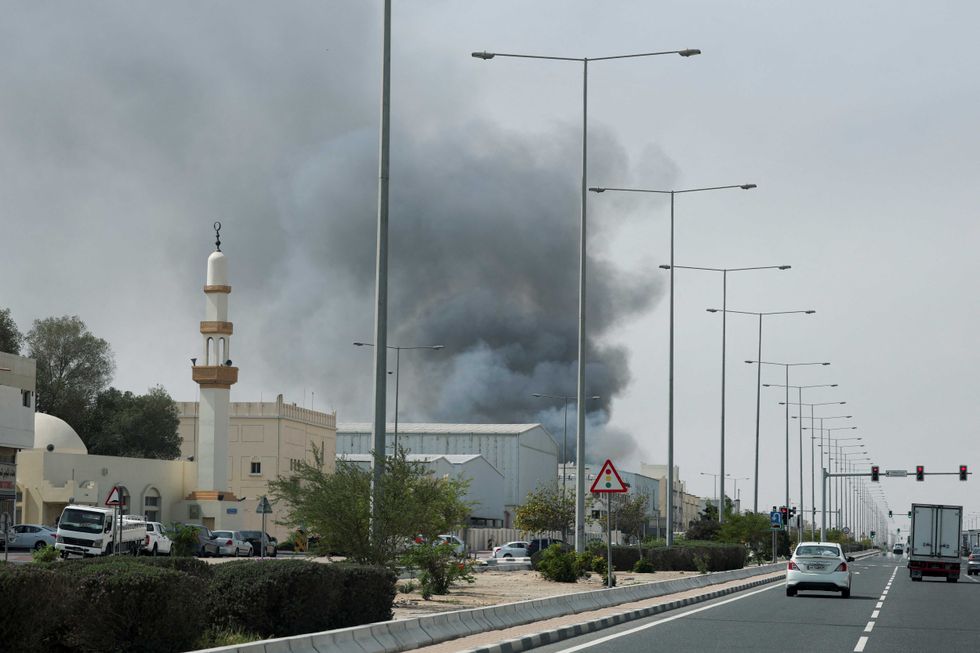
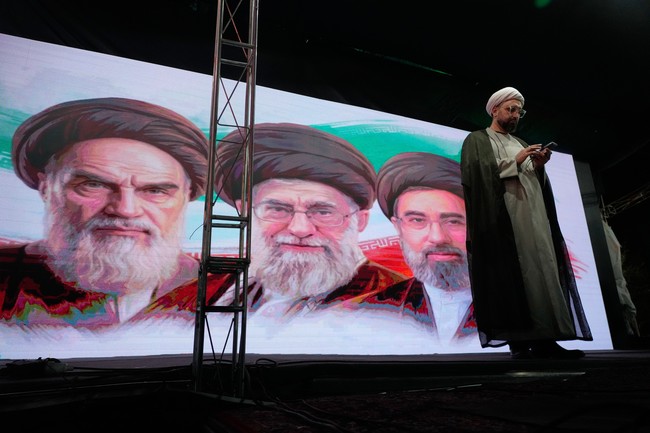
By Scott Lucas, Professor of International Politics, Clinton Institute, University College Dublin. The conflict in the Middle East continues, and is showing no sign of letting up. Israeli and US warplanes have continued to strike targets inside Iran, which has prompted retaliatory attacks throughout the region. An American submarine has also sunk an Iranian navy ship off the coast of Sri Lanka, killing at least 80 people, while Nato defences intercepted a missile heading towards Turkey.US officials, who initially envisioned the conflict in Iran lasting four to five weeks, are now warning it may go on far longer. “We are accelerating, not decelerating,” Defence Secretary Pete Hegseth told reporters on March 4, adding that “more bombers and more fighters are arriving just today”. We asked Middle East expert Scott Lucas how dangerous the situation has become.You’ve called this ‘uncontained war’. What do you mean by that?Once the Iranian regime retaliated, hours after initial US-Israel airstrikes that it was later revealed killed Iranian supreme leader Ayatollah Ali Khamenei, this was no longer just an American-Israeli war on Iran. Tehran, which had refrained from retaliation beyond Israel in the 12-day war in 2025, was taking this across the region.This was a war in the Gulf states, where Iran fired not only on American bases but also industrial areas, ports and tankers. This was a war in Lebanon, where Israel responded to Hezbollah rocket fire with airstrikes and an expansion of its occupation in the south of the country. This was the possibility of war spreading to Iraq, where the US military and CIA may be supporting Iranian Kurds for a cross-border incursion.It is now possibly also a war beyond the Middle East. A drone attacked the UK’s RAF Akrotiri base in Cyprus and an Iranian missile has been intercepted flying towards Turkey. Drones have struck an airport and school in Azerbaijan. Iran has denied responsibility but the Azerbaijani president, Ilham Aliyev, has put his armed forces on high readiness.How dangerous a moment is this?War is always dangerous, of course, but this conflict is compounded by the shattering of any international “rules of the game”. The US and Israel have blatantly violated international law. They have assassinated the head of another country and his senior officials.The United Nations can condemn the strikes, but this will be easily disregarded by Israel and the US. Donald Trump has historically taken little notice of UN criticism, and said in January that his power is limited only by his “own morality”. European countries can call for deescalation, but almost all have now prioritized working with the US on the defense of positions threatened by the Iranians.China is maintaining a cautious position and Russia will be grateful that attention is being taken away from its invasion of Ukraine. If the Iranian regime does not surrender, there does not appear to be anyone or anything capable of checking the US and Israeli attacks — and thus the retaliatory shocks across the region and beyond.Is there a risk that Nato will be drawn in?Nato is already drawn in. Once Iran went beyond the Middle East to threaten Cyprus and Turkey, then the bloc had to take action. However, while Nato forces downed the missile heading towards Turkish airspace, the alliance is not yet discussing invoking Article 5 (the agreement that an attack on one Nato member is considered an attack on all).The alliance has also become involved in the conflict verbally to ensure the Trump camp does not abandon Ukrainian and European security at a sensitive point in talks to end Russia’s invasion of Ukraine. Nato secretary general Mark Rutte, already known for calling Trump “daddy”, has given fulsome praise to the war even as some Nato members like Spain condemn it.In a recent interview with a German television channel, Rutte said: “It’s really important what the US is doing here, together with Israel, because it is taking out, degrading the capacity of Iran to get its hands on nuclear capability.”Where are the Gulf states in this? What happened to Qatar’s attempts to mediate?The Gulf states are likely to be happy that Iran’s supreme leader and others in his circle have been assassinated. For decades, Khamenei had pursued a strategy of expanding Iran’s influence across the Middle East — directly threatening Gulf monarchies. However, they are loathe to see regime change, fearing the disorder and instability that marked Iraq after the 2003 US invasion.They have been trying to pull back the Trump administration — an initiative by Qatar to persuade Trump into finding an off-ramp is notable — but they have to do so quietly. Open opposition to the US president risks even more serious disruption of the political and economic situation, with no guarantee that a triggered Trump will listen.There is a further complication because of division among the Gulf states.
Related Coverage
- What Is Iran Building Now in the Zagros Mountains? (Right — RedState)
- Most dangerous CA cities to celebrate July 4th revealed — including ritzy celebrity hideaway (Right — New York Post)
- 'It's so hot' - Dangerous hot weather grips parts of the US (Center — BBC News)
- Iran threatens response without ‘full implementation’ of US deal (Center — The Hill News)
- Iran’s supreme leader bails on first day of late dad’s funeral ceremonies (Right — New York Post)
- Trump team believed Israel plotted assassinations to derail Iran talks: reports (Far Left — Raw Story)
- ‘It’s crazy’: GOP rebel declares war on Republican leadership (Far Left — Raw Story)
- Iran warns US, Israel against strikes during supreme leader's funeral (Center — NewsNation)
More Headlines From March 8, 2026
- BREAKING: Mojtaba Khameinei Named Iran's Supreme Leader (Right)
- DEVELOPING: 'Suspicious Device' Found Inside Vehicle Near NYC's Gracie Mansion (Right)
- Trump Makes A HUGE Move to Get the SAVE Act Passed (Right)
- The unlikely tool Trump is eyeing to tackle rising oil prices amid the Iran conflict (Right)
- U.S. Now Warning Iranians Their Regime Is Endangering Them (Right)