It’s a sunny Thursday morning in Berlin’s central business district. In the shadow of shopping malls and corporate HQs, a large group of high schoolers has gathered. From a makeshift stage, two of their comrades start leading chants aimed at the German chancellor: “Friedrich Merz, suck my balls,” “Send Friedrich Merz to the front line,” […]
It’s a sunny Thursday morning in Berlin’s central business district. In the shadow of shopping malls and corporate HQs, a large group of high schoolers has gathered. From a makeshift stage, two of their comrades start leading chants aimed at the German chancellor: “Friedrich Merz, suck my balls,” “Send Friedrich Merz to the front line,” […]
Even as President Donald Trump and his MAGA movement gut civics in public schools by dismantling the Department of Education and pushing pro-MAGA interpretations of history and “God-centered education,” a new study suggests that Generation Z can ill afford this educational erosion, as they are shockingly ignorant of basic facts about American history.“Nearly two-thirds (61 percent) of Americans under 30 are unaware of what America’s 250th is commemorating this year, while just 39 percent know we are celebrating the adoption of the Declaration of Independence,” reported Cato Institute’s Jonah Messinger and Emily Ekins on Thursday. The right-leaning think tank conducted a survey, the Cato Institute Fourth of July Survey, with the help of the polling firm Morning Consult.Messenger and Ekins added that “a majority (52 percent) of Gen Z Americans also don’t know what country from which the American colonies declared their independence, while 48 percent correctly answered that it was Great Britain.”Additionally, “More importantly, two-thirds (67 percent) of Gen Z do not know why the American colonies declared independence from Great Britain, while 33 percent correctly answered that it was to protest high taxes and a lack of representation in government.”There was a bright spot in the numbers, in that 66 percent of Generation Z knew America’s first president was George Washington. That number, however, is 11 points less than the number of Americans overall who know their nation’s first president.“Six in ten Americans (64 percent) under 30 likewise don’t know what the main purpose of the US Constitution is,” Messenger and Ekins wrote. “Instead, 14 percent thought the main purpose of the Constitution was to declare independence from Great Britain (which is what the Declaration of Independence did), 17 percent thought the main purpose was to create a presidency, Congress, and Supreme Court, 8 percent thought it was to list all federal laws, and 4 percent thought it was to create two major political parties. Another 21 percent admitted they didn’t know. Only 36 percent knew that the main purpose of the Constitution is to establish and limit the powers of government.”In a separate Thursday post about the poll, Ekins identified similarly ominous findings about the American public overall.“A new national survey from the Cato Institute, conducted in collaboration with Morning Consult of 2,253 Americans ahead of July 4th and America’s 250th anniversary, finds nearly half (46 percent) of Americans don’t know what America’s 250th anniversary commemorates,” Ekins wrote. “A little more than half (53 percent) correctly answered that it was the adoption of the Declaration of Independence.”The survey discovered that “while most Americans have at least an instinctive sense that the US Constitution protects their rights, a majority (58 percent) don’t actually know how it accomplishes this. Less than half (41 percent) correctly said that the Constitution’s purpose is to establish and limit the powers of government. The remaining said the purpose of the Constitution was to declare independence from Great Britain (17 percent), create the presidency, Congress, and Supreme Court (12 percent), list all federal laws (7 percent), or create two major political parties (4 percent), while 18 percent conceded they don’t know what the purpose of the Constitution is.”The survey also found majorities of Americans support ideas about how to change America’s Constitution that one or the other party staunchly oppose. These include conservative views such as requiring photo ID to vote (66 percent), requiring a balanced budget (69 percent), making English the nation's official language (64 percent), banning flag burning (60 percent) and banning transgender women from women’s sports (59 percent). It also includes liberal views such as guaranteeing health care (73 percent), providing free college (60 percent), limiting money in political campaigns (69 percent), guaranteeing a right to abortion (58 percent), banning hate speech (58 percent) and increasing taxes on the wealthy (58 percent).
Germany’s pro mass migration establishment is facing explosive scrutiny after reports that a taxpayer-funded NGO adviser allegedly drove the suspected Stade mass shooter both to a child-welfare meeting and away from the scene after six employees were killed.
The post Germany: Mass Migration NGO Worker Allegedly Drove Stade Mass Shooting Suspect to and from Scene appeared first on The Gateway Pundit.
German lawmakers are set to approve a €12 billion ($13.7 billion) order of up to eight submarine-hunting frigates from defense manufacturer TKMS AG& Co. KGaA in one of the biggest military procurements for Chancellor Friedrich Merz’s ruling coalition this year.
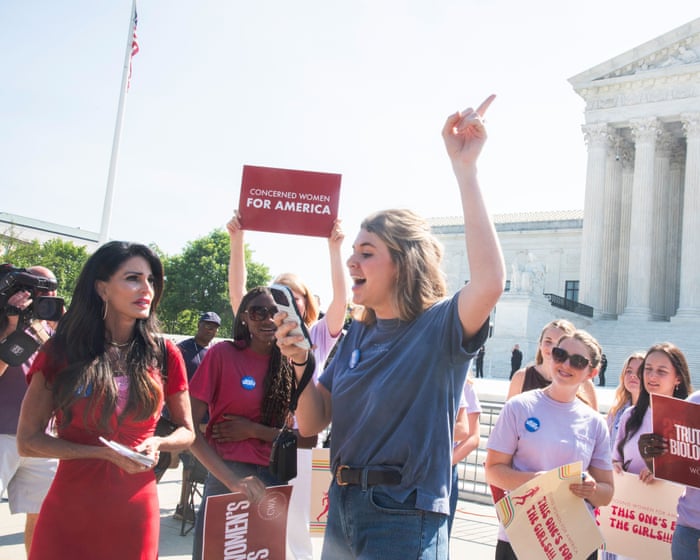
Gen Z conservative women may be fewer in numbers than their male counterparts, but they are no less consequentialOn the steps of the US supreme court on Tuesday, a group of women celebrated. They cheered and held up signs with phrases like “Girls’ Sports for Girls Only” and “Truth, Fairness, Biological Reality”. Penny Young Nance, the CEO of Concerned Women for America, told the gathering that after a decade of these conservative women’s activism: “The court agrees with us that a man cannot be a woman.”“The decision will affect the law across the country,” she said. “We will have a better opportunity to protect young women.” Continue reading...
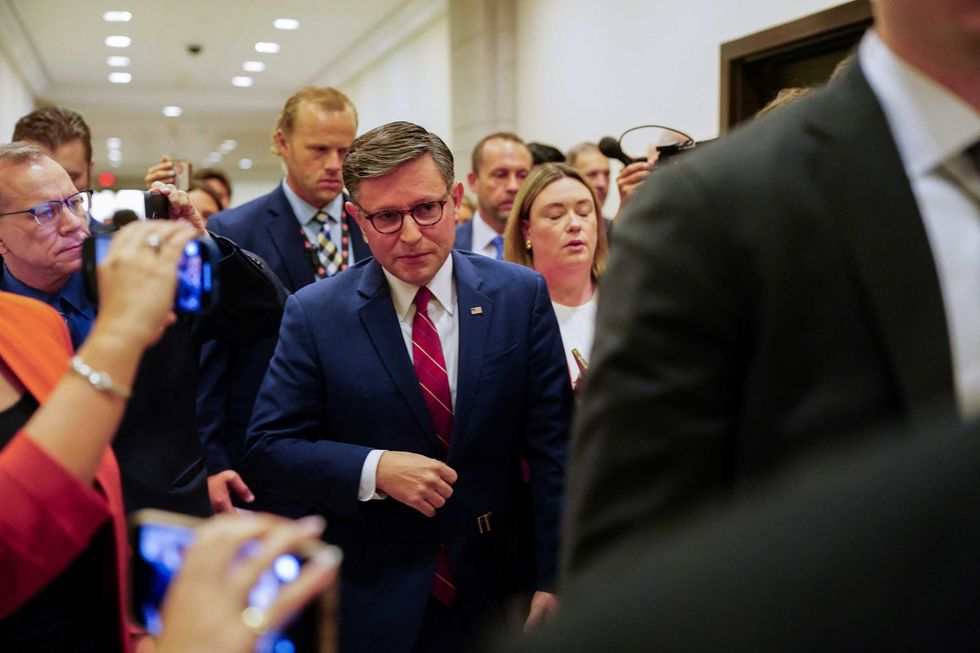
President Donald Trump's push for his top congressional priority is running into resistance not from Democrats, but from within his own party's rural wing.The 80-year-old president wants an expanded SAVE America Act to include sweeping mail-voting restrictions alongside provisions targeting transgender athletes and gender-affirming care for minors, but that effort has stalled because House Speaker Mike Johnson (R-LA) doesn't have the votes to pass Trump's preferred version, reported Politico.“There are other states that do it well, and without a problem,” Johnson said. “Our concerns are with the handful, five or six blue states, who abuse this, and California is the avatar for this, because it is so ridiculous.”Johnson has instead fallen back on a narrower February bill focused on proof-of-citizenship requirements, leaving most election administration to the states.The holdup traces to Republicans representing sparsely populated states, where mail voting isn't a partisan talking point but a practical necessity. Rep. Julie Fedorchak (R-ND), a supporter of election reform broadly, warned that a near-total ban would create real problems back home."We're a rural state," she said. "I understand the concerns about mail-in voting … but I think the solution that I'm in favor of is restricting it and creating these commonsense reforms for it."Republican Rep. Mark Amodei (R-NV) echoed the sentiment, arguing that absentee voting simply needs structure rather than elimination — commonsense safeguards like clear postmark deadlines, not a wholesale ban.Complicating matters further, the Supreme Court recently struck down Trump's attempt to restrict mail-ballot counting by executive order, a ruling some Republicans welcomed as vindication that mail voting isn't inherently corrupt, as Trump has claimed.“It says mail-in voting in and of itself is not evil," Amodei said. "There ought to be some mechanism for you to do that.”In the Senate, the effort is similarly stuck. Sen. Rick Scott (R-FL) reportedly told colleagues — as well as the president directly — that while he personally favors the expanded provisions, there isn't consensus within the Senate GOP to pass them, pointing instead toward procedural tactics on a slimmed-down bill.
Ultraconservative lawmakers refused to back a critical procedural measure as they pressed for action on voting legislation championed by President Trump.