Dems blast their own party for using 'heroic dead for a political attack on Memorial Day'
Far Left
A pair of Democratic lawmakers – both combat veterans – blasted their own party for a social media post marking Memorial Day.Sen. Tammy Duckworth (D-IL) called out the the Democratic National Committee for posting photos of 13 U.S. service members killed during the military conflict with Iran and blaming President Donald Trump for their deaths.“It is incredibly distasteful to use our heroic dead for a political attack on Memorial Day,” Duckworth posted on her social media accounts. “I’m a Democrat and I condemn this post by the DNC.”Duckworth served in the U.S. Army from 1992 to 2014 and lost both of her legs and injured her right arm during a 2004 combat mission during the Iraq War.Rep. Jason Crow (D-CO), who served as an Army Ranger during three tours of duty in Iraq and Afghanistan, also criticized the DNC post.“If we want the moral high ground, we have to be better,” Crow posted. “I fought for our country and served with those who made the ultimate sacrifice. It’s wrong to politicize this day. I won’t hesitate to call out my own team when we fall short."The president also drew criticism for his Memorial Day social media messages attacking Democrats."Happy Memorial Day to all, including the Dumocrats, who disrespect our Military and all of the tremendous success that it has had over the last year," Trump posted early that morning. "Memorial Day is traditionally one of the most unifying moments on the American political calendar, a day when presidents of both parties have set aside partisan conflict to honor the men and women who died in service to the country.""God Bless those that have made the ultimate sacrifice. I love you all!" he added.The DNC eventually deleted its post after receiving criticism from the Democratic lawmakers, but Trump's message and subsequent posts attacking his rivals remain online.
Views and opinions expressed are solely those of the author. On a day when decent Americans paid tribute to the nation’s fallen heroes, Democrats were celebrating their […]
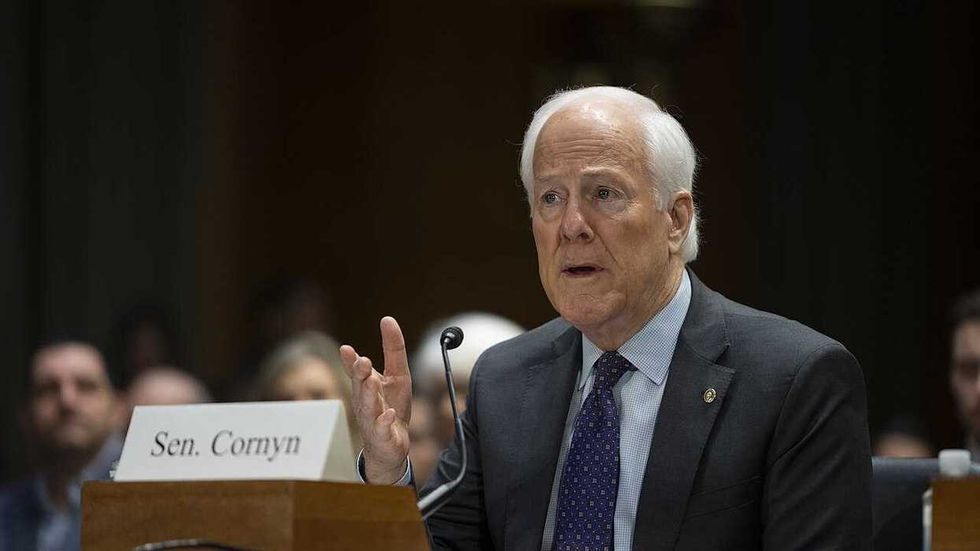
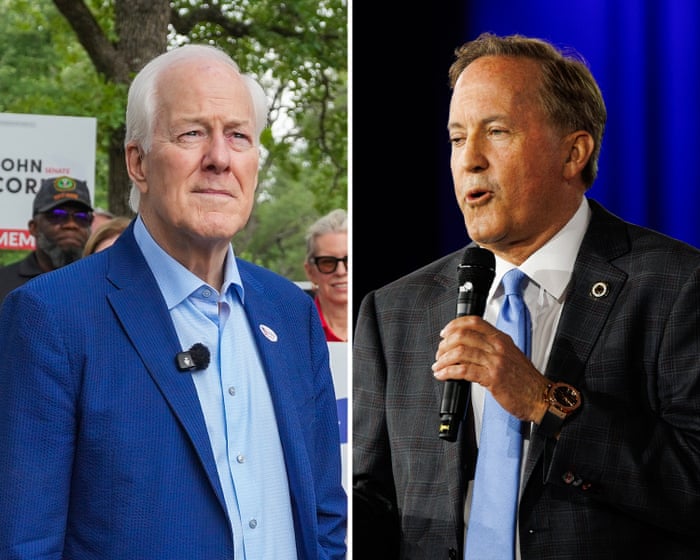
This Tuesday night, May 26 in a U.S. Senate primary runoff, Texas Republicans will choose between incumbent Sen. John Cornyn and State Attorney General Ken Paxton — a far-right conspiracy theorist who President Donald Trump endorsed. Paxton is clearly the more MAGA of the two, while Cornyn is being supported by Senate Majority Leader John Thune (R-South Dakota) and other traditional GOP establishment conservatives. According to Politico reporters Liz Crampton and Samuel Benson, this primary is so "brutal" that some GOP insiders are "worried the party will emerge in tatters.""Armed with President Donald Trump's endorsement," the journalists explain in Politico, "Paxton has emerged as the clear frontrunner in the final days of a Texas Senate runoff where the MAGA-aligned, scandal-plagued firebrand state attorney general has weathered millions of dollars in attack ads. But Cornyn, the establishment favorite and a giant of the Senate seeking a fifth term in office, is putting up a hard fight until the end, bolstered by a massive war chest and solidarity from senior leadership in Congress…. The race has become increasingly vicious in the final stretch, with Cornyn accusing the attorney general of being ethically unfit for office and Paxton arguing that the incumbent, 74, is too old to continue serving in the Senate."Crampton and Benson continue, "Their relentless mudslinging has only deepened existing divisions between the GOP's hardliners and traditional moderates. Several Republicans in both Texas and Washington warn that Trump's decision to endorse Paxton over Cornyn has alienated lawmakers on Capitol Hill — and risks turning off major GOP donors who will be critical during an expensive general election."One of the Republicans who is sounding the alarm is Daniel Garza, president of the Texas-based conservative group, the LIBRE Institute.Garza told Politico, "In Spanish, they call it lucha de gigantes — a fight between two giants. Post-runoff, you're going to have to mend a lot of fences."Some conservatives, including Thune and Washington Post columnist George Will, believe that the Democratic nominee, Texas State Rep. James Talarico, would have a better shot against Paxton than he would against Cornyn. And Crampton and Benson note that "national Republicans" are "growing increasingly worried that having Paxton as the nominee will force them to spend massively to hold onto the seat, sucking away resources from other top battlegrounds."A GOP state lawmaker in Texas, interviewed on condition of anonymity, told Politico, "The vitriol is going to be real. (Trump) has destroyed that trust there. No matter what we do for you, you will still stab us in the back. That's what he did to Cornyn."A GOP strategist, also interviewed by Politico on condition of anonymity, said of Cornyn, "To say he's the most adored politician by the donor class in Texas is an understatement. That's why this is hard to come to grips with, because he was viewed as the gatekeeper to every major donor in the state, and there's not a close second."Veteran GOP strategist Mark McKinnon told Politico, "If Cornyn loses, he will be (the) last of the compassionate conservatives — and it will signal the end of years of Republican ascendancy in the Lone Star State."
Last week’s primary election didn’t feature any races with both a Democrat and a Republican on the ballot, but Georgia Democrats still feel like they won.If you are one of the more than 2 million Georgians who cast a ballot, you will likely recall the poll worker asking you to choose a Democratic, Republican or nonpartisan ballot.In all, Democrats pulled more than 1 million ballots to Republicans’ nearly 940,000, or about 52.6% to 45.4%.Democratic Party of Georgia Chairman Charlie Bailey said that margin is the biggest for Democrats since 1998 and shows that voters are ready to line up in November behind candidates like U.S. Sen. Jon Ossoff and former Atlanta Mayor Keisha Lance Bottoms, the Democratic nominees for U.S. Senate and Georgia governor.“It’s just another piece of evidence of growing Democratic momentum, the work of the party, the strength of Jon Ossoff, the strength of Keisha Lance Bottoms coming into this governor’s race,” he said. “People are fed up with (Republicans), and what those numbers in the primary tell you is that that momentum is building towards November, when they’re going to vote these Republicans out.”In 2018, a midterm year with President Donald Trump in the White House and an open race for Georgia governor at the top of the ticket, Republicans pulled more ballots than Democrats by about 52% to 48%.Comparing the number of ballots drawn is not a perfect measure. Some people choose the other party’s ballot because they live in an area dominated by that party and they want to have a say in local races, or because they want to promote a weaker opponent for their candidate in the general election.Still, the discrepancy spells good news for Democrats looking ahead to the Nov. 3 election, says Emory University political science professor Andra Gillespie.“What it connotes or implies is that Democratic candidates are capturing the imagination of voters in ways that, if this energy can be sustained, could be helpful for them in terms of flipping seats nationally, and in Republican states like Georgia, narrowing those margins between Democrats and Republicans, even in contests where Republicans are the odds-on favorite,” she said.The difference in ballots is even more notable because Republicans had more high-profile races, said University of Georgia political science professor Trey Hood. No Democrat challenged incumbent U.S. Sen. Jon Ossoff, while Republicans had competitive races for U.S. Senate and Georgia governor at the top of the ticket.Hood said it’s also notable that Republicans who voted on Election Day did not outnumber Democrats by a large margin. Republicans only had about 4,000 more voters on Election Day than Democrats, about 508,000 to 504,000. Hood said that might signal a shift in GOP voter behavior, with more conservatives preferring to cast a ballot during Georgia’s three weeks of early voting.“I don’t know that we can expect to necessarily see a huge surge in Republican turnout on Election Day anymore,” he said.Voter demographics strong for DemocratsResults also show demographics that tend to favor Democratic candidates in Georgia had a strong showing.Statistically, Black voters in Georgia largely favor Democrats, and they made up nearly 32% of the vote.“If Black turnout was 31% in a general election, yeah, that would be probably a good Democratic year,” Hood said. “I mean, before now, the highest it’s ever been is about 29%. And the more Black turnout as a percentage of the total electorate, the less of the white share of the vote you have to draw off as a Democrat. So if that pattern held and Black turnout was 31% in the general, it would be big.”Data from the secretary of state’s office also shows that the electorate was nearly 57% female and 43% male. That number is likely boosted by high turnout among Black women, who are registered to vote at a higher rate than Black men.Reality check?Still, the high Democratic turnout was not enough to land a pair of Democratic-aligned candidates on the state Supreme Court, and not everyone thinks the numbers show the wind is at Democrats’ back.Georgia Republican Party Chairman Josh McKoon said turnout in primary elections does not correlate with general election turnout.McKoon said he chalks up the ballot discrepancy to the typical midterm backlash to the party in the White House and Democrats having a competitive field for governor for what he said was the first time in more than two decades.“It was Mark Taylor and then it was Jason Carter, then it was Stacey Abrams twice,” he said. “Now, this time they actually had a wide open primary, and a lot of people ran. And so, yes, it’s not surprising that they had more than their usual turnout because usually they don’t have anything to turn out for.
Out here in California, Democracy is a monthslong slog. The state effectively began engaging in big-D Democracy sometime around January—that’s when California’s ballot measures were gathering signatures. Every time you went to Ralphs or Vons, you could linger outside in the perpetual sunshine, pick up a box of Girl Scout cookies—and scribble your signature onto the latest ballot initiative. The people gathering those signatures are often gig workers, paid for each John Hancock they wrangle. They carry around armfuls of paper (usually collecting signatures for four or five ballot initiatives at once), and they’ve learned to lead with the most popular measures. A Californian hurrying through a milk run won’t always stop when asked to sign your petition to create an immunology research institute at the state university, but they might stop if you ask them to sign on to an easy-to-explain and broadly popular initiative like Voter ID or Prohibiting New Retirement Taxes. Their ears may especially perk up when they hear the signature hustlers mention this year’s billionaire tax.“Have you signed the billionaire tax yet?” was a popular refrain outside my local Ralphs. They’d buttonhole you with that or with the ballot measure prohibiting new retirement taxes, which sounded just as simple until you asked to see the language. I remember reading the retirement tax initiative and feeling uncomfortable; it was too wishy-washy. What’s this here about prohibiting new taxes on the worldwide value of my intellectual property? Are California’s firefighters and nurses really at risk of retroactive taxes on the future value of their 401(k)? I had the curious sensation that I was being astroturfed. Turns out, I was. The Retirement and Personal Savings Protection Act is one of six billionaire-backed measures, three of which are aimed at defanging the billionaire tax. All these measures are funded by Building a Better California, the $80 million nonprofit bankrolled by Google founder Sergey Brin, who has thrown a $40 million tantrum over the notion that he may have to pay the billionaire tax. A spokesperson for Building a Better California didn’t want to speak on the record, but Brin’s been telling the governor and every reporter who’ll listen that he’s leaving California and taking his toys with him. Why, he’s even threatening to move the company that manages his 466-foot-long superyacht out of the Golden State, per The New York Times. There’s a dystopian (and distinctly American) paradigm on display here, a scene akin to performance art: Gig workers sweating outside grocery stores, collecting signatures to keep billionaires from paying taxes. Those same billionaires insist they’d rather leave than pitch in to help keep afloat the system within which they built their empires. Sergey Brin built Google while on a taxpayer-funded grant from the National Science Foundation. Those grants, of course, have been slashed in the Trump era. Now that Brin has reached the top, he’s pulling the rope up after him, throwing his hissy fit from a ritzy hideaway somewhere in Nevada, presumably Lake Tahoe. But chances are—unless his ballot initiatives pass and/or he wins the lawsuits that will inevitably follow—Brin is going to have to pay the billionaire tax. (Who knows how much, but you might ballpark it at about 15 of his $240 billion.)“If it were so easy just to get a Nevada driver’s license or put your assets in the Cayman Islands, would the billionaires be this agitated?” asks Darien Shanske, the UC Davis tax law professor who helped write this year’s billionaire tax. Shanske told The New Republic that he began working on a wealth tax during the pandemic in 2020, but that it became an emergency after Trump’s Big Beautiful Bill cut nearly $1 trillion from health care assistance to low-income families, driving a hole into California’s budget. It’s no coincidence, he notes, that the billionaire tax’s signature-gathering effort is funded by the health care workers’ union, SEIU-UHW. Shanske was recruited into the effort by David Gamage, a University of Missouri tax law professor who advised Senator Elizabeth Warren on her wealth tax policy when she was running for president. Gamage says that he, Shanske, and two other law professors—Brian Galle and Emmanuel Saez, both of UC Berkley—worked on “several rounds of wealth tax proposals.” At first, it seemed like the California Teachers Association might put the billionaire tax on the ballot, but when that fell through SEIU-UHW picked it up. The Teachers Association is now backing a permanent structuring of Proposition 30—the 2012 referendum taxing high earners that has pumped nearly $100 billion into the state’s education system—so, technically, there are two wealth taxes jockeying for the ballot this year in California.
Vote is latest test of President’s grip over party and ability to punish Republicans he sees as insufficiently loyalHello and welcome to the US politics live blog.Texans are voting for a Republican nominee for US Senate in Tuesday’s runoff election, following Donald Trump’s late bid to influence the race in his latest effort to rid the GOP of less devoted leaders.Iran has poured cold water on suggestions that a deal with the US is imminent, pointing to the confusion in US positions and Israeli interference as reasons why an agreement is proving difficult to secure. Speaking at the weekly foreign ministry press briefing, Esmail Baghaei, the spokesperson for Iran’s negotiating team, also said future management of the strait of Hormuz was a matter for Oman and Iran to agree on, and that it was not tolls that were being proposed but “fees for navigational services”.By contrast, the US secretary of state, Marco Rubio, said that a deal was still possible, adding that the strait of Hormuz would open “one way or another”. “There were some talks going on in Qatar today, so we’ll see if we can make progress. I think it’s a lot of talking back and forth going on about specific language in the initial document,” Rubio told reporters in Jaipur during an official visit to India.A Trump Tower planned for the Georgian capital, Tbilisi, is to be built on land currently part-owned by the son of the US-sanctioned leader of the country, according to official records. The proposed skyscraper, a joint venture between a local consortium and the Trump Organization, which is managed by the US president’s sons, Donald Trump Jr and Eric Trump, will be on a plot whose current registered owner is the International Charity Fund Cartu.Mexico’s president, Claudia Sheinbaum, said on Monday her government agreed to allow the Iranian national football team to stay in Mexico during the World Cup, adding that the United States did not want to host the team. Sheinbaum said football’s governing body Fifa approached her government after the US said it did not want Iran’s squad to stay in the country throughout the tournament, despite Iran playing all three of its group matches there. Continue reading...
Controversial Texas Attorney General Ken Paxton is challenging U.S. Sen. John Cornyn's reelection. The $100 million fight could have far-reaching implications for the GOP, and party control of the Senate.
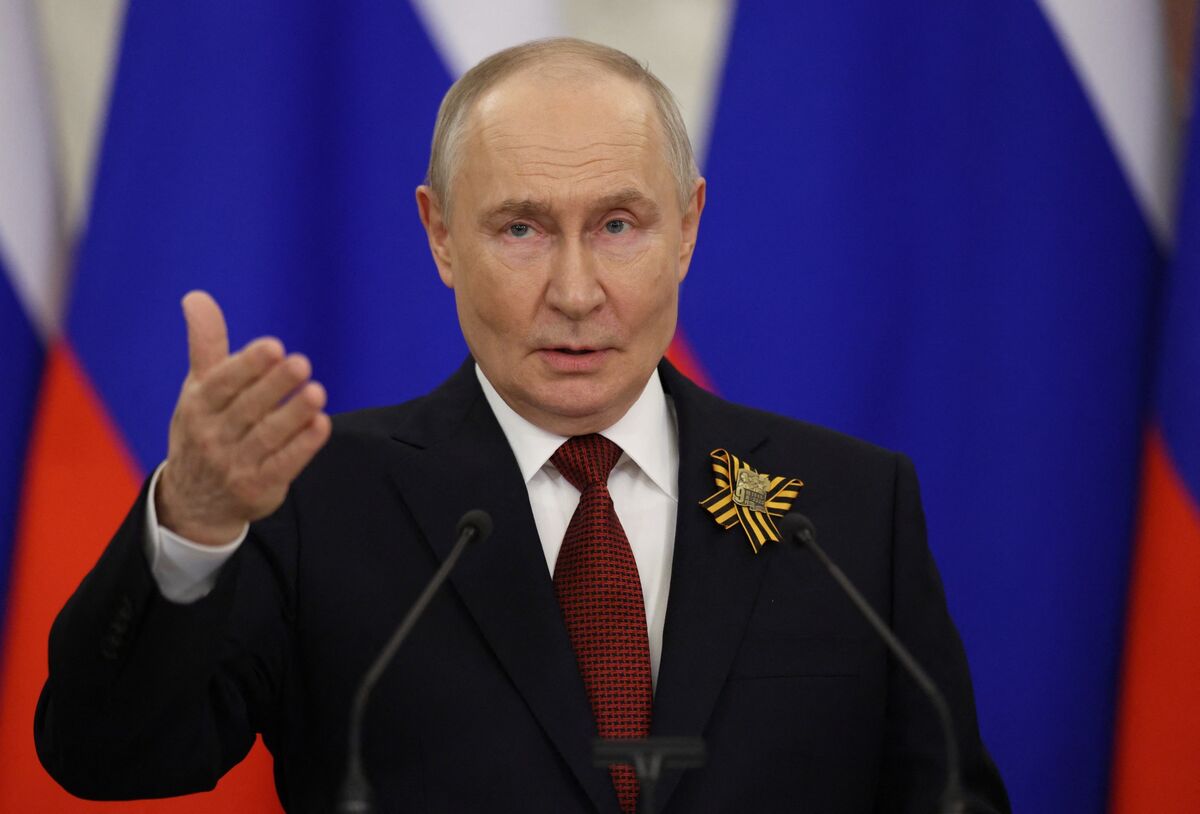
President Vladimir Putin signed a law allowing him to deploy the military to foreign countries to aid Russian citizens who’ve been detained or face prosecution.
Steve Schmidt, former Republican operative, had a scathing response to the Trump administration and MAGA on Memorial Day.The co-founder of the anti-Trump group The Lincoln Project described "MAGA's ultimate disgrace" and called President Donald Trump and his White House "America's most despicable men and women."He reflected on Memorial Day, the ultimate sacrifice that Americans have made serving their country around the world — and warned that there were forces trying to infiltrate the military and dishonor its reputation."And it's not abstract and it's not history, not for the families of the Americans killed in action in Iran, not for the families whose loved ones are buried in section 60 at Arlington National Cemetery," Schmidt said."The grief never abates — 26 years of war and the United States has been transformed by it," Schmidt explained. "What it has produced is a soft tyranny, an autocratic man in freedom's chair who desecrates in word, and deed and action, with every breath, the sacrifice we honor and celebrate."Schmidt described Trump's attempts to change the military and MAGA's influence. "He is a contemptuous man and a contemptible one," Schmidt added. "He is a low down, no good man, a liar, a felon, an abuser of women and children, a man who dishonors and disgraces the American military and whose attempts to transform it into a personal pretorian guard are a national obscenity. The military does not belong to Trump, and it does not belong to MAGA. It belongs to the nation. And it is made up of the nation's sons and daughters. It is our most precious resource. It is our most fragile institution. And it is being broken in half by America's most despicable men and women. We should not tolerate it."