'Craziest thing': Women in labor get shock hearings as judge dictates how they give birth
Source: Raw Story · Bias: Far Left
Summary
On the afternoon of Sept. 9, 2024, Cherise Doyley was in her 12th hour of contractions at University of Florida Health in downtown Jacksonville when a nurse came in with a bedsheet and told her to cover up. A supervisor brought a tablet to Doyley’s bedside. Gathered on the screen were a judge in a black robe and several lawyers, doctors and hospital staff.“It’s a real judge in there?” Doyley asked the nurse at the beginning of what would be a three-hour hearing. “Now this is the craziest thing I’ve ever seen.”Doyley hadn’t asked for the hearing. The hospital had sought it. Doyley had mere minutes to prepare. She had no lawyer and no advocate — no one to explain to her what, exactly, was going on.Judge Michael Kalil informed her that the state had filed an emergency petition at the hospital’s behest — not out of concern for Doyley, per se, but in the interest of her unborn child. He described the circumstances as “extraordinary.”The hospital and state attorney’s office wanted to force Doyley to undergo a cesarean section. Doyley, a professional birthing doula, didn’t want that and had been firm about it. She’d had three prior C-sections, one that resulted in a hemorrhage, and hoped to avoid another serious complication and lengthy recovery. She was aware that doctors were concerned about the risk of uterine rupture, a potentially deadly complication for her and her baby. She would say during the hearing that she understood the risk to be less than 2% and didn’t want to agree to a C-section unless there was an emergency.But the choice would not be hers. The judge would decide how she would give birth.Mentally competent patients typically have the right to choose their medical care — or refuse it. But there is one notable exception: pregnant patients. That inconsistency is particularly striking in Florida, a state that has pushed to expand medical freedom for those who wish to avoid vaccines or fluoridated water, while constricting the rights of people in various stages of pregnancy.“There aren’t any other instances where you would invade the body of one person in order to save the life of another,” said Lois Shepherd, a bioethics expert at the University of Virginia School of Law.In Florida and many other states, court-ordered medical procedures are just one of the ways pregnant patients’ rights are restricted. The effort to chip away at those rights is rooted in the concept of fetal personhood — that a fetus has equal and, in some cases, more rights than the woman sustaining it.The link between fetal personhood and court-ordered C-sections dates back to the 1980s, when courts started ruling that hospitals can override patients’ decisions in favor of the health of unborn children.In the years since, proponents of fetal personhood began to push for even broader legal protections. In 1986, Minnesota was the first state to recognize fetuses as victims in homicide cases. Some states have imprisoned pregnant women for exposing their fetuses to drugs. Nearly 30 states have passed laws that allow hospitals to invalidate pregnant patients’ advance directives, which outline the kinds of life-sustaining treatment a person wants after a catastrophic illness or accident. At least one, Alabama, extended the concept of personhood all the way to the earliest stages of fertilization and conception by giving frozen embryos the same legal status as children, though the Legislature later said the law couldn’t be enforced.And the fetal personhood movement has accelerated in the past several years, supercharged by the U.S. Supreme Court decision to reverse the abortion rights that had been protected by Roe v. Wade.Florida has long been at the forefront of fetal personhood policies. The state was one of the first in the country to prosecute a woman for “delivering” drugs to her fetus during pregnancy in 1989, although the Florida Supreme Court later overturned her conviction. And after advocates twice failed to get a fetal personhood amendment on the state ballot, the Legislature is now considering a bill that would enshrine the concept in state law by giving embryos and fetuses the same legal status as people in wrongful death suits.For women in labor, the potential impact of the bill is clear: Experts anticipate their medical needs could be further diminished in favor of the fetuses’.Several legal experts told ProPublica they are alarmed by Doyley’s case and the legislation’s potential to allow for more court interventions during childbirth. Lawyers who represent women in fetal personhood cases already have identified a higher number of forced C-sections in Florida than other states.The state attorney’s office for the 4th Judicial Circuit declined to comment on Doyley’s case, saying a response would violate her medical privacy.
Related Coverage
- Melania gives Congress private deadline as she works around Trump's team: report (Far Left — Raw Story)
- A Vietnam Nurse Who Came Home, Helped Get Us to 250 (Center Right — RealClearPolitics - Homepage)
- Senator John Fetterman Reveals the One Thing That Would Make Him Leave the Democrat Party (VIDEO) (Far Right — The Gateway Pundit)
- AI Industry Is Creating a New Age of Imperial Extraction and Labor Exploitation (Far Left — Truthout)
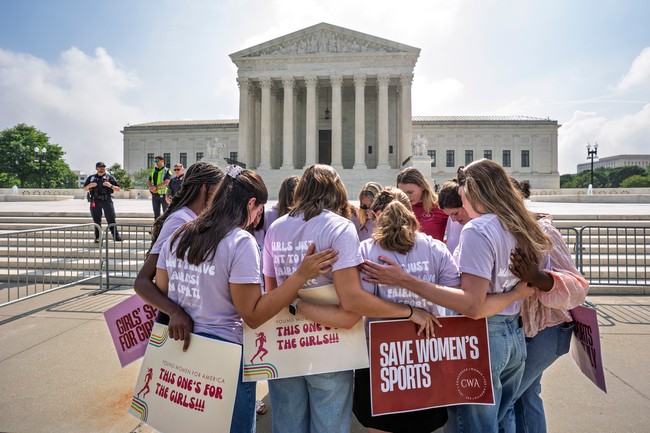
- The Supreme Court Protects States’ Ability to Safeguard Women’s Sports (Right — RedState)
- First Thing: Iran to show defiance in six-day funeral for supreme leader (Center Left — US news | The Guardian)
- Zohran Mamdani gives speech to mark US’s 250th birthday in New York – watch in full (Center Left — US news | The Guardian)
- Score cushy bedding without the sticker shock with Cozy Earth’s Fourth of July sale (Right — New York Post)
More Headlines From March 18, 2026
- Sen Mullin gets emotional recounting Trump's kindness to his son (Right)
- John Fetterman Breaks Ranks to Approve Trump’s Extreme DHS Pick (Left)
- WH rejects fmr Counterterrorism Chief’s ‘False’ and ‘Absurd’ resignation claims amid Iran conflict (Far Right)
- Roy Cooper Is Out of Touch on the SAVE America Act (Far Right)
- Sen. Markwayne Mullin says he regrets calling Alex Pretti a "deranged individual" (Center)