America's crazed new obsession is nothing more than a tall tale
Source: Raw Story · Bias: Far Left
Summary
I’m very short. At my zenith I was 4 feet, 11 inches.From time to time, worried parents of abnormally short children phone or email me seeking reassurance. I tell them that if they or their children are desperate, they can resort to limb-lengthening surgeries, growth hormone treatments — humatrope — with unknown and potentially dangerous side effects, or a wide variety of homeopathic and crank remedies. But I discourage this.The newest craze is height surgery, a procedure in which the leg bones are fractured and implanted with devices that slowly stretch them over several months. It can add three or so inches per procedure to a person’s height.Mario Moya, chief executive at the LimbplastX Institute in Las Vegas, says demand for height surgery has been surging. Dr. S. Robert Rozbruch, an orthopedic surgeon at Hospital for Special Surgery in New York, says he used to see about 10 cases a year; last year, his clinics had 155 cases.Last week, the New York Times ran a long feature on height surgery. The procedure was even used recently as a plot point in the film Materialists.Why are so many parents worried about their child’s height these days? Maybe because, in this era of record-breaking inequality, they believe greater height will give their kid a leg up.I gently urge the parents of short children not to seek height surgery or anything else to make their children taller.I tell them to love their short kids, to inundate them with affection, and they’ll be okay.I should know. I was bullied and ridiculed as a young kid, as I’ve recounted in my memoir, Coming Up Short.Starting when I was around six years old, my mother and grandmother Minnie told me not to worry that I was at least a head shorter than other kids my age because I’d “shoot up” when I got to be 13 or 14 years old. I pictured a magic beanstalk; one morning, I’d wake up and be 6-foot-10. But by the time I was 15, I remained an inch under five feet, and I never got any taller.Soon after John F. Kennedy’s inauguration in 1961, when the whole country seemed to be bubbling with optimism, my optimistic mother took me to see a doctor in New York who specialized in bone growth. He took a bunch of measurements, asked questions about the heights of my grandparents and great-grandparents (they were all normal), made some X-rays, drew some blood samples, and three weeks later phoned to say he had no idea why I was so short.Reluctantly, I gave up waiting to shoot up. By that time I wasn’t particularly worried about being bullied or ridiculed. But being a very short man wasn’t especially helpful when it came to dating. A few years later, Dartmouth College, which was then all-male, seemed comprised almost entirely of big young men able to swoop the inhabitants of women’s colleges literally off their feet. (When I swooped in, they seemed to flee.)That’s where things stood, as it were, until I was in my 30s, when my then wife (about five inches taller than I) and I contemplated having children. Medical science had advanced considerably over the two decades, because there was an answer to why I was so short.I inherited a mutation called Fairbanks Disease, or multiple epiphyseal dysplasia, a rare genetic disorder that slows bone growth. (The actor Danny DeVito also has this condition.) Normal bones grow when cartilage is deposited at their ends. The cartilage then hardens to become additional bone. But my cartilage didn’t work that way.Not only were my bones short, but the experts predicted I’d also have pain in my joints. I’d often tire, they said, and have problems with my spine. I’d have arthritis all over, and I’d waddle when I walked. Other things would go wrong as well.Their predictions were accurate. I have had problems with my hips, and in my late 30s had to replace both. I had a bout of grand mal seizures in my late 30s, which neurologists couldn’t explain. There’s no need to bore you with my aches and pains. But the geneticist I consulted explained that the odds of passing this mutation to my children were very small. Even if they had it, the odds that it would slow their bone growth or cause any other irregularities, or be passed on to their own children, were minuscule.We decided to have kids. And our sons turned out perfectly normal. But what’s “normal” anyway? And why is normal so important? I’ve had a wonderful life. I have a loving family. I’ve had good friends, work that I consider satisfying and important, reasonably good health except for the above-mentioned problems. So what if I’m very short?Researchers have correlated being taller with greater income, high-status jobs, and positive perceptions of leadership. And it can be a tricky issue in an era of dating apps that can filter for height preferences.Yet David Sandberg, a psychologist at the University of Michigan, studied hundreds of children in the Buffalo area and found no real problem with being short and little benefit to being tall.
Related Coverage
- Business Leader Calls on New York City to Resist Mamdani (Far Right — The Gateway Pundit)
- America 250 Soars With Amazing Flyovers and Aerial Action Over the National Mall (Right — RedState)
- America declared independence in 1776. Yorktown secured it in 1781 (Center Right — Washington Examiner)
- Final preparations for America's 250th anniversary underway (Center — NewsNation)
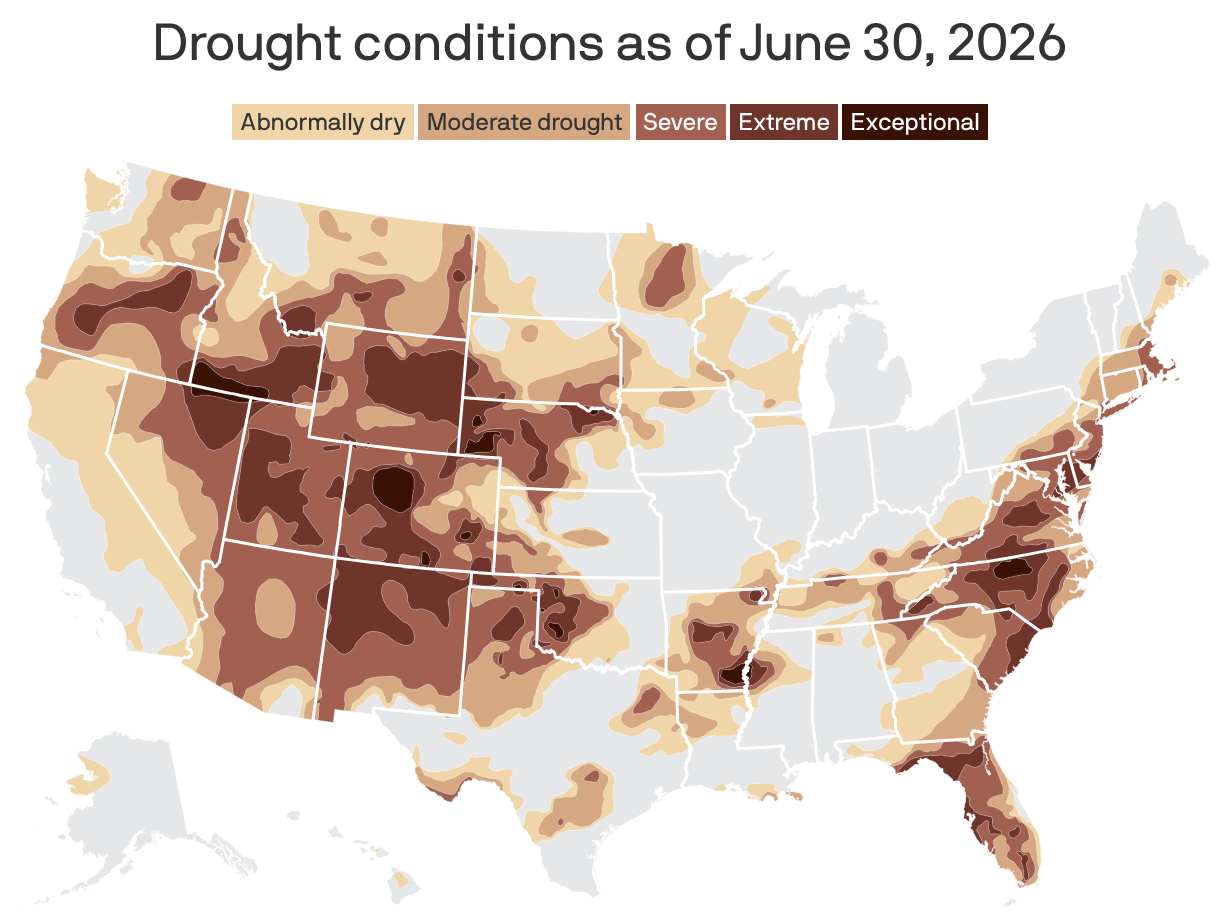
- America's 250th fireworks party collides with burn-bans (Center Left — Axios)
- Glenn Beck REACTS to foreigners LOVING their visit to America (Right — Blaze Media)
- Luka Doncic weighs in on new-look Lakers roster amid heavy criticism (Right — New York Post)
- Why All Patriots Should Watch The Patriot On America’s 250th Birthday (Far Right — The Federalist)
More Headlines From February 28, 2026
- World on edge as US, Israel strikes on Iran stoke fears of broader conflict (Center)
- World leaders react to Iran military strikes (Center)
- No vote, no war? Congress to challenge Trump on Iran strikes (Left)
- Watch: Smoke rises over Tehran as Trump 'seeks regime change' (Center)
- Pentagon reaches deal with OpenAI amid Anthropic beef (Center)