AIPAC Just Helped Put a Bernie Sanders Alum in Congress
Source: The Intercept · Bias: Far Left
Summary
Spending by the pro-Israel lobby in New Jersey's special election inadvertently helped a candidate with progressive ties win by splitting the moderate vote.
AIPAC Just Helped Put a Bernie Sanders Alum in Congress
Far Left
Spending by the pro-Israel lobby in New Jersey's special election inadvertently helped a candidate with progressive ties win by splitting the moderate vote.
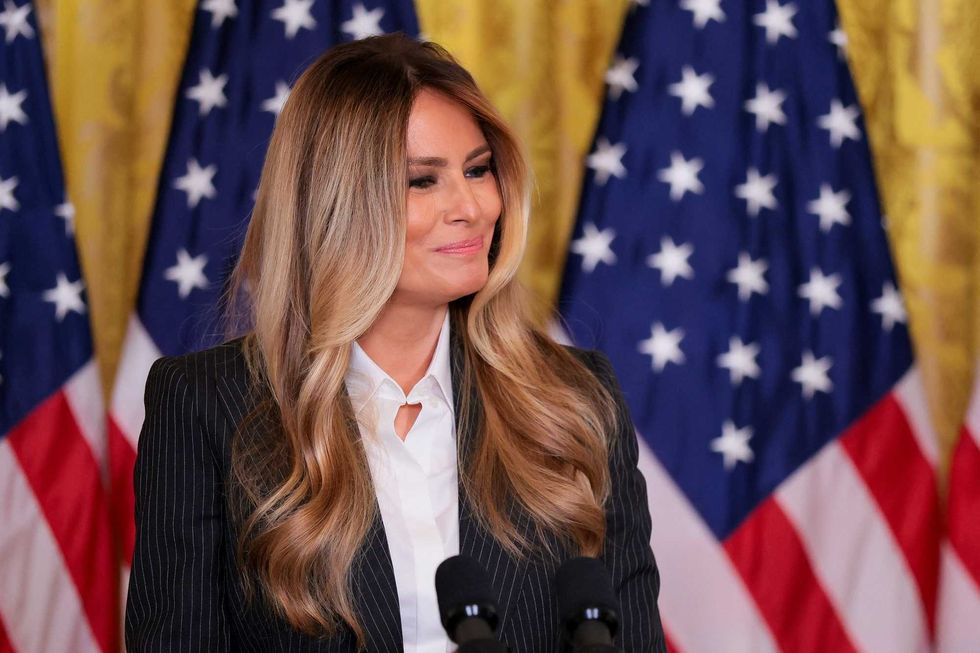
First lady Melania Trump gave Congress a private deadline to pass her signature foster care bill, and she is pursuing it largely outside the usual White House channels, according to a new report in Politico. At a bipartisan roundtable with the House Ways and Means Committee in April, the first lady publicly called foster care legislation a "moral imperative." Then, behind closed doors, she set a target, Rep. Jason Smith (R-MO) told the outlet: "I want this on Donald's desk by the August recess." The Fostering the Future Act, which expands housing, education and workforce help for young people aging out of foster care, passed the House unanimously.The Senate has not moved it out of committee, and lawmakers are set to leave Washington around Aug. 10. At a White House picnic the day the House passed the bill, both Trumps urged the Senate to hurry. "Hopefully, it will quickly pass in the Senate," the president said. He has not publicly pressed senators since.The deadline reflects a first lady who increasingly operates on her own track. Her office, not the State Department, has led her effort to reunite children displaced by the Russia-Ukraine war, negotiating directly with Moscow and Kyiv, the White House said. She has also shown a willingness to diverge from the administration's message. She broke with the White House on Epstein, calling for survivors to testify as the president's team tried to move past the scandal, and last week put her own spin on a Supreme Court ruling her husband celebrated, voicing support for the LGBTQIA+ community.A recent book recounted how she resisted Trump's overhaul of the White House grounds and lost.
Stop slacking, allies.
The post NATO Leaders Will Meet for Key Summit in Turkey After Trump Puts Freeloading Allies on Blast appeared first on The Gateway Pundit.
Some Americans who have always celebrated the anniversary of our country's independence see us losing independence and so much else on the eve of our 250th. They aren't in the mood for a parade.
Members of Congress gathered Thursday at Independence Hall in Philadelphia to commemorate the 250th anniversary of the signing of the Declaration of Independence. The bipartisan group of lawmakers gathered at Independence Hall specifically on this day because it marked the anniversary of the Second Continental Congress’s vote in support of American independence in 1776 in […]
Congress is planning to crack down on birth tourism after the U.S. Supreme Court’s recent ruling preserved birthright citizenship. The Supreme Court ruled 6-3 on Tuesday that […]
President Trump is redefining what it means to be a U.S. ally in the AI era.Why it matters: For the White House, it's now about how partners can help the U.S. win the AI race.For decades, shared values and security interests have underpinned alliances with Europe and other partners around the world. Under Trump, that's no longer enough.As AI becomes central to economic and military power, frontier AI models, chips and infrastructure are turning into new instruments of American influence.Driving the news: The Trump administration is blocking allies from accessing the world's most powerful models, playing it close to the vest and criticizing Europe for not having its own robust AI industry.With export controls on Fable and Mythos lifted on Tuesday, Anthropic and the Trump administration are continuing Project Glasswing efforts, which the company previously said would give access to Mythos to 150 more organizations across more than 15 countries.Fable is also back.Commerce retains the power to pull back access when it deems appropriate. "The problem we have is that we are leading everybody by a lot," Trump said in a recent interview with "The Axios Show." "Europe has to be very careful. They're losing their way entrepreneurially."Trump pointed to the U.K. not tapping into energy sources in the North Sea because of environmental concerns: "It's crazy." Between the lines: The Trump administration's AI restrictions are part of a broader transactional approach to alliances.Catch up quick: Vice President JD Vance's speech last year at the Paris AI Summit set the stage for a confrontational relationship with the European Union.The U.S. was quick to rebuke the EU's focus on safety over innovation with Trump entering his second term laser-focused on deregulation. But the president now finds himself behind an ad hoc licensing regime that's creating its own regulatory uncertainty, both domestically and abroad.OpenAI's GPT-5.6 was forced into a staggered rollout last month due to government concerns.What they're saying: European Commission spokesperson Thomas Regnier on Wednesday said the bloc is looking forward to "intensifying" discussions with Anthropic to gain access to Mythos through Project Glasswing and that, in the meantime, it has access to GPT-5.5-Cyber.The EU has a delegation in the U.S. to determine the scope of a future tech dialogue, the frequency of meetings and the level at which they'll be held.The dialogue is expected to include frontier AI models, chip supply chains and cybersecurity."But we have one clear line," Regnier said, "which is that our sovereign legislation is not up for negotiation."Omran Sharaf, the United Arab Emirates' assistant foreign minister for advanced science and technology, told Axios "it's very important that trusted partners and strategic partners are included in the process."That way it is "synchronized and we're applying similar standards in controlling such technologies, rather than having something that gets imposed."The big picture: AI is changing what the White House wants in its alliances.Just last week, the EU and several European governments signed onto Pax Silica, the U.S.-led effort to secure AI supply chains and critical minerals, even as the White House restricts their access to frontier AI models.For the U.S., Europe is all of the above: a restraint, an indispensable partner and a competitor.The administration is simultaneously rejecting Europe's AI rules, inking deals with the region to secure supply chains and blocking access to cutting-edge technology.The bottom line: With the most advanced AI, allies will have to adjust to being considered trusted U.S. partners only in some cases."The conclusion that governments are coming to is: We'll be part of Pax Silica, yes. We'll work with the U.S. ecosystem where we can. We'll build around what we can't," A.J. Bhadelia, Cohere's head of global government affairs and external affairs, told Axios.